



Handling DUI Stops
There is a tendency to shy away from DUIs unless you are part of a specialty unit that deals with them all the time. But I think we can reverse this trend through understanding and training.

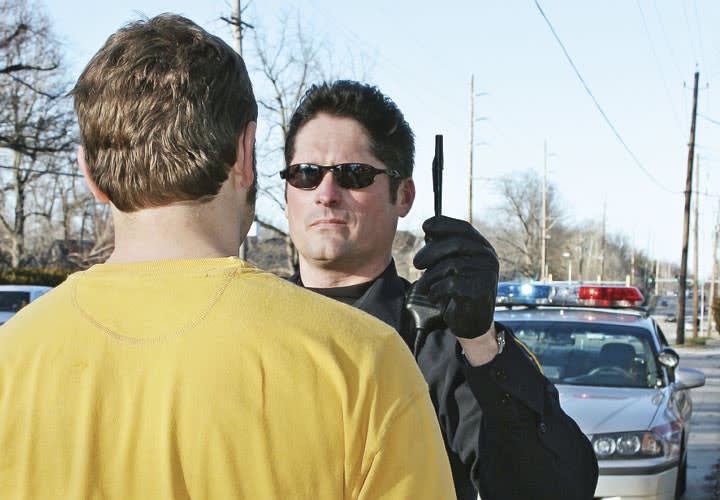
Photo: iStockPhoto.com
Dualism basically states that there tend to be two choices when faced with any particular situation, which in turn becomes the dichotomy of the decision-making. Usually your choices narrow themselves down to a selection between opposites. It's either yes or no, you like it or you hate it, or things are viewed as being good or bad. It would seem that dualism runs amok in law enforcement, especially when it comes to handling traffic.
You either love working traffic or you hate it. The proof is in the work product. You either write hundreds of tickets or you barely hand out any warnings. This form of traffic dualism is even more prevalent when it comes to the handling of DUIs.
Cops are either predatory in nature when it comes to cases of driving under the influence or they shudder at the thought. We have all seen the damage that impaired drivers can inflict upon society in terms of property damage, injuries, and fatalities. And yet, unless it becomes personal (like a DUI crash killing a family member) very few of us really give it much thought. It's just another task to be performed in a long list of other job requirements.
When you do get involved, it's usually because the driver fell out of his or her car smelling like a brewery. But what about when it's not so fool proof? There is a tendency to shy away from DUIs unless you are part of a specialty unit that deals with them all the time. But I think we can reverse this trend through understanding and training.
What's There to Understand?
I think one of the problems we face in law enforcement is that we get desensitized to things. Since you are exposed to so many negative situations over long periods of time, they lose their impact on you. You hear about the evils of DUIs all the time from organizations like Mothers Against Drunk Driving (MADD), you are bombarded with it by news outlets, and you live it at work. But do we in law enforcement really understand the scope of the problem? I think not, because if we did we would be more proactive and the numbers would speak for themselves.
MADD's Website states that one in three people will be involved in an alcohol-related crash in their lifetime. In 2010 alone, around 10,839 people died in a drunk driver-related crash. Teen alcohol use kills about 6,000 people each year, more than all illegal drugs combined. And sadly, car crashes are the leading cause of death for teens and one out of three of those are alcohol related.
The Department of Transportation (DOT) paints an even bleaker picture on its Website:
Over 50% of all fatal highway crashes involving two or more cars are alcohol
related.
Over 65% of all fatal single car crashes are alcohol related.
Over 36% percent of all adult pedestrian accidents are alcohol related.
36% of all adult pedestrian accidents involve an intoxicated pedestrian.
It's not about an upset family member screaming for justice because a drunk driver killed his or her daughter. It's everyone's problem unless you or your family don't drive on the roadways. Drunk drivers do not discriminate among their victims. Everyone is fair game.
I believe that officers shy away from DUIs because it has become a highly skilled conflict of competing interests; between those that prosecute and those that defend. The days of simply writing a report of "saw drunk arrested same" are long gone. It has been estimated that a typical DUI defense requires around $5,000 in attorney's fees and court costs. People don't pay that kind of money for shabby service. The defense attorneys will rip you a new one if you don't have your act together.
I think some officers just don't want to do battle. Though laziness is an age-old problem, the modern era has created a misguided sense of the warrior spirit. If you are not part of some type of tactical response team, then you're not a warrior. Some officers believe that dealing with DUIs is not worthy of their talents. These types have never learned what a true warrior knows; it's always about helping people and saving lives regardless of the task it involves.[PAGEBREAK]
Taking drunks off the roadway is not a waste of anyone's time. If you don't believe me or think you can't make a difference, here is an example close to home. My agency has lowered the traffic homicide rate in Osceola County, Fla., to the point that we lost some federal funding because they no longer consider us to have a big enough problem. Each one of our four Traffic Unit DUI guys alone gets more than 100 DUI arrests a year. Don't tell me you can't make a difference.
Demystifying DUI Stops
I've come up with some useful tips that might help demystify handling DUIs. They come from not only my experiences but from my agency's traffic unit as well. They are presented below in no particular order.
1. According to the "Officer's DUI Handbook" by Stephen, Kwasnoski, and Partride, which I highly recommend, there are three phases to a DUI: vehicle in motion, personal contact, and pre-arrest screening. With each phase there is one key question you have to ask yourself: Do I have enough to go on to the next phase? If the answer is yes, keep going!
Vehicle in motion: What did you see, what caught your attention, and why are you stopping this vehicle? How well did the vehicle stop when the driver was commanded to do so?
Personal contact: As you approached the vehicle, what did you see? As you talked to the driver, what did you hear, see, and smell? How did the driver respond to your questions?
Pre-arrest screening: How did the driver do while performing the field sobriety testing? What did he or she do wrong during those tests? Is the impairment caused by alcohol, drugs, or illness? Do you have enough probable cause for an arrest? If not, what other options do you have per your agency policy?
2.Ask questions. Ask, How much have you had to drink? Where are you coming from? Where are you heading? The more questions you ask, the more reasonable suspicion you build and tip over into probable cause. This becomes even more important when there is a pass-off from one officer to another; especially if you have your own DUI unit. The more the initial stopping officer can get before making the call to another more trained officer, the more it will help later on in court. "I thought he was drunk so I called Officer Smith," is never going to be enough. When you are talking DUIs you need to be talking in details.
3.Be observant. You need to look for signs of impairment through your entire stop. The obvious one is looking for empty cans or bottles of open alcohol. Is the driver fumbling around with her wallet when you ask her for her drivers' license and registration? Did he pass over his license several times before finally handing it over to you? One that is often overlooked is evidence of "the club hand" (bracelet or stamp sometimes used to mark club entrance). It's important because it may not be there the second time around when the person realizes it's a bad thing to still have on and he or she rips it off. How about checking if the engine is still hot? Is the key in the ignition and left in the "on" position? You need to be curious and have a sense of urgency about it. You need to find evidence of physical control.
4. Wheel witness. If the call is a traffic crash, try to hang on to the wheel witness if at all possible. If the person has to leave, try to get a written statement before. At a minimum, get a name, address, phone number, and e-mail address. You can't charge DUI if you can't prove the suspect was in control of the vehicle (and the vehicle was operable) at the time of the alleged offense.
5. Road less traveled. Sure any major roadway is potentially a target rich environment. But, most drunks know this and tend to drive more carefully. Get into the predator mindset and hunt down back roads and side roads as well. Many times, drunk drivers will feel more secure and comfortable driving a back road. This opens them up to better observation for their driving pattern. DUIs can be found anywhere; driving up and down major thoroughfares is just one way to look.
6. Trust your instincts. Something catches your eye but you are not sure if the driver is a DUI. Once you establish a legal reason to stop the car, look deeper. Upon contact, you may not have any other overt signs of impairment. Maybe they were sleepy or not paying attention and yet you feel something is still not right.
Again, ask questions: Why were you driving like that? Where are you now and what time is it? Where were you coming from and where are you going? Simply engaging in conversation might lead to other clues of impairment. Remember, someone's driving under the influence is not always related to alcohol. There may be other drugs involved as well.
Take it Seriously
No doubt DUIs are a pain to work. It seems like they never end. It takes a while to make your arrest and there seems to be a host of endless court related proceedings. And yet, until a drunk driver kills a member of our family, officers seldom fully commit to the importance of taking drunk drivers off the road. Become proactive before one of these idiots kills someone you know and love.
More importantly, if you're not proactive, then at least call someone over who is. But remember, your part in all of this is extremely important as the originating officer. You may be able to pawn off the rest of the call, but the end always depends on the beginning. To all you proactive "predators," good hunting.
Amaury Murgado is a special operations lieutenant with the Osceola County (Fla.) Sheriff's Office. He is a retired master sergeant from the Army Reserve, has 24 years of law enforcement experience, and has been a lifelong student of martial arts.
More Patrol

Streamlight Portable Scene Light III Wins 2026 OH&S New Product of the Year Award
Streamlight’s Portable Scene Light III has won the 2026 Occupational Health & Safety (OH&S) New Product of the Year Award in the Lighting category.
Read More →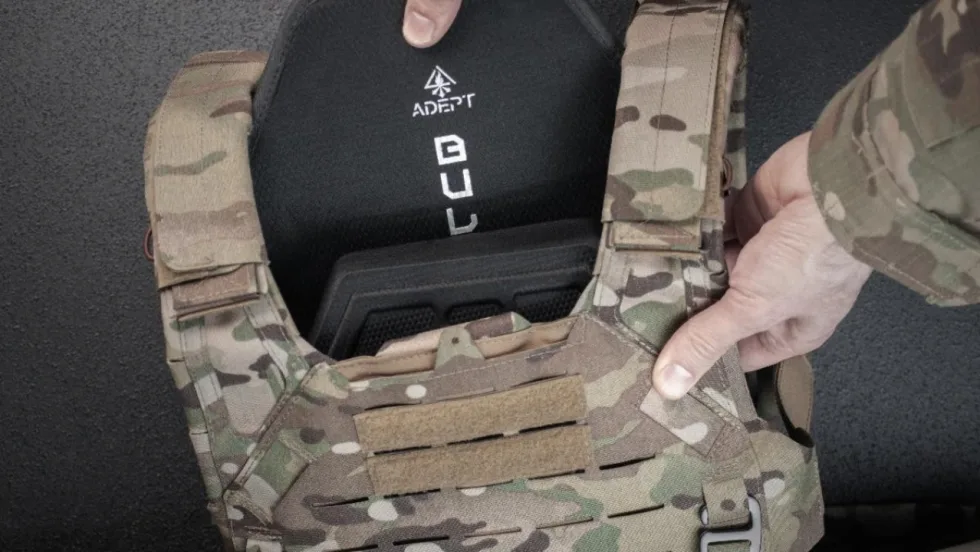
Adept Armor Introduces Two New Rifle Plates
Adept Armor has launched two new Level IV ballistic plates, the Emperor and the Archon Mark 2, which brings Adept Armor’s new Quatroid ceramic to the high-threat, performance-value center of the range at 5.2 pounds.
Read More →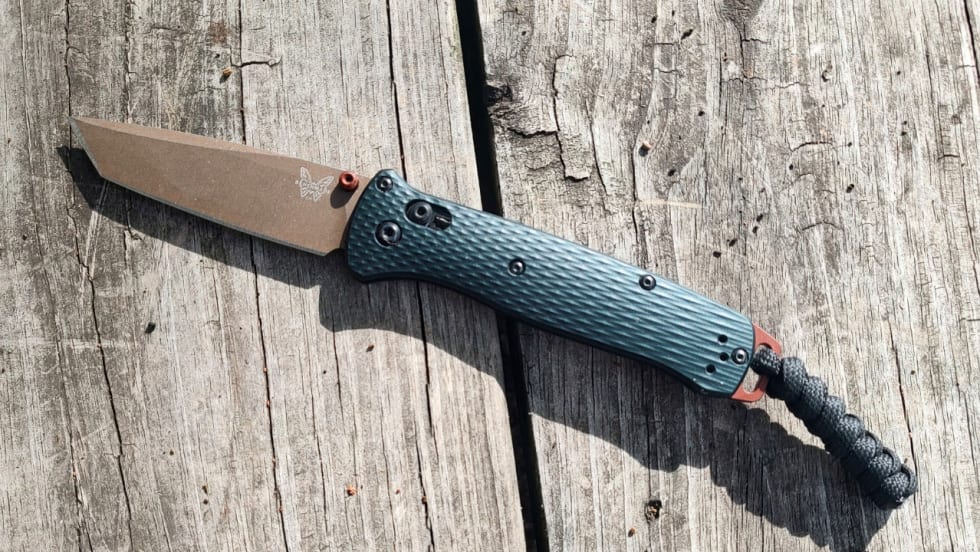
POLICE Product Test: Benchmade Bailout
The Benchmade Bailout is a slim, lightweight carry knife with a deep-ride pocket clip and comes in a variety of blade steels and scales. Here is a detailed review of the Taiga Green Bailout, released earlier this year.
Read More →
NLEOMF Announces July 2026 Officer of the Month
NLEOMF honored a Michigan deputy sheriff as the July 2026 Officer of the Month for rescuing a trapped driver from a burning vehicle following a Fourth of July crash.
Read More →
Streamlight to Showcase Newest Lighting Products at National Safety Council’s Safety Congress & Expo 2026
Streamlight will showcase its latest lights, including the Portable Scene Light III and the LiteBox 1Million, at the 2026 National Safety Council (NSC) Safety Congress & Expo.
Read More →
The 2027 World Police & Fire Games Set for Perth, Australia
The 2027 World Police & Fire Games (WPFG) will take place in Perth, Western Australia, from Friday, March 12 through Sunday, March 21, 2027.
Read More →
5.11 Partners with National Fallen Firefighters Foundation to Support #ForThe343
5.11 has joined the nationwide movement honoring the 343 New York City Fire Department firefighters lost on Sept. 11, 2001.
Read More →
Team Wendy Announces Title Sponsorship of the Jorge Pastore Foundation
Team Wendy’s 3-year partnership with the Jorge Pastore Foundation expands access to programs that strengthen those who serve.
Read More →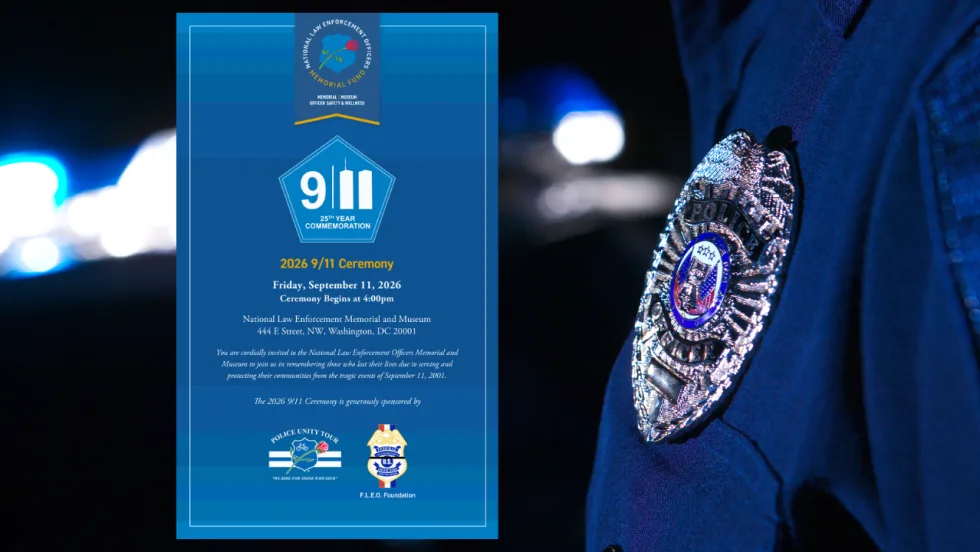
National Law Enforcement Memorial and Museum Hosting 9/11 25th-Year Commemoration Ceremony
The National Law Enforcement Memorial and Museum is hosting a 9/11 25th Year Commemoration Ceremony on Sept. 11 at 4 p.m.
Read More →
National Law Enforcement Officers Memorial Fund Announces June 2026 Officers of the Month
The National Law Enforcement Officers Memorial Fund (NLEOMF) named 15 officers of the Chico Police Department (California) as the Officers of the Month for June 2026 for their roles in responding to an active-shooter incident at a public library.
Read More →