



GTBM Info-Cop
Developed by law enforcement officers working with New Jersey-based GTBM Inc., Info-Cop offers state-of-the-art technology at a reasonable price.

Throughout much of the last century, law enforcement agencies relied on voice radio systems to link field officers to dispatch centers. When a cop needed to run a warrant on a subject, he picked up his hand mic and called dispatch.
That's how we did things in the old days. Now you most likely have a computer in your car, and that computer links you to dispatch, and in some agencies lucky enough have such systems, to databases that feed you information.
The main reason that such high-tech communications systems are not as prevalent as they could be in local police cars is quite simple: cost. It takes a lot of money to move that data out to the cars and the cost has been prohibitive for many agencies.
But that, too, has been changing. In the last few years, a number of systems have been developed to bring down the cost of wireless database access in police cars and make it commonplace. One such system that's gaining users is Info-Cop.
Developed by law enforcement officers working with New Jersey-based GTBM Inc., Info-Cop offers state-of-the-art technology at a reasonable price. Yeah, OK, the first thing you have to ask about systems like this is what does "state of the art" mean? So let's look at some of the features of this software.
Info-Cop gives you wireless access to local, state, and national law enforcement databases and supports all available NCIC 2000 features. Best of all, it offers you all of these features at a lower price than some of its competitors that require proprietary hardware.
Info-Cop runs on popular hardware that anyone can purchase. You can operate Info-Cop software on a PC, a PDA, the newer "smart phones," and even on handheld e-mail devices like the RIM Blackberry. The wireless signal can be transmitted over your existing radio channels, if spectrum and licensing permit, or over any public/private IP-based networks such as CDMA, MESH, GPRS, 802.11, the new emerging EV-DO standard, or even an older standard like CDPD. But don't let anyone sell you on CDPD, as it is on its way out.
Info-Cop is all about options. Instead of purchasing proprietary hardware from a huge, multi-national communications company with a strangle hold on the public safety market, you can buy an appropriate PC right from the wholesaler. Instead of building and maintaining your own data backbone-that will be obsolete in a few years-you can do as many agencies have done already and negotiate a monthly fee for passing all of your data.
Info-Cop's user interface is easy to learn and simple to use. You don't have to enter strings of code just to run a name check. Instead, Info-Cop presents you with different screens for different tasks. You fill out your query and then the system checks it to see if it's complete. If there's a problem, Info-cop will let you know so that you can correct it and resubmit.
The software then sends the corrected query over your wireless network to the appropriate database. A response message comes back from your query that is formatted and parsed so that you see the most important portion of data first. For example, if the guy you've stopped for driving erratically is driving a stolen car, that info comes up at the top so that you can take appropriate measures. You also can receive prompts by visual and or audible queues as determined by your agency.[PAGEBREAK]
Besides routine tasks typically handled by a dispatcher, Info-Cop gives you other ways to increase productivity. These include scanning magnetic stripes on licenses, reading barcodes on vehicle registration forms, and photo and fingerprint capture capabilities. Heck, if your cars are camera equipped, you can use Info-cop to read license plates or send frames of video back to the dispatch center or other units during an incident.
One of Info-Cop's strongest features is its ability to be shared among multiple agencies. Info-Cop's interoperability solution is not only simple; its cost can be shared between agencies. For example, a number of local public safety agencies can share an Info-Cop server. Then the participating agencies can purchase client licenses for their own users and decide how much of their data they are willing to share. There are six different levels of user authorization for security, so agencies sharing a server can limit access to proprietary data.
Besides the access to local databases, Info-Cop provides other built-in functionality such as user status, public and private chat or messaging between cars, dispatchers, and other departments in a shared system. Additionally, Info-Cop has a built-in HazMat screen to query the four digit placard numbers used by the trucking industry. This gives responding officers quick access to information about hazardous materials.
Finally, Info-Cop incorporates reporting and auditing tools built on Microsoft's SQL 2000 database. There are pre-designed report tools or users may customize reports using third-party tools.
Info-Cop even gives back to its law enforcement partners. Its national tracking system allows its users to discover information about persons contacted by other agencies who use Info-Cop systems. Whether they're called summons, citations, flags, or warnings, sharing information this way is a big step in the right direction. If it were up to me, I'd call it the National Officer Alert System or NOAS. Today, more than 300 police departments are already using this DOJ-approved system, and the more departments that adopt the Info-Cop system as a standard, the more useful it will become.
Bob Davis supervises the San Diego Police Department's computer lab. He has 27 years of experience on the force.
More Technology

A police agency's guide to data-driven fleet management
Costs are rising and the public expects more transparency into how their tax dollars are spent. This e-book shows how police agencies can use fleet data to take control of fleet expenses while improving officer safety and demonstrating fiscal responsibility to the communities they serve.
Read More →
AI and analytics for law enforcement: Turning data into insights
Law enforcement agencies are managing more video, sensor data and digital evidence than ever before. Discover how AI and analytics can help turn that data into actionable insights that strengthen situational awareness, accelerate investigations and support more informed decisions.
Read More →
Vasco Electronics Adds Automatic Language Detection to Vasco Translator Q1
Vasco Electronics’ software update introduces hands-free language switching and expanded offline translation across 45 language pairs, empowering law enforcement, healthcare, and front-office enterprise teams
Read More →

North Miami Police Department Deploys Mark43
The North Miami Police Department has deployed Mark43 as part of its Five-Year Strategic Plan that represents its collective vision and goals for a more proactive police department, anchored by a core commitment to leveraging modern technology to enhance efficiency and public safety.
Read More →
Cellebrite Genesis for Enterprise Now Generally Available
Made available to the public sector in June, Cellebrite Genesis is serving a growing mix of national, regional, and local agencies worldwide, including some of the largest regional and metropolitan police departments. It is now available for enterprise organizations.
Read More →
2026 Vision FirstNet Users Summit to Host Emerging Leaders Training on Grassroots Advocacy for Public Safety
“Emerging Leaders Training: Understanding the Importance of Grassroots Advocacy for Public Safety," a session during the 2026 Vision FirstNet Users Summit, will offer a roadmap for unified advocacy at the federal level.
Read More →
Motorola Solutions Completes Acquisition of D-Fend Solutions
Motorola Solutions has acquired D-Fend Solutions, an industry leader in counter-drone technology. This deal provides public safety and enterprise customers with access to advanced counter-unmanned aerial systems.
Read More →
ZeroEyes, Advantech & Camden Police Partner to Bring AI Gun Detection Technology to Delaware School District
ZeroEyes has partnered with Advantech and the Camden Police Department to deploy ZeroEyes’ AI gun detection and intelligent situational awareness platform at Delaware’s Caesar Rodney School District (CRSD).
Read More →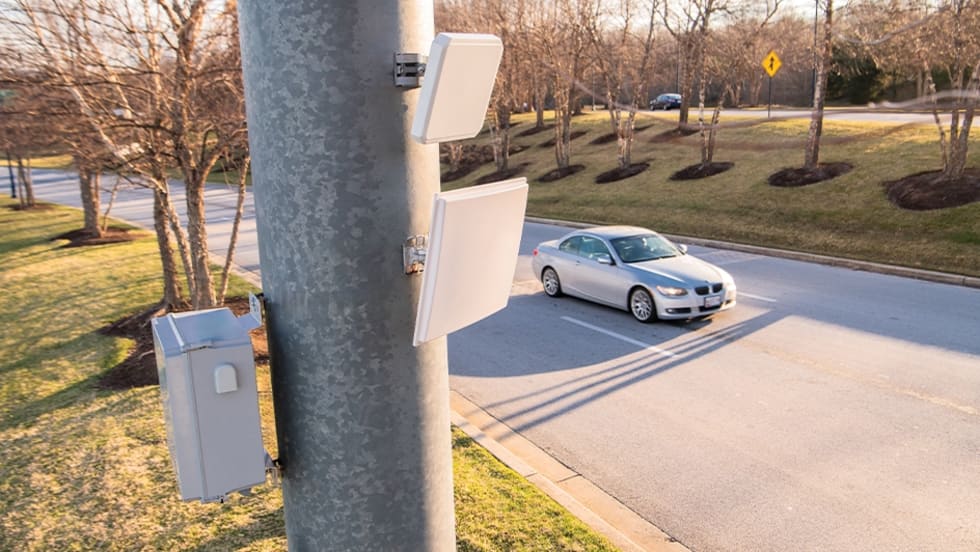
Leonardo U.S. Cyber & Security Solutions Introduces SignalTrace, the Next Evolution in Electronic Signature Detection Technology
SignalTrace reflects years of product refinement and a clearer expression of the technology’s purpose of recognizing and correlating electronic signatures in publicly broadcast wireless signals to reveal patterns, relationships, and trends that might otherwise go undetected.
Read More →
Pimloc Launches Secure File Sharing to Streamline Release of Redacted Video
Pimloc’s Secure File Sharing lets organizations deliver redacted video, audio, and documents through expiring, passcode-protected links, accelerating delivery while reducing security, compliance, and chain-of-custody risks.
Read More →