



Go For The Legs
Communications and sensitivity skills training are not enough. In fact, the third and critical component of training that should be mandatory for all law enforcement officers is defensive tactics.

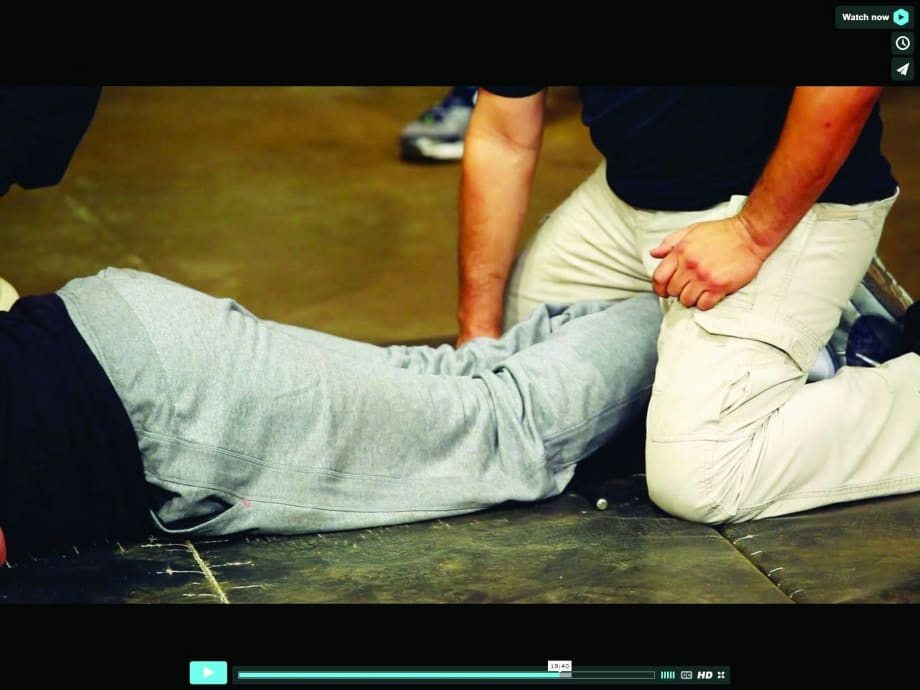
Photo: Force Effects Training
Whether you are a rookie or a seasoned vet, encounters with aggressive civilians who challenge your authority have become the new norm. Add in a genuine disdain for law enforcement, a greed for potential lawsuit payouts, and smartphones capturing every moment, and you can see why law enforcement has felt compelled to take a step back and re-evaluate certain situations and our methodology. As times change, our responses need to as well. Communications and sensitivity skills training are not enough. In fact, the third and critical component of training that should be mandatory for all law enforcement officers is defensive tactics.
Most officers will only receive a few hours of defensive tactics training during their basic training at the police academy. An unfortunate reality is that most will never see any further training in this area throughout the duration of their careers. This lack of training has resulted in serious injuries and even death for both the subjects of arrest and the officers who struggled to subdue them. This is why it's important for every officer to learn tried-and-true techniques, like taking control of dangerous subjects by taking their legs out from under them.
Training Methodology
Countless videos posted on social media and various internet sites show officers struggling and becoming increasingly frustrated with a combative subject. In some of these instances you see officers losing control because they cannot effectively control and arrest the subject.
This is why ForceEffects Training developed a simple and effective way to subdue and control a person resisting arrest in a matter of seconds. The goal is to save lives and careers and decrease exposure to lawsuits. Of course nothing is 100% foolproof, every situation is unique, and there are a great variety of methods and techniques available that can be utilized to effectively subdue a combative subject. These techniques were developed by law enforcement officer, martial arts expert, and member of the Institute of Defensive Methods, Cesar Olavarria.
Specifically, the defensive tactics were designed after studying the smartphone videos captured over the years that involve two or more officers in the arrest process. This process is broken down into several simple steps. In any combative situation, it is highly recommended that a minimum of two officers and ideally three be involved during the arrest process.
Go for the Legs
I'm not sure why this is, but it seems universal for officers to go for the neck area when trying to bring someone down. Some call it a choke hold, others call it a takedown maneuver. I don't care what you call it—it is ineffective and dangerous more often than not. The legs are the strongest part of a person's body; use this knowledge to your advantage and follow these simple steps to subdue someone.
Instead of wrapping your arm around a combative subject's neck, bend your knees and place your shoulder in between the person's inner thigh area. If you are capable of applying a rear choke or takedown maneuver then you should be able to reach down for the subject's ankles.
If the person of interest is wearing long pants, grab hold of the bottom portion of the pants. Otherwise, reach for the ankles.
Immediately begin to stand, raising your shoulder vertically as you lift the subject's buttocks while simultaneously pulling the ankles/pants toward you. It is very important to remember the lift or you will lose control of the person's legs on the way down and allow him or her to turn on you.
One of two things will happen at this point. The second and/or third officer will be engaged in the process of attempting to control the person's wrists in order to handcuff him. We have seen it a million times over that the officer(s) will not let go and this will assist in bringing the person down and avoid having the subject hit his or her face on the ground. It is human instinct for people to immediately extend their arms in front of them to break their fall. Use this to your advantage.
Once the subject is on his or her stomach, quickly cross the legs forward and sit on the ankles as you lean slightly forward. At this point, the actor will be immobilized and unable to strike you or your partner(s). For additional control, hold the person's head down on the ground.
What typically happens next is subjects will clench their arms underneath their chest, interfering with your ability to place the handcuffs on them. Frustration often kicks in at this point and officers begin using force, such as punches and/or striking the subject's ribs with a baton in order to get him to release his arms. As the force continues, and the repeated strikes don't work, witnesses become enraged at what they perceive to be police brutality. But you don't need to let this happen. There is a simple and effective solution for this as well.
Utilizing a baton, insert and wedge it in through the subject's bicep and armpit. Grab hold of both ends of the baton and crank/steer it from the waist over the subject's ear. The actor's arm will immediately come loose and the wrist will be perfectly positioned behind his or her waist, allowing you to place a cuff on it. Repeat this process on the other arm.
In some instances the subject may be very strong and not allow you to wedge his arm with the baton. Again, keep in mind that by this point several officers will be holding the actor down. The officer sitting on the subject's crossed legs can lower and straighten his legs (ankles kept crossed) and again sit on his ankles. Place the baton underneath the subject's shins. Raise the baton from one end and rub the baton up and down on the shins. This will create incredibly uncomfortable pain and discomfort, forcing the person to immediately release that tight hold of his arms and allow one of the other officers to pull back his arms or quickly shove and wedge his or her baton under the subject's armpit. Now you can steer the baton as previously mentioned and quickly handcuff the actor.
The key is to remember all of these moves by visualizing them in your mind prior to having an encounter. The goal is to reduce or completely avoid injuring the subject, yourself, and your partners. Officers have implemented these easy techniques with great success. You, too, can use them to take the fight out of a subject quickly and efficiently without losing your cool or your job.
Detective Sergeant Edwin Pantoja is a 28-year law enforcement veteran and founder of ForceEffects Training, designed to teach anyone in a combative situation how to safely and efficiently subdue a person resisting arrest. To learn more about the training program, visit https://forceeffectstraining.com/.
More Patrol

Adept Armor Introduces Two New Rifle Plates
Adept Armor has launched two new Level IV ballistic plates, the Emperor and the Archon Mark 2, which brings Adept Armor’s new Quatroid ceramic to the high-threat, performance-value center of the range at 5.2 pounds.
Read More →
POLICE Product Test: Benchmade Bailout
The Benchmade Bailout is a slim, lightweight carry knife with a deep-ride pocket clip and comes in a variety of blade steels and scales. Here is a detailed review of the Taiga Green Bailout, released earlier this year.
Read More →
NLEOMF Announces July 2026 Officer of the Month
NLEOMF honored a Michigan deputy sheriff as the July 2026 Officer of the Month for rescuing a trapped driver from a burning vehicle following a Fourth of July crash.
Read More →
Streamlight to Showcase Newest Lighting Products at National Safety Council’s Safety Congress & Expo 2026
Streamlight will showcase its latest lights, including the Portable Scene Light III and the LiteBox 1Million, at the 2026 National Safety Council (NSC) Safety Congress & Expo.
Read More →
The 2027 World Police & Fire Games Set for Perth, Australia
The 2027 World Police & Fire Games (WPFG) will take place in Perth, Western Australia, from Friday, March 12 through Sunday, March 21, 2027.
Read More →
5.11 Partners with National Fallen Firefighters Foundation to Support #ForThe343
5.11 has joined the nationwide movement honoring the 343 New York City Fire Department firefighters lost on Sept. 11, 2001.
Read More →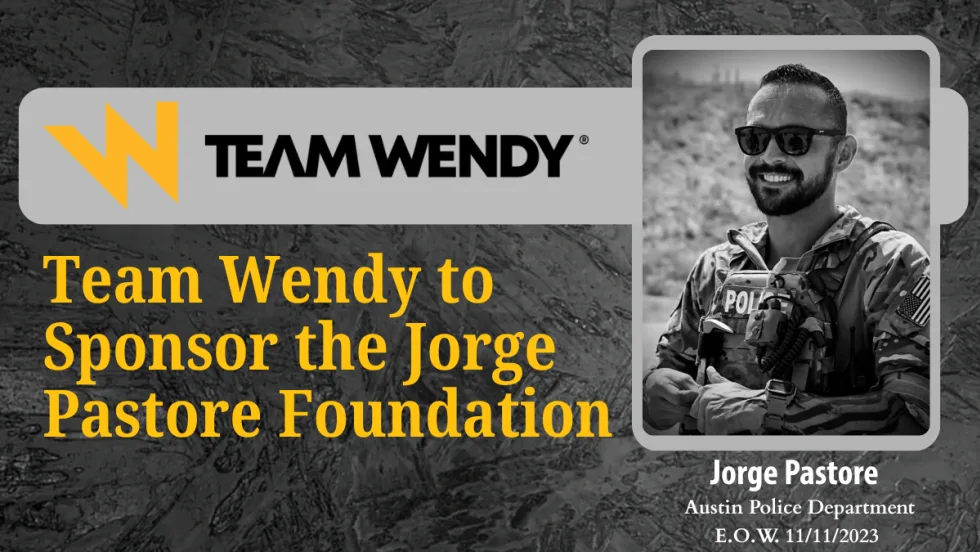
Team Wendy Announces Title Sponsorship of the Jorge Pastore Foundation
Team Wendy’s 3-year partnership with the Jorge Pastore Foundation expands access to programs that strengthen those who serve.
Read More →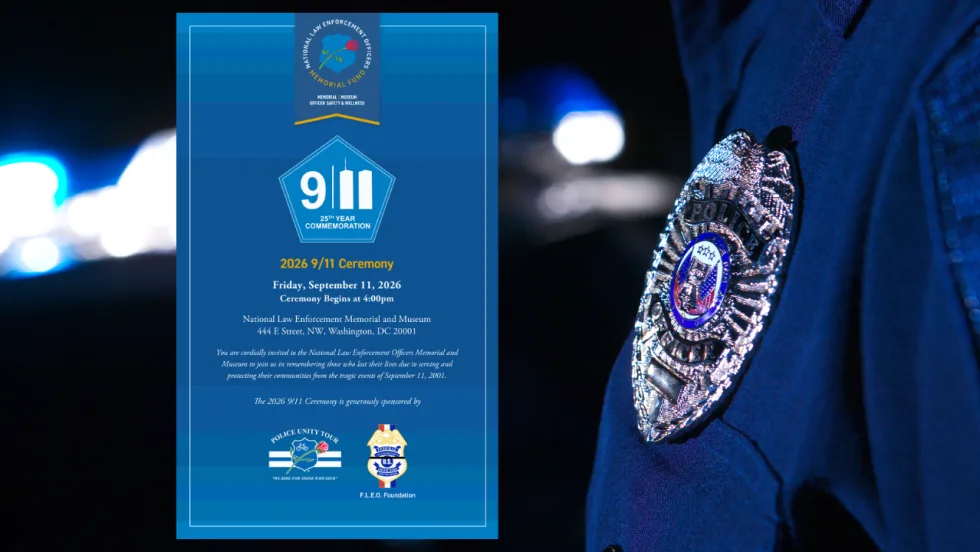
National Law Enforcement Memorial and Museum Hosting 9/11 25th-Year Commemoration Ceremony
The National Law Enforcement Memorial and Museum is hosting a 9/11 25th Year Commemoration Ceremony on Sept. 11 at 4 p.m.
Read More →
National Law Enforcement Officers Memorial Fund Announces June 2026 Officers of the Month
The National Law Enforcement Officers Memorial Fund (NLEOMF) named 15 officers of the Chico Police Department (California) as the Officers of the Month for June 2026 for their roles in responding to an active-shooter incident at a public library.
Read More →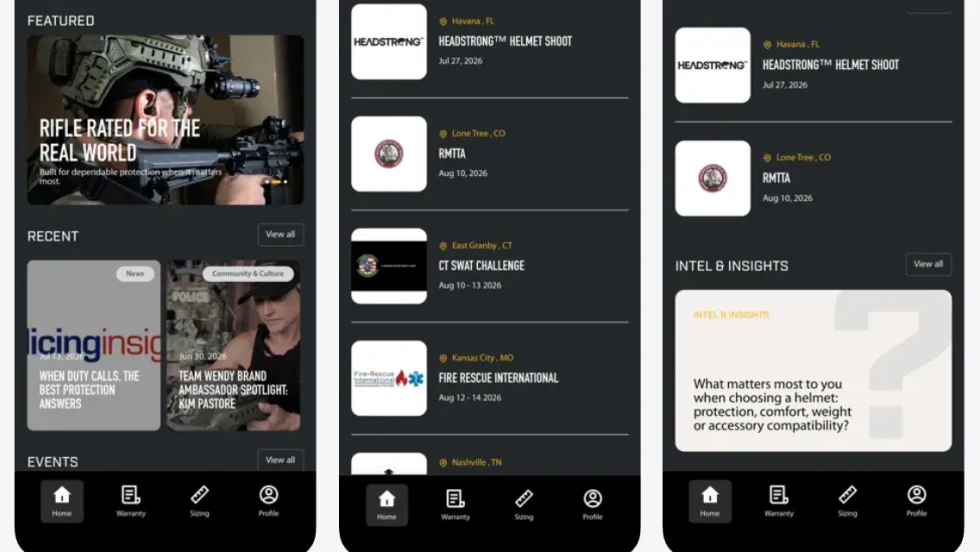
Team Wendy App Creates New Digital Hub for Helmet Owners
The Team Wendy Community App provides one location for warranty registration, size-fit tools, product updates, and community connection. For helmet owners, the new app creates a simpler path to the information and tools that matter most.
Read More →