



Glock G21 Gen 4 Pistol
The G21 has always been one of my favorite Glock pistols. My evaluation of the G21 Gen 4 involved five veteran shooters who shot the pistol during four different range sessions.

Photo: Alex Landeen
One of the most impressive things I observed during my career with the U.S. Customs Service was an early model of the 9mm Glock G17 that was carried by a fellow agent. This agent had survived the ditching of a Black Hawk helicopter in the open ocean while flying a drug interdiction mission. And even though his Glock was completely submerged in sea water until the surviving crew members were rescued, it showed no signs of having been subjected to salt. That impressed me at the time. It still does. And that’s probably the beginning of my ongoing interest in Glocks.
But as any long-time Glock shooter will tell you, Glock pistols have changed in the last few years. Which is why I wanted to look at two of the newest Glock models—the G21C Gen 3 and the G21 Gen 4—and examine their advantages and disadvantages.
The main reason I wanted to include the compensated G21C in this discussion was not to discuss the pros and cons of using compensated pistols in law enforcement. Instead, I thought it made sense to compare a Glock G21C Gen 3 to the G21 Gen 4 because both of these pistols are reportedly the softest shooting full-size .45 ACP Glock pistols. Of course, the only way to find out if they really are soft shooting is to take both pistols to the range.
Which is exactly what I did. To ensure that my colleagues and I conducted a thorough evaluation, four range sessions were held during this field test.
I should note before continuing that I have quite a bit of experience with compensated Glocks. In the last few years I have field tested a Glock G22C and a Glock G23C, two pistols that proved to be softer shooting in my hands than the standard models. Then a few weeks ago I was field testing various firearms when a friend of mine handed me a G21C. As someone who is no stranger to the standard Glock G21, I was anxious to see if the compensated G21 was softer shooting than a standard G21 or a Glock 21SF.
I loaded the G21C’s magazine with 230-grain .45 ACP Speer Lawman FMJ ammunition, and I was pleasantly surprised when I pulled the trigger. I reloaded the magazine and sent more rounds down range to confirm that the G21C was more comfortable to shoot (in my hands) than a standard G21. After my first encounter with a compensated G21C, I decided to request a new G21C Gen 3 as well as a G21 Gen 4 so I could conduct a side-by-side comparison of both pistols.
Gen 4 Features
There are two major differences between the G21 Gen 4, and the standard G21. The Gen 4s use a captive dual recoil spring that reduces felt recoil. Gen 4 Glocks are also equipped with interchangeable back straps for improved ergonomics. None of these features was incorporated into the previous generations of Glock pistols.
After field testing a G17 Gen 4, a G22 Gen 4, a G19 Gen 4, and a G26 Gen 4, I was determined to evaluate the Gen 4 version of the G21, as the G21 has always been one of my favorite Glock pistols. Before we get into the actual results of this field test we need to spend some time discussing the features that make the Gen 4 Glock pistols an improved design.
The Gen 4 Glock’s Modular Back Strap design offers five grip options. One of these options, the smallest back strap, is actually part of the frame, which means a Gen 4 Glock can be operated right out of the box without making any modifications to the pistol. The other four options include a medium back strap, a large back strap, a medium back strap with an extended beaver tail, and a large back strap with a beaver tail.
To install a different back strap on a Gen 4 Glock, you simply remove the polymer pin from the top of the grip portion of the frame then place the back strap of your choosing over the grip and secure it with the longer of the two polymer pins that are provided with each pistol. A small punch is provided with each Gen 4 Glock to facilitate the removal and the insertion of grip pins.
It’s important to note that whether you operate your Gen 4 Glock with or without the use of an interchangeable back strap, you need to insert the appropriate polymer pin in the grip to secure and stabilize the trigger mechanism. I also recommend that G21 Gen 4 shooters test the pistol on the range to find the grip that’s right for them.
Field Testing
My evaluation of the G21 Gen 4 involved five veteran shooters who shot the pistol during four different range sessions. The shooters used all five grip options, with most preferring the standard medium back strap, the medium back strap with the beaver tail feature, or the standard small grip.
Each tester shot both the G21C Gen 3 and the G21 Gen 4. One of the testers, a retired sheriff’s deputy who began carrying Glock pistols during the early years of his career, agreed that the G21C Gen 3 is a very soft shooting .45 ACP. However, I preferred the G21 Gen 4, especially while executing rapid fire drills. I believe this slight difference in the level of comfort under firing conditions is expressly due to the fact that the G21 Gen 4’s grip is more rounded than the Gen 3.
During this field test, both Glock pistols were used to engage a TQ 19 Police Qualification Target, cardboard IPSC targets, and different size metal plates at various distances. The pistols were loaded with 230-grain Remington FMJ, 230-grain Speer Lawman FMJ, 230-grain Winchester FMJ, 230-grain Federal HST HP, and 185-grain Hornady Critical Defense ammunition. Regardless of the drills that were conducted both test pistols proved to be flawlessly reliable and accurate.
The Results
In the side-by-side comparison, the G21C Gen 3 consistently delivered slightly tighter groups. I attribute this to the fact that the G21C Gen 3 has a slightly better trigger than the Gen 4. Another way to put this is to say that while both pistols were as accurate as any law enforcement service pistol should be, the slight difference in trigger feel made it easier for me and another member of my test team to shoot the Gen 3 with a tad more precision.
But that result was not unanimous. A city police patrol supervisor who also prefers previous generation Glock triggers gave the G21 Gen 4 extremely high marks for accuracy and improved ergonomics. Even though this officer says he prefers the trigger system that is used in his personally owned Gen 3 Glock, he now carries a G22 Gen 4 on duty and that has enabled him to get more comfortable with the slightly different feel of the Gen 4 trigger. Another member of my test team who carried the issued Gen 3 Glock while serving on a government border security contract also gave the G21 Gen 4 a thumbs up. I could go on but you get the point. Which pistol is best for you will come down to personal preference.
Even though some of us prefer certain features on different Glock pistols the absolute bottom line is that both firearms functioned reliably and proved to be as accurate as required to protect life and property. You will be well armed if you carry a G21C Gen 3 or a G21 Gen 4.
Glock G21 Gen 4 Pistol
Caliber: 45 ACP
Capacity: 10 or 13 rounds
Overall Length: 8.23 inches
Barrel Length: 4.6 inches
Weight (empty): 26.46 ounces
Weight Loaded: 38. 46 ounces
Height: 5.47 inches
Trigger: 5.5 pounds
Width: 1.2 inches
Price: $687
More Weapons
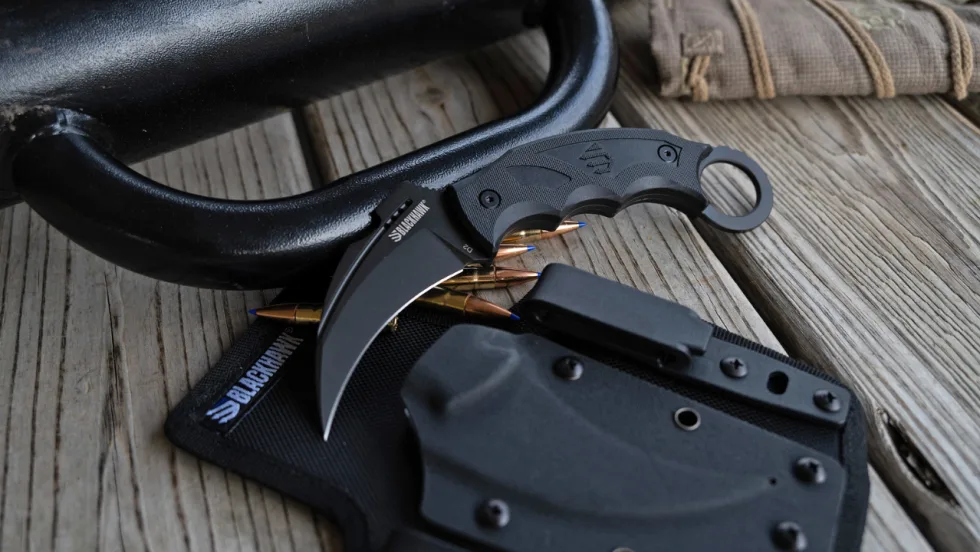
Blackhawk Introduces the Garra Fixed Karambit
The Blackhawk Garra Fixed Karambit is made from D2 steel and features a curved profile that enhances slicing efficiency, plus the full-tang construction ensures strength and durability from tip to handle.
Read More →
GOSAFE Technology Announces Public Safety Initiative Focused on Firearm Security and Risk Reduction
GOSAFE Technology’s new initiative provides support for agency-level solutions around secure firearm storage, vehicle-storage risks, off-duty firearm security, firearm accountability, and the public safety consequences that may result when firearms are stolen, lost, improperly secured, or diverted from lawful possession.
Read More →
Texas Sheriff’s Office Deploys RFID-Based User-Authenticated Firearm for Prisoner Transport Operations
A sheriff’s office in Texas is now using RFID-based user-authenticated firearms, from Free State Firearms, for prisoner transfer and transport operations.
Read More →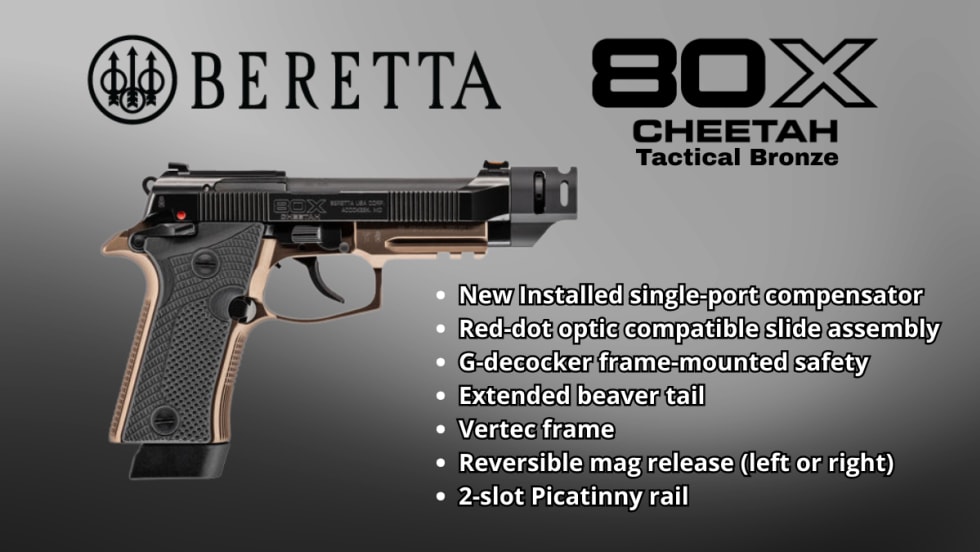
Beretta Introduces the 80X Cheetah Tactical Bronze
Beretta has launched the 80X Cheetah Tactical Bronze, which features a fiber-optic front sight, a serrated rear sight, and a Picatinny rail for accessory mounting, and ships with three 15-round extended magazines.
Read More →
Wrap Raises $5 Million to Restart Domestic Manufacturing & Advance R&D
With new funding, Wrap Technologies will restart domestic manufacturing, advance validated R&D programs into commercialization, and responsibly accelerate early growth initiatives aligned with rising demand for non-lethal response capabilities.
Read More →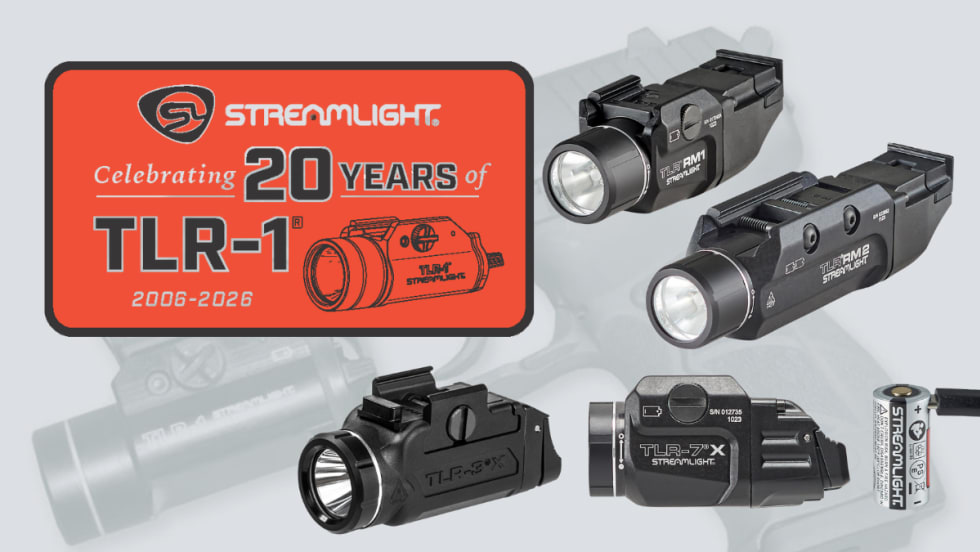
Streamlight Celebrates the 20-Year Anniversary of the TLR Series
This year, Streamlight marks two decades of weapon-mounted lighting innovation with the 20th anniversary of the TLR-1.
Read More →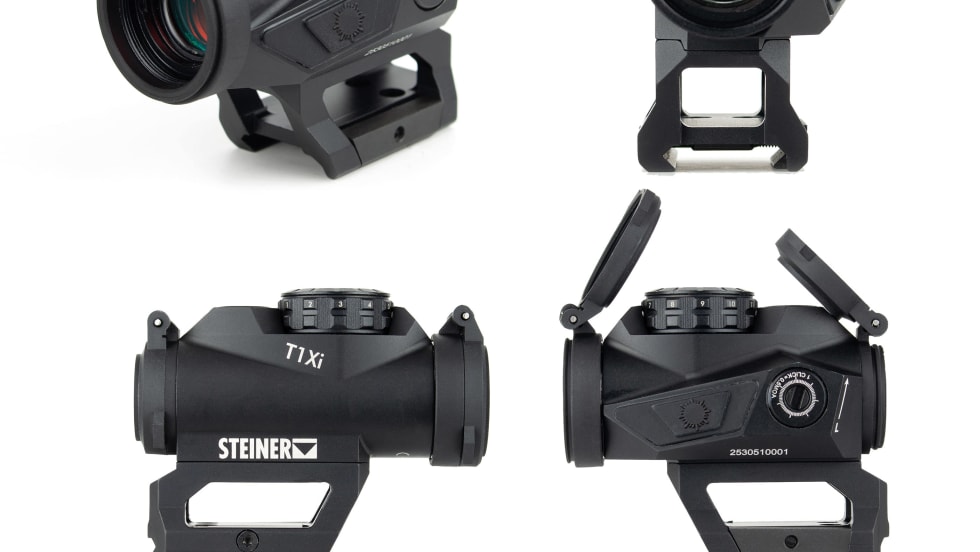
Steiner’s T1Xi Selected as Top Performer in Texas DPS Optic Evaluation
Steiner Optics’ T1Xi was selected as the top-performing red dot in the recent Texas Department of Public Safety optic evaluation.
Read More →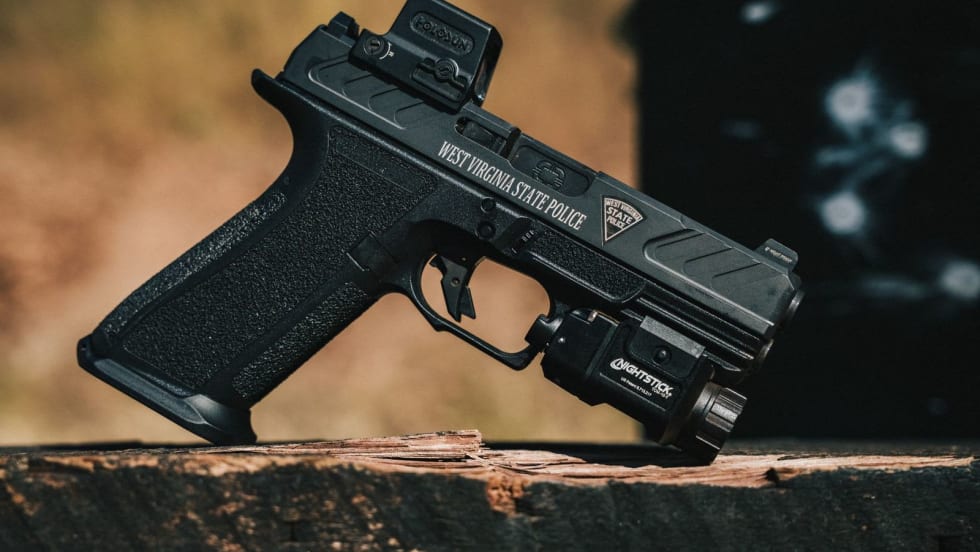
Shadow Systems Selected as Exclusive Pistol Provider for West Virginia State Police
Shadow Systems will provide 700 XR920 crossover pistols for West Virginia State Police troopers and 80 CR920X high-capacity subcompact pistols for the Bureau of Criminal Investigation.
Read More →
Aimpoint Celebrates 50 Years of Innovation and Excellence in Sighting Technology
Aimpoint is marking its 50th anniversary in 2025, celebrating five decades of red dot innovation trusted by military, law enforcement, and tactical professionals worldwide.
Read More →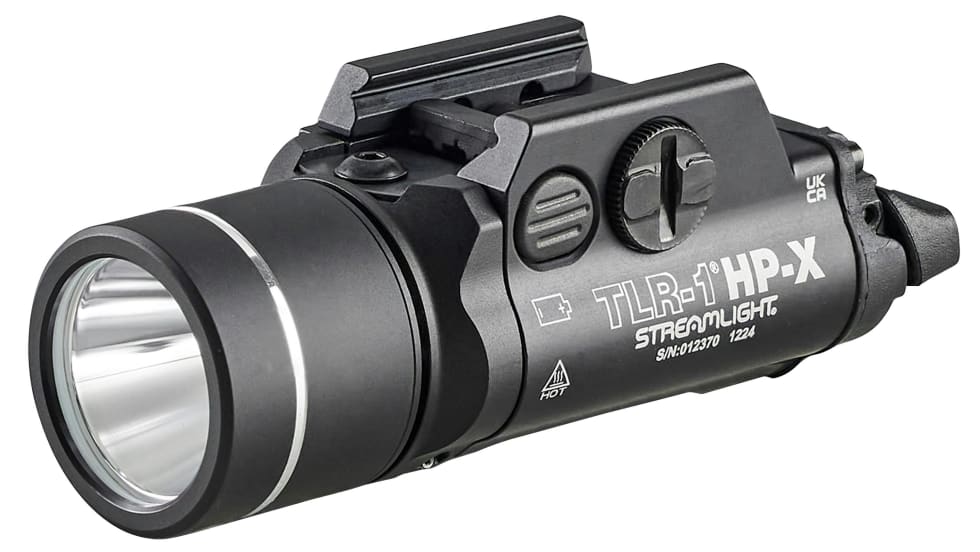
Streamlight Introduces Long-Range Handgun Light
“Our newest weapon light provides an industry-leading level of candela for handguns, giving users enhanced visibility under low light conditions, such as when searching a dark alley,” said Streamlight President Michael F. Dineen.
Read More →