



Getting Attached
One of the problems that military warfighters share with law enforcement officers is how to carry their tools of the trade so that everything is accessible and distributed in a way to ensure mobility and maximum comfort. The military developed MOLLE attachments to accomplish this, and that technology is assuming a role in street law enforcement.

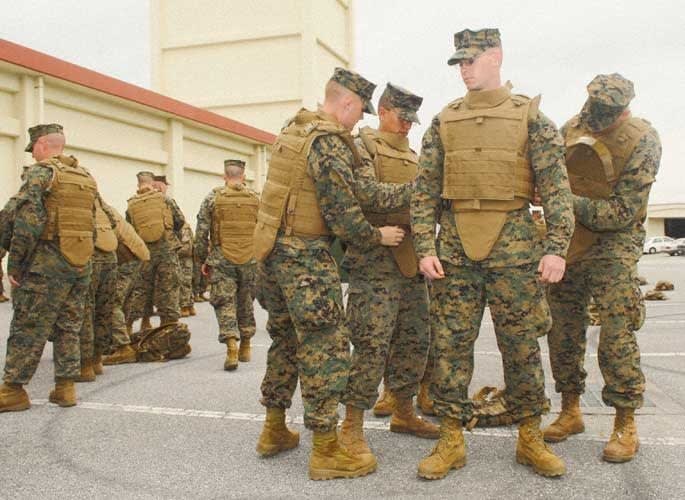
One of the problems that military warfighters share with law enforcement officers is how to carry their tools of the trade so that everything is accessible and distributed in a way to ensure mobility and maximum comfort. The military developed MOLLE attachments to accomplish this, and that technology is assuming a role in street law enforcement.
It wouldn't be a proper military item without an acronym name. MOLLE (pronounced "molly," like a girl's name) stands for MOdular Lightweight Load-carrying Equipment. The equipment itself is not especially new, consisting of holsters, pouches, and other containers for weapons, ammunition, canteens, and other combat-critical items. What distinguishes MOLLE gear is in the way the carriers attach to the vest, belt, rucksack, or other platform to be worn by the police officer or combat soldier.
Evolution
Law enforcement has long relied on the Sam Browne belt as the basic equipment platform. Holsters, carriers for ammunition, radios and handcuffs, and other accessories are threaded onto the belt, frequently separated by belt keepers that also secure the outer Sam Browne to the trouser belt. This puts considerable weight on the lower back and can make it difficult to sit in a patrol car. Women, with their smaller, higher waists and larger hips, have less room for equipment and feel that equipment pressing against their hips. Recent additions to the standard police "loadout" like TASERs, citation printers, glove pouches, and computers have made it necessary to add drop holsters that attach to the upper thigh, adding further to the weight burden.
Through the Korean War, the military likewise relied on a web belt for carrying ammo, canteens, compasses, and so on, with items less likely to be needed on short notice (rations, ponchos, entrenching tools) carried in a backpack or rucksack. The Vietnam era saw the development of a multi-pocket combat vest that was abandoned for lack of durability. The replacement carrier was called ALICE, for All-purpose Lightweight Individual Carrying Equipment. The basic carrier was a belt and suspenders of web material with various pouches attaching to it via "stick and click" sliding metal clips. The suspenders distributed the load more evenly, but the arrangement limited the types of gear a soldier could carry and where it could be placed. Vets of that era vilified the clips for their tendency to slice fingers when adjusted.
The loop-and-strap MOLLE system was introduced in 1997. A synonym for MOLLE is PALS, for Pouch Attachment Ladder System. MOLLE platforms, to which gear is attached, have horizontal rows or "ladders" of one-inch webbing, spaced one inch apart vertically, and tacked down at 1.5-inch intervals to form loops open at the top and bottom.
There are at least three methods of attaching pouches and other gear to mate with the MOLLE platform. The "Natick snap" (named for Natick Labs, where MOLLE was developed) is a strap on the back of the pouch, reinforced with polyethylene, that ends with a metal snap. The strap inserts into one of the platform loops, then threads through a slot on the pouch backing. The loop-and-slot weaving continues until the strap is used up, after which it snaps onto the pouch for retention. The weaving process is a little tedious, like learning to lace a boot quickly. It's clumsy at first, but you get more dexterous and faster after a few repetitions.
An alternative works the same way, but the strap has no snap and is just tucked back into the pouch backing. The third method uses a flexible polymer clip that slips through the platform loops without weaving. Different closures use a screwdriver to open and close the clip, or are positioned with fingertips alone.
The system is highly modular and adaptable for almost any carrier small enough to mate to the platform. Tactical vests, body armor carriers, belts, and rucksacks come with MOLLE loops so that users can attach whatever gear they might desire, positioned exactly where they want it.
Pre-MOLLE tactical vests were designed with multiple pockets for different missions and roles, with the manufacturer making a best guess at what gear the wearer would need. An officer with a sniper assignment would need pouches for rifle ammunition, a spotting scope and/or binoculars, special glasses, and maybe a Ghillie net. The team member with the less-lethal role might have to carry several types of shotgun-type ammunition with OC rounds, beanbags, or rubber projectiles, each in separate pockets to prevent him loading the wrong type under stress. Tactical team members frequently change roles and assignments from one incident to the next, and it isn't practical to maintain a different vest for each possibility.
Modular vests for cops have been around for a while, but most of them were based on a system using a combination of hook-and-loop such as Velcro and button-snap attachments. The snaps made noise when they rubbed against another surface, and pouches could be pulled off with a strong tug. The MOLLE system has neither of these shortcomings.
MOLLE users can position any pouch or holster anywhere they choose on the base platform's "ladder," right-side up or 180 degrees upside down. Pouches cannot be mounted at intermediate angles because of the vertical orientation of the MOLLE ladder on the platform. BlackHawk makes a holster for the Beretta pistol that incorporates a swivel into the attachment, so the holster can be angled in any direction.
Quality Concerns
Attachments designed for MOLLE platforms are many and diverse. A web search for "MOLLE" and whatever kind of gear you are looking to carry on your vest, bag, or rucksack usually provides many choices. As with any other gear, the buyer must beware. Equipment made for recreational activities like Airsoft and paintball use may not be of sufficient quality to survive genuine tactical service. Offshore manufacturers have been known to make lookalike military gear, stencil "USMC" or "US ARMY" on it, and send it to second-tier retailers such as military surplus stores for sale. MOLLE gear is relatively new to the military inventory, and it's unlikely there will be much in the genuine surplus channels for a while. Well-known brand name manufacturers might command a bigger price than Ol' Sarge's Surplus Emporium, but if you have to consider such a choice, put it in the context of "How much is it worth to me to have this not come apart in the middle of an operation?"
It does take a few minutes (depending on whether you use the conventional straps or one of the faster clip attachments) to rearrange gear on a MOLLE platform, but it's huge to be able to configure your critical gear in a pattern both comfortable and accessible to you. Moving an ammo pouch an inch to one side or a holster a row down from where it's currently carried may be the difference between comfort and restricted movement.
It might be more commonplace to see MOLLE gear on combat soldiers and Marines, but the system has made considerable inroads to the public safety sector, and with good reason. MOLLE equipment is as functional and more versatile than any other attachment system to date, and it lends itself to future weapons and gadgets in the law enforcement inventory.
Tim Dees is a retired police officer and a former editor of law enforcement Websites who is now a freelance writer based in Washington state.
MOLLE and Hydration Systems
Like MOLLE, hydration systems were used by the military before being adopted by law enforcement. Thus, the two are natural partners as duty tools. Some police officers prefer attaching hydration pouches to the MOLLE gear on their vests, while others carry packs covered with MOLLE for easy gear attachment that contain a hydration system inside.
For those times when you just need a small amount of water, BlackHawk's Side Hydration Pouch holds 40 ounces and can be mounted anywhere on a vest or pack with MOLLE. Originally designed by warfighters to mount on their sides during vehicle ops, these pouches are adaptable to almost any hydration need.
BlackHawk's Omega Phalanx Homeland Security Vest utilizes the BlackHawk S.T.R.I.K.E. System, which is the company's MOLLE system. This vest features a BlackHawk Hydration reservoir pocket and has padded HawkTex Sniper Shoulders, shoulder D-rings, M-16/4 mag pouches, and various pouches to carry gear. The heavy-duty webbing on the back is for attaching additional S.T.R.I.K.E. pouches.
If you're looking for a pack with MOLLE and water carrying capacity, BlackHawk's Titan Pack includes a 100-ounce BlackHawk hydration system that can also be accessed from the outside. The 1,000-denier nylon pack also has a robust waist belt with S.T.R.I.K.E. attachment points and numerous internal pockets and storage options. It provides 2,500 cubic inches of storage and comes in AU, black, coyote tan, or olive drab.
More Special Units
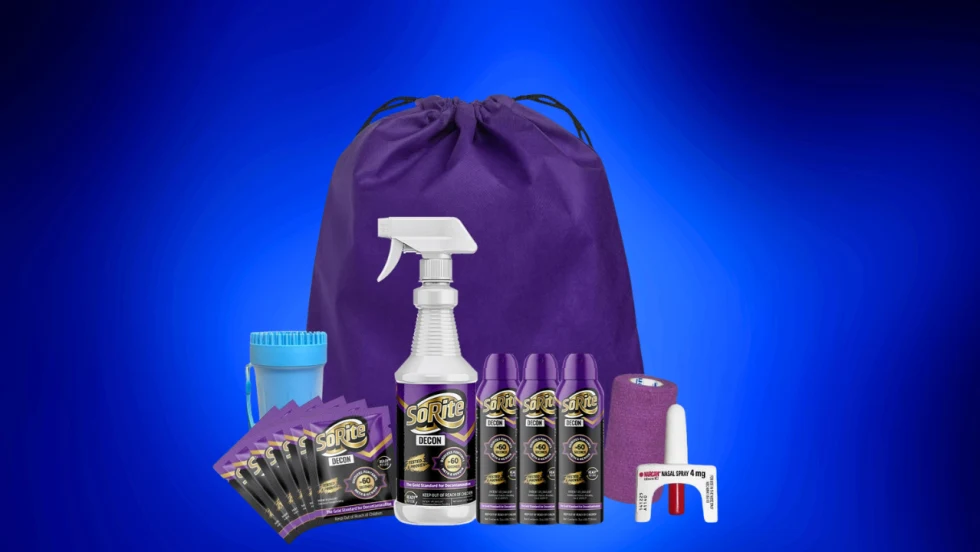
New K9 Decontamination Protocol Launched
A new K-9 protocol from the SoRite Company gives law enforcement agencies a standardized rapid-response framework to decontaminate K-9s, their handlers, and police vehicles, from dangerous narcotics.
Read More →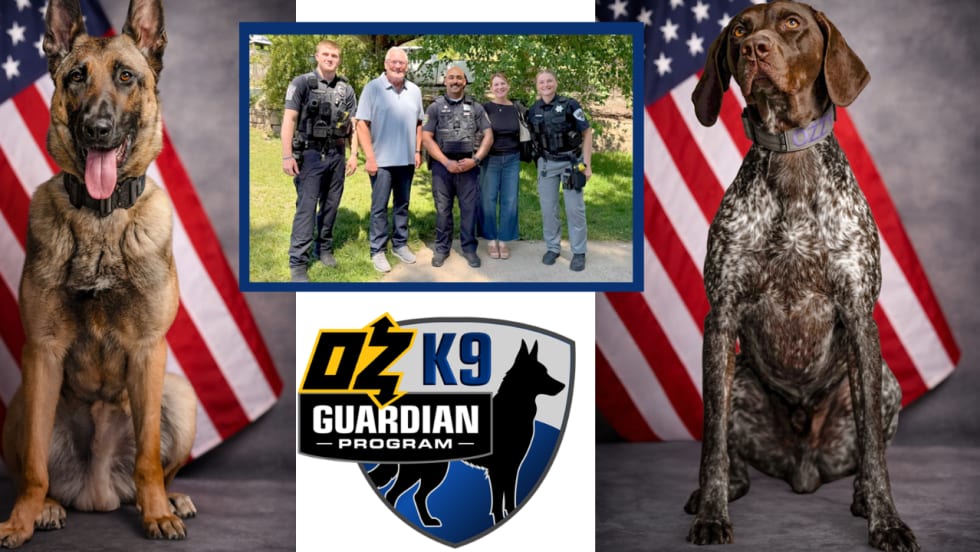
OZ Lifting Doubles Impact of K9 Guardian Program
In response to the positive impact the program has had on local communities. OZ Lifting Products has expanded its K9 Guardian Program by committing to fund a second police dog each year.
Read More →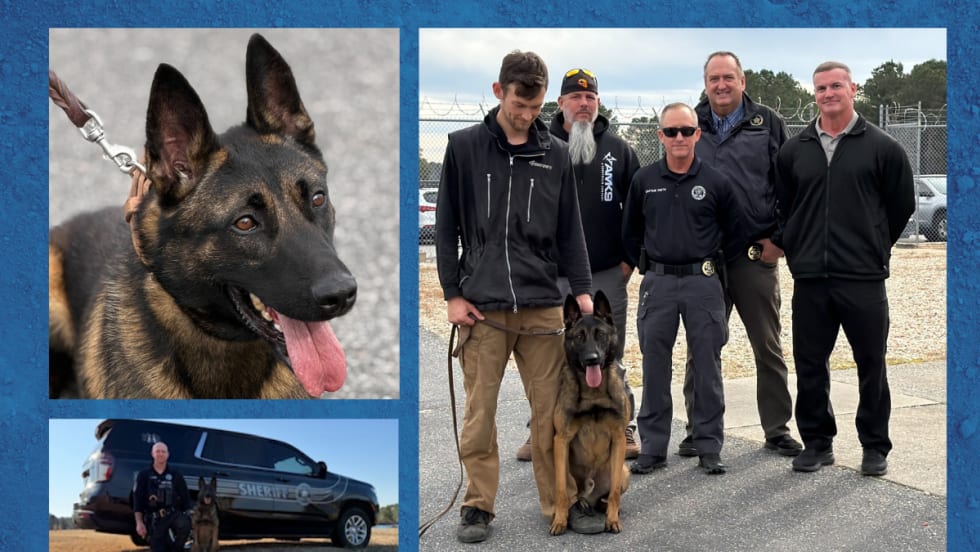
Constellis’ AMK9 to Donate K9 Officer to Currituck County Sheriff’s Office
AMK9 will donate a fully trained K9 officer to the Currituck County Sheriff’s Office K9 Unit. DAX, a 20-month-old Belgian Malinois, joined his new handler and has begun training at the Constellis Training Center.
Read More →
Ohio’s Statewide Drone First Responder Program to Take Flight
Over the next two years, the Ohio DFR Pilot Program will equip municipalities with advanced drone systems, deliver comprehensive training for first responders, and enable FAA-approved Beyond Visual Line of Sight operations.
Read More →
Louisiana Motor Sergeant Dies from Injuries Suffered in June “Intentional” Crash
A motor officer, Sgt. Caleb Eisworth was on his way to participate in a funeral escort when he was struck by another vehicle.
Read More →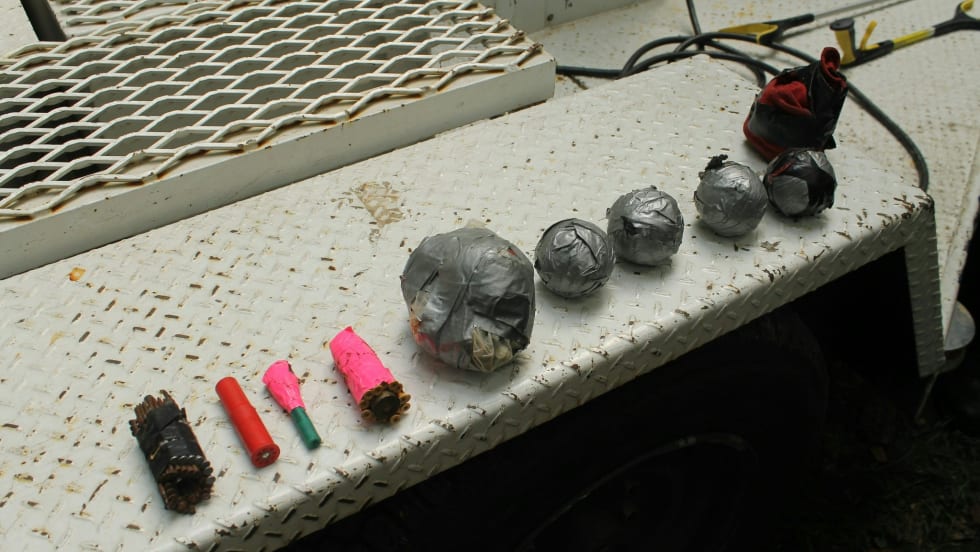
Tennessee Officers Say Man Tried to Detonate IED During Arrest
Inside the bedroom officers found what they believed to be an IED. The officers evacuated the house and called for the Chattanooga Police Bomb Squad and ATF agents.
Read More →
Florida School Officer Dies After On-Duty Medical Emergency
Sergeant Greg Graff was “preparing school leaders for the upcoming year during a safety training program at Clearwater High School,” the school district said.
Read More →
Grenade is Missing from Explosion That Killed 3 LASD Deputies
ATF Special Agent in Charge Kenny Cooper said definitively that only one grenade detonated at the facility on July 18.
Read More →
Los Angeles County Sheriff's Department Names Deputies Lost in Friday Explosion
LASD said Detective Joshua Kelley-Eklund, Detective Victor Lemus, and Detective William Osborn who were all assigned to Special Enforcement Bureau’s Arson Explosives Detail were killed in the incident.
Read More →
Maryland State Police Helicopter Rescues Victim from Overturned Boat in Chesapeake Bay
The Maryland State Police Aviation Command Trooper 7 crew, the MSP helicopter based in California, Maryland, were monitoring the county dispatch radio, overheard the dispatch, and self-launched.
Read More →