



Gas Masks and Air Packs
While actually known by professionals as Air Purifying Respirators (APRs) and Self-Contained Breathing Apparatuses (SCBAs), gas masks and air packs, once only found with specialized units, are fast becoming a staple in the patrol officer and first responder's gear bag.


BlackHawk’s gas mask adapter kit allows you to drink through your mask.
While actually known by professionals as Air Purifying Respirators (APRs) and Self-Contained Breathing Apparatuses (SCBAs), gas masks and air packs, once only found with specialized units, are fast becoming a staple in the patrol officer and first responder's gear bag.
But which one is right for you? With heightened attention to the needs of the patrol officer, a purchasing agent or prepared officer could be easily overwhelmed.
Here is a look at what to look for in a respirator system to make sure it meets your department's needs.
Standards
The torrent of mask sales since 9/11 has attracted the attention of several governing bodies. While many in the law enforcement community believe that a system made to military specifications, or "mil-spec," is always adequate, there is another standard that warrants attention.
The National Institute for Occupational Safety and Health (NIOSH) is the vanguard for inspecting the numerous respirators and determining which are safe for civilian responders in an environment where weapons of mass destruction have been deployed. Knowledgeable insiders say that the standards this agency is currently creating will eventually find their way into Federal law. This is important because purchases now may not be certifiable or upgradeable in the very near future.
Keep in mind there are some companies that tout their product simply as "NIOSH Approved." Many systems that are approved for certain industrial environments may not be suitable for the special needs of the patrol officer in a WMD environment. Look for the NIOSH CBRN seal of approval for WMD certification.
Another agency, OSHA, has issued findings on the serviceability of certain "military" respirators in industrial settings.
Which One?
There are only three styles of respirator suitable for police first response work: Self Contained Breathing Apparatuses, Powered Air Purifying Respirators, and Air Purifying Respirators.
SCBAs
Experts agree, the best protection comes in a Self Contained Breathing Apparatus, or SCBA. There are two distinct advantages to an SCBA. The first is that you always carry with you a known supply of good, fresh air. This allows you to enter areas that may not only be contaminated, but may not have enough oxygen to support you. For instance, in a confined space such as a building, subway, or even an area like a parking garage, it is possible for a device to expell so much agent that it displaces the available oxygen. Entering this type of environment with a simple respirator could be fatal, as the respirator will remove the contaminants, but there won't be any oxygen left to breathe.
The second advantage to an SCBA is that it offers a higher level of protection against contaminants through positive pressure.
All Air Purifying Respirators operate on the concept of negative pressure. This means that when you suck in to breathe, you create a vacuum, which then draws air in. Hopefully, this is through a filter. But if your mask has a pinhole or crack in it, you could potentially suck in unfiltered outside air instead.
An SCBA supplies a constant source of pressurized air to the facepiece. When you inhale, the SCBA regulator mechanism forces extra air in, keeping a positive pressure in the facepiece at all times. If there is a pinhole, crack, or even a split-second gap in your mask seal, the overpressure created by the SCBA regulator mechanism blows air out of the leak, preventing entry of outside contaminants.
SCBAs aren't the total solution, however. They can be extremely heavy, bulky, and provide additional handles for an adversary to use against you in close-quarter combat. Also, they are the most expensive systems to purchase.
PAPRs
The PAPR, or Positive Pressure Air Purifying Respirator, combines the increased safety and ease of breathing of an SCBA with the lighter weight, decreased cost per unit, and ease of operation of an Air Purifying Respirator. Officers using PAPRs can work longer and more comfortably, because of the lesser strain put on them compared with an SCBA or APR. The best PAPRs will state that they are sealed against entry of contaminants, easy to decontaminate, and have intrinsically safe batteries and electronics.
PAPRs aren't without drawbacks, either, however. They require a power source to operate. Most use rechargeable batteries, which, like your flashlight, can go dead when you need them. Also, the fan motor that supplies the air for the positive pressure can be noisy. Some lower-tiered brands have had problems with the switching and motor regulation circuits. Then there's that pesky hose used to connect your facepiece to the blower/filter unit, which in a riot situation could pose a problem.[PAGEBREAK]
APRs
For the majority of agencies, the most commonly found respirator system continues to be the full-face, air purifying respirator. As Gary Weeks, a retired U.S. Air Force Disaster preparedness NCO says, "I would never recommend anything less than a full-face respirator for a first responder who could find him or herself as the first person to arrive on site or anyone who could find him or herself in a downwind hazard area."
In its most basic form, an APR consists of a facepiece, sight lens (or lenses), filter (or filters), valves, voice diaphragm, and attachment assembly. It is the revolver of the respirator family: uncomplicated respiratory protection at a reasonable price.
Purchasing Points
While it might be easy enough to decide which basic type of respirator would be best for your agency, make sure to evaluate the differences in its main components when choosing a specific model.
Facepieces on the best respirators are made of newer halo-butyl thermoplastic formulations, such as Hycar. These formulations offer increased resistance to chemical agents and toxic industrial materials than older silicone masks, while at the same time offering a better mask-face seal by being more flexible. Facepieces should also be as externally smooth as possible. Any irregular surfaces can harbor contaminants.
Which sight lens assembly to use is a controversial matter. There is much discussion on which is better, single or double. Unfortunately, there is no clear winner. The single assemblies offer a wider field of view, especially downward, and seem to fog less, but are more prone to distort your vision. The double-lensed assemblies seem to be preferred by special operations and SWAT officers for improved weapons sighting.
Filters are a critical choice. There are several proprietary fittings for filters, and if you buy one style while your department issues another, it could be a serious issue.
Most military masks use a 40mm NATO specification screw-on fitting. If there is ever a major incident requiring the use of respirators, the odds of the National Guard CST or Marine CBIRF Team being there with their supplies are pretty good. Also, most agencies have a relationship with their local armory. It behooves you to be as compatible as possible so you can share filters with other agencies.
Next, there are several dozen types of filters. Only two are suitable for the patrol officer. The first is called a P100 filter. This is good for riots and training. For a WMD event, the only filter you can safely use is one that is NBC rated. The name varies by manufacturer, so be sure you get the correct one before you need it.
Also, if you are contemplating buying a dual-filtered system, can you blank off one side? Sighting a videocamera or weapon will be difficult, if not impossible, with one filter blocking the way.
Accessories
When purchasing a respirator system, consider accessories. The smart purchaser will buy a mask with a drinking tube assembly. When wearing a mask for any period of time, especially in addition to heavy protective gear, even in cooler climates, the need to rehydrate is essential. There are several drinking systems that interface safely with respirators, allowing you to drink while masked.
Another item to consider is an on-mask voice amplifier. It is difficult to communicate while masked, so this lightweight accessory makes it much easier to direct crowds or give commands.
Several respirator systems offer integrated communications points, as well. This makes talking to fellow officers much easier and clearer than using a shoulder mic or on-radio microphone.
Of course, hearing is only so useful if you can't see properly. A spectacle kit is a must if you wear glasses.
Finally, you will want something to carry and store your investment in. It is recommended, especially with single- port sight lenses, that you never store a respirator in the folded position for long periods of time.
And don't forget the most important (and required) accessories: fit testing and training.
After arming yourself with the facts about respirators, your purchase will be the best one for your mission and needs.
Shawn Hughes is a 12-year veteran police officer and bomb technician. He is the WMD and explosives lead instructor for the company Tactical Response.
More Special Units
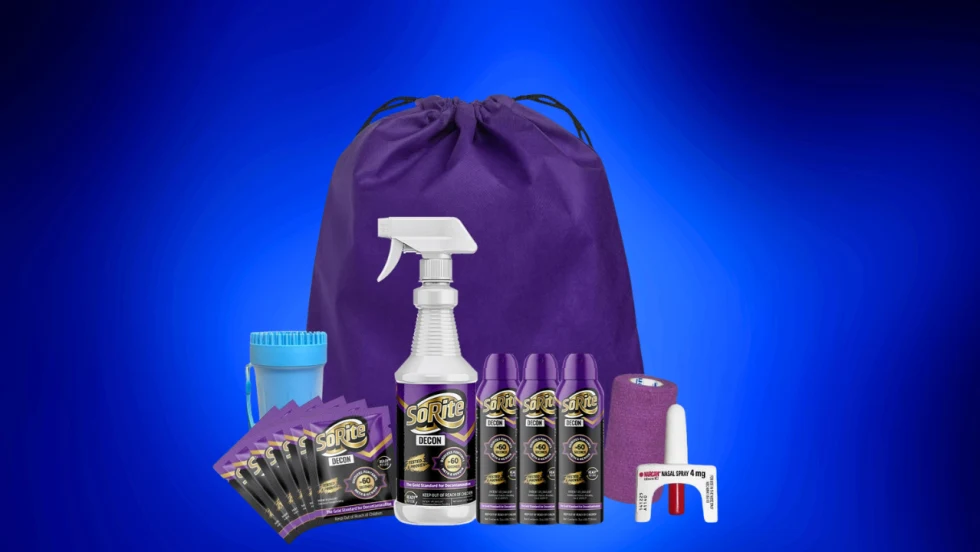
New K9 Decontamination Protocol Launched
A new K-9 protocol from the SoRite Company gives law enforcement agencies a standardized rapid-response framework to decontaminate K-9s, their handlers, and police vehicles, from dangerous narcotics.
Read More →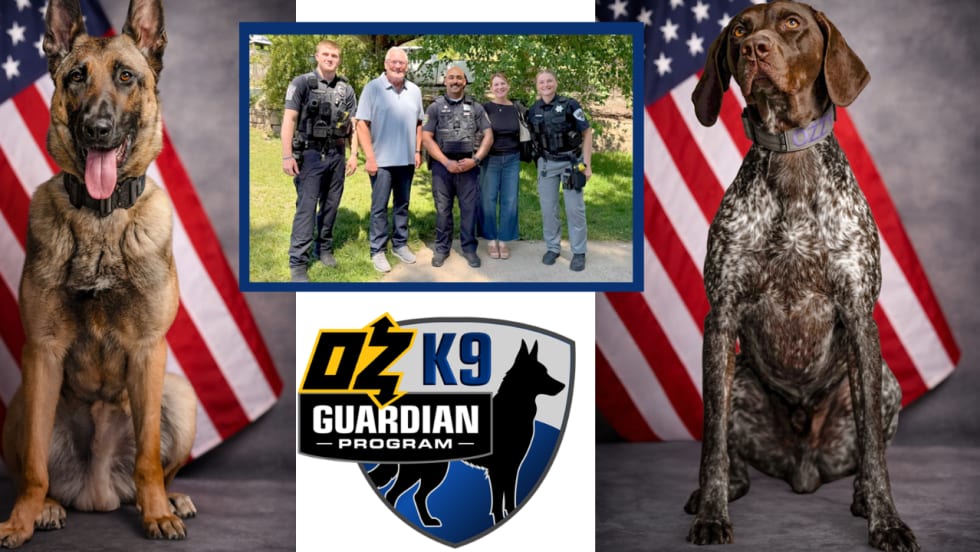
OZ Lifting Doubles Impact of K9 Guardian Program
In response to the positive impact the program has had on local communities. OZ Lifting Products has expanded its K9 Guardian Program by committing to fund a second police dog each year.
Read More →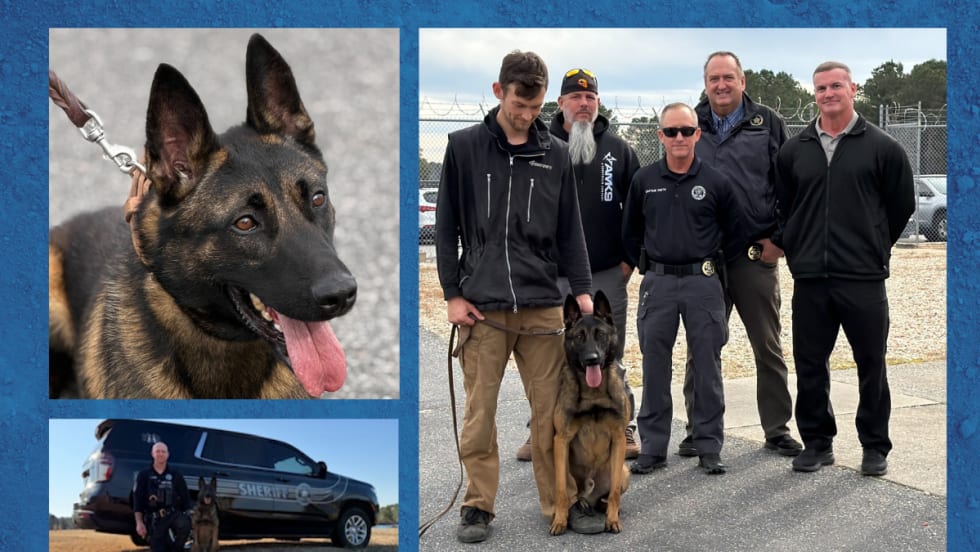
Constellis’ AMK9 to Donate K9 Officer to Currituck County Sheriff’s Office
AMK9 will donate a fully trained K9 officer to the Currituck County Sheriff’s Office K9 Unit. DAX, a 20-month-old Belgian Malinois, joined his new handler and has begun training at the Constellis Training Center.
Read More →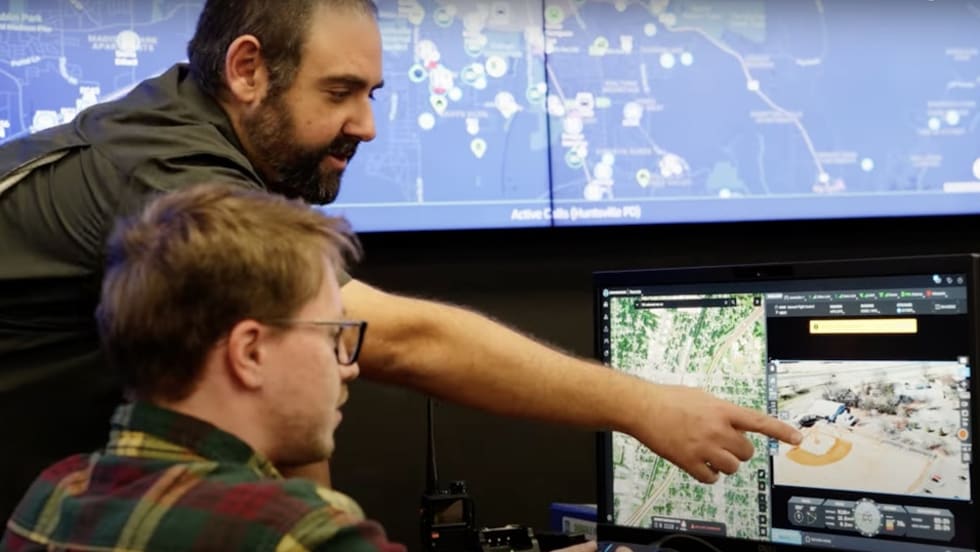
Ohio’s Statewide Drone First Responder Program to Take Flight
Over the next two years, the Ohio DFR Pilot Program will equip municipalities with advanced drone systems, deliver comprehensive training for first responders, and enable FAA-approved Beyond Visual Line of Sight operations.
Read More →
Louisiana Motor Sergeant Dies from Injuries Suffered in June “Intentional” Crash
A motor officer, Sgt. Caleb Eisworth was on his way to participate in a funeral escort when he was struck by another vehicle.
Read More →
Tennessee Officers Say Man Tried to Detonate IED During Arrest
Inside the bedroom officers found what they believed to be an IED. The officers evacuated the house and called for the Chattanooga Police Bomb Squad and ATF agents.
Read More →
Florida School Officer Dies After On-Duty Medical Emergency
Sergeant Greg Graff was “preparing school leaders for the upcoming year during a safety training program at Clearwater High School,” the school district said.
Read More →
Grenade is Missing from Explosion That Killed 3 LASD Deputies
ATF Special Agent in Charge Kenny Cooper said definitively that only one grenade detonated at the facility on July 18.
Read More →
Los Angeles County Sheriff's Department Names Deputies Lost in Friday Explosion
LASD said Detective Joshua Kelley-Eklund, Detective Victor Lemus, and Detective William Osborn who were all assigned to Special Enforcement Bureau’s Arson Explosives Detail were killed in the incident.
Read More →
Maryland State Police Helicopter Rescues Victim from Overturned Boat in Chesapeake Bay
The Maryland State Police Aviation Command Trooper 7 crew, the MSP helicopter based in California, Maryland, were monitoring the county dispatch radio, overheard the dispatch, and self-launched.
Read More →