



Gaining the Upper Hand on Combative Subjects
Great strides have been made in police technology over the last 25 years. Advances are evident in almost every area of police work from the collection of evidence to the use of computers in squad cars. But when it comes to training, one law enforcement team has drawn from the past to develop a method for controlling violent subjects.

Great strides have been made in police technology over the last 25 years. Advances are evident in almost every area of police work from the collection of evidence to the use of computers in squad cars. But when it comes to training, one law enforcement team has drawn from the past to develop a method for controlling violent subjects.
Although electronic devices and pepper sprays are useful in controlling resistive subjects, they have not proved to be wonder tools in solving physical confrontation problems. In the end, it usually comes down to a grappling situation to control a noncompliant subject. And with video cameras rolling, the public often sees several officers trying to contain one resistive subject. To an uninformed observer, such action looks like excessive force.
Through television and movies, the media have influenced public perception regarding how police officers should react to violent suspects. Fight scenes often depict officers containing a resisting person with one punch or baton strike. No matter how ski lied an officer is in defensive tactics and control, subduing a violent person is never as easy as it looks in the movies or a training environment. But there are techniques available to help officers on the street.
The CLAMP Control Technique
Larry and Chris Lein, a father and son team, have drawn from the past to come up with a highly effective method for controlling resistive subjects. A jujitsu/judo bent arm-lock technique, called Ude Garami, was refined and developed into the CLAMP Control Technique. "CLAMP" stands for the "Chris Lein Arm Management Program."
Both Larry and Chris have police backgrounds and are judo experts. Larry is a retired FBI special agent, and his son is a member of the Kansas City (Mo.) Police Department. Chris has used the CLAMP Control Technique numerous times while working as a police officer, offering proof that the method works during actual physical confrontations.
For five years, the two men worked together in a variety of situations to perfect their method. One basic technique can be employed in a wide variety of police arrest and control incidents. The method is based upon proper application of body mechanics and leverage to control subjects, rather than just cause them pain. It is simple to learn and apply, making it ideal for police officers to employ on the street. It can also be easily modified to adjust to the standard cooperative and uncooperative control techniques officers have already learned.
The CLAMP employs the very same principles used with the PR-24 police baton and the straight baton to control resistive subjects. The body mechanics used with this arm control technique are the same with or without a baton. Therefore, officers who understand the basic principles of the CLAMP can use the same method with a police baton. The technique also employs a basic grip that can be mastered and retained with little practice.
Controlling Subjects
Larry emphasizes that they "are not in competition with any other defensive tactics system because (their) method can be incorporated into other systems of arrest and control." The CLAMP is designed to control uncooperative subjects and can work for officers of every size. The method can be employed on a resistive subject who is standing, kneeling, or lying on his back or on top of an officer. It can also be used to remove a subject from a cell or vehicle, and to subdue someone who attempts to grab an officer from behind.
Officers often feel that the techniques they learned at the academy do not work during real-life street confrontations. But the CLAMP has been used countless times in actual fight scenarios. Once officers practice this technique during street simulation training, they often immediately gain confidence. I have personally used the bent arm-lock method successfully in various freestyle practice sessions with another subject who is an experienced grappler.
Using the CLAMP
No article or book on any motor skill can fully explain how a technique is performed. Without instruction from a qualified self-defense instructor, you cannot learn the vital nuances that make a technique more effective. The photographs in this article are demonstrated by an officer who has been trained to use the CLAMP technique. Chris Lein is the resisting subject in these pictures.
To practice the CLAMP technique from an interview stance in front of a subject:
Photo 1-Grasp the left wrist of the subject with your right hand as you step forward.
Photo 2-Place your left mm outside and over the subject's left arm. Slip your left hand under the subject's arm and grasp your own right wrist.
Photo 3-Move behind the subject while applying downward pressure with your left arm and move your right hand upward.
Photo 4-Use your body weight to sit down. This will force the subject on his stomach for handcuffing.
Practice slowly at first and use the pat-out method to let your partner know when you feel enough pressure.
Note: There are other variations to complete this hold on a subject who is on the ground.
A Final Note
Although there is no single solution to every use-of-force situation, the key to dealing with resistive subjects is to use a multifaceted approach. The more control options officers have, the better they will be at subduing a combative subject, using only enough force to contain the situation. Remember, the secret to competency in anything is regular practice and reinforcement. •
Joseph Truncale is a professional police trainer, free-lance writer and retired police officer.
For more information on the CLAMP, contact Larry and Chris Lein at: 9757 N. Indiana, Kansas City, MO 64156. Telephone: (816) 734-9141
The contents of this article are for information purposes only and not intended to be a substitute for professional training under a qualified instructor. POLICE, the author, and Larry and Chris Lein accept no liability whatsoever for injuries to persons or property resulting from the information presented or implied in this article.
More Patrol

Adept Armor Introduces Two New Rifle Plates
Adept Armor has launched two new Level IV ballistic plates, the Emperor and the Archon Mark 2, which brings Adept Armor’s new Quatroid ceramic to the high-threat, performance-value center of the range at 5.2 pounds.
Read More →
POLICE Product Test: Benchmade Bailout
The Benchmade Bailout is a slim, lightweight carry knife with a deep-ride pocket clip and comes in a variety of blade steels and scales. Here is a detailed review of the Taiga Green Bailout, released earlier this year.
Read More →
NLEOMF Announces July 2026 Officer of the Month
NLEOMF honored a Michigan deputy sheriff as the July 2026 Officer of the Month for rescuing a trapped driver from a burning vehicle following a Fourth of July crash.
Read More →
Streamlight to Showcase Newest Lighting Products at National Safety Council’s Safety Congress & Expo 2026
Streamlight will showcase its latest lights, including the Portable Scene Light III and the LiteBox 1Million, at the 2026 National Safety Council (NSC) Safety Congress & Expo.
Read More →
The 2027 World Police & Fire Games Set for Perth, Australia
The 2027 World Police & Fire Games (WPFG) will take place in Perth, Western Australia, from Friday, March 12 through Sunday, March 21, 2027.
Read More →
5.11 Partners with National Fallen Firefighters Foundation to Support #ForThe343
5.11 has joined the nationwide movement honoring the 343 New York City Fire Department firefighters lost on Sept. 11, 2001.
Read More →
Team Wendy Announces Title Sponsorship of the Jorge Pastore Foundation
Team Wendy’s 3-year partnership with the Jorge Pastore Foundation expands access to programs that strengthen those who serve.
Read More →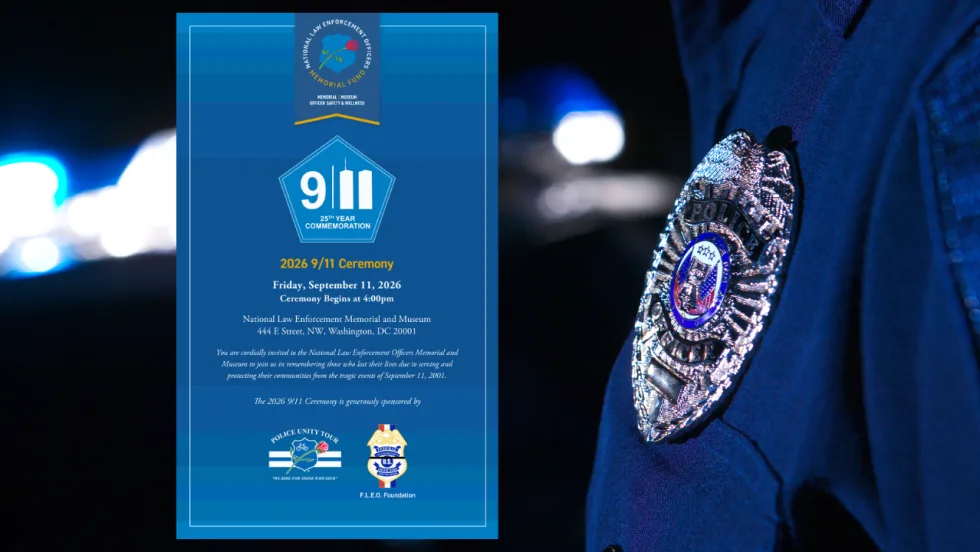
National Law Enforcement Memorial and Museum Hosting 9/11 25th-Year Commemoration Ceremony
The National Law Enforcement Memorial and Museum is hosting a 9/11 25th Year Commemoration Ceremony on Sept. 11 at 4 p.m.
Read More →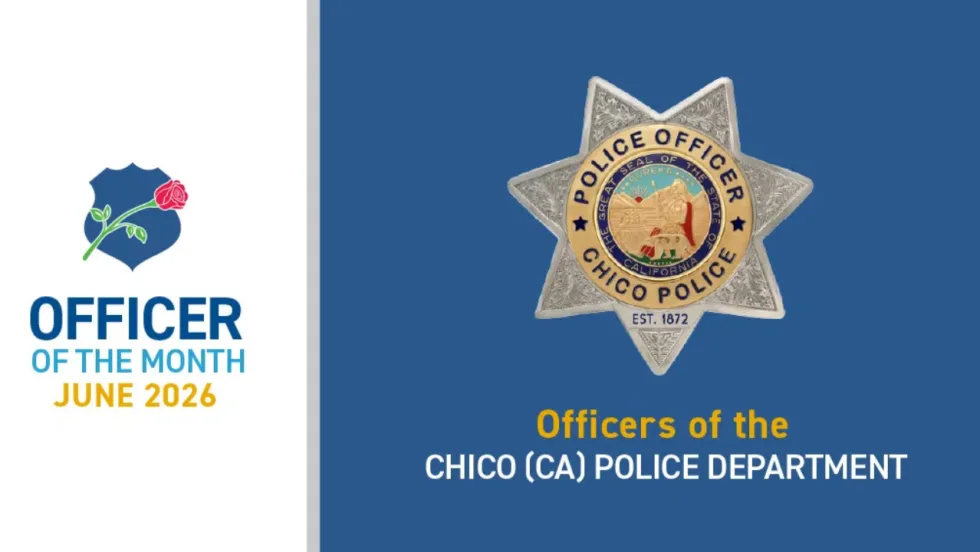
National Law Enforcement Officers Memorial Fund Announces June 2026 Officers of the Month
The National Law Enforcement Officers Memorial Fund (NLEOMF) named 15 officers of the Chico Police Department (California) as the Officers of the Month for June 2026 for their roles in responding to an active-shooter incident at a public library.
Read More →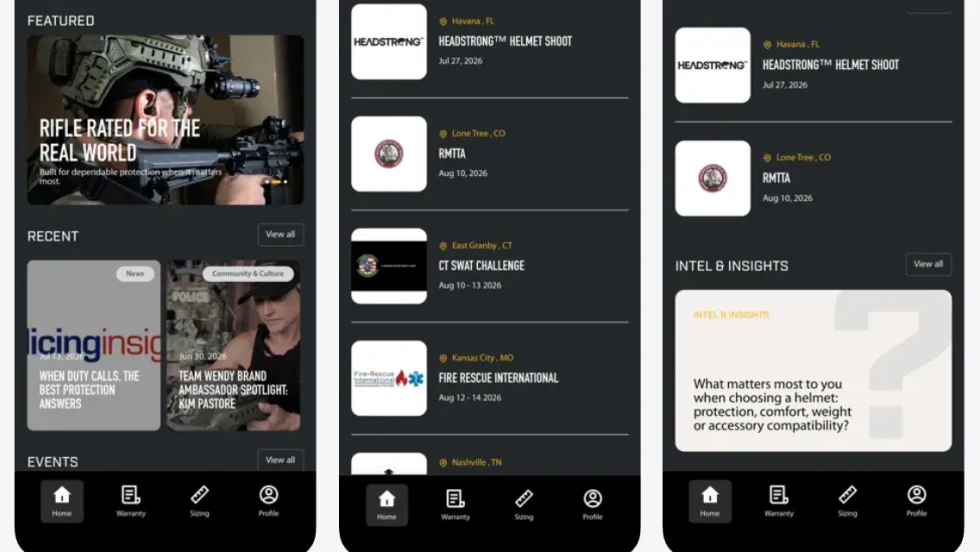
Team Wendy App Creates New Digital Hub for Helmet Owners
The Team Wendy Community App provides one location for warranty registration, size-fit tools, product updates, and community connection. For helmet owners, the new app creates a simpler path to the information and tools that matter most.
Read More →