



Fourth Amendment Supremacy
Evidence discovered during a search incident to an arrest supported by PC is not suppressible in the majority of state courts.

Although there may be many similarities in the arrest statutes of the 50 states, there are also some differences. Some states restrict an officer's warrantless arrest authority to felonies based on probable cause and misdemeanors only if committed in the officer's presence. Other states allow arrests for any level of offense if there is PC.
But for federal civil liability purposes and to determine admissibility of evidence under the Fourth Amendment exclusionary rule, the Supreme Court has ruled that state restrictions do not prevail over constitutional standards.
For example, if you have PC to arrest for a fine-only misdemeanor but state statutes require you to release the person on a written promise to appear, would an arrest in violation of such statutes subject you to federal civil liability, or trigger the exclusionary rule of Mapp v. Ohio? Short answer: "No."
Civil Liability: Atwater v. City of Lago Vista, Texas
A Lago Vista police officer saw Gail Atwater driving her pickup truck and noticed that she was not wearing a seat belt, as required by Texas law. Her two young children riding in the front seat also were not wearing seat belts, which was also a violation. The maximum penalty for either of these offenses in Texas is a $50 fine. The officer had previously stopped Atwater and given her a warning, so after he stopped her truck on this occasion he arrested her on the misdemeanor. Atwater was transported to the police station and mugshots were taken, after which she appeared before a magistrate, where she posted bail and was released.
Atwater filed a federal civil rights suit against the officer and the city. She claimed that her Fourth Amendment right against unreasonable arrest was violated when she was arrested for a fine-only offense for which she could not have been sentenced to incarceration. After lower courts dismissed her suit, she appealed to the U.S. Supreme Court.
The Supreme Court affirmed the dismissal. In a federal civil rights action, the issue is whether an officer, acting under color of authority, has deprived the plaintiff of some right guaranteed by the U.S. Constitution. (Title 42, US Code, § 1983) The court ruled in Atwater that no matter what the penalty may be under state law for a criminal or traffic violation, the only question relevant to the constitutionality of an arrest is whether the officer has PC to believe the person has committed an offense:
"If an officer has probable cause to believe that an individual has committed even a very minor criminal offense in his presence, he may, without violating the Fourth Amendment, arrest the offender." (Atwater v. Lago Vista)
Exclusionary Rule: Virginia v. Moore
Police officers in Portsmouth, Va., stopped David Lee Moore and learned that he was driving on a suspended license, a misdemeanor. Although Virginia law directed that such offenders be issued a citation and a summons and then be released, the officers arrested Moore, then searched him and found crack cocaine. Moore was prosecuted and convicted, the trial court denying his motion to suppress the narcotics on grounds of unreasonable arrest and search.
Moore appealed his conviction, arguing that his arrest was not authorized under Virginia law, so the search incident to that arrest was invalid. An appellate court and the Virginia Supreme Court agreed with Moore's argument and reversed his conviction. These courts cited an earlier U.S. Supreme Court ruling in Knowles v. Iowa that had held that a search "incident to arrest" could not be performed after a suspect had been released on a citation. Since Virginia law specified a citation in lieu of arrest for driving on a suspended license, the Virginia Supreme Court ruled Moore's arrest and search unconstitutional.
The Commonwealth appealed to the U.S. Supreme Court, arguing that under Atwater the reasonableness of the arrest and search should be judged solely by Fourth Amendment standards, and not by state law.
In a judgment concurred in by all nine justices on April 23, 2008, the Supreme Court reversed the Virginia ruling. The court pointed out that there are significant law enforcement benefits to custodial arrests, and these factors justify a general rule that where there is probable cause a police officer may constitutionally arrest a person for any public offense, regardless of state statutory restrictions on arrest authority:
"[A]n arrest based on probable cause serves interests that have long been seen as sufficient to justify the seizure. Arrest ensures that a suspect appears to answer charges and does not continue a crime, and it safeguards evidence and enables officers to conduct an in-custody investigation.
"When officers have probable cause to believe that a person committed a crime in their presence, the Fourth Amendment permits them to make an arrest, and to search the suspect in order to safeguard evidence and ensure their own safety." (Virginia v. Moore)
Atwater-Moore Implications
The Atwater ruling means that law enforcement officers and agencies cannot be sued under the federal civil rights act for an arrest that may violate state restrictions, as long as the arrest is based on probable cause. (There might still be liability in some states for the state tort of unlawful arrest, and officers might face departmental discipline for violation of state law or department policy.)
The Moore ruling means that evidence discovered during a search incident to an arrest supported by PC is not suppressible in the majority of state courts, because most states apply U.S. Supreme Court rulings on constitutional admissibility, even if the arrest violated state statutory restrictions. As the court said in Moore, "[I]t is not the province of the Fourth Amendment to enforce state law." (In the smaller number of states that use more restrictive state constitutional interpretations rather than U.S. Supreme Court rulings to determine admissibility of evidence, the Moore decision does not change admissibility criteria. Officers should consult local prosecutors or legal advisors to determine whether their particular state courts follow U.S. Supreme Court rulings or may suppress evidence on the basis of independent state grounds.)
Atwater-Moore Precautions
In both Atwater and Moore, the Supreme Court noted that there did not appear to be any "epidemic of unnecessary minor-offense arrests" by police officers. The "dearth of horribles demanding redress" indicated there was no need to limit the constitutional arrest powers of police beyond requiring probable cause. These comments also suggest, however, that if police began to engage in widespread custodial arrests of citizens in minor traffic cases where there was no apparent reason to take the person into custody instead of simply writing a ticket, the issue could be revisited in a future case.
Although law enforcement officers who are sworn to uphold the law should themselves always strive to abide by the law and comply with any statutory restrictions imposed on their arrest powers, it is significant that for purposes of federal civil liability, and for purposes of admissibility of evidence under the exclusionary rule of Mapp v. Ohio, the Fourth Amendment controls over state statutes. An arrest based on probable cause satisfies the Fourth Amendment, whether or not it complies with statutory restrictions, and whether or not the offense is punishable by incarceration.
More Patrol

Team Wendy Introduces the EXFIL Endurance Ballistic Helmet, Engineered to Reduce the Burden of Extended Wear
Team Wendy has launched its EXFIL Endurance, a new lightweight ballistic helmet engineered to deliver protection, comfort, and fit during demanding, extended operations.
Read More →
The First Responders Children’s Foundation National First Responders Day Roll Call of Heroes Ceremony Returns to Times Square, NYC
First Responders Children’s Foundation (FRCF), in collaboration with T-Mobile, will host the Roll Call of Heroes ceremony in Times Square to commemorate National First Responders Day on Wednesday, Oct. 28. During the event, FRCF will present 18 Hero Awards.
Read More →
Streamlight to Showcase Newest Lighting Products for Law Enforcement Professionals at IACP 2026
Streamlight will showcase its newest lights for law enforcement at the International Association of Chiefs of Police Annual Conference & Expo. Featured lights will include the TLR-3 X, the PolyTac 1X, and more.
Read More →
Streamlight Portable Scene Light III Wins 2026 OH&S New Product of the Year Award
Streamlight’s Portable Scene Light III has won the 2026 Occupational Health & Safety (OH&S) New Product of the Year Award in the Lighting category.
Read More →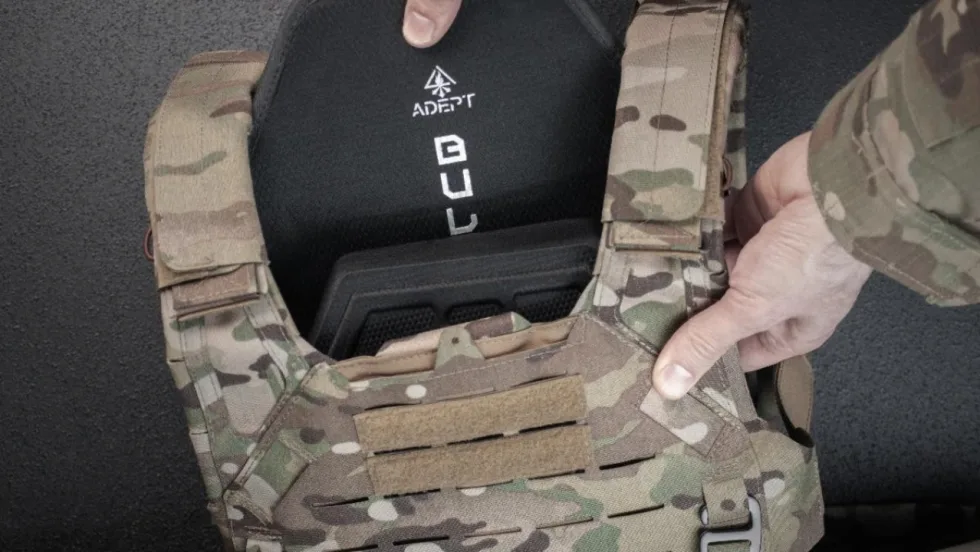
Adept Armor Introduces Two New Rifle Plates
Adept Armor has launched two new Level IV ballistic plates, the Emperor and the Archon Mark 2, which brings Adept Armor’s new Quatroid ceramic to the high-threat, performance-value center of the range at 5.2 pounds.
Read More →
POLICE Product Test: Benchmade Bailout
The Benchmade Bailout is a slim, lightweight carry knife with a deep-ride pocket clip and comes in a variety of blade steels and scales. Here is a detailed review of the Taiga Green Bailout, released earlier this year.
Read More →
NLEOMF Announces July 2026 Officer of the Month
NLEOMF honored a Michigan deputy sheriff as the July 2026 Officer of the Month for rescuing a trapped driver from a burning vehicle following a Fourth of July crash.
Read More →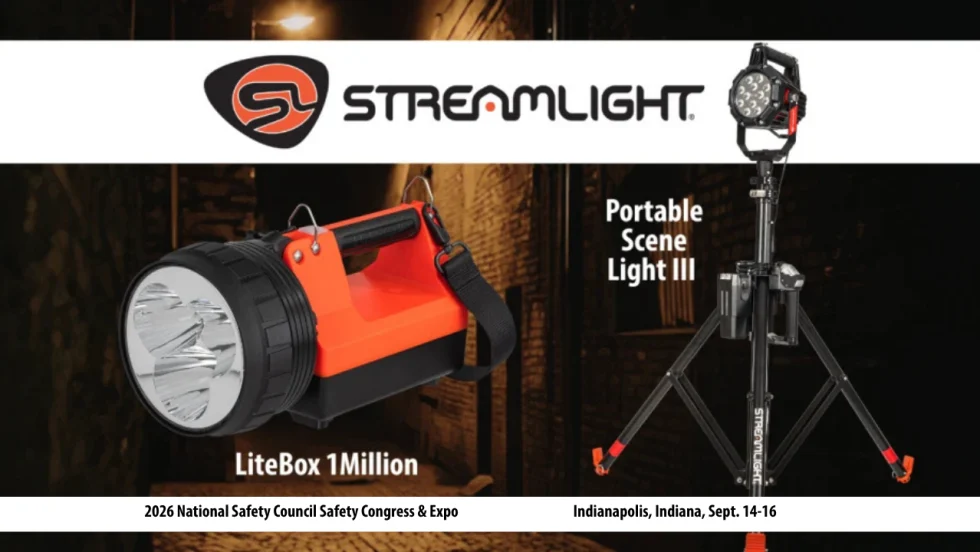
Streamlight to Showcase Newest Lighting Products at National Safety Council’s Safety Congress & Expo 2026
Streamlight will showcase its latest lights, including the Portable Scene Light III and the LiteBox 1Million, at the 2026 National Safety Council (NSC) Safety Congress & Expo.
Read More →
The 2027 World Police & Fire Games Set for Perth, Australia
The 2027 World Police & Fire Games (WPFG) will take place in Perth, Western Australia, from Friday, March 12 through Sunday, March 21, 2027.
Read More →
5.11 Partners with National Fallen Firefighters Foundation to Support #ForThe343
5.11 has joined the nationwide movement honoring the 343 New York City Fire Department firefighters lost on Sept. 11, 2001.
Read More →