



Fit and Clean for Life
Your soft body armor always stands at the ready to help save your life. And next to your duty weapon, it's the most important piece of equipment that you have on the job. Yet, many of you are unfamiliar with how to best make sure your vests fit properly and, also, how proper fit affects not only your comfort but also the protection the armor provides. Sadly, even fewer of you fully understand how to best care for your vests to get the best protection and longest service from them.

Your soft body armor always stands at the ready to help save your life. And next to your duty weapon, it's the most important piece of equipment that you have on the job.
Yet, many of you are unfamiliar with how to best make sure your vests fit properly and, also, how proper fit affects not only your comfort but also the protection the armor provides. Sadly, even fewer of you fully understand how to best care for your vests to get the best protection and longest service from them.
It's a misconception that age alone affects the useful service life of body armor. Actually, how the garment is fitted and maintained has a far greater impact on its capability than age.
Optimal Protection
Properly fitted body armor enables the wearer to have unrestricted movement. A properly fitted vest should be not only comfortable, but optimally protective. A poorly fitted vest will be uncomfortable and may not provide the protection it should.
Like any new garment, body armor has a brief break-in period. If your vest feels somewhat stiff at first, take a few days to wear it off duty or around the house to speed up the break-in process. This will also help you determine if it fits properly.
Most manufacturers provide a limited period of time (typically 30 days) during which the vest can be altered or adjusted to provide a more comfortable fit, at no charge to you. But it's up to you to ensure from the outset that the vest fits properly to avoid long-term issues.
Also, while your vest may soften up a bit and conform more comfortably to your body with regular use, be aware that how it fits after the first few weeks of use is most likely how it will feel months or even years from now (assuming there are no significant weight or body shape changes). Make sure that you are happy with the way your armor fits within the grace period or you may be stuck with it.
Fitting Your Armor
To ensure the best fit for your vest, make sure it is neither too long nor too short. Ideally, there should be no side gaps. Check to make sure the vest does not ride up on your duty belt.
The vest should fit your torso as follows:
Front Panel—The vest should clear your duty belt in the seated driving position to avoid rolling or wrinkling at the bottom of the vest. Make sure the top neck edge fits within one inch below the clavicle notch at the top of the sternum.
Back Panel Bottom—The vest should fit just above your duty belt, but not ride on any of the equipment attached to your belt.
Back Panel Top—The vest should be in line with the points of your shoulders. This helps ensure maximum coverage, while also minimizing bulging in the upper portion of the shirt so that the back panel remains concealed.
Sides—The sides of the vest should butt together or overlap to eliminate any unprotected side areas.
The comfort vs. coverage trade-off is a factor that you must take into account when fitting body armor. For example, it may be more comfortable to allow small gaps in the side of your vest because it provides better ventilation. However, those same gaps leave you without protection in very vulnerable areas, which is why an overlap between front and back panels is preferred for seamless protection. You must determine for yourself what level of comfort vs. coverage that you can tolerate in your body armor.
Fortunately, new high-tech fabrics such as Gore-Tex, Cocona, X-static, CoolMax, and others are being used in today's vests to make them much more comfortable than the body armor of years past. These fabrics provide a variety of comfort and wear benefits including moisture barriers that breathe, antimicrobial properties, and odor protection. The result is higher wear rates by officers, which has resulted in more officer saves.
Care and Maintenance
Your body armor isn't just another piece of your uniform. It is a critical component of your safety equipment and should be maintained and treated as such. Always make sure to review and closely follow the care instructions provided by your vest's manufacturer to ensure it continues to perform as intended.
The following are some specific dos and don'ts for cleaning and storing your vest. They will help maximize your vest's service life and effectiveness.
Cleaning the Ballistic Panels
Remove the ballistic panels from your carrier before cleaning it. Both components of your vest should be cleaned separately.
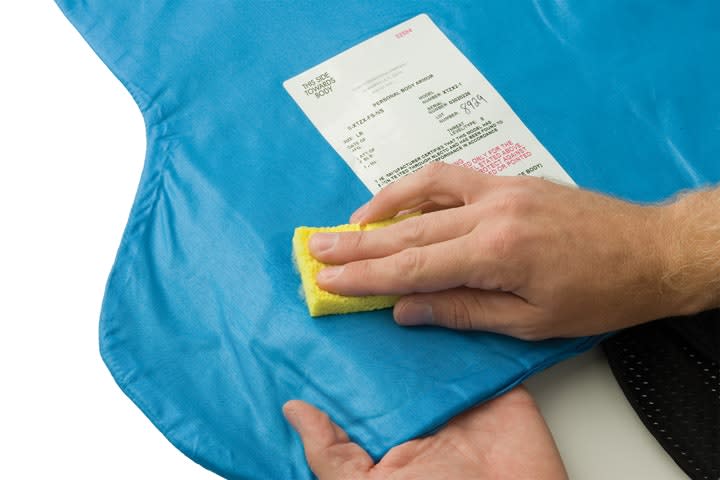
Wipe down your vest's protective panels by hand with a damp sponge or soft cloth, using mild soap and cold water. Never fully submerge the panels in water.
Don't machine wash and/or dry the panels of your body armor. Machine laundering can damage the ballistic material.
Don't use bleach or solvents to clean the panels. Harsh chemicals can degrade the moisture barrier of the panel cover and the all-important ballistic material.
Don't dry-clean the panels.
Don't dry your ballistic panels outdoors in direct sunlight, as ultraviolet exposure can degrade some ballistic materials.
Cleaning the Carrier
Use a cloth or soft bristle brush to remove loose dirt from the carrier's surface and hook-and-loop fasteners.
Close all of the hook-and-loop fasteners before washing the carrier, as it helps prevent wear and lint buildup.
Hand wash or machine wash the carrier in cool or warm water on the gentle cycle using mild soap or detergent.
Don't use bleach, starch, or fabric softeners on the carrier.
Don't dry clean the vest carrier because cleaning solvents can negatively affect some of the components.
Hang the carrier indoors to drip dry after washing, without the ballistic panels inserted. You can also machine dry the carrier at either the AIR or lowest temperature setting.
This is very important. When reinserting the ballistic panels into the carrier after cleaning, make sure you do so with the strike face of the ballistic panel facing the proper way. Read the manufacturer's instructions to ensure you do this properly.
Improperly installed ballisticpanels or ballistic inserts may not provide the full level of protection the vest is intended to confer because they may not be designed to work unidirectionally.
Storing Your Vest
When storing your vest, lay it flat (the best way to store it) or hang it upside down from the bottom of the carrier.
Don't lay the vest out or attempt to dry it in direct sunlight.
Don't hang the vest in such a way that it can stretch the shoulder straps.
Don't fold your vest or lay it on its side in a locker or car trunk.
Don't lay heavy objects on the vest. This will cause creasing of the ballistic package.
Vest Inspection and Repairs
Regularly inspect your armor for cuts, tears, and other fabric damage to the carrier and ballistic panels that could compromise the overall integrity and safety of the vest. Make a practice of inspecting your armor when shedding the carrier for washing.
Don't attempt to make repairs to the vest yourself. Instead, return the armor to the manufacturer for repairs or replacement.
With concealable body armor now a regular component of the uniform equipment worn by thousands of law enforcement officers, it is more important than ever that you become better educated on how your vest should fit and be maintained. While part of that responsibility rests with the departments providing the vest, ultimately, it is up to you to ensure that your body armor is properly cared for.
Remember, you want your gun to fire when needed. It's no different with body armor; it must protect you as intended. To ensure that it does, taking the necessary time to properly fit and maintain your vest isn't a hassle. It's an investment that can save your life.
Keith Fahl is an armor technical specialist for Armor Holdings Products Group. He has more than a decade of experience with law enforcement body armor and equipment. You can ask him questions about your armor at (360) 687-9059 or at kfahl@armorholdings.com.
More Technology

A police agency's guide to data-driven fleet management
Costs are rising and the public expects more transparency into how their tax dollars are spent. This e-book shows how police agencies can use fleet data to take control of fleet expenses while improving officer safety and demonstrating fiscal responsibility to the communities they serve.
Read More →
AI and analytics for law enforcement: Turning data into insights
Law enforcement agencies are managing more video, sensor data and digital evidence than ever before. Discover how AI and analytics can help turn that data into actionable insights that strengthen situational awareness, accelerate investigations and support more informed decisions.
Read More →
Vasco Electronics Adds Automatic Language Detection to Vasco Translator Q1
Vasco Electronics’ software update introduces hands-free language switching and expanded offline translation across 45 language pairs, empowering law enforcement, healthcare, and front-office enterprise teams
Read More →

North Miami Police Department Deploys Mark43
The North Miami Police Department has deployed Mark43 as part of its Five-Year Strategic Plan that represents its collective vision and goals for a more proactive police department, anchored by a core commitment to leveraging modern technology to enhance efficiency and public safety.
Read More →
Cellebrite Genesis for Enterprise Now Generally Available
Made available to the public sector in June, Cellebrite Genesis is serving a growing mix of national, regional, and local agencies worldwide, including some of the largest regional and metropolitan police departments. It is now available for enterprise organizations.
Read More →
2026 Vision FirstNet Users Summit to Host Emerging Leaders Training on Grassroots Advocacy for Public Safety
“Emerging Leaders Training: Understanding the Importance of Grassroots Advocacy for Public Safety," a session during the 2026 Vision FirstNet Users Summit, will offer a roadmap for unified advocacy at the federal level.
Read More →
Motorola Solutions Completes Acquisition of D-Fend Solutions
Motorola Solutions has acquired D-Fend Solutions, an industry leader in counter-drone technology. This deal provides public safety and enterprise customers with access to advanced counter-unmanned aerial systems.
Read More →
ZeroEyes, Advantech & Camden Police Partner to Bring AI Gun Detection Technology to Delaware School District
ZeroEyes has partnered with Advantech and the Camden Police Department to deploy ZeroEyes’ AI gun detection and intelligent situational awareness platform at Delaware’s Caesar Rodney School District (CRSD).
Read More →
Leonardo U.S. Cyber & Security Solutions Introduces SignalTrace, the Next Evolution in Electronic Signature Detection Technology
SignalTrace reflects years of product refinement and a clearer expression of the technology’s purpose of recognizing and correlating electronic signatures in publicly broadcast wireless signals to reveal patterns, relationships, and trends that might otherwise go undetected.
Read More →
Pimloc Launches Secure File Sharing to Streamline Release of Redacted Video
Pimloc’s Secure File Sharing lets organizations deliver redacted video, audio, and documents through expiring, passcode-protected links, accelerating delivery while reducing security, compliance, and chain-of-custody risks.
Read More →