



Entries and Civil Liability
Fortunately, the Supreme Court recently overturned two federal court rulings that had exposed officers to potential liability in cases involving warrantless entries.

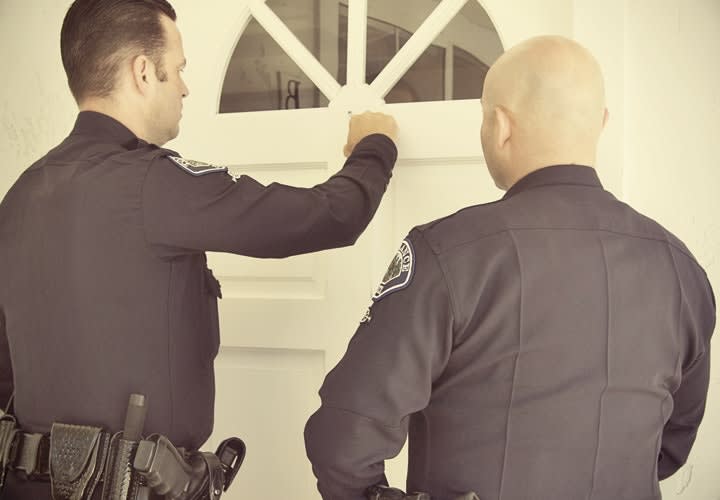
Photo: Vincent Taroc
In 2013, the U.S. Supreme Court broadened the definition of a Fourth Amendment "search" to include not only an infringement of a legitimate expectation of privacy (the longstanding test under Katz v. U.S.), but also any "trespass" by officers onto someone's person, house, papers, or effects, in an effort to obtain information (the second definition of a "search," under Jones v. U.S.). One result of the broadened definition of "search" has been greater restrictions on entry onto the curtilage of the home (for example, Florida v. Jardines, prohibiting a K-9 sniff on the suspect's front porch).
Another result of the enlarged definition of "search" has been a surge in civil suits against officers for engaging in "trespasses" onto property, even where no reasonable expectation of privacy is compromised. Fortunately, the Supreme Court recently overturned two federal court rulings that had exposed officers to potential liability in cases involving warrantless entries.
Carroll V. Carman
Officers of the Pennsylvania State Police received information that a felony suspect they were investigating might be in the home of Andrew and Karen Carman. The officers went there to conduct a "knock-and-talk" to see if the suspect was there. They found that the Carman house sat on a corner lot, with doors facing both streets. Because the closest parking they could find was nearer the side entrance than the front entrance, they approached the sliding glass door on the side of the house and knocked. Mrs. Carman consented to their entry and search of the house, which revealed that the suspect was not there, so the officers left.
The Carmans then sued one of the officers, Trooper Carroll, alleging a violation of their Fourth Amendment rights when he had approached the side door, rather than the front door, to attempt the knock-and-talk. Trooper Carroll contended he was entitled to qualified immunity from suit, because knock-and-talks at customary entryways do not constitute "trespasses" under Jones. The U.S. Court of Appeals for the Third Circuit denied Carroll qualified immunity. Citing to and quoting from both Jones and Jardines, the appeals court ruled that because Carroll knocked at the side door instead of the front door, "his warrantless entry into the Carmans' curtilage violated the Fourth Amendment as a matter of law."
On appeal, the U.S. Supreme Court unanimously reversed the Third Circuit and held that Trooper Carroll's conduct did not violate any clearly established law, and that he was therefore entitled to qualified immunity from suit. Quoting from several other opinions, the court said the following:
"A government official sued under § 1983 is entitled to qualified immunity unless the official violated a statutory or constitutional right that was clearly established at the time of the challenged conduct. In the Third Circuit's view, a 'knock and talk' must begin at the front door. But that conclusion does not follow.
"Officers conducting a knock and talk need not approach only a specific door if there are multiple doors accessible to the public. Because the officer approached a principal entrance to the house that other visitors could be expected to take, he did not violate the Fourth Amendment. The Fourth Amendment is not implicated when officers go to the back door reasonably believing it is used as a principal entrance to the dwelling." (Carroll v. Carman)
San Francisco V. Sheehan
Teresa Sheehan lived in a room at a mental health group home. She stopped taking her medications, holed up in her room, and yelled at the staff that she had a knife and would kill them. Police were called, and two officers responded. When officers entered her room, Sheehan grabbed a five-inch kitchen knife and yelled, "I'm going to kill you! Get out!"
Both officers backed out of the room and Sheehan closed the door. The officers then devised a plan that one would push the door open and the other would immediately spray Sheehan with pepper spray. When they followed this plan (thereby making a second warrantless entry into the room), Sheehan seemed unaffected by the pepper spray and repeated her threats with the knife. Fearing for their safety, both officers shot Sheehan (multiple rounds). She survived and sued for, among other claims, illegal entry into her room.
Both officers moved for qualified immunity, based on the exigency facing them—namely, the need to disarm a dangerous, uncooperative mental patient who had threatened facility staff and police officers with death. When the case reached the Ninth Circuit Court of Appeals, that court agreed that the officers were entitled to qualified immunity as to their initial entry into Sheehan's room, but ruled that the officers should be subject to suit as to the second entry. The Ninth Circuit said that "a jury could find that the officers 'provoked' Sheehan by needlessly forcing the second confrontation."
The U.S. Supreme Court reversed. After repeating the rule that officials are entitled to qualified immunity unless their conduct violates clearly established law, the court surveyed a number of court rulings that showed there was no clearly established law prohibiting the officers from re-entering Sheehan's room; in fact, said the court, most of the case law supports the reasonableness of the officers' actions. The court said this:
"There is no doubt that the officers did not violate any federal right when they opened Sheehan's door the first time. Law enforcement officers may enter a home without a warrant to render emergency assistance to an injured occupant or to protect an occupant from imminent injury. Because the two entries were part of a single, continuous search or seizure, the officers were not required to justify the continuing emergency with respect to the second entry.
"The officers knew that Sheehan had a weapon and had threatened to use it to kill three people. They also knew that delay could make the situation more dangerous. The Fourth Amendment standard is reasonableness, and it is reasonable for police to move quickly if delay would gravely endanger their lives or the lives of others. No precedent clearly established that there was not an objective need for immediate entry here." (San Francisco v. Sheehan)
Evaluating the reasonableness of the force the officers had used in firing multiple shots at Sheehan, the court said, "Nothing in the Fourth Amendment barred the officers from protecting themselves, even though it meant firing multiple rounds."
And on a related issue raised by the testimony of the plaintiff's "expert" witness who testified that the officers did not follow proper tactics or their training, the court said, "Even if an officer acts contrary to her training, that does not itself negate qualified immunity. In close cases, a jury does not automatically get to second-guess these life and death decisions, even though a plaintiff has an 'expert' who claims the situation could have been handled differently."
Liability Risk Reduction
When approaching a private home for a knock-and-talk or other investigation, it's best to stay on sidewalks or paths apparently open to public use, and to knock at doors that reasonably appear to be commonly used for access.
If exigent circumstances justify warrantless entry, be sure to document all of the reasons why immediate entry was necessary to neutralize the exigency.
Devallis Rutledge is a former police officer and veteran prosecutor who currently serves as special counsel to the Los Angeles County district attorney. He is the author of 12 books, including "Investigative Constitutional Law."
More Patrol

Adept Armor Introduces Two New Rifle Plates
Adept Armor has launched two new Level IV ballistic plates, the Emperor and the Archon Mark 2, which brings Adept Armor’s new Quatroid ceramic to the high-threat, performance-value center of the range at 5.2 pounds.
Read More →
POLICE Product Test: Benchmade Bailout
The Benchmade Bailout is a slim, lightweight carry knife with a deep-ride pocket clip and comes in a variety of blade steels and scales. Here is a detailed review of the Taiga Green Bailout, released earlier this year.
Read More →
NLEOMF Announces July 2026 Officer of the Month
NLEOMF honored a Michigan deputy sheriff as the July 2026 Officer of the Month for rescuing a trapped driver from a burning vehicle following a Fourth of July crash.
Read More →
Streamlight to Showcase Newest Lighting Products at National Safety Council’s Safety Congress & Expo 2026
Streamlight will showcase its latest lights, including the Portable Scene Light III and the LiteBox 1Million, at the 2026 National Safety Council (NSC) Safety Congress & Expo.
Read More →
The 2027 World Police & Fire Games Set for Perth, Australia
The 2027 World Police & Fire Games (WPFG) will take place in Perth, Western Australia, from Friday, March 12 through Sunday, March 21, 2027.
Read More →
5.11 Partners with National Fallen Firefighters Foundation to Support #ForThe343
5.11 has joined the nationwide movement honoring the 343 New York City Fire Department firefighters lost on Sept. 11, 2001.
Read More →
Team Wendy Announces Title Sponsorship of the Jorge Pastore Foundation
Team Wendy’s 3-year partnership with the Jorge Pastore Foundation expands access to programs that strengthen those who serve.
Read More →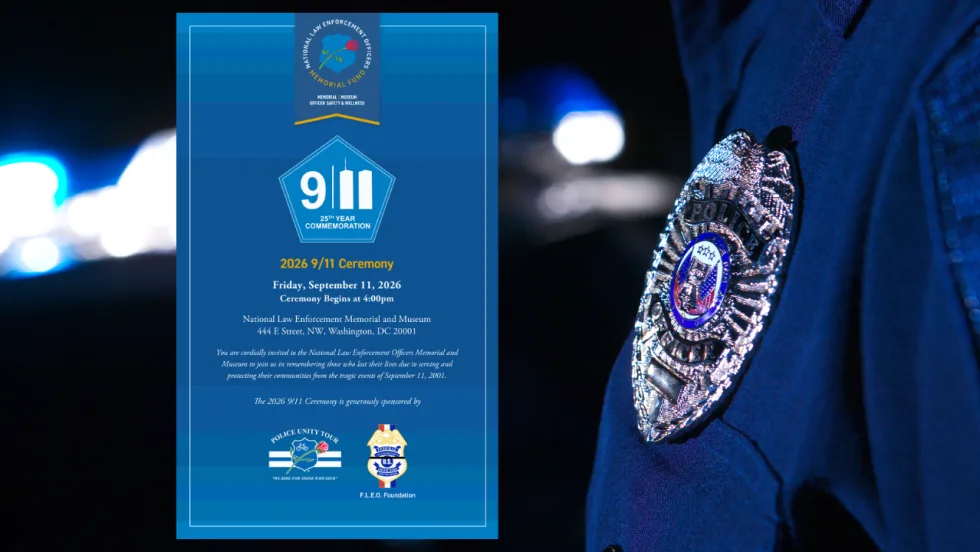
National Law Enforcement Memorial and Museum Hosting 9/11 25th-Year Commemoration Ceremony
The National Law Enforcement Memorial and Museum is hosting a 9/11 25th Year Commemoration Ceremony on Sept. 11 at 4 p.m.
Read More →
National Law Enforcement Officers Memorial Fund Announces June 2026 Officers of the Month
The National Law Enforcement Officers Memorial Fund (NLEOMF) named 15 officers of the Chico Police Department (California) as the Officers of the Month for June 2026 for their roles in responding to an active-shooter incident at a public library.
Read More →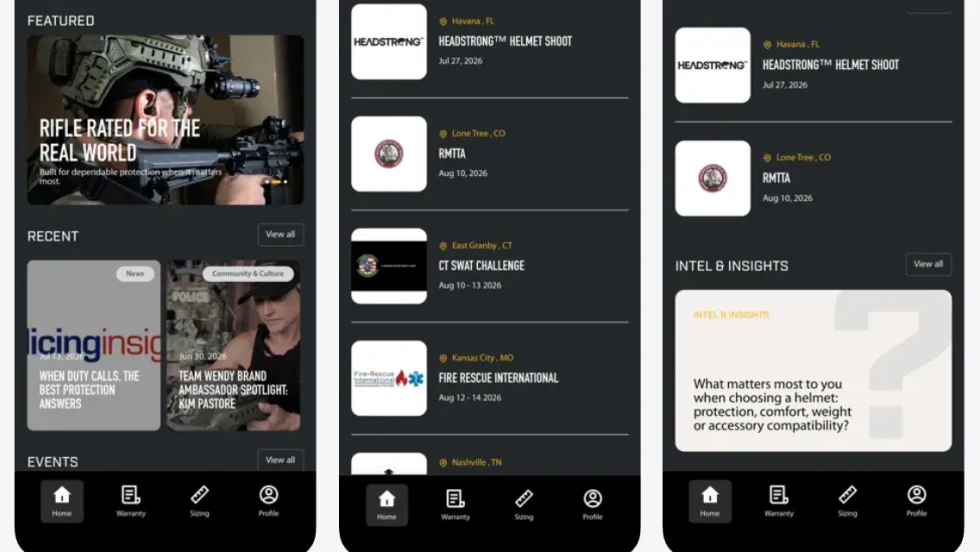
Team Wendy App Creates New Digital Hub for Helmet Owners
The Team Wendy Community App provides one location for warranty registration, size-fit tools, product updates, and community connection. For helmet owners, the new app creates a simpler path to the information and tools that matter most.
Read More →