



Entrapment
"The first duties of the officers of the law are to prevent, not to punish crime. It is not their duty to incite to and create crime for the sole purpose of prosecuting and punishing it." — U.S. Supreme Court, Sorrells v. U.S.

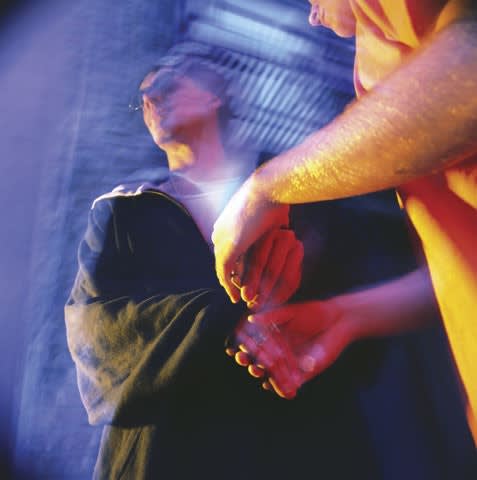
Prosecuting so-called "victimless crimes" (such as narcotics offenses, prostitution, and pornography distribution) relies heavily on sting operations in which undercover officers posing as fellow criminals gain the confidence of suspects and catch them dirty. Other kinds of crimes can also involve a suspect's misplaced trust in an undercover agent, including bribery, fencing, auto theft, sale of alcohol to minors, and even solicitation for murder.
When working these kinds of cases, you're allowed to go to certain lengths to create opportunities for crimes or to fool suspects into thinking you're a lawbreaker yourself so as to induce them to attempt or commit a crime, for which you can then arrest them. But there's a limit. If you exceed it, you allow the suspect to raise a defense of entrapment.
Federal Entrapment Standard
During the prohibition days, an undercover agent sought out C.V. Sorrells in Canton, N.C., to try to buy a jug of moonshine whiskey. Sorrells, himself a non-drinker, repeatedly declined the agent's requests, but the agent persisted, playing on Sorrells' sympathies for "an old former war buddy." Finally, Sorrells relented and went to a bootlegger in a nearby town and brought back a half-gallon of whiskey. Sorrells was convicted of violating the National Prohibition Act, and he appealed to the U.S. Supreme Court, arguing that he had been entrapped into committing the crime. The Supreme Court agreed and reversed his conviction.
Said the court, "It is well settled that the fact that officers or employees of the government merely afford opportunities or facilities for the commission of the offense does not defeat the prosecution. A different question is presented when the criminal design originates with the officials of the government, and they implant in the mind of an innocent person the disposition to commit the alleged offense and induce its commission in order that they may prosecute.
"The first duties of the officers of the law are to prevent, not to punish crime. It is not their duty to incite to and create crime for the sole purpose of prosecuting and punishing it. It is unconscionable, contrary to public policy, and to the established law of the land to punish a man for the commission of an offense of the like of which he had never been guilty and evidently never would have been guilty if the officers of the law had not inspired, incited, persuaded, and lured him to attempt to commit it." (Sorrells v. U.S.)
In the days since the Sorrells case, the court has focused the entrapment inquiry on the two issues of whether law enforcement officials or their agents provoked the crime, and whether the suspect was already inclined to commit it. "A valid entrapment defense has two related elements: government inducement of the crime, and a lack of predisposition on the part of the defendant to engage in the criminal conduct." (Mathews v. U.S.) The facts and holdings of four other U.S. Supreme Court cases illustrate these elements.
Sherman v. U.S.: Government Inducement
Joseph Sherman was a recovering drug addict. A government informant approached him at his doctor's office and began a series of attempts to persuade Sherman to abandon his treatment and resume his addiction, so they both could avoid the suffering caused by recovery and treatment. Sherman refused several times, but the informer supplied Sherman with money for drugs and eventually persuaded him to buy drugs for the two men to share.
Considering the government agent's relentless efforts not only to obtain drugs but to convince Sherman to abandon his treatment and return to a life of addiction, the court said, "We conclude from the evidence that entrapment was established as a matter of law."
Lopez v. U.S.: No Government Inducement
An IRS agent was investigating tax irregularities at Lopez's restaurant when Lopez made an unsolicited offer to pay a cash bribe for the agent's approval of phony records. The agent pretended to play along, reported the bribe to his superiors, and wore a wire to his next meeting with Lopez to obtain evidence of the crime.
Arguing entrapment, Lopez appealed his subsequent conviction to the Supreme Court, which had no difficulty in deciding that the agent had merely afforded an opportunity for a continuing course of criminal conduct by a willing criminal, without overbearing inducements. The court ruled, "It is evident that entrapment has not been shown as a matter of law."
U.S. v. Russell: Suspects Predisposed
An undercover narcotics agent posing as a drug distributor was investigating three suspects for manufacture and sale of methamphetamine. In face-to-face conversations, the suspects talked freely of their narcotics activities and offered the agent some meth from their "last batch." The agent told them he could supply a precursor chemical that was difficult to obtain.
The suspects accepted the offer, received delivery of the precursor, and used it to make more methamphetamine, after which they were arrested and convicted. They appealed, arguing that by furnishing one of the components of the illegal drugs, the government had entrapped them. The Supreme Court rejected this argument, noting that an undercover agent "will not be taken into the confidence of illegal entrepreneurs unless he has something of value to offer them."
Jacobson v. U.S.: Suspect Not Predisposed
Over a 2.5-year investigation of child pornography, postal inspectors made numerous efforts to persuade Keith Jacobson to order kiddie porn. Some 34 months after their first mailing to him, inspectors posed as a First Amendment protection lobby and offered to send Jacobson a sample of the kind of material that they thought should be readily available. He ordered the magazine and was later arrested and convicted on federal pornography charges.
The Supreme Court ruled that in the absence of any evidence that Jacobson had a predisposition to possess child pornography, the lengthy government efforts to ensnare him constituted entrapment. Said the court, "In their zeal to enforce the law, government agents may not plant in an innocent person's mind the disposition to commit a criminal act, and then induce commission of the crime so that the government may prosecute."
State Entrapment Standards
Many states apply the federal entrapment test, looking to see whether law enforcement officers or agents have induced the commission of the crime, and inquiring into the suspect's criminal predisposition. Other states have variations on this test, with some states ignoring the suspect's criminal background and weighing only the degree of pressure or incentives employed by officers to see whether such influences were so overbearing as to cause a normally law-abiding person to commit the crime. To confirm the test of entrapment applicable in your jurisdiction, consult local prosecutors or legal advisors.
Certain techniques are generally considered not to constitute entrapment, whether in the federal jurisdiction or the states. These typically include the following: offering to buy or sell drugs or stolen property; agreeing to engage in an act of prostitution; posing as an underage correspondent in an Internet chat room; pretending to be a hit man after a prisoner or other suspect has expressed an interest in paying for a contract murder; and leaving the keys in an unlocked car under surveillance in an area where auto thefts occur.
More Patrol

Adept Armor Introduces Two New Rifle Plates
Adept Armor has launched two new Level IV ballistic plates, the Emperor and the Archon Mark 2, which brings Adept Armor’s new Quatroid ceramic to the high-threat, performance-value center of the range at 5.2 pounds.
Read More →
POLICE Product Test: Benchmade Bailout
The Benchmade Bailout is a slim, lightweight carry knife with a deep-ride pocket clip and comes in a variety of blade steels and scales. Here is a detailed review of the Taiga Green Bailout, released earlier this year.
Read More →
NLEOMF Announces July 2026 Officer of the Month
NLEOMF honored a Michigan deputy sheriff as the July 2026 Officer of the Month for rescuing a trapped driver from a burning vehicle following a Fourth of July crash.
Read More →
Streamlight to Showcase Newest Lighting Products at National Safety Council’s Safety Congress & Expo 2026
Streamlight will showcase its latest lights, including the Portable Scene Light III and the LiteBox 1Million, at the 2026 National Safety Council (NSC) Safety Congress & Expo.
Read More →
The 2027 World Police & Fire Games Set for Perth, Australia
The 2027 World Police & Fire Games (WPFG) will take place in Perth, Western Australia, from Friday, March 12 through Sunday, March 21, 2027.
Read More →
5.11 Partners with National Fallen Firefighters Foundation to Support #ForThe343
5.11 has joined the nationwide movement honoring the 343 New York City Fire Department firefighters lost on Sept. 11, 2001.
Read More →
Team Wendy Announces Title Sponsorship of the Jorge Pastore Foundation
Team Wendy’s 3-year partnership with the Jorge Pastore Foundation expands access to programs that strengthen those who serve.
Read More →
National Law Enforcement Memorial and Museum Hosting 9/11 25th-Year Commemoration Ceremony
The National Law Enforcement Memorial and Museum is hosting a 9/11 25th Year Commemoration Ceremony on Sept. 11 at 4 p.m.
Read More →
National Law Enforcement Officers Memorial Fund Announces June 2026 Officers of the Month
The National Law Enforcement Officers Memorial Fund (NLEOMF) named 15 officers of the Chico Police Department (California) as the Officers of the Month for June 2026 for their roles in responding to an active-shooter incident at a public library.
Read More →
Team Wendy App Creates New Digital Hub for Helmet Owners
The Team Wendy Community App provides one location for warranty registration, size-fit tools, product updates, and community connection. For helmet owners, the new app creates a simpler path to the information and tools that matter most.
Read More →