



Editorial: Endangering Students and Teachers
The movement to remove officers from schools will only lead to more violence on campus and more victims for active shooters.

Last month the Chicago Board of Education voted to keep school resource officers in the city’s schools. That shouldn’t be newsworthy. But it was.
It was newsworthy because Chicago is a very Blue city in the political sense. And as you can read in this month’s cover story (“Removing Officers from Schools is a Bad Idea, page 16), city councils in other “progressive” cities nationwide, including Minneapolis, Portland, Milwaukee, and San Francisco, have been voting to remove SROs from their schools.
The throw cops out of schools movement is another repercussion from the horrific in-custody death of George Floyd and its gasoline and fire effect on anti-police sentiment. Defunding and abolishing law enforcement is one of the primary goals of the Black Lives Matter organization and of the radical leftists and anarchists carrying the BLM banner.
Advocates for removing police from schools argue that SROs are part of a systemically racist system that sends students of color with disciplinary issues down the path to prison time. They argue that black students, especially, are treated much more harshly for disciplinary issues than white students. They also say that the presence of police officers in schools does not make the kids safer.
Dominique Parris of the decidedly liberal research organization Child Trends www.childtrends.org told NPR, “There isn’t much evidence indicating that police officers in schools make schools safer. What they do do is increase the likelihood that black and brown children are going to be involved in the legal system early and often.”
Child Trends posted a blog last month that detailed information for school systems to consider when addressing “community demands to renegotiate school-police partnerships.” It’s full of the usual arguments. Of course the favorite is that there are racial disparities in arrests. But there’s no discussion whatsoever of what the arrests were about. And context is everything.
They also argue that there are more officers in schools with black and brown children. But there’s no discussion of why that might be the case. Is the neighborhood more economically stressed and therefore more prone to crime? Has there been a history of violence on the campus? Is there a gang problem in the neighborhood that also affects the school? You would think that putting more police in urban schools is a good thing. It shows that cities are trying to help the good students in these school get an education.
You also would think that teachers might want the protection and backup from law enforcement in the dangerous environments of some schools. But last month the American Federation of Teachers, a big teacher union, passed a resolution saying, the “necessary function of school safety should be separated from policing and police forces.”
So who is going to handle security? “School security personnel should be trained as peace officers (that does not mean police) and integrated within the school community, with a focus on nonviolent resolution of conflicts with a minimal use of force,” the teacher union resolution says. Did the teachers working in dangerous schools get to vote on this? Unarmed security is either ineffective or dead meat.
A lot of this remove police from schools rhetoric comes down to the same kind of “everybody is peaceful and there is no evil in the world” theories that disband police advocates are spouting. It’s all nonsense about restorative justice and drum circles or whatever. Child Trends says the key is to intervene early in the life of the child. And they are absolutely right. Unfortunately, that doesn’t do anything to help with the 15-year-old criminal of today. We can’t send him back to kindergarten and teach him some morals and responsibility.
It also doesn’t help with the mass shooter. Anti-SRO advocates argue that the placement of police in schools has done little to stop the carnage of school shootings. They use Parkland, FL, as an example. Actually, there are multiple cases of SROs stopping or at least drawing the fire of active shooters to protect kids. And we can’t know how many potential active shooters have been deterred by the presence of SROs or perhaps even their personal rapport with an SRO.
The truth is that getting rid of SROs will lead to more crime in schools and more danger for students and teachers. Which is a high price to pay for appeasing anti-police radicals. Do these officers need better training? Absolutely. Have there been some questionable use-of-force incidents? Yes. But most SROs do a great job of ensuring students are safe on campus.
Even the Chicago school board realizes that. “Safety is of the utmost concern to all of us,” said Chicago Board of Education President Miguel del Valle, who cast the deciding vote. That’s amazing common sense for Chicago. We only wish all other Blue cities would follow their lead.
More Patrol
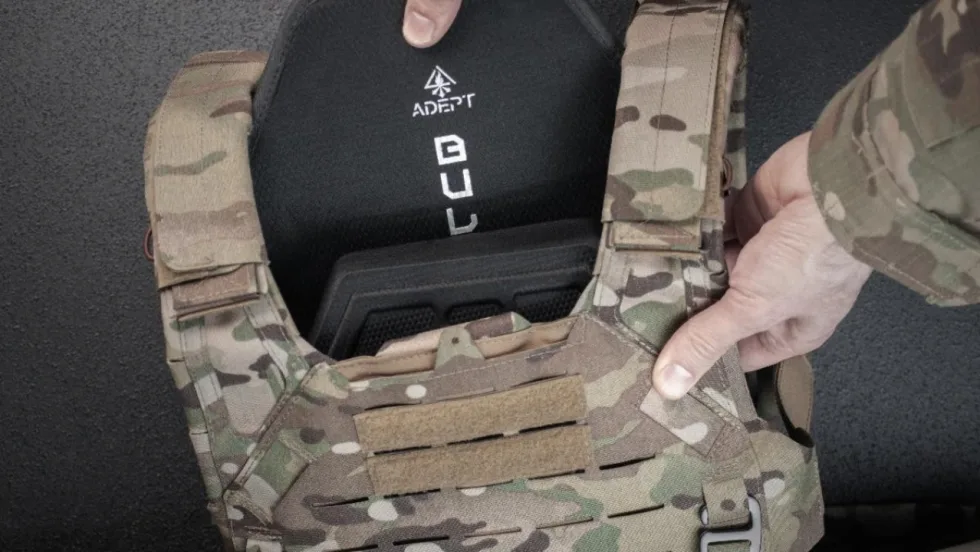
Adept Armor Introduces Two New Rifle Plates
Adept Armor has launched two new Level IV ballistic plates, the Emperor and the Archon Mark 2, which brings Adept Armor’s new Quatroid ceramic to the high-threat, performance-value center of the range at 5.2 pounds.
Read More →
POLICE Product Test: Benchmade Bailout
The Benchmade Bailout is a slim, lightweight carry knife with a deep-ride pocket clip and comes in a variety of blade steels and scales. Here is a detailed review of the Taiga Green Bailout, released earlier this year.
Read More →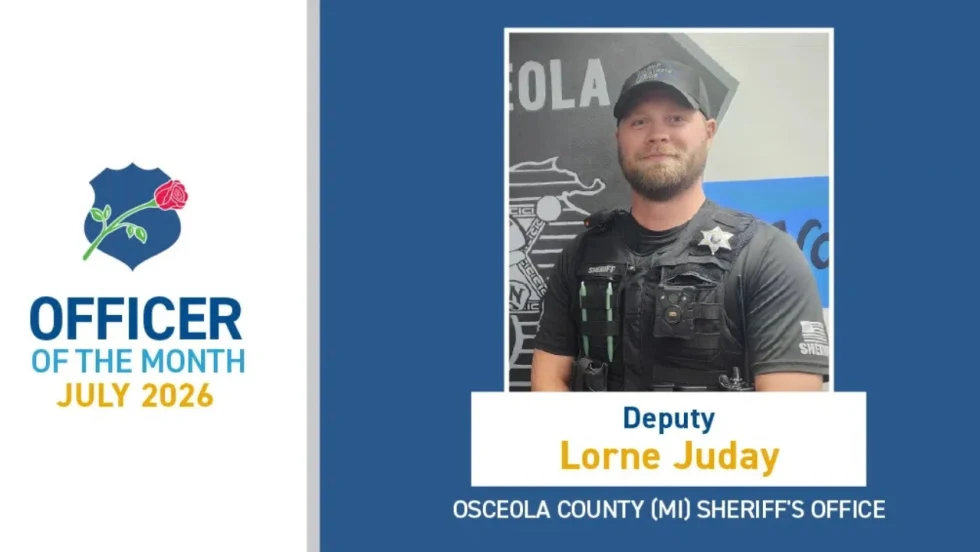
NLEOMF Announces July 2026 Officer of the Month
NLEOMF honored a Michigan deputy sheriff as the July 2026 Officer of the Month for rescuing a trapped driver from a burning vehicle following a Fourth of July crash.
Read More →
Streamlight to Showcase Newest Lighting Products at National Safety Council’s Safety Congress & Expo 2026
Streamlight will showcase its latest lights, including the Portable Scene Light III and the LiteBox 1Million, at the 2026 National Safety Council (NSC) Safety Congress & Expo.
Read More →
The 2027 World Police & Fire Games Set for Perth, Australia
The 2027 World Police & Fire Games (WPFG) will take place in Perth, Western Australia, from Friday, March 12 through Sunday, March 21, 2027.
Read More →
5.11 Partners with National Fallen Firefighters Foundation to Support #ForThe343
5.11 has joined the nationwide movement honoring the 343 New York City Fire Department firefighters lost on Sept. 11, 2001.
Read More →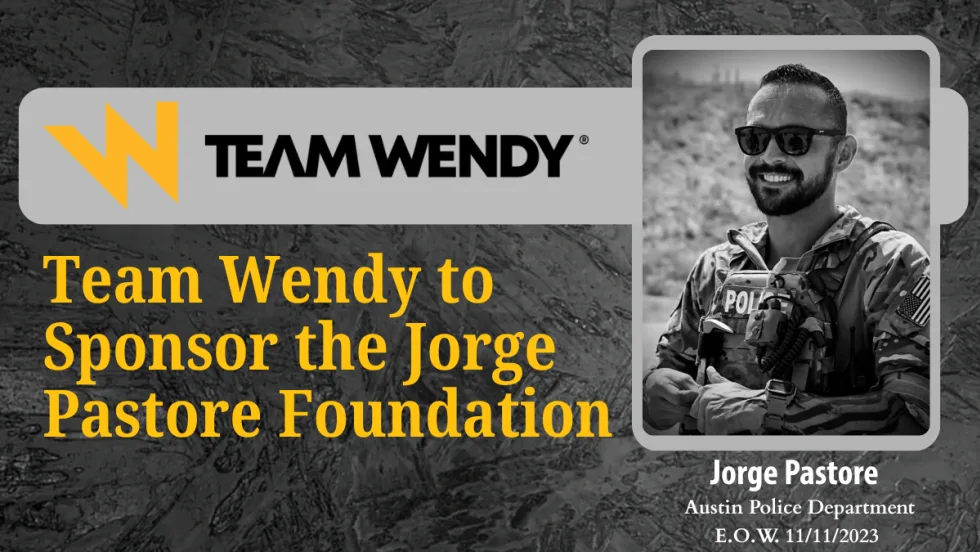
Team Wendy Announces Title Sponsorship of the Jorge Pastore Foundation
Team Wendy’s 3-year partnership with the Jorge Pastore Foundation expands access to programs that strengthen those who serve.
Read More →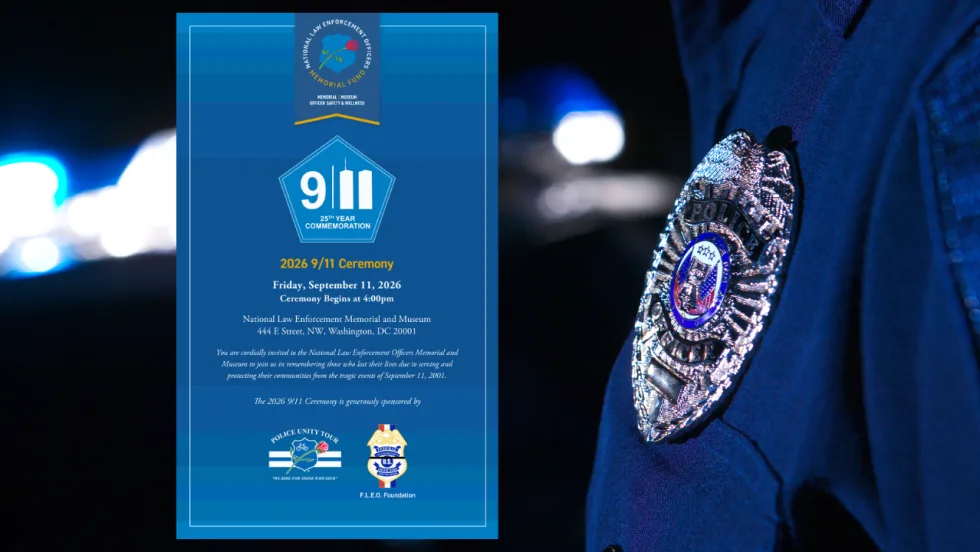
National Law Enforcement Memorial and Museum Hosting 9/11 25th-Year Commemoration Ceremony
The National Law Enforcement Memorial and Museum is hosting a 9/11 25th Year Commemoration Ceremony on Sept. 11 at 4 p.m.
Read More →
National Law Enforcement Officers Memorial Fund Announces June 2026 Officers of the Month
The National Law Enforcement Officers Memorial Fund (NLEOMF) named 15 officers of the Chico Police Department (California) as the Officers of the Month for June 2026 for their roles in responding to an active-shooter incident at a public library.
Read More →
Team Wendy App Creates New Digital Hub for Helmet Owners
The Team Wendy Community App provides one location for warranty registration, size-fit tools, product updates, and community connection. For helmet owners, the new app creates a simpler path to the information and tools that matter most.
Read More →