



Dynamic Takedown Techniques
When it comes to training, most of us don't get enough. So the training we do get must be practical, effective, and efficient. This article will provide you with two techniques you can use to keep yourself safe when dealing with suspects who become resistive or combative during a pat search.

Editor's note: View our related photo gallery,"Two Dynamic Takedowns."
Year after year, statistics compiled by the FBI consistently reaffirm the dangers of our profession. Law enforcement officers all have one thing in common: ultimately, we or those we train and supervise must deal with the bad guys. When we do, we are putting ourselves at risk. To offset those risks, we use many resources including technology and training.
When it comes to training, most of us don't get enough. So the training we do get must be practical, effective, and efficient. This article will provide you with two techniques you can use to keep yourself safe when dealing with suspects who become resistive or combative during a pat search.
In my previous article, "Safe Searching: the Standing Basic Search," I covered the concepts and mechanics of performing a safe pat down or Terry search for weapons. As I stated, searching persons for weapons is a high frequency activity for law enforcement personnel. One of the risks I addressed in my previous article was the risk of attack from the person you are searching, while you are searching him or her. Using the standing basic search gives you the ability to minimize your risk, and maximize your options when the person you are searching initiates an attack.
Review
Before we discuss our options, let's quickly review the primary components of the standing basic search. Remember, you want your search to be safe, effective, and expedient. To ensure this, focus on controlling the suspect through proper body position, limiting the person's mobility, and controlling the hands. When properly executed, the standing basic search position can minimize the suspect's ability to escape or attack.
One point to consider is the way you control the suspect's hands. Remember, it is critical to both "lace up" the fingers of the interlocked hands, and anchor them to the base of the skull, maintaining downward pressure throughout the search. This reduces the suspect's ability to quickly escape by turning toward you and ducking under your hands.
Options
Once you have initiated your standing basic search, what can you do if the suspect tries to escape or initiate an attack? The universal answer is and should always be: it depends.
What does it depend on? Many things, which can be broadly categorized to include the suspect's actions, your actions, and your environment. But under most circumstances, you should be looking at several options, ranging from verbal commands to transitioning to control holds or takedowns, and/or disengaging and transitioning to other force options (e.g. personal body weapons, impact weapons, chemical agents, electronic control devices, or firearms.) The level and type of force you choose will always be situationally determined, and must be reasonable and justified under your agency's policy and the law.
For the remainder of this discussion, I'll focus on one of your options: taking the suspect to the ground. The takedowns we will examine are designed to disorient and temporarily incapacitate the suspect to help you quickly and safely establish a greater level of control. Taking a suspect to the ground can potentially cause her injury, and therefore should always be objectively reasonable under the circumstances.[PAGEBREAK]
The Takedowns
We are all innately wired for forward movement. Your balance and equilibrium are more adversely affected when your vertical plane is broken in a backward direction. Therefore, from the standing basic search position, you can employ these two simple and dynamic takedown techniques to effectively overcome the suspect's resistive or combative actions. Both operate under the same principles of body mechanics, differing only in the amount and type of control you will establish once the suspect is on the ground.
The first and simplest of the two techniques is the Rear Pull-down. The key to this technique is quickly and forcefully breaking the suspect's vertical plane simultaneously backward and downward; gravity will do the rest. This technique results in a disengagement from the suspect, affording the opportunity to transition to other force options or methods of control.
The second technique is the Rear Pull-down with Arm Compression. This technique is initiated in the same way as the Rear Pull-down, but enhanced with a controlling movement to assist with the take down and to further control the suspect once she is on the ground. Let's look at each technique in detail.
Rear Pull-down
The Rear Pull-down can be initiated from the standing basic search position regardless of which hand you are using to control the suspect's hands. The key is to use that hand to break the suspect's vertical plane both backward and downward simultaneously, while you use your footwork to "open a hole" for the suspect to fall into.
In this case, where the head goes, the body will follow. Because you are controlling the suspect's hands, which are connected to his head, you are able to quickly and efficiently move his head and spine backward and downward, breaking his vertical plane.
As the suspect begins to fall, you let go of his hands, adjust your stance appropriately, and prepare to initiate your next action. If you need to generate a little more force to initiate the takedown, bring your free (searching) hand to the suspect's elbow and push downward as you pull his hands.
Rear Pull-down with Arm Compression
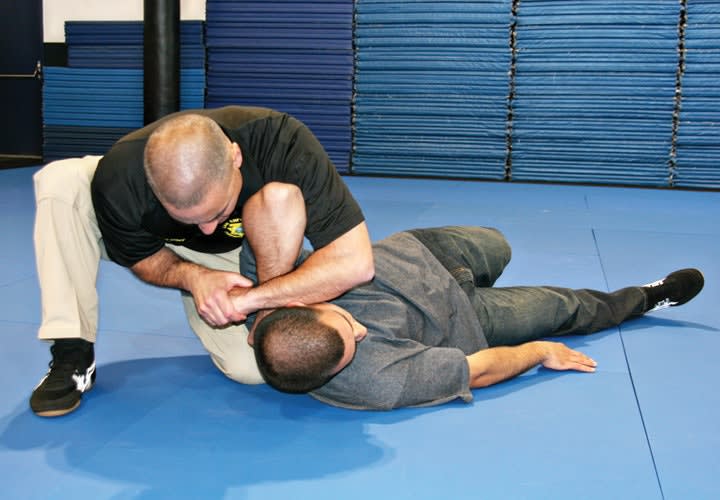
The Rear Pull-down with Arm Compression can also be initiated from the standing basic search position regardless of which hand you are using to control the suspect's hands. Use your controlling hand to initiate backward and downward movement of the suspect's hands and head. As this occurs, use your free (searching) arm to wrap around the suspect's arm, midway between the suspect's wrist and elbow. Quickly move your controlling hand to a supporting position on your wrapping wrist, locking down and compressing the suspect's arm.
Depending on which arm you are compressing, relative to your stance, you may have to adjust your feet to facilitate the arm compression and/or open the hole for the takedown.
Once the arm is compressed, drive your hips toward the hole, bringing the suspect to the ground forcefully. Once on the ground, maintain control of the suspect in the arm compression position long enough to disengage or, preferably, transition into a shoulder-lock prone control.
Simple Yet Effective
Whenever you deal with people who have a potential to harm you, your safety is paramount and control is the key. Once you have established control over a person using the standing basic search, if the person's resistive or combative behavior necessitates that you establish greater control, one of your options is to take him to the ground. The two takedown techniques presented here are simple in concept and execution, and effective in application. If you don't use them already, give them some consideration. Above all, stay safe and in control.
Lt. James Harbison is the Basic Academy Director at the Contra Costa County (Calif.) Office of the Sheriff Law Enforcement Training Center. He has been teaching law enforcement defensive tactics at the academy and advanced officer levels for more than 21 years.
Related:Safe Pat-Down Searches (photos)
More Training
Registration Underway for Sixth Annual First Responders Relay
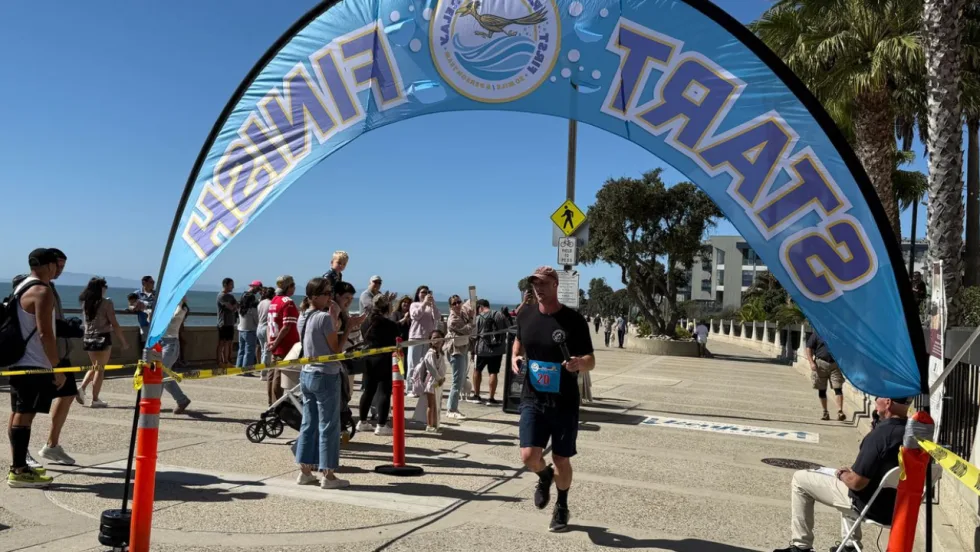
The California Police Athletic Federation’s annual First Responder Relay will welcome first responder teams from across the globe to compete along Ventura's scenic coastline on Oct. 11. Registration is underway.
Read More →
Vector Solutions Launches Comprehensive Online Dispatch Training Catalog for Emergency Communications Professionals
Vector Solutions’ new catalog of 35 expert-developed online courses can help emergency communication centers strengthen training, meet certification requirements, and simplify continuing education.
Read More →
Tools for Active Shooter Response Training
What technologies help prepare officers for active shooter response situations? This behind-the-scenes look at law enforcement training explores shot simulators, smart firearms, laser target systems, and the tools used to build safer, more effective training environments.
Read More →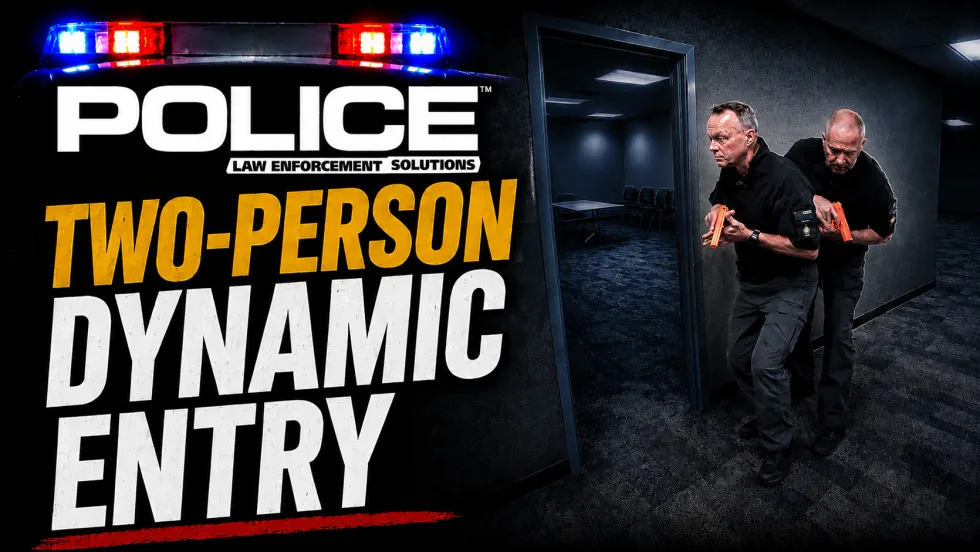
Two-Officer Tactical Doorway Entry Techniques
Entering a room during active-threat situations requires communication, coordination, and disciplined tactical movement. In this video, trainers from the United States Deputy Sheriff’s Association demonstrate critical room entry concepts, including fatal funnel awareness, team coordination, and safe tactical movement.
Read More →
High Compressed Ready Explained | Muzzle Control For Room Entry
In this video, Mike Willis, law enforcement national training and program director for the United States Deputy Sheriffs’ Association, demonstrates the high compressed ready position and discusses muzzle control during room entry.
Read More →
Why Attend the DroneSense Innovation Summit by Versaterm?
Let’s hear from Ryan Bracken, head of product, about why your agency should send someone to the first annual DroneSense Innovation Summit by Versaterm in April.
Read More →
Caswell Live Fire Spins Off from InVeris
Caswell Live Fire has spun off from parent company InVeris, coinciding with the 100th anniversary of Caswell’s founding. Over the past 100 years, Caswell has developed pioneering solutions that support military, law enforcement, and commercial clients worldwide.
Read More →
When Do You Transport a Wounded Officer Instead of Waiting for EMS?
Thumbnail for video series POLICE Topics, Tactics & Tips with a yellow headline that reads When Do You Transport a Wounded Officer Instead of Waiting for EMS?
Read More →
How to Pick Your High-Risk Stop Location for Tactical Advantage
Hear veteran trainer Mike Willis, of the United States Deputy Sheriff’s Association, explain several considerations that can help you wisely pick your best spot to initiate high-risk or felony traffic stops.
Read More →
Coffee Break with Police Experts: Using Your Patrol Vehicle for Cover
In this video, hear from Dustin Mowery, a product specialist at Team Wendy, as he discusses how to best use a patrol vehicle for cover.
Read More →