



Dogs of War
As police service dog use continues in full swing, a body of special legal knowledge is beginning to develop.

Working police dogs have been around almost as long as society has needed law enforcement. Ancient Egyptians used dogs for keeping order. In Greece and Persia, dogs were equipped with sharply spiked collars to tear at the legs of horses bearing cavalry soldiers. When 19th-century Paris was faced with a gang problem, police dogs were set loose to disperse the gangs. The first organized K-9 unit in the United States began in 1907 in New York City. Today, there are over 7,000 police K-9 teams patrolling the nation.
As police service dog use continues in full swing, a body of special legal knowledge is beginning to develop.
An Invitation to Sue?
Police administrators often mistakenly believe that K-9 units are significant liability risks. While a number of lawsuits are filed each year over use of a police dog, these suits generally are dismissed in the early stages of litigation, and before an expensive trial. Even when a department's K-9 unit is successfully sued, the damages are typically insignificant in comparison to the damages paid in a single traffic collision with a police vehicle or a verdict for sexual harassment by a supervisor.
Plaintiffs may choose state or federal court, often opting for a Section 1983 civil rights suit under federal law to gain the advantage of federal attorney fees provisions. In order to successfully litigate a federal civil rights claim, the plaintiff of a "clearly established constitutional right. Mere negligence cannot give rise to a federal civil rights suit.
In Andrade vs. City of Burlingame, the suspect/plaintiff was stopped following an attempt-to-locate broadcast for an assault suspect. Although the plaintiff Andrade had not been involved in the assault, his car matched the suspect vehicle description. During a traffic stop, the officer ordered Andrade and his companions to lie down.
Andrade did not cooperate. As the officer attempted to subdue Andrade, the officer's dog came out of the car and bit two other suspects who had complied with the order to lie down. Upon realizing that his dog had joined the fight, the officer immediately called off the dog.
Andrade and his companions sued in federal court claiming civil rights violations for assault and battery, negligent and intentional infliction of emotional distress, and negligent training and supervision. The court ruled that the essence of Andrade's complaint was that the officer had been negligent in leaving the car door open, allowing the dog to exit. The court concluded, "it is clear that no constitutional violation occurred. Negligent conduct is not sufficient to support a constitutional violation pursuant to section 1983...In view of all of the circumstances, plaintiffs cannot establish that the officer acted with deliberate indifference to their safety."
Discovery
Even though, as in the Andrade case, an officer and department may defeat a lawsuit, the plaintiff can still put the officer through the pains of the "discovery" process. Discovery is the term applied to the steps allowed in both state and federal court to force each side to produce records, documents, dispatch tapes, in-car video tapes, and to subject officers to depositions (examination under oath by the opposing attorney) and interrogatories (lengthy written questioning).
The department's legal counsel should carefully assist the handler to respond to written interrogations.
Preventive Risk management
Gather important defensive evidence before there is even a hint of a lawsuit. Some officers post warning signs, such as "Bad Dog-Stay Back," near their home kennels. Count on the plaintiff's lawyer photographing the sign, enlarging it several times, and claiming that this sign proves that the department and the officer knew that the dog was vicious mauler. To counter such tactics, make a home videotape of the police dog interacting with the handler's children, or kids at the D.A.R.E. graduation. Such tapes also give the officer an opportunity to give the jury a look at the officer's human side and family life. Document visits to Boy Scout and Brownie groups. If sued, and if the K-9 unit has an active public relations strategy, it is probable that at least one juror will have a child who has had a positive experience with the police dog.
Adequate records must be kept. The following records are essential for risk management:
Initial selection criteria and basic training of handler and canine;
In-service training, including performance trials and awards won;
Patrol officer containment training; Deployments and apprehensions;
Veterinary care; Bites, including bites not intended by the handler;
Corrective and adjustment training;
Supervisory inspection of training and deployment;
Public relations appearances.
Even the best records, however, are useless of they are not periodically reviewed by command-level supervisors.
Much has been said about tracking police dogs' "bite ratios." No court case in the last 10 years gives any serious weight to this concept. A department, however, would be wise to keep records of each bite and to review each bite as a use of force.
Training Time
To maintain a solid level of performance, a K-9 team requires adequate training. The average recommendation is 5 to 8 hours per week, depending on the tasks expected of the K-9 team. The department and the handler should be willing to commit to at least one training hour per working day to maintain an effective K-9 unit.[PAGEBREAK]
Countless court decisions in suits for police dog action, and decisions upholding a dog's ability to create probable cause for a search based on an alert to controlled substances, repeatedly cite the dog's high level of training as a key factor in ruling in factor of the police.
Training after normal work hours and home care of the police dog is comprehensible time under the Fair Labor Standards Act (FLSA). Administrators should not turn a blind eye to the off-duty hours logged by K-9 handlers. To do so is an invitation for an FLSA lawsuit and Department of Labor citations. (See Jeff Chamberlain's March and April 1998 articles, POLICE, "Point of Law," for more information on FLSA.)
Policy Issues
A sound policy, outlining when a police dog may be deployed to locate and/or apprehend a suspect will substantially reduce the risk of legal liability. The policy should be grounded in established law for use of force. In Graham vs. Connor, the United States Supreme Court established a pivotal three-part analysis for police use of force. The first question is the severity of the crime for which the suspect is being sought. The severity of the crime cannot be judged simply by the degree of the crime; some misdemeanors may be far more threatening than a felony bank fraud.
The second question in the Graham vs. Connor analysis is whether the suspect presents an immediate threat to the officers or public. Police dogs should generally not be deployed to locate and apprehend misdemeanor suspects but should be considered whenever officers are facing a serious threat, even if the suspect has only committed a misdemeanor.
The third inquiry in the Graham vs. Connor test is whether the suspect is actively resisting arrest or attempting to flee. Suspects who do not attempt to flee or offer physical resistance should never be involved with a police dog.
Deadly Force?
No court has ever ruled that the deployment of a trained police dog constitutes deadly force. A recent decision by the United States Court of Appeals, Vera Cruz vs. City of Escondido, has repeated the long-standing rule that the use of police dog to locate and apprehend a suspect is not deadly force.
This rule was first announced in the only federal lawsuit following an actual death caused by a police dog. In Robinette vs. Barnes, a burglar was fatally bitten by a police service dog.
Even though the burglar died as a result of the dog bites, the Robinette court unequivocally stated that use of the dog did not constitute deadly force. The dog was well trained and the handler and dog both received regular in-service training.
One significant feature of the Robinette decision is the court's note that deployment of a police K-9 can prevent the necessity of deadly force when deadly force may well be justified. The court stated: "The use of dogs can make it more likely that the officers can apprehend suspects without the risks attendant to the use of firearms in the darkness, thus, frequently enhancing the safety of the officers, bystanders and the suspect."
Conclusion
Although perceived by some as liability traps, the use of police service dogs rarely results in successful lawsuits against police agencies. Many police officers' lives have been saved when their furry friend took a bullet for them, or when the dog found a dangerous suspect who might not have been found by traditional searches. Police dogs save lives, can be the backbone of an effective public relations program, and most importantly-police dogs catch bad guys.
Ken Wallentine is the Chief Deputy Uintah County Attorney, an adjunct professor of criminal law at Colorado Northwestern College, and the Judge Advocate for the Utah Peace Officers Association. Wallentine writes and lectures extensively on search and seizure as well as K-9 issues and is the author of Preparing and Executing Search Warrants. Wallentine may be reached at kwallentine@sisna.com.
More Patrol

Streamlight Portable Scene Light III Wins 2026 OH&S New Product of the Year Award
Streamlight’s Portable Scene Light III has won the 2026 Occupational Health & Safety (OH&S) New Product of the Year Award in the Lighting category.
Read More →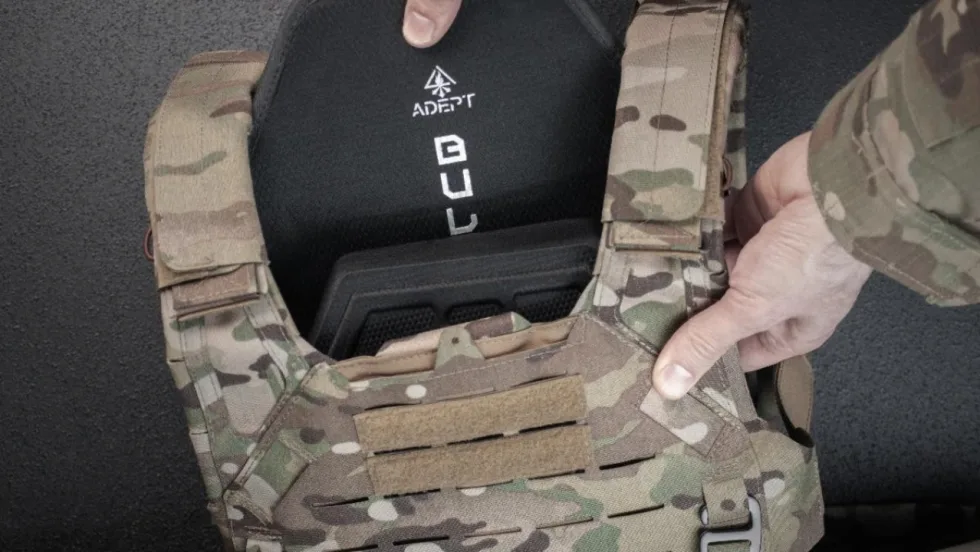
Adept Armor Introduces Two New Rifle Plates
Adept Armor has launched two new Level IV ballistic plates, the Emperor and the Archon Mark 2, which brings Adept Armor’s new Quatroid ceramic to the high-threat, performance-value center of the range at 5.2 pounds.
Read More →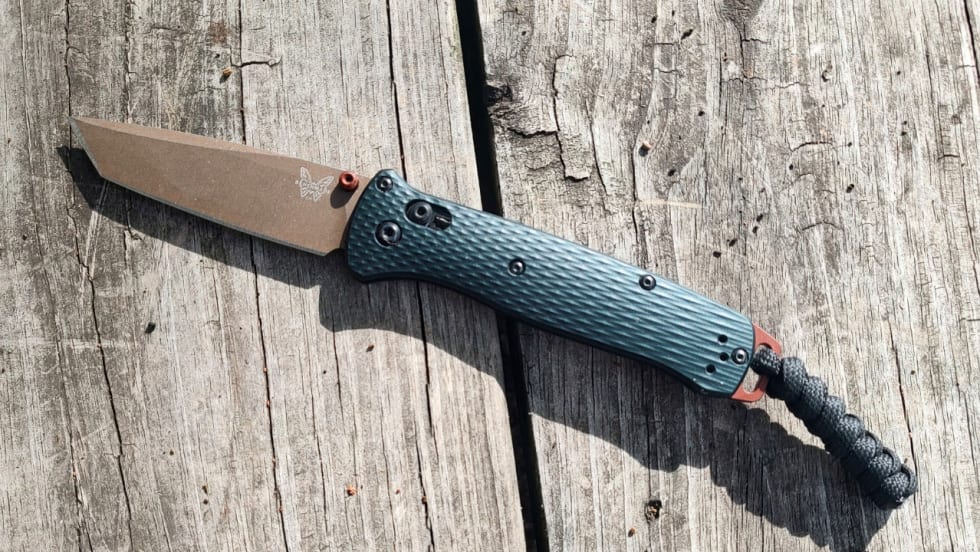
POLICE Product Test: Benchmade Bailout
The Benchmade Bailout is a slim, lightweight carry knife with a deep-ride pocket clip and comes in a variety of blade steels and scales. Here is a detailed review of the Taiga Green Bailout, released earlier this year.
Read More →
NLEOMF Announces July 2026 Officer of the Month
NLEOMF honored a Michigan deputy sheriff as the July 2026 Officer of the Month for rescuing a trapped driver from a burning vehicle following a Fourth of July crash.
Read More →
Streamlight to Showcase Newest Lighting Products at National Safety Council’s Safety Congress & Expo 2026
Streamlight will showcase its latest lights, including the Portable Scene Light III and the LiteBox 1Million, at the 2026 National Safety Council (NSC) Safety Congress & Expo.
Read More →
The 2027 World Police & Fire Games Set for Perth, Australia
The 2027 World Police & Fire Games (WPFG) will take place in Perth, Western Australia, from Friday, March 12 through Sunday, March 21, 2027.
Read More →
5.11 Partners with National Fallen Firefighters Foundation to Support #ForThe343
5.11 has joined the nationwide movement honoring the 343 New York City Fire Department firefighters lost on Sept. 11, 2001.
Read More →
Team Wendy Announces Title Sponsorship of the Jorge Pastore Foundation
Team Wendy’s 3-year partnership with the Jorge Pastore Foundation expands access to programs that strengthen those who serve.
Read More →
National Law Enforcement Memorial and Museum Hosting 9/11 25th-Year Commemoration Ceremony
The National Law Enforcement Memorial and Museum is hosting a 9/11 25th Year Commemoration Ceremony on Sept. 11 at 4 p.m.
Read More →
National Law Enforcement Officers Memorial Fund Announces June 2026 Officers of the Month
The National Law Enforcement Officers Memorial Fund (NLEOMF) named 15 officers of the Chico Police Department (California) as the Officers of the Month for June 2026 for their roles in responding to an active-shooter incident at a public library.
Read More →