



Do You Smell Smoke?
Smoking is about as good for you as drinking toxic waste, although it's a lot more satisfying.

Late last year the Riverside County (Calif.) Board of Supervisors approved a measure that would prohibit the hiring of sheriff's deputies who smoke.
Take a second and mull over the implications of that decision. The Riverside supervisors didn't forbid smoking in the sheriff's offices, or in sheriff's vehicles, or even on the job. They outlawed the hiring of anyone who just happens to smoke in his or her private life.
Riverside officials say the smoking prohibition for new hires was enacted to address the escalating cost of health, disability, and worker's compensation insurance for county law enforcement officers. They contend smokers are much more prone to cancer, heart disease, and respiratory disease, and that all those dying former deputies are a drain on the county's coffers.
Science backs the supervisors' argument. Smoking is about as good for you as drinking toxic waste, although it's a lot more satisfying. But if they want to start banning law enforcement officers from doing things that could harm their health when they are off duty, I respectfully submit that the Riverside supes should consider banning the following activities: eating anything but low-fat foods, drinking anything but water, running (it's bad for the knees), shooting (it's bad for the ears), driving too fast, driving too slow, dating, sex, child birth, and talking on a cell phone.
That's just a short list of off-duty activities that can cause long-term or sudden disability for law enforcement officers. And I'd like to add one special one for Riverside County employees: living in Riverside.
I don't mean to slam Riverside County. It's a pretty place when you can see it and people out there have been very nice to me, but Riverside is one of the most toxic environments to be found in the United States. The county is home to what may be the nation's most polluted air. You see, the prevailing winds blow most of the smog from greater Los Angeles inland into areas like Riverside County. And Riverside also has toxic waste. The county is home to the infamous Stringfellow Acid Pits, a massive EPA Superfund Site. It would be a reach to claim that living in Riverside County is as bad for you as sucking up a carton of Winstons every week, but it's no exaggeration to say that living in the area is not conducive to good health.
Unfortunately, the Riverside supes have the law on their side. It's perfectly legal for private and public employers to blackball smokers from joining their payrolls. A U.S. Court of Appeals ruled in 1987 that Oklahoma City could enforce a non-smoker hiring policy and that to do so was not discriminatory. One anti-smoking group's analysis of this ruling reads something like this, "smoking is a matter of conduct like drinking beer or playing golf, which a potential employee might relinquish voluntarily."
Well, I'm glad that I work for a company that lets me swing a 7-iron in my off hours. Heck, it lets me swing a 7-iron and drink a beer at the same time if I want.
And wait just a minute. There's really something wrong with an anti-smoking group promoting discrimination against smokers when it comes to employment, insisting that smokers have to take responsibility for their voluntary vice, and then turning right around and promoting legal action against tobacco companies on behalf of smokers who can't be held responsible for their own bad habits. As Mr. Spock would say, "That's quite illogical, Captain."
OK, I gave up smoking long ago. But if I want to, I should be able to go light up. It's legal. And it's my right as an adult American to have a cigarette... eat a cheeseburger, pound some bourbon, go scuba diving, shoot a pistol, climb a mountain, drive a sports car...And do dozens of other unhealthy things.
When it comes to this kind of intrusion into our basic rights, government should take its own advice and just say, "No."
More Patrol

Streamlight Portable Scene Light III Wins 2026 OH&S New Product of the Year Award
Streamlight’s Portable Scene Light III has won the 2026 Occupational Health & Safety (OH&S) New Product of the Year Award in the Lighting category.
Read More →
Adept Armor Introduces Two New Rifle Plates
Adept Armor has launched two new Level IV ballistic plates, the Emperor and the Archon Mark 2, which brings Adept Armor’s new Quatroid ceramic to the high-threat, performance-value center of the range at 5.2 pounds.
Read More →
POLICE Product Test: Benchmade Bailout
The Benchmade Bailout is a slim, lightweight carry knife with a deep-ride pocket clip and comes in a variety of blade steels and scales. Here is a detailed review of the Taiga Green Bailout, released earlier this year.
Read More →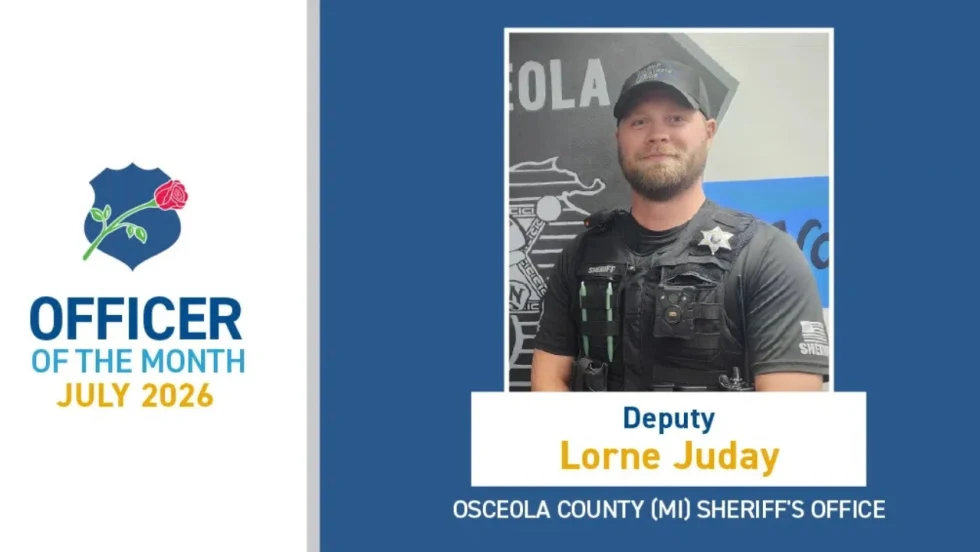
NLEOMF Announces July 2026 Officer of the Month
NLEOMF honored a Michigan deputy sheriff as the July 2026 Officer of the Month for rescuing a trapped driver from a burning vehicle following a Fourth of July crash.
Read More →
Streamlight to Showcase Newest Lighting Products at National Safety Council’s Safety Congress & Expo 2026
Streamlight will showcase its latest lights, including the Portable Scene Light III and the LiteBox 1Million, at the 2026 National Safety Council (NSC) Safety Congress & Expo.
Read More →
The 2027 World Police & Fire Games Set for Perth, Australia
The 2027 World Police & Fire Games (WPFG) will take place in Perth, Western Australia, from Friday, March 12 through Sunday, March 21, 2027.
Read More →
5.11 Partners with National Fallen Firefighters Foundation to Support #ForThe343
5.11 has joined the nationwide movement honoring the 343 New York City Fire Department firefighters lost on Sept. 11, 2001.
Read More →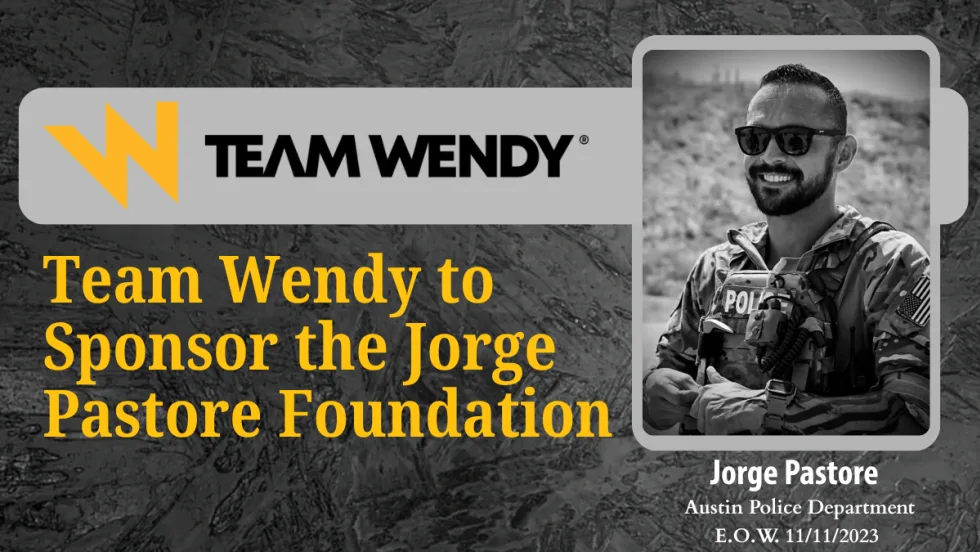
Team Wendy Announces Title Sponsorship of the Jorge Pastore Foundation
Team Wendy’s 3-year partnership with the Jorge Pastore Foundation expands access to programs that strengthen those who serve.
Read More →
National Law Enforcement Memorial and Museum Hosting 9/11 25th-Year Commemoration Ceremony
The National Law Enforcement Memorial and Museum is hosting a 9/11 25th Year Commemoration Ceremony on Sept. 11 at 4 p.m.
Read More →
National Law Enforcement Officers Memorial Fund Announces June 2026 Officers of the Month
The National Law Enforcement Officers Memorial Fund (NLEOMF) named 15 officers of the Chico Police Department (California) as the Officers of the Month for June 2026 for their roles in responding to an active-shooter incident at a public library.
Read More →