



Deadly Force in D.C.
Critics often ask why officers didn't shoot at the tires. The answer is that law enforcement tactics don't follow Hollywood fiction. They must work in the real world.

Law enforcement's use of deadly force at the end of the Oct. 3 U.S. Capitol pursuit may not satisfy the mainstream media or other second guessers, but it was the proper response.
Based on what we know publicly, a volatile subject attempted to breach a White House security barrier by ramming a black Infiniti sedan into it. When the subject failed, he or she rammed a responding radio car and struck a Secret Service agent. The subject then exposed the officers to great risk by driving away at high speed in a reckless manner. Minutes later the subject crashed his or her vehicle into a U.S. Capitol Police barricade. Officers stopped the potentially lethal threat by appropriately deploying their firearms.
Notice my reference to the individual who initiated the lethal scenario as “the subject" and not identifying her gender or name, both of which are now well known. I’m doing that for a very important reason: The officers facing the threat did not know her identity or maybe even her gender during the incident. They just knew they were dealing with a subject who was presenting a deadly threat at the time.
Responding officers were confronted by a potentially lethal, unknown threat, rather than a young attractive woman with her child in the rear seat. But inevitably, the news media's bias drew upon the subject's gender and appearance to criticize the level of force used.
No one envies the officers who were on scene during the initial and final attacks. We don't know whether the officers were able to see the child in the back seat, especially considering window visibility factors. The officers demonstrated remarkable restraint when the subject first attempted to breach the security using her vehicle as a lethal weapon.
The presence of the child should be viewed as a potential victim of the subject's lethal behavior, and the officers should be commended for rescuing her without injury. History has shown us that subjects exuding irrational, lethal behavior have exploited children to accomplish their deadly objectives. The presence of a child, as heart wrenching as it may be, doesn't reduce the level of threat posed by the subject.
In terms of the use of deadly force, federal law enforcement officers follow the same policy and concept. We discharge our weapons as a last resort to stop a potentially lethal threat and prevent serious bodily injury or loss of life.
Based on what is known, the officers used the appropriate level of force considering their reasonable perception of the threat level initiated by the subject, Miriam Carey, 34. Carey’s use of the Infiniti, and the fact that she rammed government property and federal officers, posed a potentially lethal threat to the officers. She also posed a lethal threat to the public in the immediate area, including her child.
While it was obvious Carey used her vehicle in a hazardous manner to gain unauthorized entry to government property, there was no way to discern whether the vehicle contained any explosive material or other weapons that could have fatally wounded the officers or bystanders. Officers assess available threat indicators in micro-seconds and react accordingly.
Critics often ask why officers didn't shoot at the tires. The answer is that law enforcement tactics don't follow Hollywood fiction. They must work in the real world. Warning shots and shots at tires are usually prohibited by agency policy because they pose a greater threat to those in the immediate area. Shooting at tires would create a dangerous ricochet swarm that exposes anyone in the immediate area to significant risk.
The officers should be commended for their performance. The second-guessing, "could have" committee will draw upon the subject's publicized mental health history, and somehow suggest the officers should have known this and tempered their response. That's nonsense. There's no pause button for an officer to hit while being confronted by a lethal threat. Law enforcement officers receive training on how to deal with subjects with known mental illness, but in this situation, the officers needed to objectively assess what was known at the time of the attacks and respond appropriately.
While the loss of this young woman’s life is regrettable, it's fortuitous that no law enforcement officers or innocent civilians were killed. The Secret Service and Capitol Police have a very dangerous job, and they carry out their respective high-risk missions with the utmost degree of professionalism. I applaud them for their unwavering service to our country, and for confronting volatile subjects to keep us safe.
More Patrol

Adept Armor Introduces Two New Rifle Plates
Adept Armor has launched two new Level IV ballistic plates, the Emperor and the Archon Mark 2, which brings Adept Armor’s new Quatroid ceramic to the high-threat, performance-value center of the range at 5.2 pounds.
Read More →
POLICE Product Test: Benchmade Bailout
The Benchmade Bailout is a slim, lightweight carry knife with a deep-ride pocket clip and comes in a variety of blade steels and scales. Here is a detailed review of the Taiga Green Bailout, released earlier this year.
Read More →
NLEOMF Announces July 2026 Officer of the Month
NLEOMF honored a Michigan deputy sheriff as the July 2026 Officer of the Month for rescuing a trapped driver from a burning vehicle following a Fourth of July crash.
Read More →
Streamlight to Showcase Newest Lighting Products at National Safety Council’s Safety Congress & Expo 2026
Streamlight will showcase its latest lights, including the Portable Scene Light III and the LiteBox 1Million, at the 2026 National Safety Council (NSC) Safety Congress & Expo.
Read More →
The 2027 World Police & Fire Games Set for Perth, Australia
The 2027 World Police & Fire Games (WPFG) will take place in Perth, Western Australia, from Friday, March 12 through Sunday, March 21, 2027.
Read More →
5.11 Partners with National Fallen Firefighters Foundation to Support #ForThe343
5.11 has joined the nationwide movement honoring the 343 New York City Fire Department firefighters lost on Sept. 11, 2001.
Read More →
Team Wendy Announces Title Sponsorship of the Jorge Pastore Foundation
Team Wendy’s 3-year partnership with the Jorge Pastore Foundation expands access to programs that strengthen those who serve.
Read More →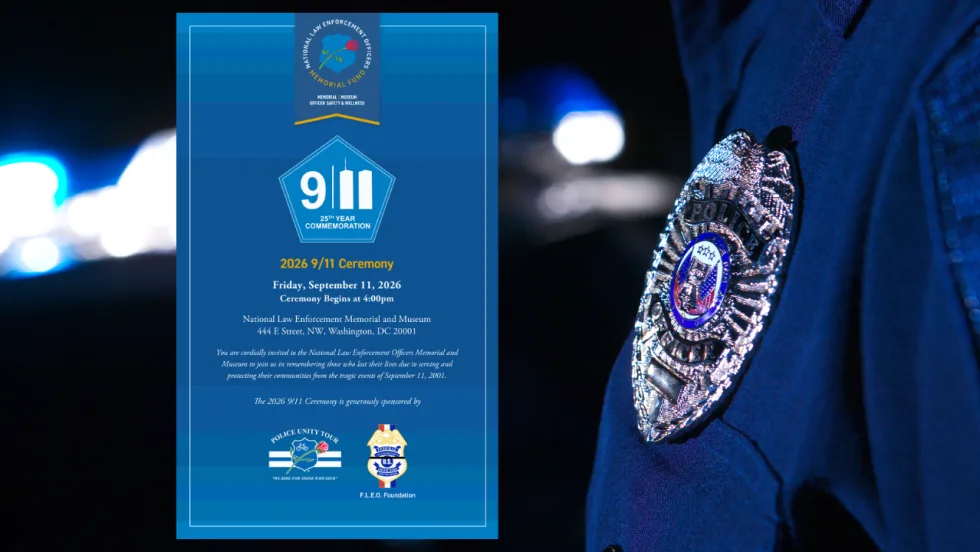
National Law Enforcement Memorial and Museum Hosting 9/11 25th-Year Commemoration Ceremony
The National Law Enforcement Memorial and Museum is hosting a 9/11 25th Year Commemoration Ceremony on Sept. 11 at 4 p.m.
Read More →
National Law Enforcement Officers Memorial Fund Announces June 2026 Officers of the Month
The National Law Enforcement Officers Memorial Fund (NLEOMF) named 15 officers of the Chico Police Department (California) as the Officers of the Month for June 2026 for their roles in responding to an active-shooter incident at a public library.
Read More →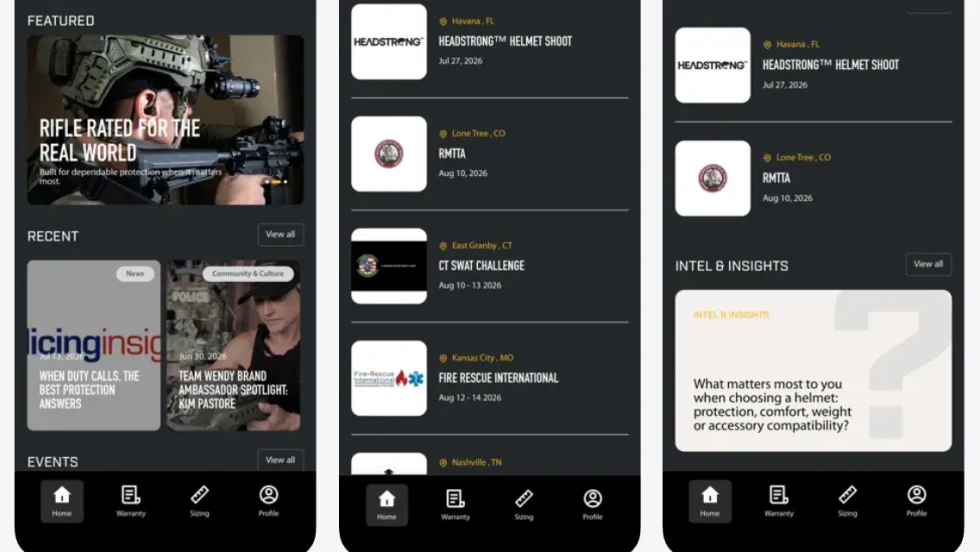
Team Wendy App Creates New Digital Hub for Helmet Owners
The Team Wendy Community App provides one location for warranty registration, size-fit tools, product updates, and community connection. For helmet owners, the new app creates a simpler path to the information and tools that matter most.
Read More →