



Dave Smith: Telling Isn't Training
Classroom, video conference, and online instruction can teach officers a lot of concepts and educate them on law and policy, but they are no substitute for physical training.

POLICE
Recently I was talking to a friend about his in-service training and how it was becoming more and more computer based. The great thing about computer-based instruction is it can be done at any time from any place. The bad thing is that it’s not what I would call training; it’s education.
Certainly, educating our people is a critical task, especially where concepts, context, knowledge, and perspective are concerned. But training requires doing. The chalk talk in football is a key to teaching a team the overview of a play, but the training of players can only commence when they are actually physically executing the plays on the practice field.
The simple truth is training is distinctly different than instruction and education. You are trained to shoot at the range by shooting and learning to move effectively and safely when firing. You get educated on the legality, ramifications, and moral foundations in a classroom. Training is best understood by the maxim: “If I do it, I learn it. And if I do it a lot, I learn it well.”
I first heard that saying decades ago from the legendary fire service trainer Brian Crandall E.D. when he explained the importance of training “in context;” one of the core principals in preparing firefighters for their work. Going to fight a fire in smoke? Train in smoke. Fighting fires in heavy turnout gear? Train in the gear. Working with a mask on? Train with one on. Fire training is a life and death affair for the fire service, and it should be for law enforcement as well. Ask any great trainer how to prepare for an active shooter situation and they will ask you where, when, how, and what does good performance versus bad look like so we can measure our learner’s progress. Then they will tell you to get out actually and do it, do it, and do it again.
Always remember that training is a long-term modification of behavior, preparing the trainee to reproduce the skill automatically, exactly as taught. Too often our folks walk out of a defensive tactics class, for instance, with only the recognition that the instructor was one tough dude, but nothing was transferred to them except a bruise or two. I have walked off the mats many times thinking I had just attended a demonstration of butt kicking without improving my skill of avoiding such a butt kicking.
It would seem that the intrinsic motivation of crime fighters to prevent a beating would make training them in how to quickly overcome an assailant an easy task; but, too often, the ones assigned to do the training are not the right people for the job. One of the key principles of instructor development is that the focus of training, instruction and education is the learner, not the teacher. Many times, we think a top performer is going to always be a great teacher but that is not the case. The fact is that high-level performers often don’t even remember being a novice and are unable to empathize with those learning the very basics of a skill.
In their outstanding book “Telling Ain’t Training,” Harold D. Stolovitch and Erica J. Keeps describe how, often, parents try to teach their kids how to drive with terrible results. Understanding the issues of skill acquisition by a naïve learner is very important and great trainers have a knack for making even the most difficult student into an excellent performer. Anyone can train a “natural,” but only a good trainer is going to have the skills and patience to bring a remedial performer up to par and, in our profession, par is an essential level for survival’s sake.
Finally, PowerPoint training and Zoom are often used to transfer knowledge, but to say you gave your people a Zoom Class on active shooter tactics is like saying you taught your folks to ride a bike by PowerPoint. That just doesn’t cut it! Train like a firefighter, in the context the skill will be needed. Get in your schools, and factories, and malls, and practice, practice, practice. We love how an action hero can grab a spatula and defeat a villain wielding a knife, but that move is rehearsed by actor and stuntman over and over again until it looks smooth.
That is exactly how we want law enforcement heroes to respond: smooth and fast, safe and effective. Training is indispensable in this high-liability world and the greatest way to compensate for the increased risks and pressures on our people is tprepare them mentally and physically for the challenges they may face.
Training must become a national priority, and developing trainers a prime goal, for all agencies. Develop top trainers and you are going to develop top troops. So, demand high standards, develop your trainers, and remember that great trainers are lifelong students. You trainers, keep learning, growing, and developing your own skills and abilities.
Dave Smith is an internationally recognized law enforcement trainer and is the creator of “JD Buck Savage.” You can follow Buck on Twitter at @thebucksavage
More Training
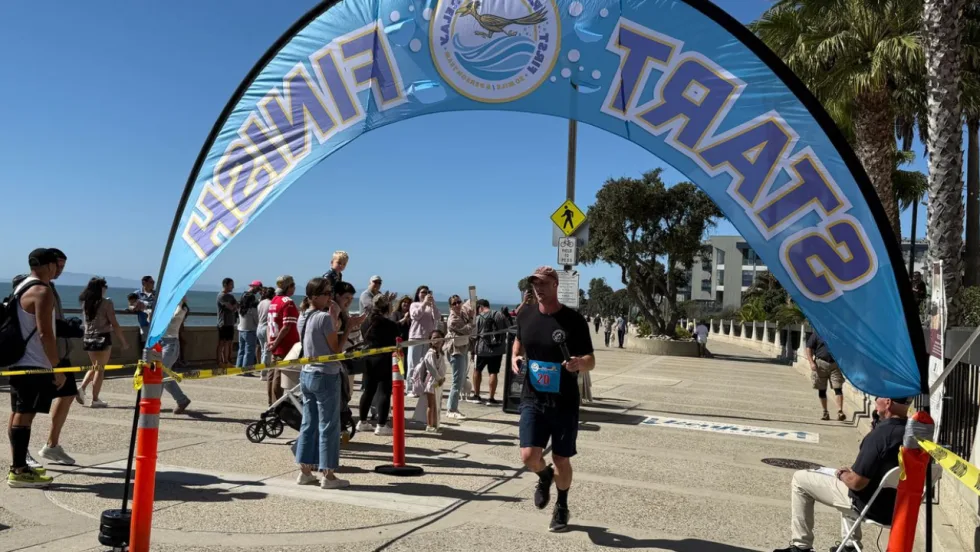
Registration Underway for Sixth Annual First Responders Relay
The California Police Athletic Federation’s annual First Responder Relay will welcome first responder teams from across the globe to compete along Ventura's scenic coastline on Oct. 11. Registration is underway.
Read More →
Vector Solutions Launches Comprehensive Online Dispatch Training Catalog for Emergency Communications Professionals
Vector Solutions’ new catalog of 35 expert-developed online courses can help emergency communication centers strengthen training, meet certification requirements, and simplify continuing education.
Read More →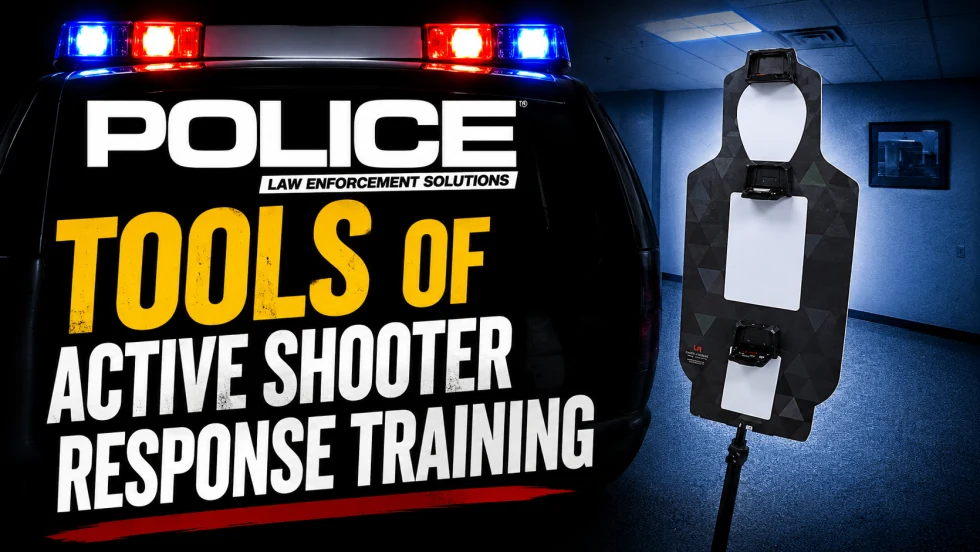
Tools for Active Shooter Response Training
What technologies help prepare officers for active shooter response situations? This behind-the-scenes look at law enforcement training explores shot simulators, smart firearms, laser target systems, and the tools used to build safer, more effective training environments.
Read More →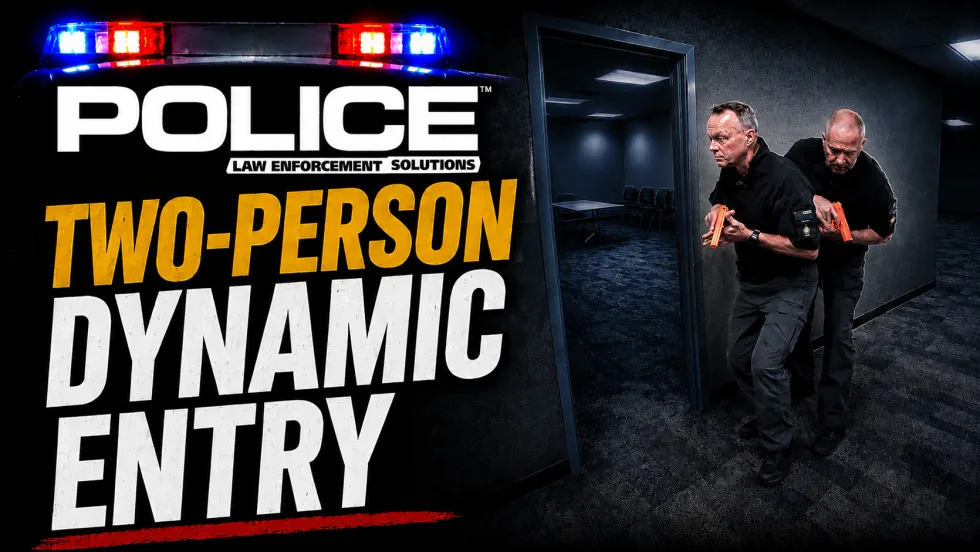
Two-Officer Tactical Doorway Entry Techniques
Entering a room during active-threat situations requires communication, coordination, and disciplined tactical movement. In this video, trainers from the United States Deputy Sheriff’s Association demonstrate critical room entry concepts, including fatal funnel awareness, team coordination, and safe tactical movement.
Read More →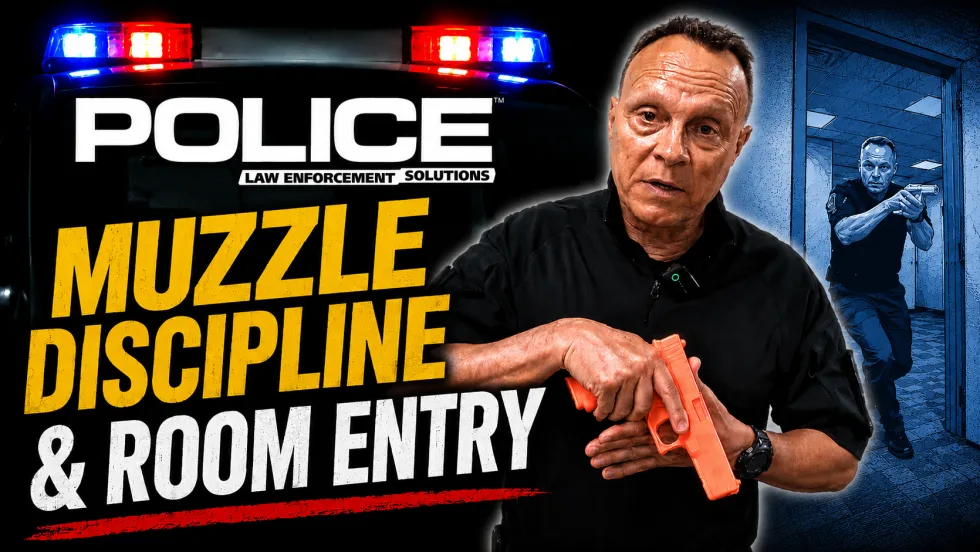
High Compressed Ready Explained | Muzzle Control For Room Entry
In this video, Mike Willis, law enforcement national training and program director for the United States Deputy Sheriffs’ Association, demonstrates the high compressed ready position and discusses muzzle control during room entry.
Read More →
Why Attend the DroneSense Innovation Summit by Versaterm?
Let’s hear from Ryan Bracken, head of product, about why your agency should send someone to the first annual DroneSense Innovation Summit by Versaterm in April.
Read More →
Caswell Live Fire Spins Off from InVeris
Caswell Live Fire has spun off from parent company InVeris, coinciding with the 100th anniversary of Caswell’s founding. Over the past 100 years, Caswell has developed pioneering solutions that support military, law enforcement, and commercial clients worldwide.
Read More →
When Do You Transport a Wounded Officer Instead of Waiting for EMS?
Thumbnail for video series POLICE Topics, Tactics & Tips with a yellow headline that reads When Do You Transport a Wounded Officer Instead of Waiting for EMS?
Read More →
How to Pick Your High-Risk Stop Location for Tactical Advantage
Hear veteran trainer Mike Willis, of the United States Deputy Sheriff’s Association, explain several considerations that can help you wisely pick your best spot to initiate high-risk or felony traffic stops.
Read More →
Coffee Break with Police Experts: Using Your Patrol Vehicle for Cover
In this video, hear from Dustin Mowery, a product specialist at Team Wendy, as he discusses how to best use a patrol vehicle for cover.
Read More →