



Dave Smith: Pay Attention or Pay the Piper
Don’t let the distractions presented by police and private technology make you a casualty.
A guy double parks in downtown Manhattan and walks into an office building with a rifle. He kills an NYPD officer working off-duty providing security and three civilians before killing himself.
Two Ohio, police officers are ambushed while having lunch. Both are wounded and one dies at a local hospital. A third arrives on scene to provide backup and is also wounded. The suspect was killed in a fierce battle with the three officers.
In Springfield, Oregon, two officers are stabbed while dealing with a miscreant who was described as a suspicious person in a vehicle.
These incidents illustrate that times are as dangerous now for law enforcement officers, if not more so, than they have ever been. There is no time for distractions or wasting our limited capacity focusing on things not relevant to our safety and the safety of others while on the job and off the job.
One big problem today is that technology continues to distract us. Smartphones, earbuds, laptops, tablets, digital procedures, and other distractors are everywhere. Write a ticket in the old days and you could quickly look up from your citation book to check the subjects around you. Today, you are sitting in the front seat of your car looking at the computer while creating a citation.
And if tying up your visual focus isn’t enough, pop those earbuds in to further limit your ability to attend to the world around you. I am a big fan of technology, but officer safety requires you to not only look, but see, to not only listen but hear, and not only at the conscious level, but at the intuitive level as well. In his marvelous book, “See What Others Don’t,” Gary Klein describes the process of insights and, as with so much of his research, it applies to high-risk professions like law enforcement, fire, military, and any other profession requiring split-second recognition of threats and instant responses.
The difference between what a veteran police officer sees and what a rookie officer observes is remarkable. And the difference between what a veteran officer sees compared to what a civilian is even greater. Civilians are not able to comprehend or even recognize why an officer did what he or she did because they don’t see what officers see. Noticing threat patterns, ambiguous patterns, or even simple contradictory actions requires an observer to do just that, observe.
Often the recognition by a veteran officer is so intuitive that he or she has difficulty explaining it in cognitive terms. It literally comes across as a feeling, a sense. The trouble is that today we have all this technology focusing us inwards or away from where any threat cues would be coming from.
I sometimes wonder if we should just put a label on every display screen used by law enforcement that says, “LOOK UP!” to remind us to check the real world around us.
At the same time, we still have all the usual suspects lowering our awareness and making us susceptible to attack. Chief among these is complacency. The effects of routine on human awareness and safety have long been recognized. And in another of Klein’s excellent books, “Sources of Power,” he explains how the very nature of routine makes it invisible, and constant, and just part of doing your job.
To combat all of this, we need to do a couple of things, and I emphasis, WE, not the agency, not the sergeant. You and I need to make ourselves safer, and harden the target so to speak.
First, “open” ear earbuds don’t block your hearing of the outside world as much as ones that go into the ear canal. Second, always ask yourself: “What doesn’t fit this scene? What could be a threat? Who could be a threat?” This isn’t paranoia, it’s preparation to quote the legendary police writer Chuck Remsburg.
Next, if you are texting or doing Facebook or TikTok and pretending to work on your phone, get into the habit of constantly looking up, checking for threats, and evaluating the environment. Finally, trust your gut, your intuition, your “Spidey Sense,” it has saved tons of cops’ lives.
Yes, my generation didn’t have all the distractors of today. Heck, we didn’t even have portable radios my first few years. But it was a dangerous time then as it now, and we checked our tires when returning to our vehicles because terror groups had bombed a crimefighter back East. Times have always been hard and hard men and women adapt and overcome.
The world has returned to the dark times of anti-police rhetoric and violence. So keep your head on a swivel. I remember a joke someone told in the department gym so often that a sign was put up that said it. And that joke still applies today just as then.
“Be Alert, the World Needs More Lerts!”
Dave Smith is an internationally recognized law enforcement trainer and is the creator of “JD Buck Savage.” You can follow Buck on Twitter at @thebucksavage
More Patrol

Adept Armor Introduces Two New Rifle Plates
Adept Armor has launched two new Level IV ballistic plates, the Emperor and the Archon Mark 2, which brings Adept Armor’s new Quatroid ceramic to the high-threat, performance-value center of the range at 5.2 pounds.
Read More →
POLICE Product Test: Benchmade Bailout
The Benchmade Bailout is a slim, lightweight carry knife with a deep-ride pocket clip and comes in a variety of blade steels and scales. Here is a detailed review of the Taiga Green Bailout, released earlier this year.
Read More →
NLEOMF Announces July 2026 Officer of the Month
NLEOMF honored a Michigan deputy sheriff as the July 2026 Officer of the Month for rescuing a trapped driver from a burning vehicle following a Fourth of July crash.
Read More →
Streamlight to Showcase Newest Lighting Products at National Safety Council’s Safety Congress & Expo 2026
Streamlight will showcase its latest lights, including the Portable Scene Light III and the LiteBox 1Million, at the 2026 National Safety Council (NSC) Safety Congress & Expo.
Read More →
The 2027 World Police & Fire Games Set for Perth, Australia
The 2027 World Police & Fire Games (WPFG) will take place in Perth, Western Australia, from Friday, March 12 through Sunday, March 21, 2027.
Read More →
5.11 Partners with National Fallen Firefighters Foundation to Support #ForThe343
5.11 has joined the nationwide movement honoring the 343 New York City Fire Department firefighters lost on Sept. 11, 2001.
Read More →
Team Wendy Announces Title Sponsorship of the Jorge Pastore Foundation
Team Wendy’s 3-year partnership with the Jorge Pastore Foundation expands access to programs that strengthen those who serve.
Read More →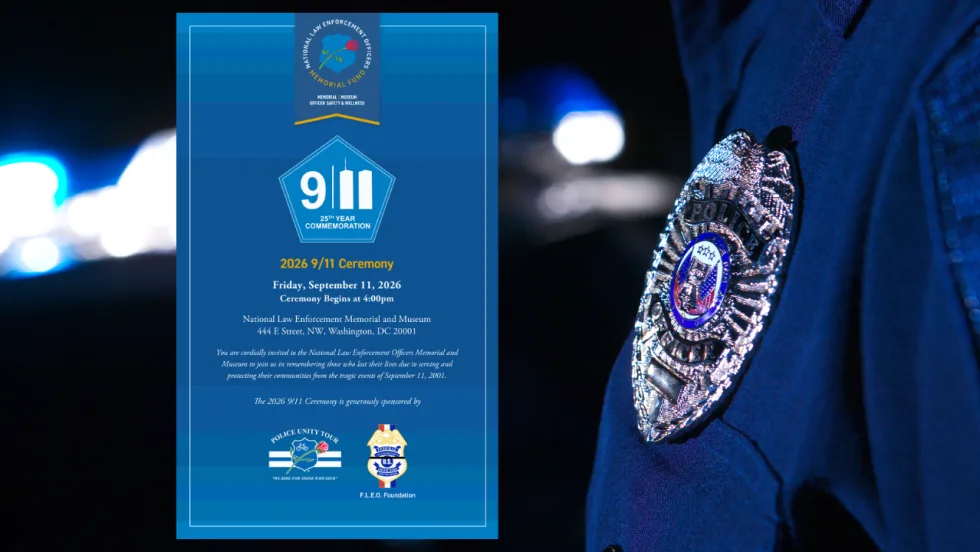
National Law Enforcement Memorial and Museum Hosting 9/11 25th-Year Commemoration Ceremony
The National Law Enforcement Memorial and Museum is hosting a 9/11 25th Year Commemoration Ceremony on Sept. 11 at 4 p.m.
Read More →
National Law Enforcement Officers Memorial Fund Announces June 2026 Officers of the Month
The National Law Enforcement Officers Memorial Fund (NLEOMF) named 15 officers of the Chico Police Department (California) as the Officers of the Month for June 2026 for their roles in responding to an active-shooter incident at a public library.
Read More →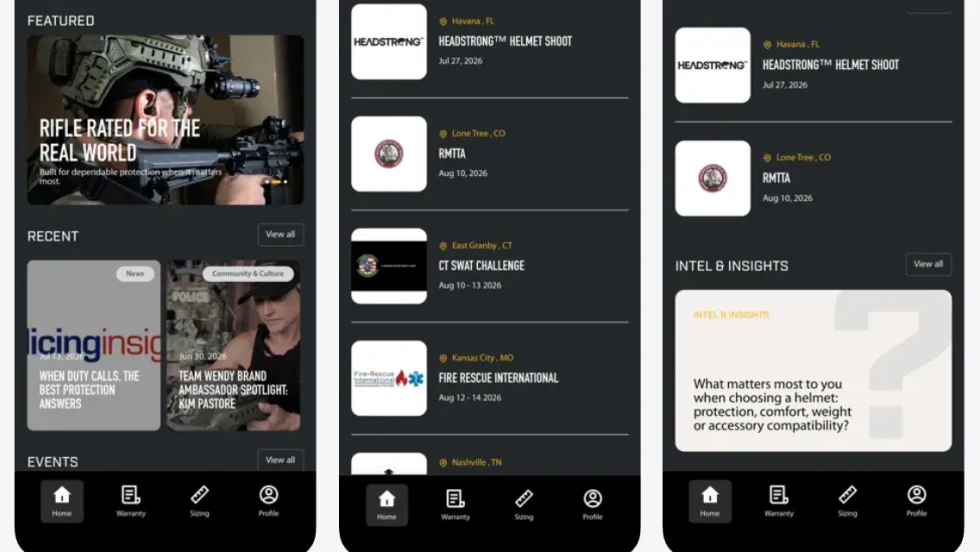
Team Wendy App Creates New Digital Hub for Helmet Owners
The Team Wendy Community App provides one location for warranty registration, size-fit tools, product updates, and community connection. For helmet owners, the new app creates a simpler path to the information and tools that matter most.
Read More →