



Dave Smith: A Nation of Handwringers
There is only one cure for the crime plague that grips America, going back to punishing criminals.

POLICE
I recently overheard a couple of folks at an airport complaining about crime in America. They were quite concerned about their daughter living in Chicago, and were trying to get her to move out of the part of the city where she lives. Understandably, they feared for their daughter’s safety, as Chicago has become a den of crime and violence. But just where can they send their daughter?
The average American seems to be concerned about solving crime rates and making the country safe again from the rising incidences of murder, robbery, theft, assault, and vandalism; but the shiny object that media keeps whining about is incarceration rates and rehabilitation and root causes. They are fiddling while Rome burns.
Of course, this is a constant pattern in modern America. Policies create a crisis, and bureaucrats, talking heads, and others discern that the only way to fix the problem is to implement more of the very policies that created it. Crime is an interesting case in point. It has been highly studied, discussed, debated, and acted upon with various results over the last century but one thing is clear: Today’s policies failed in the 1960s, ‘70s, ‘80s, and halfway through the ‘90s until a new course was taken.
That’s right, we have been here before. “Experts” in the Sixties lamented the number of folks incarcerated in the U.S. and it was decided to depopulate the prisons, moving away from these places of punishment, and instead implement programs of rehabilitation. Feels good, sounds nice, and identical to the policies of today. Problem is, by the seventies crime was going crazy, and yet leaders kept doubling down on the rehabilitation model. Was it poverty, fatherless families, or capitalism that was the problem? No one dared talk anymore about personal responsibility. It had to be someone’s other than the criminal’s fault.
By 1975, James Q. Wilson wrote an interesting, insightful, and foreboding book: “Thinking About Crime.” In his studies, he found that attacking root causes of crime had proven totally unsuccessful. Poverty wasn’t linked directly to crime and spending that had skyrocketed to end both crime and poverty had failed miserably. In all his research, only one, that is right, only one thing reduced crime: certainty of punishment! Boom!
Yes, America had a high incarceration rate, but also it could be shown that the vast majority of incarcerated people were not nonviolent offenders, but rather actually violent offenders from whom society needed protection. Regardless of these facts, lenient prosecutors and judges became the norm and as punishment became less and less likely for criminals, crime skyrocketed further until the Crime Bill of 1994 and its severe punishments, and social programs, became law. Almost overnight, urban centers became safer. James Q. Wilson’s Broken Windows Theory, which postulated that disorder within neighborhoods (for which broken windows was his metaphor) escalated to serious crime, was adopted and proactive policing became the norm. Yes, prisons began to fill back up, but it became evident that it truly was a relatively small percentage of the population that actually committed crimes. Simply removing them from society was the only way to reduce their criminality. And what was the impact of all of this? By 2005 we had the lowest crime rate in our country’s history!
Then, along came law school graduates and social scientists who resurrected the bizarre theories so popular in the past, asserting once again that criminals are not the problem, society is the problem. Turning criminal justice on its head and putting logical analysis out to pasture, the politicians, activists, and media began a feeding frenzy of forgetting the victim, justice for society, and safe streets, and began coddling the criminal class once again.
Beer summits, 21st century Progressive Policing, defunding and debasing the police have all followed in short order. Crime is rampant, victims are neglected, politicians act helpless, and most people are blissfully unaware thanks to a modern media that is vastly more interested in UFO’s than crime. Sadly, once enough folks have become victims, or the crimes become sufficiently horrific, there will be a sudden, “Oh my!” from all the of the above-mentioned handwringers, and perhaps, just perhaps we will come to our senses as in 1994.
In the meantime, you law enforcement leaders must refresh the minds of the ruling elites about “Broken Windows Policing” and how successful it truly was, and maybe get a small plaque to put on your mayor’s desk with the last paragraph from Wilson’s, Thinking About Crime: Wicked people exist. Nothing avails except to set them apart from innocent people. And many people, neither wicked nor innocent, but watchful, dissembling, and calculating of their opportunities, ponder our reaction to wickedness as a cue to what they might profitably do. We have trifled with the wicked, made sport of the innocent, and encouraged the calculators. Justice suffers, and so do we all.
Dave Smith is an internationally recognized law enforcement trainer and is the creator of “JD Buck Savage.” You can follow Buck on Twitter at @thebucksavage
More Patrol

Streamlight Portable Scene Light III Wins 2026 OH&S New Product of the Year Award
Streamlight’s Portable Scene Light III has won the 2026 Occupational Health & Safety (OH&S) New Product of the Year Award in the Lighting category.
Read More →
Adept Armor Introduces Two New Rifle Plates
Adept Armor has launched two new Level IV ballistic plates, the Emperor and the Archon Mark 2, which brings Adept Armor’s new Quatroid ceramic to the high-threat, performance-value center of the range at 5.2 pounds.
Read More →
POLICE Product Test: Benchmade Bailout
The Benchmade Bailout is a slim, lightweight carry knife with a deep-ride pocket clip and comes in a variety of blade steels and scales. Here is a detailed review of the Taiga Green Bailout, released earlier this year.
Read More →
NLEOMF Announces July 2026 Officer of the Month
NLEOMF honored a Michigan deputy sheriff as the July 2026 Officer of the Month for rescuing a trapped driver from a burning vehicle following a Fourth of July crash.
Read More →
Streamlight to Showcase Newest Lighting Products at National Safety Council’s Safety Congress & Expo 2026
Streamlight will showcase its latest lights, including the Portable Scene Light III and the LiteBox 1Million, at the 2026 National Safety Council (NSC) Safety Congress & Expo.
Read More →
The 2027 World Police & Fire Games Set for Perth, Australia
The 2027 World Police & Fire Games (WPFG) will take place in Perth, Western Australia, from Friday, March 12 through Sunday, March 21, 2027.
Read More →
5.11 Partners with National Fallen Firefighters Foundation to Support #ForThe343
5.11 has joined the nationwide movement honoring the 343 New York City Fire Department firefighters lost on Sept. 11, 2001.
Read More →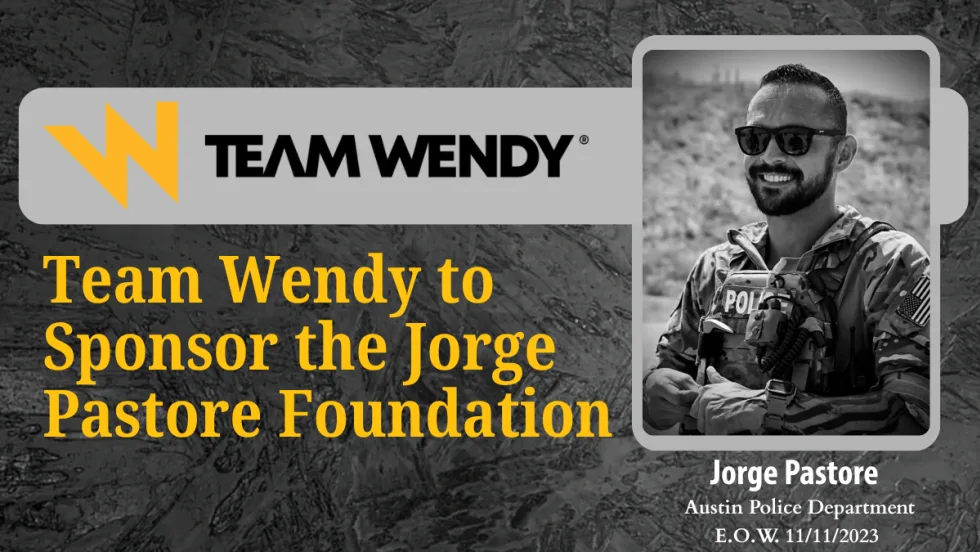
Team Wendy Announces Title Sponsorship of the Jorge Pastore Foundation
Team Wendy’s 3-year partnership with the Jorge Pastore Foundation expands access to programs that strengthen those who serve.
Read More →
National Law Enforcement Memorial and Museum Hosting 9/11 25th-Year Commemoration Ceremony
The National Law Enforcement Memorial and Museum is hosting a 9/11 25th Year Commemoration Ceremony on Sept. 11 at 4 p.m.
Read More →
National Law Enforcement Officers Memorial Fund Announces June 2026 Officers of the Month
The National Law Enforcement Officers Memorial Fund (NLEOMF) named 15 officers of the Chico Police Department (California) as the Officers of the Month for June 2026 for their roles in responding to an active-shooter incident at a public library.
Read More →