



Cross-border Tunnels: What Lies Beneath
The Nogales Tunnel Task Force, headed by U.S. Immigration and Customs Enforcement's Homeland Security Investigations, was established in 2011 and is made up of personnel from CBP, the Drug Enforcement Administration, and state and local agencies.

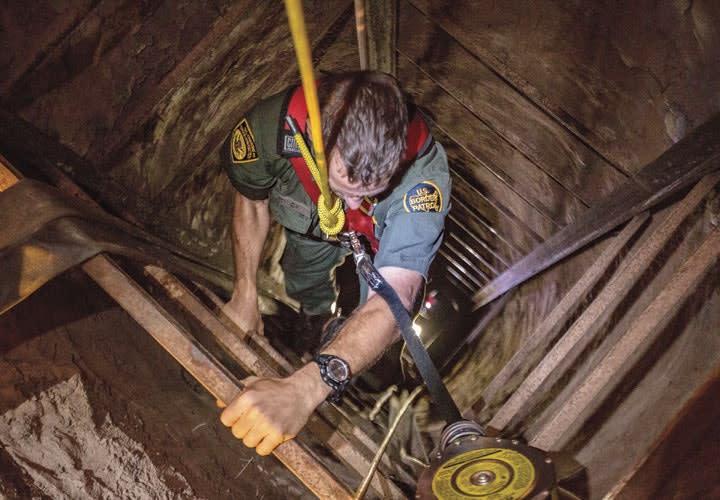
Photo: Josh Denmark
When Supervisory Border Patrol Agent Thomas Pittman began investigating the drainage systems beneath Nogales, Ariz., 20 years ago, he discovered an underground Wild West.
"The drainage tunnels were wide open and people were just flooding through them," Pittman says. "Back then the drains had gates [along the channel between Nogales and Mexico] that were made out of simple landing mat and the illegals would just break them open with no problem and make their way through."
The Border Patrol installed heavy steel gates along the Nogales drainage system to tame the situation, but drug and human traffickers are nothing if not inventive. The new gates denied them unfettered access to Nogales, so they began hand digging their own tunnels that cut into the drainage system.
More than 180 tunnel attempts have been identified since the first cross-border tunnel was documented in Arizona on May 17, 1990. Tunnel discoveries have increased nationwide in recent years: 16 were discovered in fiscal year 2008; 27 more were found in fiscal year 2009; 13 were uncovered in fiscal year 2010; 18 in fiscal year 2011; 16 in fiscal year 2012; seven tunnels were found in fiscal year 2013 and 11 in fiscal year 2014.
Illegal tunneling may be increasing because Mexican drug cartels are finding it much more difficult to use traditional methods to get drugs into the United States. Since 2006, CBP has hired and trained more than 15,000 new Border Patrol agents, new border fencing has been constructed, and the steel gates along the Nogales drainage systems have remained impassable.
"The smuggling organizations are very creative," says Deputy Patrol Agent in Charge Kevin Hecht from Border Patrol's Nogales Station. "Once they come upon significant resistance, like they did with the gates installed by Border Patrol, they don't just give up. They try to find another way.
"It is our job," Hecht says, "to stay on stop of them and prevent them from entering the U.S. illegally."
Through August 2015, 113 tunnels have been discovered in the Tucson Sector and 107 of them were in Nogales. Nogales is the most active illegal tunneling area in the United States.
The Nogales Tunnel Task Force, headed by U.S. Immigration and Customs Enforcement's Homeland Security Investigations, was established in 2011 and is made up of personnel from CBP, the Drug Enforcement Administration, and state and local agencies. Before the task force was created, the Nogales Station had a tunnel team to deal with illegal entries through drainage and infrastructure and via illicit tunnels in the Nogales area. The Border Patrol's Nogales tunnel team works closely with the Nogales Tunnel Task Force.
Each of the approximately 15 members of the Border Patrol's tunnel team plays a critical role, Hecht says.
"Some members crawl the tunnels to investigate and examine the way the tunnels are constructed and if they do or do not cross the international border," Hecht says. "There are also confined-space rescue technicians—they're above ground and handle belay lines and tripod harnesses and whatever safety needs we require, including air quality meters, forced air ventilation, and all the safety requirements and permitting.
"There's also the investigation side," he says, "where we have agents assigned to the task force. Those agents [work the] investigation of a tunnel once it's discovered."
Illicit tunnel diggers make rudimentary tunnels and then use simple, blunt tools to crack holes in the walls of the storm drains or other underground infrastructure. Once they have cracked into the U.S. underground infrastructure, they can travel through the entire system and smuggle drugs or humans or even support terrorist activities. The tunnel team members are not afraid to get their hands dirty to combat these efforts. They regularly explore the maze of Nogales' underground infrastructure, including the drainage systems, taking note of structural integrity and searching for possible breaches made by smugglers. The practice is known as change detection. Change detection also can involve looking for footprints or scratch marks and investigating their source.
Exploring underground tunnels is not for everyone. The initial challenges are being in the right physical shape to crawl the tunnels and having the mindset to be prepared for whatever could be lurking around the corner. Preparation is important and teamwork is essential.
"It's a very close-knit group of people," Hecht says. "We almost know what to do without saying [anything]. We do all safety checks and precautions before we make entry into the tunnel, but once we make it in, it's still an unknown."
Rise of the Machines
The Border Patrol's Nogales tunnel team's battle against drug traffickers recently got another ally: a wireless, camera-equipped robot. In a few of the most narrow, dangerous tunnels, the tunnel team deploys the robot to investigate the passages.
"Our current robot is designed for investigating pipes," Hecht says. "If we can send a robot in first and clear the tunnel, it alleviates a lot of the safety concerns and helps us eliminate some of the unknown factors. Any way you look at it, we still have to verify and validate that the tunnel penetrates the border to classify it as a cross-border tunnel, so a person will need to enter the tunnel under our current standards of operation."
The Nogales tunnel team has plenty of work to do above the surface as well. By building relationships in the Nogales community, it can reach out to businesses that could be exploited as cross-border tunneling locations. The team educates owners and employees about things to be on the lookout for and how to report any suspicious activities or contact by a transnational criminal organization.
"Whenever someone hears noises or sees something unusual – for instance, the city is working on a water main and they have a cave-in underneath the water main – they call us instantly," Hecht says. "They know who to call; we've built that relationship with them. We've also reached out to any of the owners along the border – not renters – but the owners of the property, and they keep an eye out for us. They let us know: 'Hey we heard something, we saw something out of the ordinary, some digging underneath my backyard,' and they'll give us a call."
Filling the Breach
When a tunnel is discovered, the passage must be thoroughly blocked to prevent trafficking. Remediation is the process of rendering a tunnel unusable following interdiction. The type of remediation used depends on the tunnel type. For example, a hand-dug tunnel may be filled with concrete, while a corrugated cut-out (in a storm drain, for instance) must be repaired with a contractor-fabricated, CBP-approved patch or liner.
CBP's finance, facilities management, and engineering teams are responsible for tunnel remediation. The general practice is to plug tunnels as quickly as possible.
Virginia Quiambao of CBP's facilities division works with tunnel remediation and related activities.
"Illegal cross-border tunnel remediation is an extensive internal and external interagency effort to impede passage of humans and/or contraband with the intent of avoiding inspection," she says. "CBP works with business partners to manage and execute right of entry agreements and environmental and real estate activities. Consistent interagency coordination and communication is necessary to streamline tunnel remediation."
Tunnel detection technology offers a promising, long-term strategy for enhancing subterranean situational awareness and combating the threat of illegal cross-border tunnels. It is inherently challenging to detect tunnels of varying diameters at different depths in different types of ground. To address these variations, realizing that there may be no single technology that will work in all environments, technologies are deployed that are best suited to the operational environment.
CBP's Tunnel Detection Program is working diligently to identify, acquire, and procure suitable tunnel detection technology. By conducting market research, extensive academic studies, and field trials, the program has identified viable technology options that have detected illicit cross-border tunnels. Additionally, CBP has partnered with the Department of Defense to test and evaluate tunnel detection technology developed by the Army Corps of Engineers and private industry.
Current detection technologies fall into two categories: physics-based systems and motion detecting system. The technologies were developed primarily for other purposes, including mining and oil drilling.
The threat that tunneling poses is real, and the men and women on the frontlines to combat the activity know the importance of their mission.
"Regardless of whether a tunnel is simply a crude, hand-dug passage or a sophisticated, reinforced passage with lights, all tunnels create viable means for smugglers to enter the United States and pose a potential threat to national security," says Border Patrol Chief Michael J. Fisher.
The job isn't for the faint of heart. Someone still has to drop into a dark tunnel with unknown structural integrity built by amateur engineers. In order to put their fears aside, the Nogales tunnel team members must have tremendous confidence in each other.
"It's a very trusting relationship you have to develop," Hecht says. "You have to trust your lives with each other. Going back to the first tunnel you ever crawled, it plays mind games with you – confined spaces and the claustrophobia and darkness and all the unknowns involved. We try to adopt as many people as we can onto the team but there are some people that freeze. It's just not for them. They get two feet into the illicit, hand-dug portion of the tunnel and [they know] it's just not for them. You've got to have a desire to do this."
Tunnel Types
Tunnels have been found both on the northern and southern borders of the United States through diligent law enforcement work, human intelligence, and even by accident when roads have caved in due to vehicle weight. Since the first tunnel was discovered, cross-border tunnels have become more and more advanced.
Three basic types of illegal tunnels are used to circumvent the U.S. border:
➔ Rudimentary: This type of tunnel is crudely constructed and travels a short distance, less than 20 feet. These tunnels do not use shoring, machinery, electrical power, or ventilation. The entrance to a rudimentary tunnel is usually open air or concealed by something as simple as a piece of plywood.
➔ Interconnecting: This type uses at least one purpose-built section to connect existing underground infrastructure. This includes tunnels that use roads or sidewalks as one or more of the walls for the tunnel. The purpose-built section is often crudely constructed. One specific type of interconnecting tunnel is known as a corrugated cutout. This occurs when a tunnel builder cuts a hole in a corrugated drainpipe. These tunnels usually exit into underground infrastructure in the United States. Once in the United States, users of interconnecting tunnels navigate through infrastructure (like storm drains) with access to multiple exit points as far as a mile from the border.
➔ Sophisticated: A sophisticated tunnel is elaborately constructed and may use shoring, ventilation, electricity, railroads, or water pumps. These tunnels usually span a long distance. The entrance and exit points of sophisticated tunnels are often located within homes or warehouses. These tunnels, even if they are only open for a short period, can allow traffickers to move massive amounts of drugs, humans, currency, and firearms back-and-forth between Mexico and the United States. The soil of the tunnel area often dictates the type of tunnel.
"Some tunnels can have characteristics of all three common tunnel types," says Deputy Patrol Agent in Charge Kevin Hecht from Border Patrol's Nogales Station. "Some are interconnecting but have some sophisticated parts to them and also have rudimentary [portions], depending on the soil type."
The traffickers continue to innovate in their tunnel production, Hecht says.
"There's also a fourth, less common type of tunnel that has come to light lately," he says. "The latest threats are horizontal, directional-drill tunnels, which are very small-diameter tunnels. None have been discovered to be actually operational, but there have been numerous attempts discovered. The intent behind those is to pressurize a pipe similar to a bank teller system, where they would send the drugs pressurized through a pipe."
More Patrol

Adept Armor Introduces Two New Rifle Plates
Adept Armor has launched two new Level IV ballistic plates, the Emperor and the Archon Mark 2, which brings Adept Armor’s new Quatroid ceramic to the high-threat, performance-value center of the range at 5.2 pounds.
Read More →
POLICE Product Test: Benchmade Bailout
The Benchmade Bailout is a slim, lightweight carry knife with a deep-ride pocket clip and comes in a variety of blade steels and scales. Here is a detailed review of the Taiga Green Bailout, released earlier this year.
Read More →
NLEOMF Announces July 2026 Officer of the Month
NLEOMF honored a Michigan deputy sheriff as the July 2026 Officer of the Month for rescuing a trapped driver from a burning vehicle following a Fourth of July crash.
Read More →
Streamlight to Showcase Newest Lighting Products at National Safety Council’s Safety Congress & Expo 2026
Streamlight will showcase its latest lights, including the Portable Scene Light III and the LiteBox 1Million, at the 2026 National Safety Council (NSC) Safety Congress & Expo.
Read More →
The 2027 World Police & Fire Games Set for Perth, Australia
The 2027 World Police & Fire Games (WPFG) will take place in Perth, Western Australia, from Friday, March 12 through Sunday, March 21, 2027.
Read More →
5.11 Partners with National Fallen Firefighters Foundation to Support #ForThe343
5.11 has joined the nationwide movement honoring the 343 New York City Fire Department firefighters lost on Sept. 11, 2001.
Read More →
Team Wendy Announces Title Sponsorship of the Jorge Pastore Foundation
Team Wendy’s 3-year partnership with the Jorge Pastore Foundation expands access to programs that strengthen those who serve.
Read More →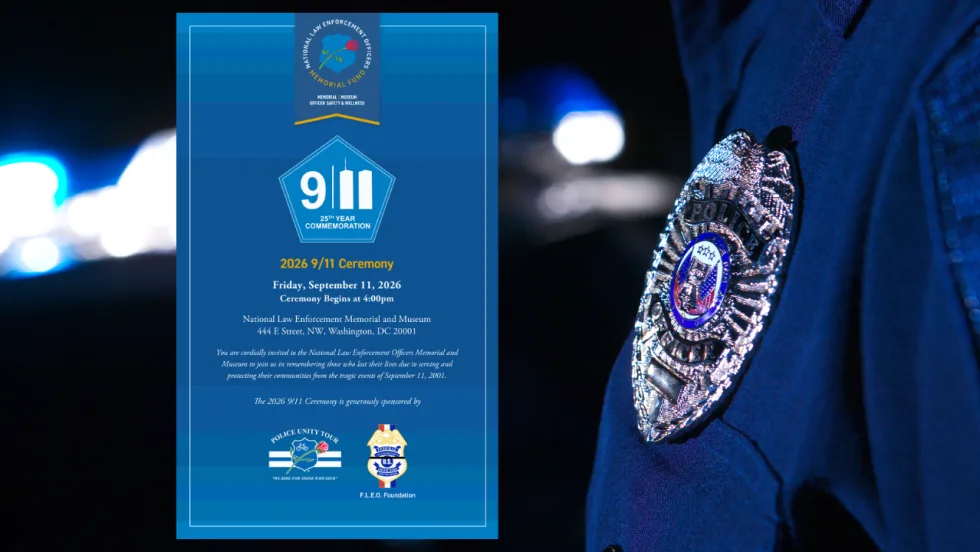
National Law Enforcement Memorial and Museum Hosting 9/11 25th-Year Commemoration Ceremony
The National Law Enforcement Memorial and Museum is hosting a 9/11 25th Year Commemoration Ceremony on Sept. 11 at 4 p.m.
Read More →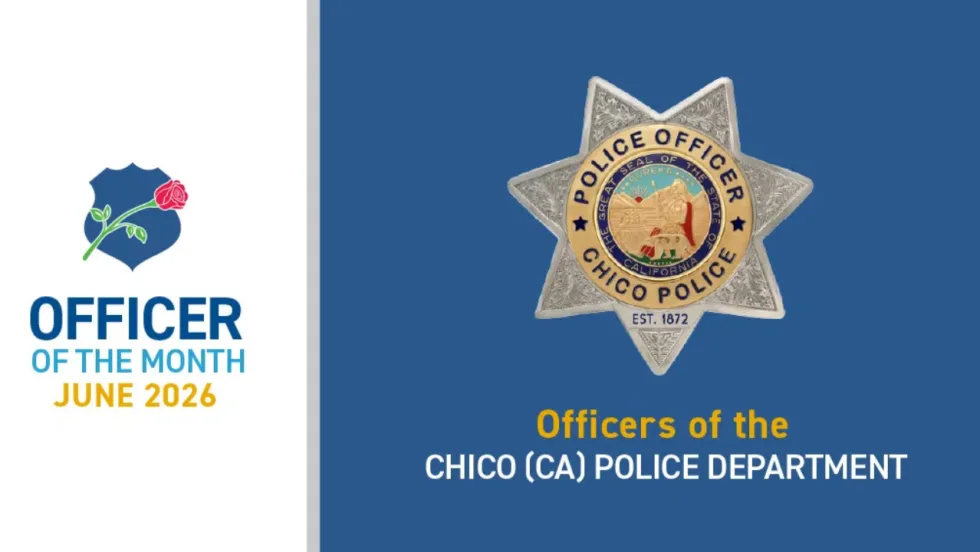
National Law Enforcement Officers Memorial Fund Announces June 2026 Officers of the Month
The National Law Enforcement Officers Memorial Fund (NLEOMF) named 15 officers of the Chico Police Department (California) as the Officers of the Month for June 2026 for their roles in responding to an active-shooter incident at a public library.
Read More →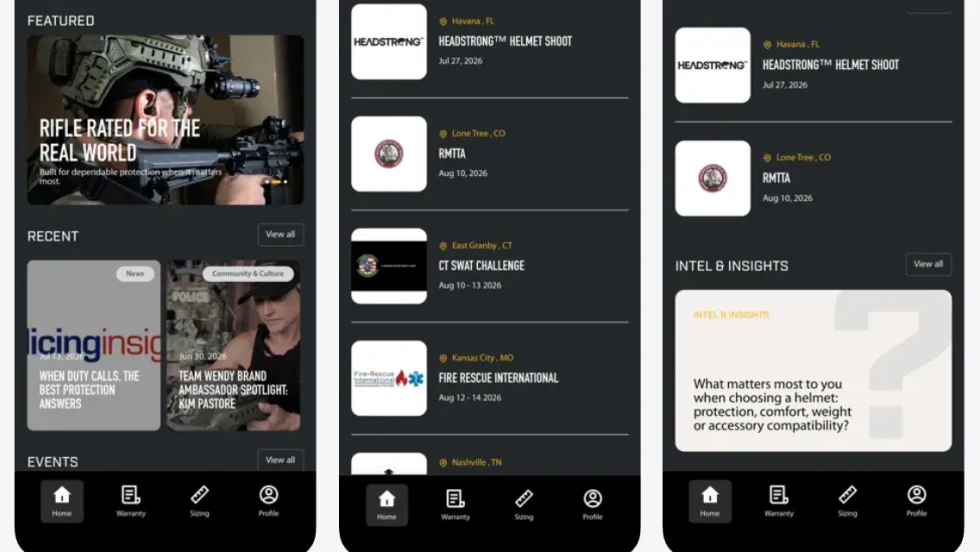
Team Wendy App Creates New Digital Hub for Helmet Owners
The Team Wendy Community App provides one location for warranty registration, size-fit tools, product updates, and community connection. For helmet owners, the new app creates a simpler path to the information and tools that matter most.
Read More →