



Consent Entry After Refusal
The question of who can give valid consent to enter and search private premises has been the subject of numerous Supreme Court opinions.

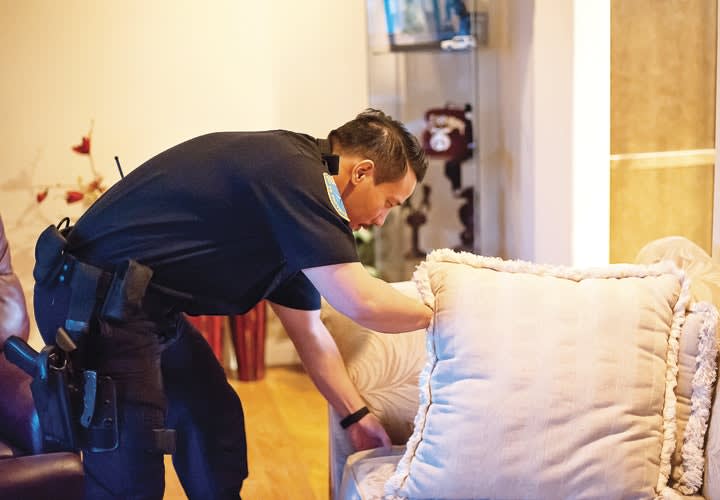
Photo: Mark W. Clark
You're standing at the suspect's front door and asking for consent to enter and search. One occupant (the suspect's spouse or roommate, for example) says "Yes," but the suspect (the other spouse or roommate) says "No." Assuming you have PC to arrest the suspect who is there at the open doorway, could you make an arrest, remove the suspect, and then return to the doorway to get valid consent from the other occupant? As it turns out, you can.
Prior Supreme Court Cases
The question of who can give valid consent to enter and search private premises has been the subject of numerous Supreme Court opinions.
• In the 1974 case of U.S. v. Matlock, the court upheld consent given by one tenant while the other tenant was seated in a police car nearby. In its ruling, the court said this: "The consent of one who possesses common authority over premises or effects is valid against the absent, nonconsenting person with whom that authority is shared."
• Illinois v. Rodriguez, in 1990, upheld consent given by the suspect's live-in girlfriend while he slept inside. Even though police later learned that the girlfriend no longer lived in the apartment and therefore lacked actual authority over the premises, it was enough that she had apparent authority to consent.
• In both Matlock and Rodriguez, the joint-tenant suspect was not at the doorway objecting when consent was given. The importance of that fact was the subject of Georgia v. Randolph, in 2006. Mrs. Randolph told officers at her doorway that her husband had drugs inside. Mr. Randolph was standing at the doorway and refused the officers' request for consent to enter and search. Officers then asked his wife, who consented.
The Supreme Court held that under those circumstances, police could not rely on the wife's consent. Randolph held that if one occupant is present and objecting, the other occupant cannot give effective consent. And in dictum, the court suggested that co-occupant consent would still be invalid "if there is evidence that the police have removed the potentially objecting tenant from the entrance for the sake of avoiding a possible objection." (Randolph was covered in the May 2006 issue of POLICE Magazine.)
But what if police were to remove the objector for other, legitimate reasons, such as for lawful detention or arrest? Would that allow officers to return to the other occupant and obtain a valid consent to enter and search? The court has now answered that question.
Fernandez v. California
Walter Fernandez committed a street robbery. Astute officers went to a gang neighborhood, got an impromptu tip, and knocked on the front door of the apartment Fernandez shared with his girlfriend, Roxanne Rojas. When Rojas answered the door, officers saw bruises, blood, and bumps, indicating recent physical abuse. Fernandez then came to the door and told officers they had no right to enter. He was arrested for domestic battery and removed from the scene.
Shortly afterward, police obtained an ID of Fernandez from the robbery victim. They returned to the apartment and asked Rojas for permission to enter and search. She gave verbal and written consent. Evidence linking Fernandez to the robbery and other charges was retrieved and offered against him in court.
Fernandez moved to suppress the evidence, based on Randolph. His motion was denied, and he was convicted on multiple charges. Eventually reaching the U.S. Supreme Court, Fernandez argued that his girlfriend's consent was not valid because he had already refused to consent, and the officers could not get around this refusal by simply removing him from the scene. In a 9-3 ruling, the Supreme Court rejected Fernandez's argument and affirmed his convictions.
As for application of Randolph to this case, the court said that Randolph is limited to cases in which the suspect is present and objecting at the time consent is given by the other occupant, and those were not the facts in Fernandez. The court characterized Randolph as follows: "The Court's opinion went to great lengths to make clear that its holding was limited to situations in which the objecting occupant is present."
And as to Fernandez's argument that he fell within the Randolph dictum about police removing the objecting tenant in order to obtain consent, the court said that lower courts could not be placed in the position of having to try to discern an officer's subjective reasons for removing a potential objector, but should simply examine the facts to see if the removal was justifiable for other reasons. In the court's words, "The Randolph dictum is best understood not to require an inquiry into the subjective intent of officers who detain or arrest a potential objector but instead to refer to situations in which the removal of the potential objector is not objectively justifiable."
With that understanding, the court noted that Fernandez had not argued that there was no PC to arrest him for domestic abuse, so his removal did not invalidate Rojas's subsequent consent. Once it is determined that the objecting spouse or cotenant was removed with justification, the officer's subjective intent to facilitate consent would be irrelevant. Again quoting the court, "We hold that an occupant who is absent due to a lawful detention or arrest stands in the same shoes as an occupant who is absent for any other reason."
In other words, you cannot simply remove the suspect from the doorway in order to prevent his being present and objecting when you seek consent, when there is no justification for his detention or arrest. On the other hand, if you have reasonable grounds to detain him, he could be removed to prevent his intimidation of the other occupant during your investigation. And if you have PC to arrest him, he could be removed to your patrol car or to the station, and consent could then be sought from the other occupant.
Warrantless Arrest?
Ordinarily, an arrest warrant is required to enter a suspect's home to arrest him. (Payton v. New York) However, in U.S. v. Santana, the Supreme Court said that a person standing at an open doorway is sufficiently exposed to public view as to be considered "in public," so no warrant is required to arrest him (assuming probable cause exists).
Availability of a Warrant
Whenever it's practicable to get a search or arrest warrant, it's always a good idea to do so. The three dissenting justices in Fernandez thought that it was not just a good idea, but a Fourth Amendment requirement that police get warrants whenever they possibly could. The majority rejected such a rule, saying the following:
"It would be unreasonable—indeed, absurd—to require police officers to obtain a warrant when the sole owner or occupant of a house or apartment voluntarily consents to a search. A warrantless consent search is reasonable and thus consistent with the Fourth Amendment irrespective of the availability of a warrant."
Lower Court Decisions
This decision basically affirms the existing rule in the 5th, 7th, 8th, and 10th Circuits, which had already come to the same conclusion, and it abrogates the contrary ruling of the 9th Circuit in U.S. v. Murphy.
Devallis Rutledge is a former police officer and veteran prosecutor who currently serves as special counsel to the Los Angeles County district attorney. He is the author of 12 books, including "Investigative Constitutional Law."
More Patrol
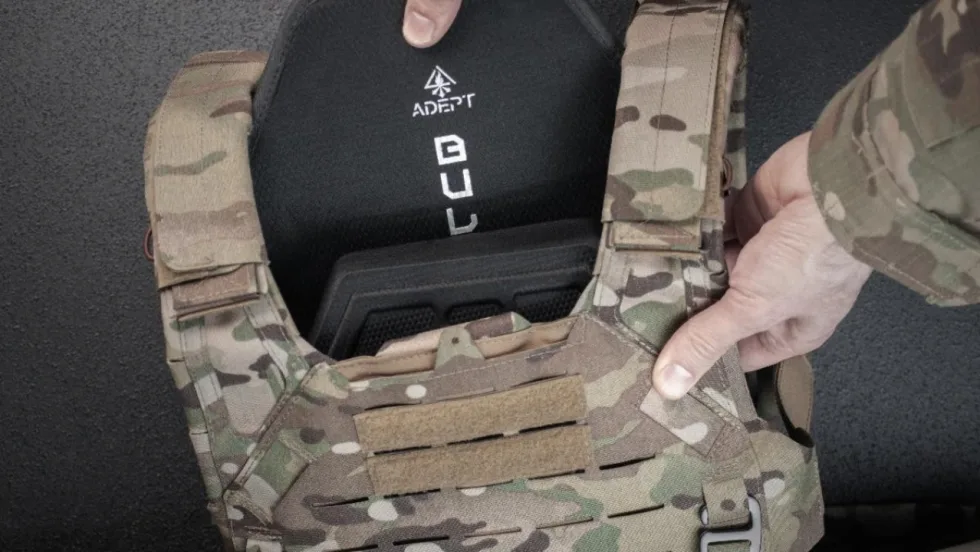
Adept Armor Introduces Two New Rifle Plates
Adept Armor has launched two new Level IV ballistic plates, the Emperor and the Archon Mark 2, which brings Adept Armor’s new Quatroid ceramic to the high-threat, performance-value center of the range at 5.2 pounds.
Read More →
POLICE Product Test: Benchmade Bailout
The Benchmade Bailout is a slim, lightweight carry knife with a deep-ride pocket clip and comes in a variety of blade steels and scales. Here is a detailed review of the Taiga Green Bailout, released earlier this year.
Read More →
NLEOMF Announces July 2026 Officer of the Month
NLEOMF honored a Michigan deputy sheriff as the July 2026 Officer of the Month for rescuing a trapped driver from a burning vehicle following a Fourth of July crash.
Read More →
Streamlight to Showcase Newest Lighting Products at National Safety Council’s Safety Congress & Expo 2026
Streamlight will showcase its latest lights, including the Portable Scene Light III and the LiteBox 1Million, at the 2026 National Safety Council (NSC) Safety Congress & Expo.
Read More →
The 2027 World Police & Fire Games Set for Perth, Australia
The 2027 World Police & Fire Games (WPFG) will take place in Perth, Western Australia, from Friday, March 12 through Sunday, March 21, 2027.
Read More →
5.11 Partners with National Fallen Firefighters Foundation to Support #ForThe343
5.11 has joined the nationwide movement honoring the 343 New York City Fire Department firefighters lost on Sept. 11, 2001.
Read More →
Team Wendy Announces Title Sponsorship of the Jorge Pastore Foundation
Team Wendy’s 3-year partnership with the Jorge Pastore Foundation expands access to programs that strengthen those who serve.
Read More →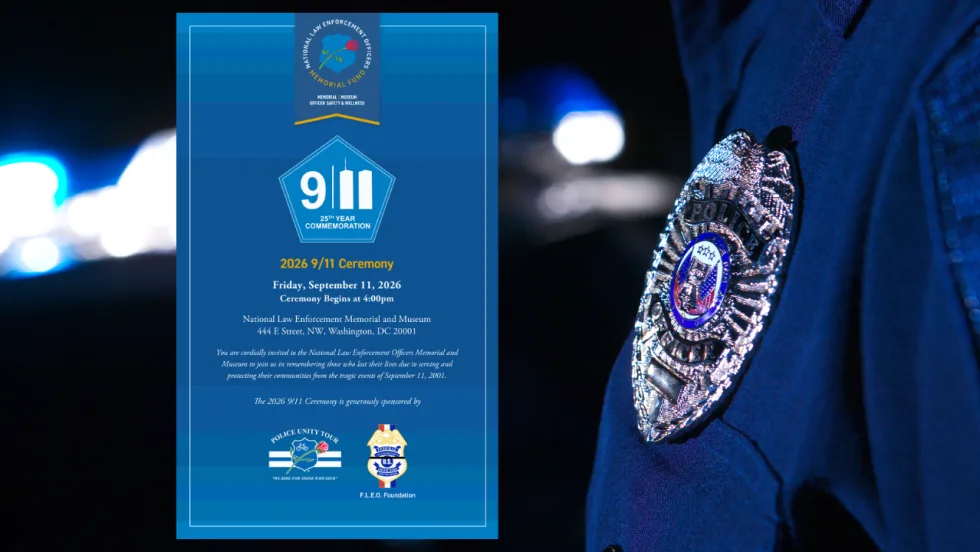
National Law Enforcement Memorial and Museum Hosting 9/11 25th-Year Commemoration Ceremony
The National Law Enforcement Memorial and Museum is hosting a 9/11 25th Year Commemoration Ceremony on Sept. 11 at 4 p.m.
Read More →
National Law Enforcement Officers Memorial Fund Announces June 2026 Officers of the Month
The National Law Enforcement Officers Memorial Fund (NLEOMF) named 15 officers of the Chico Police Department (California) as the Officers of the Month for June 2026 for their roles in responding to an active-shooter incident at a public library.
Read More →
Team Wendy App Creates New Digital Hub for Helmet Owners
The Team Wendy Community App provides one location for warranty registration, size-fit tools, product updates, and community connection. For helmet owners, the new app creates a simpler path to the information and tools that matter most.
Read More →