



Communications: Sound Tactics
Columbine is a vivid example of what happens during a tactical operation when communications break down. It and 9/11 are also strong examples of why first responders need radios that can talk to personnel from other agencies.

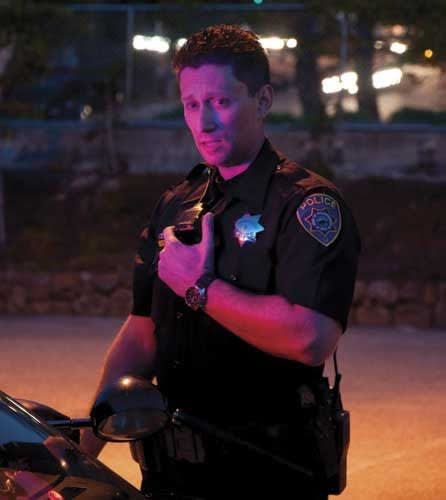
The success or failure of tactical operations can come down to a matter of communication dependability.
Consider the recent hijacking of the cargo ship Maersk Alabama off the horn of Africa. A skirmish on board the vessel resulted in the ship's captain, Richard Phillips, being taken captive by pirates. A few days later, Navy SEALs rescued Capt. Phillips, killing three of his captors and capturing a fourth in the process. A series of transmitted radio commands-commands that resulted in SEAL operatives taking simultaneous shots at Phillips' abductors-played no small part in the success of the tactical operation.
That SEAL operation off the coast of Somalia is a clear example of how critical clear communications are to a successful tactical operation.
For the flip side of this equation, look at the Columbine school massacre.
Among the communication setbacks experienced at Columbine were the wide variety of radio frequencies used by the some 47 different agencies that responded to the incident. SWAT units also had to deal with environmental factors that inhibited communications, including a cacophony of alarms going off in hallways. Also the varying reliability of protected channel communications and almost non-existent radio communications between SWAT and the command post didn't help. These factors and others resulted in redundancy of effort and a protraction of the incident.
Columbine is a vivid example of what happens during a tactical operation when communications break down. It and 9/11 are also strong examples of why first responders need radios that can talk to personnel from other agencies.
Cleaning Up a Mess
"Communications tend to fail as soon as you need them," observes Bill Palmer, a Minneapolis sergeant who recently left his department's SWAT unit. "Mister Murphy is always around. We had an incident where a gun nut ran into the local community college in downtown Minneapolis, and we had to operate with multiple SWAT teams, including our teams, state teams, FBI, sheriffs, and a couple of local teams. The ability to communicate with the local teams was difficult and, with the Feds, it was nearly impossible."
Making it easier for different law enforcement agencies to communicate is one of the most critical issues in tactical communications. But it's not something that can be easily achieved.
To advance this effort, federal grants are increasingly being awarded to agencies so that they can purchase systems that are interoperable with other local, state, and federal public safety agencies.
Also, industry groups have been developing guidelines for interoperable systems. For example, the National Communications System (NCS) has encouraged enhanced features in tactical communications. Working with other entities such as the Association of Public Safety Communications Officials (APCO) International, the National Association of State Telecommunications Directors (NASTD), and selected federal agencies NCS helped establish Project 25 (P-25), a steering committee responsible for selecting voluntary common system standards for digital public safety radio communications.
P25-compliant systems may well address a number of technical and tactical issues that have historically hampered interagency communications: interoperability between analog and digital modes, transmission security, cost effectiveness, and upgradability. Such systems are increasingly being deployed in the field.
When the Telecommunications Industry Association (TIA) recommended Project 25 standards, EF Johnson Technologies was quick to embrace them. "In fact," notes company representative Kevin Nolan, "we are the first radio supplier to ship our radios with the enhanced Project 25 Vocoder. The enhanced P25 Vocoder provides a very loud and intelligible digital signal while filtering out background noise."
EF Johnson's Transcrypt product line provides a number of digital encryption and scrambler modules. Its VoSec encryption model delivers excellent voice quality under poor environmental conditions and is available for use with a department's existing Motorola, Icom, Kenwood, and Vertex radios. The company's portable and mobile radios likewise offer P-25 compliance for enhanced security.
Private Conversations
Interoperability is the hot buzz word in post-9/11 public safety communication, but it can be a two-edged sword for SWAT communications.
When dealing with a self-contained scenario, most SWAT teams will avoid using an open communications system for safety and security. But when the situation requires outside coordination to direct outside agencies within the perimeter, to extract an injured team member, or when the situation moves into another agency's territory SWAT teams need to be able to open their frequencies with minimal effort.
Temco Communications offers voice-activated voice intercom systems and push-to-talk (PTT) accessories, along with a variety of tactical headsets and microphones designed specifically for rugged outdoor use. Push-to-talk technology is particularly important for SWAT team members whose hands are typically occupied with weapons or other equipment.
With the push of a button or a simple voice command, officers can establish communication with other team members. Television Equipment Associates (TEA) takes the hands-free technology a step further, with several push-to-talk options that can be clipped to the chest or to the stock of a sniper rifle for greater ease of use.
Flipping a Switch
Increasingly, with the availability of federal funding for interagency communications systems, many manufacturers offer field radios that allow line officers to switch to another agency's frequency with a flick of a switch.
Three challenges need to be met in order for agencies to become fully interoperative: the availability of affordable interoperable equipment, defined procedures for when and how to interoperate with other agencies, and training for personnel on the use of the equipment and procedures.
To meet this need, National Interop provides consulting services for law enforcement agencies to acquire equipment and expertise in all three areas.
Environmental Concerns
Interoperability alone is not a cure-all panacea for SWAT communications.
PoliceMag.com SWAT Channel columnist and retired SWAT sergeant Bob O'Brien says that at a technical level, improving SWAT communications is a balancing act of reconciling environmental and tactical considerations.
Environmental factors that can wreak havoc on communications systems include electromagnetic interference caused by power lines, car ignition systems, anti-theft devices, scanners, and many other electronic devices and electrical installations. Such factors can make an already inherently dangerous situation more so.[PAGEBREAK]
Please Repeat
Another communication issue faced by tactical units is a weak signal. SWAT operations are usually far away from repeating stations, and that can be a big problem in the field.
"Occasionally, our team has gone out of state to work with the ATF and marshals," observes Palmer. "Even though we're not around large structures in these rural areas, we still encounter numerous dead zone problems."
Based upon conversations with other SWAT teams from across the country, dead zones and the need for multiple repeater systems would appear to be an ongoing problem.
"In my day, we kept trying to get a mobile repeater," O'Brien recalls. "You'd find yourself down two or three sub-levels or in a hospital or university building-anything that was of heavy duty construction and had a lot of steel-and there was so much interference that it effectively thwarted your ability to communicate with one another."
Indeed, the vast majority of tactical officers interviewed seemed to be very pleased with their equipment, overall. But there was a recurrent complaint that budgetary constraints did not meet the need for mobile repeaters.
Dallas SWAT Lt. Robert Owens notes that his department has it pretty good when it comes to the local terrain, but even then the agency needs enhanced repeater systems.
When asked to name the biggest problem facing law enforcement when it comes to communications systems, Lt. Owens is quick to answer: "Money."
Owens continues, "We need repeaters. We've been working for 10 years to improve our communications infrastructure and now we're going to get some of what we've been asking for. We have a new command post that should be here in September this year and we'll have a portable repeater, so we should be looking pretty good then. But it can be hell when we get in these dead spots behind buildings. Our radio equipment-our individual gear-is very good, but getting rid of all the dead spots can be cost prohibitive."
Government agencies are now willing to fund grants for field communications equipment, but Bill Reitz from CeoTronics says the money flow may soon dry up. "The government is getting to the point where it is tired of wasting money on different communications systems to do different jobs. It's looking for something that can tie them all together."
CeoTronics manufactures mobile short-range communications systems that allow SWAT teams to take range extenders right where they need them. The base unit of the CT-DECT mobile digital radio system is capable of communicating with up to eight users at a range of 150 to 300 yards, depending on terrain.
Two base units can be linked to extend the perimeter even further and connect up to 14 people. The unit utilizes 64-bit encryption and low wattage to prevent local hacking during a callout. And to stretch your budget further, the system can be integrated with existing radio systems.
In addition to his concerns about portable repeaters, O'Brien says he wonders how many agencies might still be plagued by problems that affected his team in Cleveland.
"SWAT found that every one of their officers needed to have portable radios at home because coordinating calls otherwise was impossible," O'Brien explains. "We'd have an officer who by virtue of his position was the only one to see something, but he couldn't communicate what he was seeing. There weren't enough radios even for patrol cars, let alone for officers to take home. It was a catch-22."
More Comfortable Com Gear
The real conundrum for SWAT budgets is that even as the media and congress lobby for greater funding for tactical responders, there is still not sufficient funding to support all of the needs of every SWAT team-needs that are diverse and expensive. The technological advancements required in the latest communications equipment do not come cheap.
However, where they are obtained, such grants have proven to be of immense profit. Palmer notes that his agency's SWAT unit improved substantially with its acquisition of new headsets under a federal grant pursued by his captain.
"I was a sniper," recalls Palmer. "So I had the luxury to dump my helmet. That was the first piece of equipment I'd dump because the headset didn't fit very well with it."
Mike Lessman, a sergeant with the Reno SWAT team, can relate. "The headsets I was wearing on call-outs gave me an excruciating headache after I put the helmet atop the comset," he says. "My problem wasn't unique; it was a universal complaint from others. But MSA makes a high-speed, low-drag helmet that has the ear portions cut away so it doesn't press the com system up against your head. It's made my life easier."
But if such problems continue to be a bane to law enforcement technicians, they provide inspiration for innovation and improvements. With an aggregate 25 years experience working with his department's unit, Lt. Owens has seen a favorable evolution in the reliability and advancement of SWAT radio communication technology. The result is new products that will make it easier for tactical teams to communicate, regardless of the mission or environmental conditions.
Temco Communications has developed a facemask headset that can be worn with most gas masks, scuba gear, or chem-bio suits. Other companies such as EF Johnson are developing new technologies including self-contained breathing apparatus with built-in headset.
And many new products feature ancillary benefits such as ear protection during firefights. Otto Engineering has introduced a line of tactical headsets that is designed to be worn under protective clothing and helmets, and holds up to the harshest weather conditions. To provide greater comfort while wearing listening headgear, PCL Communications has developed behind-the-ear and custom ear pieces that provide secure hands-free communication. Pryme Radio Products' GPSMIC speaker microphone includes GPS locators for officers working in the field.
Such recent innovations and the continuing evolution of SWAT tactics are sure to make tactical communications easier and more efficient in the near future.
More Technology

A police agency's guide to data-driven fleet management
Costs are rising and the public expects more transparency into how their tax dollars are spent. This e-book shows how police agencies can use fleet data to take control of fleet expenses while improving officer safety and demonstrating fiscal responsibility to the communities they serve.
Read More →
AI and analytics for law enforcement: Turning data into insights
Law enforcement agencies are managing more video, sensor data and digital evidence than ever before. Discover how AI and analytics can help turn that data into actionable insights that strengthen situational awareness, accelerate investigations and support more informed decisions.
Read More →
Vasco Electronics Adds Automatic Language Detection to Vasco Translator Q1
Vasco Electronics’ software update introduces hands-free language switching and expanded offline translation across 45 language pairs, empowering law enforcement, healthcare, and front-office enterprise teams
Read More →

North Miami Police Department Deploys Mark43
The North Miami Police Department has deployed Mark43 as part of its Five-Year Strategic Plan that represents its collective vision and goals for a more proactive police department, anchored by a core commitment to leveraging modern technology to enhance efficiency and public safety.
Read More →
Cellebrite Genesis for Enterprise Now Generally Available
Made available to the public sector in June, Cellebrite Genesis is serving a growing mix of national, regional, and local agencies worldwide, including some of the largest regional and metropolitan police departments. It is now available for enterprise organizations.
Read More →
2026 Vision FirstNet Users Summit to Host Emerging Leaders Training on Grassroots Advocacy for Public Safety
“Emerging Leaders Training: Understanding the Importance of Grassroots Advocacy for Public Safety," a session during the 2026 Vision FirstNet Users Summit, will offer a roadmap for unified advocacy at the federal level.
Read More →
Motorola Solutions Completes Acquisition of D-Fend Solutions
Motorola Solutions has acquired D-Fend Solutions, an industry leader in counter-drone technology. This deal provides public safety and enterprise customers with access to advanced counter-unmanned aerial systems.
Read More →
ZeroEyes, Advantech & Camden Police Partner to Bring AI Gun Detection Technology to Delaware School District
ZeroEyes has partnered with Advantech and the Camden Police Department to deploy ZeroEyes’ AI gun detection and intelligent situational awareness platform at Delaware’s Caesar Rodney School District (CRSD).
Read More →
Leonardo U.S. Cyber & Security Solutions Introduces SignalTrace, the Next Evolution in Electronic Signature Detection Technology
SignalTrace reflects years of product refinement and a clearer expression of the technology’s purpose of recognizing and correlating electronic signatures in publicly broadcast wireless signals to reveal patterns, relationships, and trends that might otherwise go undetected.
Read More →
Pimloc Launches Secure File Sharing to Streamline Release of Redacted Video
Pimloc’s Secure File Sharing lets organizations deliver redacted video, audio, and documents through expiring, passcode-protected links, accelerating delivery while reducing security, compliance, and chain-of-custody risks.
Read More →