



Code 7
Of course, you don't have to work the late shift or even work the streets for a cop's lifestyle and eating habits to add up to obesity, high blood pressure, and other coronary risk factors.

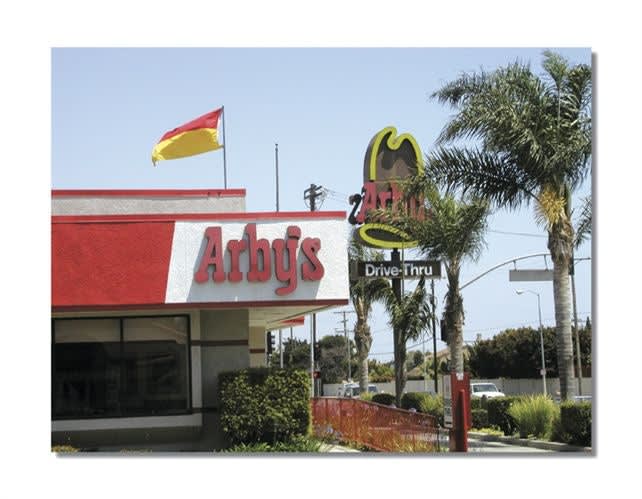
To get through his shift, the police officer working days relies on a repertoire that includes training, experience, and a vested interest in things bulletproof. To keep his energy level up and his waistline down, he brings food from home or sits down to a nice lunch in a local eatery. It's easy for him to eat right and stay fit.
His nocturnal counterpart isn't so lucky. Oh, sure, she practices good officer safety tactics, verbal judo, and says her prayers. But she doesn't have the luxury of patronizing ideal eating establishments. She's lucky just to find an after hours drive-thru. And when it comes to late night eats, the usual suspects include regional and national chains slinging burgers, tacos, chicken, and pizza-with nary a veggie burger on the menu. That's too bad. For when one is faced with the omnipresent possibility of having to literally eat and run, there's a pretty strong case to be made for avoiding heartburn and heart attacks.
Of course, you don't have to work the late shift or even work the streets for a cop's lifestyle and eating habits to add up to obesity, high blood pressure, and other coronary risk factors. Even cops with choice assignments who work ideal hours and enjoy a wonderful rapport with local restaurants eat too much, eat the wrong things, and exercise too little, leaving them susceptible to heart attacks, both on-duty and off.
Unfortunately, they have a lot of company. A recent American Medical Association study estimates that 300,000 Americans die each year from obesity-related causes, such as heart disease, diabetes, and stroke. Experts have shown that up to 50 percent of all cancers are related to our diets. The tale of the tape sizes it up like this: In 1991, one in eight Americans was obese. In 1999, the number had increased to one in five. In short, even a good many of our more vocal critics can be called "pigs," too.
"Super Size That?"
The ready availability of fast food has a lot to do with our expanding girth and constricting arteries. A 2000 census by the National Restaurant Association counted more than 215,000 fast-food restaurants in the United States, generating sales of more than $119 billion.
To find out what cops are eating and what it's doing to them, Police made some calls to a number of departments nationwide. The following is a cross-section of cops from across the country talking about their favorite fast-food joints.
Dean Sorenson, a sergeant with the Dallas Police Department, notes, "There are about a gazillion fast-food places to get your daily dose of artery-clogging, cholesterol-filled, heart attack-in-a sack food source, but I think my favorite is Wendy's for the burgers, What-A-Burger for its shakes, and Dairy Queen for its Blizzards."
For the St. Paul (Minn.) Police Department, it's a little different according to Officer Glenn Norstrem. "Most of the officers avoid the true fast-food places like McDonald's and Burger King. Those places usually are a last resort. Of the two, I prefer Burger King. Nearly everyone I know eats at local restaurants and non-chain pizza joints most of the time. The one chain that probably gets the most business is Subway."
When it comes to Southern hospitality, Atlanta cop Dan King says, "We mostly eat at the major fast-food chains. As you know, call volumes across the country are rising and we only have time for a quick meal most of the day. Midnight shift eats at either the Waffle King or the Waffle House. Not by choice, but it's all that's open when they get down time."
McDonald's also enjoys what little monopoly there is when it comes to fast foods in Boston. But don't go opening any franchises yet. According to 24-year veteran John Tracey, most Boston cops bring their own food.
While LAPD's André BeLotto is similarly disciplined and generally abstains from fast foods, he admits a partiality for Taco Bell "for their quick and tasty double decker tacos." André is not alone. When it comes to lesser evils, Officer Scott Houghton, a 16- year vet with the Denver Police Department, also sees Taco Bell as his choice. But Scott says such excursions are rare, and when he does make a run for the border, it's usually for a chicken burrito. Scott says he tries to watch his weight and keep his cholesterol down.
The Stress Factor
Barbara Brehm-Curtis, a nutritionist and writer, applauds the culinary discipline of officers who skip fast food for healthier fare or try to choose the healthiest fast food when nothing else is available-especially given the nature of law enforcement. "With the stressors that come with the job, the last thing a cop needs to do is to tax his already overburdened heart further," Brehm-Curtis observes. "Stress can increase blood cholesterol levels in many ways. Feeling stressed increases the fight-or-flight response, which can increase blood fat levels. This is OK in moderation, but chronic fight or flight is not OK. Stress can also contribute to overeating (in an attempt to reduce stress), which causes weight gain and elevated cholesterol."
Cholesterol and its effect on the body is often much misunderstood by the average American, Brehm-Curtis says. "In foods, all cholesterol is the same. In your blood, there is good and bad cholesterol. LDL is bad, HDL is good. To increase HDL, be a premenopausal woman, choose your parents well (so you have good genes), lose weight if you are overweight, exercise almost daily, and eat less saturated and trans-fatty acids."
Trans-fatty acids and saturated fats are the real health villains in most fast foods. Fortunately, some fast-food establishments are trying to clean up their act and their clients' arteries. When the Center for Science in the Public Interest (CSPI) recently rated fast-food chains for compliance with dietary guidelines, low-fat items like Long John Silver's baked fish, Wendy's reduced-calorie salad dressings, Arby's roasted chicken breast, and Wendy's multi-grain bun all garnered praise. The CSPI also lauded a switch from breading and frying fish to baking it, thereby creating a nearly 60-percent calorie count reduction. Increasingly, many fast-food chains are offering "healthy choice" menus.
At the same time, Brehm-Curtis notes, "Most menus have better or worse items on them. It's not usually the menu that is 'good' or 'bad,' it's the choices the officer makes. Habitual meals have an especially strong impact. For example, if every morning for breakfast, the officer has a donut and coffee, this will have a much stronger impact than one donut (pastry) every month or so. So, those daily choices are really important."
Fat content is another important consideration.
"While no fat is 'bad' in proper amounts, Americans tend to eat too much saturated fats (found in meats and high-fat dairy products: butter, cream, cheese, whole milk, ice cream) and trans-fatty acids, found in processed foods such as baked goods," Brehm-Curtis says. "In general, you will be healthier if you avoid being overweight, exercise regularly, and eat plenty of fruits and vegetables. Some fats are good for you (unless they cause weight gain): nuts, avocados, sunflower seeds, and fish. Sedentary lifestyles kill as many people each year as smoking. Exercise is not an option. Exercise reduces stress, depression, and anxiety, and it increases vigor. It improves your sex life. It prevents heart attack, stroke, some kinds of cancer, type 2 diabetes, obesity, and hypertension."
Brehm-Curtis advocates eating more fiber and fresh fruits and vegetables. "The most common problems in the U.S. diet are a dearth of fruits and vegetables. So when looking at menus and making choices, look for opportunities to consume more fruits and vegetables. These are the foods that help prevent heart disease, cancer, obesity, and other diet-related illnesses. An adult should try to consume two to four servings of fruit and three to five servings of vegetables a day. This may take some planning."[PAGEBREAK]
Sneezers and Stoners
Wherever you decide to eat, consider avoiding salad bars, smorgasbord establishments, and similar hygienic nightmares. This is where restaurants such as Subway have an advantage: You can see your food being made. With all the anecdotal horror stories of fry cooks adulterating the orders of cops, the last thing a cop needs is to unwittingly submit a dirty test because some Iron Chef wannabe sprinkled a little cannabis sativa as an additive.
What with all the horning and snorting, chipping and slamming, shooting and jamming that we see our suspects doing, you'd think we'd be a little more cautious with what we put in our own systems. Unfortunately, one need only inventory the candy wrappers in our back seats, the sunflower seed shells on the floorboard, and smell the cigar smoke residue to know some of the officers in our sister cars aren't living the most abstemious lifestyles.
If your lifestyle and diet are less than healthy, now's the time to change. Or you can wait for a significant emotional event, an epiphany like a heart attack or stroke that dramatically alters your perceptions. Unfortunately, not everyone survives his or her first heart attack.
Hazardous Materials
There are certain compounds in food that are essential to good health but can cause or magnify illness when consumed in excess. These are the equivalent of what hazmat professionals call "bad actors." They are substances in your food that can be extremely damaging to your body.
Cholesterol and fat: The important thing to remember is there is no such thing as "good" or "bad" cholesterol in your food, only in your blood. Also, many doctors and nutritionists believe that the saturated fats in hydrogenated oils in cookies are as dangerous or even more dangerous than the cholesterol in high-cholesterol foods like eggs. This should not be taken as a license to ignore cholesterol content, but as a warning to also watch total fat intake, especially saturated fat. One really good way to lower the fat content of fast-food meals is to hold the cheese, the mayo, and mayo-based sauces.
Sodium: For most people, sodium chloride (salt) is not a major hazard. But if you have high blood pressure or a family history of high blood pressure, sodium is a stone killer. The first thing you can do to cut back on sodium is ditch the salt shaker. Unfortunately, it's not that simple. Most of the sodium in our diets comes to us through the food itself, not by extra shakes of Morton's iodized. To make things worse, sometimes the "healthy" fast foods are full of sodium. You can reduce the sodium in fast foods by passing on sauces, holding the pickles, dropping the cheese, and staying away from processed and cured meats like bacon.
Sugar and carbohydrates: The key to healthy consumption of sugar and carbs for most people is moderation. But if you are overweight or have diabetes, sugar and carbs are as bad for you as sodium is for people with high blood pressure. Most sugar enters your diet not through the sugar bowl but in processed foods, including baked goods, candies, cereals, sauces, etc. Naturally occurring sugars, such as those in fruits, milk, and vegetables, are generally OK in moderation, even for diabetics. Carbs turn into sugar in the body and are also generally safe in moderation. But if you're overweight and inactive, watch the carbs.
For all dietary issues, if you have medical conditions such as diabetes or high blood pressure, be sure to follow your doctor's advice.
Seven Painless Dieting Tips
Dieting's not fun. But rather than having to suck in one's cheeks and belly to simulate the ravages of hunger, it's better to remember these little tips when you're unable to make that u-turn at the food bar.
1. Bust that mayonnaise and special sauce. Try wiping them off with a Chem-wipe, or something. To compensate for these taste delicacies, douse with mustard, ketchup, salsa, or pepper spray. Mustard is best because it's both low fat and low sodium.
2. Cover your partner, but not your salad. At least, not with creamy high-fat Sam Browne-busting dressing.
3. Treat deep-fried foods and cheese eats with the contempt you'd normally reserve for a violent third-strike offender: Lock 'em up and throw away the key.
4. If you're starving and the only eating establishment in sight is a Stop 'n Rob, skip the beef jerky and grab a nutrition bar.
5. If given a choice between having your foods fried or grilled, grill 'em like a caffeinated Joe Friday.
6. Try to eat like you do at home (unless you eat like a pig there, too). Skip the "glutton specials" and stop "super-sizing." Eat normal-sized meals, as portions are an important consideration.
7. Exercise.
Editor's Note: The nutritional content calculations used in this story come from www.calorieking.com.
More Patrol

Adept Armor Introduces Two New Rifle Plates
Adept Armor has launched two new Level IV ballistic plates, the Emperor and the Archon Mark 2, which brings Adept Armor’s new Quatroid ceramic to the high-threat, performance-value center of the range at 5.2 pounds.
Read More →
POLICE Product Test: Benchmade Bailout
The Benchmade Bailout is a slim, lightweight carry knife with a deep-ride pocket clip and comes in a variety of blade steels and scales. Here is a detailed review of the Taiga Green Bailout, released earlier this year.
Read More →
NLEOMF Announces July 2026 Officer of the Month
NLEOMF honored a Michigan deputy sheriff as the July 2026 Officer of the Month for rescuing a trapped driver from a burning vehicle following a Fourth of July crash.
Read More →
Streamlight to Showcase Newest Lighting Products at National Safety Council’s Safety Congress & Expo 2026
Streamlight will showcase its latest lights, including the Portable Scene Light III and the LiteBox 1Million, at the 2026 National Safety Council (NSC) Safety Congress & Expo.
Read More →
The 2027 World Police & Fire Games Set for Perth, Australia
The 2027 World Police & Fire Games (WPFG) will take place in Perth, Western Australia, from Friday, March 12 through Sunday, March 21, 2027.
Read More →
5.11 Partners with National Fallen Firefighters Foundation to Support #ForThe343
5.11 has joined the nationwide movement honoring the 343 New York City Fire Department firefighters lost on Sept. 11, 2001.
Read More →
Team Wendy Announces Title Sponsorship of the Jorge Pastore Foundation
Team Wendy’s 3-year partnership with the Jorge Pastore Foundation expands access to programs that strengthen those who serve.
Read More →
National Law Enforcement Memorial and Museum Hosting 9/11 25th-Year Commemoration Ceremony
The National Law Enforcement Memorial and Museum is hosting a 9/11 25th Year Commemoration Ceremony on Sept. 11 at 4 p.m.
Read More →
National Law Enforcement Officers Memorial Fund Announces June 2026 Officers of the Month
The National Law Enforcement Officers Memorial Fund (NLEOMF) named 15 officers of the Chico Police Department (California) as the Officers of the Month for June 2026 for their roles in responding to an active-shooter incident at a public library.
Read More →
Team Wendy App Creates New Digital Hub for Helmet Owners
The Team Wendy Community App provides one location for warranty registration, size-fit tools, product updates, and community connection. For helmet owners, the new app creates a simpler path to the information and tools that matter most.
Read More →