



Civil Liability and Protected Speech
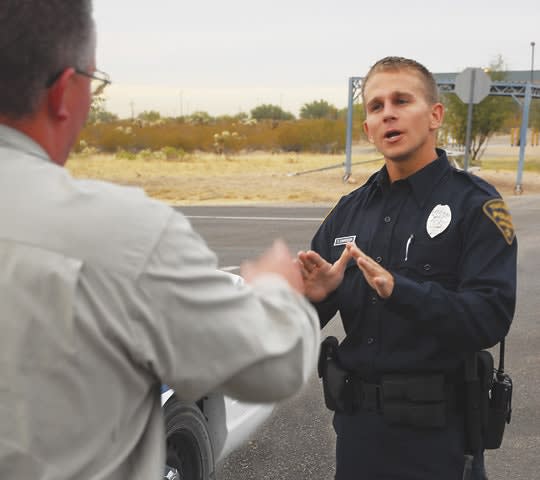
You must act with considerable discipline and restraint when loudmouths try to demean and upset you with offensive language and gestures.

Although Fourth Amendment claims predominate in civil liability cases, lawsuits sometimes focus on allegations that some other constitutional right was violated. For example, plaintiffs sometimes claim that officers infringed their First Amendment rights by making an arrest that might appear to be authorized by local ordinances or state statutes, but may amount to an unconstitutional infringement of the freedom of speech. Also, some arrests may be impermissible under federal labor laws.
Arrests for "Contempt of Cop"
The City of Houston had an ordinance making it illegal for anyone to "interrupt" a police officer in the execution of his or her official duty. When Raymond Wayne Hill came upon a scene where officers were talking to a pedestrian in the middle of the street, he repeatedly yelled at them, "Why don't you pick on somebody your own size?" He was arrested for violating the ordinance.
After being acquitted at trial, Hill filed a civil suit. When the case reached the U.S. Supreme Court, the ordinance was ruled unconstitutional. The Court said that the guarantee of free speech requires law enforcement officers to tolerate objectionable speech that does not actually obstruct the performance of their duties.
The Court's opinion read, "The First Amendment protects a significant amount of verbal criticism directed at police officers. 'Speech' is often provocative and challenging, but it is nevertheless protected against censorship or challenge, unless shown to be likely to produce a clear and present danger of a serious substantive evil that rises far above public inconvenience, annoyance, or unrest. The Constitution does not allow such speech to be made a crime. The freedom of individuals verbally to oppose or challenge police action without thereby risking arrest is one of the principal characteristics by which we distinguish a free nation from a police state." (Houston v. Hill)
As the dissenting opinion pointed out, under other circumstances, "An individual, by contentious and abusive speech, could interrupt an officer's investigation of criminal conduct," and the First Amendment would not preclude an arrest. For example, if you had just arrived at the scene of a recent robbery and were trying to obtain a description of the perpetrator from the victim to be broadcast to other officers in the vicinity, a bystander's constant interruptions with yelled epithets could delay you in getting timely information that was needed to aid in the perpetrator's apprehension. The bystander's speech would not be constitutionally protected in such circumstances, because the speech—regardless of content—actually delayed and obstructed your performance of official duty.
But the rule of Houston v. Hill means that you must act with considerable discipline and restraint when loudmouths try to demean and upset you with offensive language and gestures. Though restraint is not easy, the cost of giving in to the temptation to show the loudmouth who's the boss can be costly.
In Duran v. City of Douglas, Arizona, for instance, police officers made a vehicle stop and arrested the passenger, Ralph Duran, after he made an obscene hand gesture and yelled profanities at them. Duran sued and was awarded summary judgment against the city and the officers for violation of his First Amendment rights.
Citing the ruling in Houston v. Hill, the federal appeals court said the following: "We cannot, of course, condone Duran's conduct; it was boorish, crass and unjustified. Our hard-working law enforcement officers surely deserve better treatment from members of the public. But disgraceful as Duran's behavior may have been, it was not illegal; criticism of the police is not a crime.
"While police, no less than anyone else, may resent having obscene words and gestures directed at them, they may not exercise the awesome power at their disposal to punish individuals for conduct that is not merely lawful, but protected by the First Amendment. Inarticulate and crude as Duran's conduct may have been, it fell squarely within the protective umbrella of the First Amendment and any action to punish or deter such speech—such as stopping or hassling the speaker—is categorically prohibited by the Constitution." (Duran v. Douglas)
Arrests for Trespass
Another common variety of First Amendment issue arises when a property owner calls to report someone on the property who is passing out fliers, or trying to get signatures on petitions, or propounding some kind of message to customers and passers-by. The property owner either demands that these speakers be arrested for trespass or uses security guards to eject them.
This is essentially what happened in PruneYard v. Robins, where the owner of a shopping mall sought to exclude from the premises a group of students who were circulating political petitions on mall property. The state courts ruled that the private property owner was operating the modern-day equivalent of a downtown main street where such speech historically had been protected, and the mall was ordered to allow the student speech. The U.S. Supreme Court upheld this ruling. Unless individuals or groups are blocking access or egress or are committing a breach of the peace or other criminal acts, private property owners may not always exclude them or have them arrested for trespassing on property to which the public is openly invited.
During the past quarter-century, U.S. Supreme Court rulings on First Amendment issues have become very complex and seemingly contradictory. For example, Schenck v. Pro-Choice Network of Western New York held unconstitutional a statute that made it illegal to conduct an anti-abortion protest within 15 feet of a person entering an abortion clinic, while Hill v. Colorado ruled that a law prohibiting abortion protesters within eight feet of someone who was within 100 feet of an abortion clinic was not unconstitutional.
Because of the complexity of these issues, police officers confronted with enforcement demands implicating First Amendment rights should normally seek advice from a legal advisor who specializes in this area of the law, such as a city attorney, county counsel, or state's attorney. A precipitous arrest for trespass or other statutory violation could generate civil liability for the officer and his or her agency, if the courts conclude that the arrested person was engaged in constitutionally protected speech.
National Labor Relations Act
There are some circumstances where the First Amendment may not necessarily shield speech and activities, but federal labor law does. If you are called to the scene of a labor dispute, such as a strike, picket line, lock-out, or union-organizing drive, you should be aware that it violates federal law to threaten arrest, or to make arrests, for activities that are protected from official interference by the NLRA. (Hudgens v. NLRB; NLRB v. Babcock and Wilcox)
You may arrest for criminal destruction of property or for assaults committed by those engaged in labor disputes (Coates v. Cincinnati). However, arrests for such offenses as trespass or obstructing traffic should normally be done only after consultation with a legal advisor who has an expertise in NLRA law.
Free speech issues can be complicated and fraught with liability risks. First responders need to be mindful of the restrictions imposed by the First Amendment and federal law, and are well-advised to consult with legal experts before taking enforcement steps, except in emergencies requiring immediate action.
More Patrol
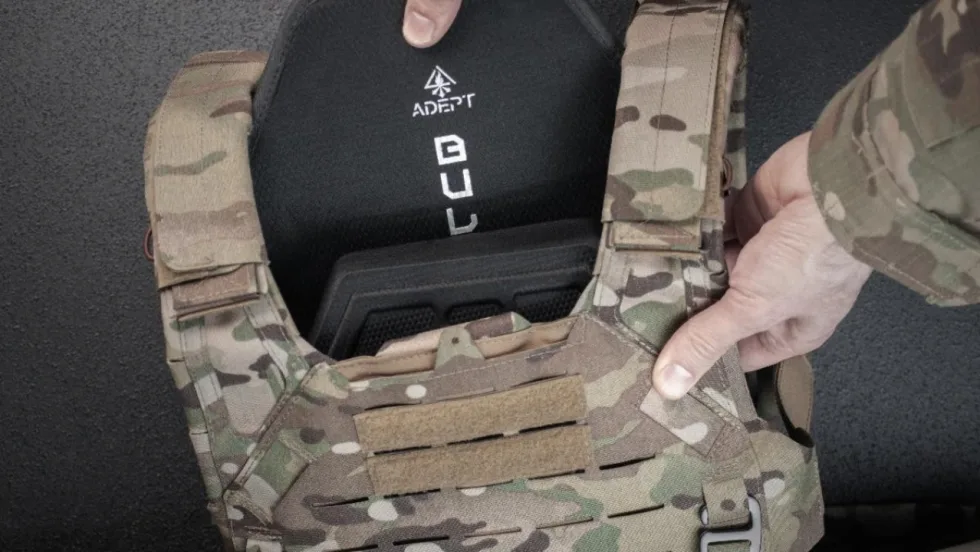
Adept Armor Introduces Two New Rifle Plates
Adept Armor has launched two new Level IV ballistic plates, the Emperor and the Archon Mark 2, which brings Adept Armor’s new Quatroid ceramic to the high-threat, performance-value center of the range at 5.2 pounds.
Read More →
POLICE Product Test: Benchmade Bailout
The Benchmade Bailout is a slim, lightweight carry knife with a deep-ride pocket clip and comes in a variety of blade steels and scales. Here is a detailed review of the Taiga Green Bailout, released earlier this year.
Read More →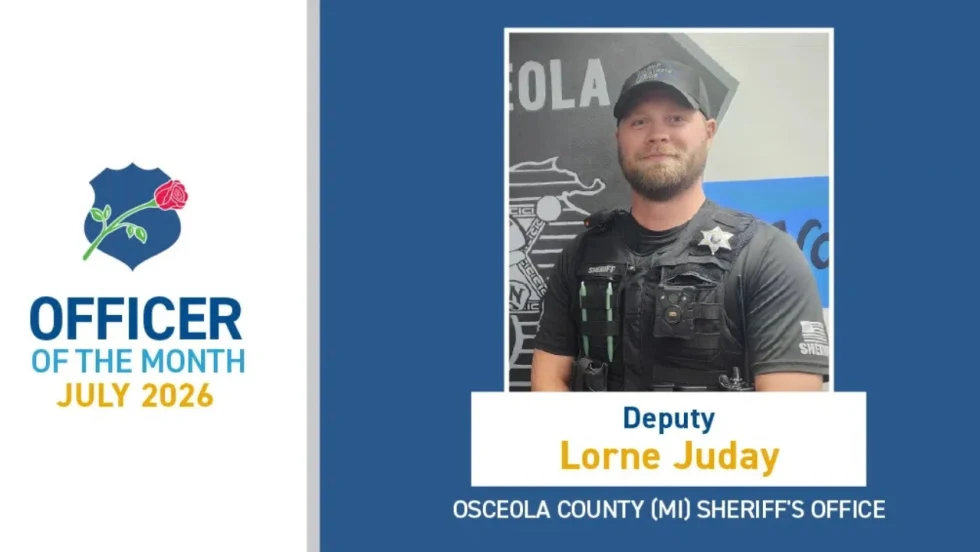
NLEOMF Announces July 2026 Officer of the Month
NLEOMF honored a Michigan deputy sheriff as the July 2026 Officer of the Month for rescuing a trapped driver from a burning vehicle following a Fourth of July crash.
Read More →
Streamlight to Showcase Newest Lighting Products at National Safety Council’s Safety Congress & Expo 2026
Streamlight will showcase its latest lights, including the Portable Scene Light III and the LiteBox 1Million, at the 2026 National Safety Council (NSC) Safety Congress & Expo.
Read More →
The 2027 World Police & Fire Games Set for Perth, Australia
The 2027 World Police & Fire Games (WPFG) will take place in Perth, Western Australia, from Friday, March 12 through Sunday, March 21, 2027.
Read More →
5.11 Partners with National Fallen Firefighters Foundation to Support #ForThe343
5.11 has joined the nationwide movement honoring the 343 New York City Fire Department firefighters lost on Sept. 11, 2001.
Read More →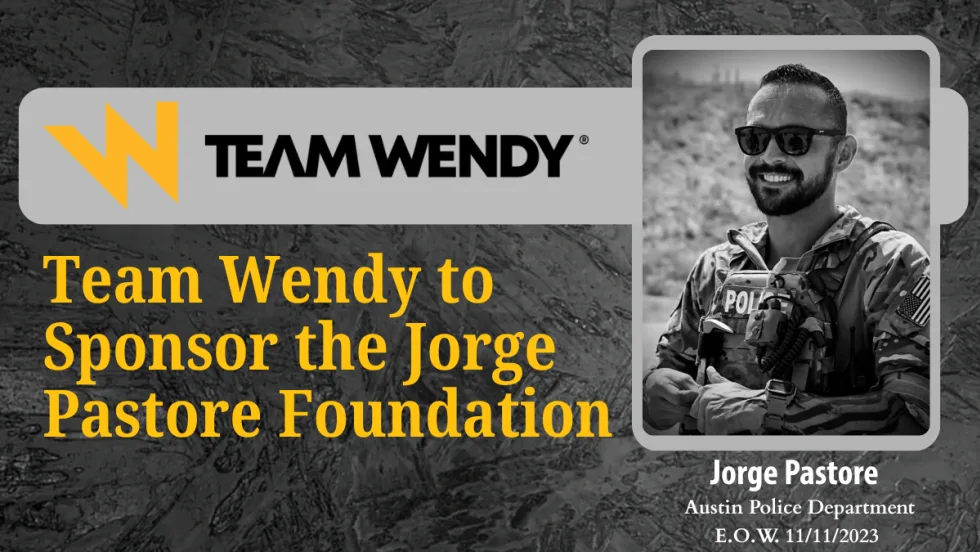
Team Wendy Announces Title Sponsorship of the Jorge Pastore Foundation
Team Wendy’s 3-year partnership with the Jorge Pastore Foundation expands access to programs that strengthen those who serve.
Read More →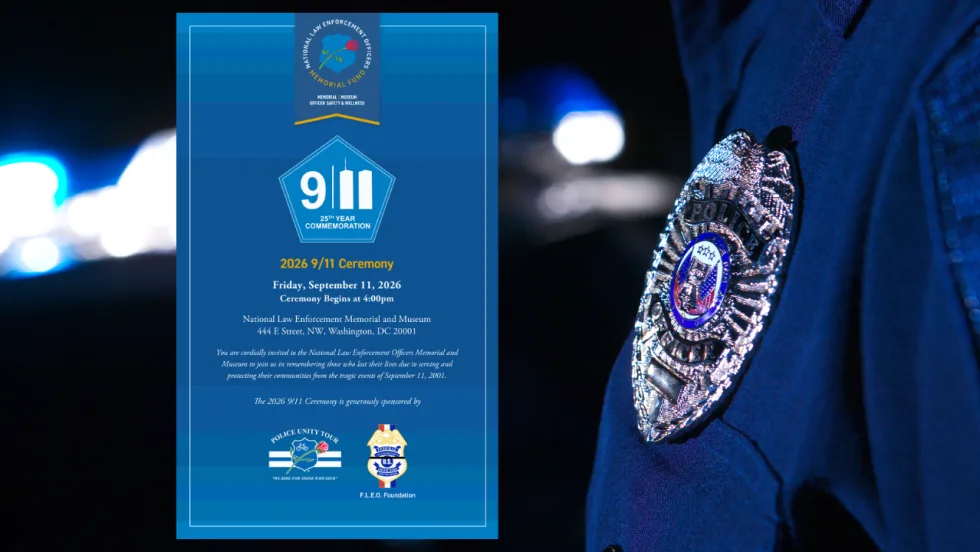
National Law Enforcement Memorial and Museum Hosting 9/11 25th-Year Commemoration Ceremony
The National Law Enforcement Memorial and Museum is hosting a 9/11 25th Year Commemoration Ceremony on Sept. 11 at 4 p.m.
Read More →
National Law Enforcement Officers Memorial Fund Announces June 2026 Officers of the Month
The National Law Enforcement Officers Memorial Fund (NLEOMF) named 15 officers of the Chico Police Department (California) as the Officers of the Month for June 2026 for their roles in responding to an active-shooter incident at a public library.
Read More →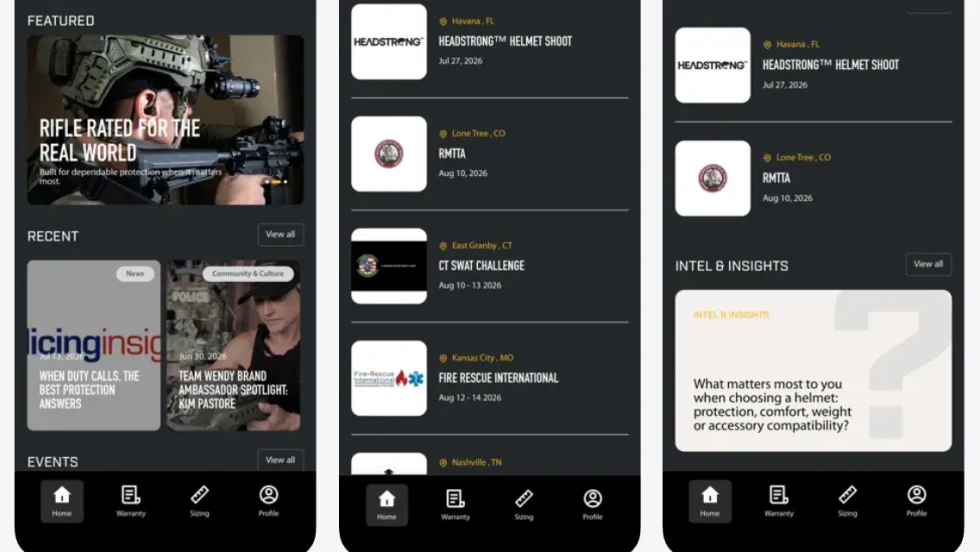
Team Wendy App Creates New Digital Hub for Helmet Owners
The Team Wendy Community App provides one location for warranty registration, size-fit tools, product updates, and community connection. For helmet owners, the new app creates a simpler path to the information and tools that matter most.
Read More →