



By the Numbers
The police in my area made national news when a local dog owner and repeat offender of the leash law tricked them into issuing a citation for a $50 fine to his dog. The dog owner made a mockery of the situation by requesting a hearing on behalf of the dog, and reporters found that very amusing.

The police in my area made national news when a local dog owner and repeat offender of the leash law tricked them into issuing a citation for a $50 fine to his dog. The dog owner made a mockery of the situation by requesting a hearing on behalf of the dog, and reporters found that very amusing.
As a researcher who studies risk management and public health, I know that little stories like these chip away at the hard-earned public trust and the positive images of police. That erosion of the public image bothers me a lot.
I’m not a cop, but I can tell from the numbers that it’s not easy keeping the peace in this country. Police make more than 10 million arrests each year in the United States, nearly 2 million for serious crimes. With the U.S. population at more than 290 million that means that on average approximately one in 29 Americans is arrested each year.
More than 150 American law enforcement officers die in the line of duty each year. Assuming approximately 1 million officers on duty in this country, this puts the risk of death for an average officer at approximately one in 10,000.
Each officer must manage his or her own injury risks and must also recognize his or her role in contributing to the public’s perceptions of police—both positive and negative. Using force and making arrests clearly involves tough choices and trade-offs.
Currently, the Taser represents the most controversial tool in the use-of-force continuum. I’ve heard officers say that Taser devices provide agencies with their most important harm reduction tools in decades, perhaps since bullet-resistant vests. But news reports suggest that Tasers might be responsible for a growing number of in-custody deaths. And groups that track the cumulative number of deaths associated with Taser weapons now emphasize that the number exceeds 100 in the United States since January 2001.
Unfortunately, these groups fail to report on critical context, like the sad reality that nearly 1,000 people die each year while in custody or shortly after being arrested—mainly because of drugs and other substances. We must ask whether 100 deaths out of the approximately 4,000 in-custody deaths in the last five years really indicate that Tasers are unsafe, or if Tasers simply make some of the deaths more newsworthy because Tasers are new. Shouldn’t we care about all of the in-custody deaths and the true underlying causes?
It’s time to look at Tasers from a public health perspective. We need to ask about how many lives the Taser might be saving overall. If Taser weapons provide officers with a better option than using lethal force or provide the opportunity to defuse a situation before it reaches lethal force, then this translates into lives saved and injuries avoided—real benefits that must be counted.
We should be looking at the cost-effectiveness of Taser weapons in the same way that we evaluate new pharmaceutical and consumer products and characterizing their net benefits to society. This means, however, that law enforcement leaders will need to work with leading public health analysts to evaluate the case.
Risk analysis clearly should play a much larger role in law enforcement, with potentially large benefits both to public health and law enforcement agencies. This leads me to suggest that it’s time for law enforcement leaders to adopt and use the analytical tools needed to improve the information available to policymakers and to improve overall risk management performance.
I can’t promise that using risk analysis will prevent officers from issuing tickets to dogs or keep police from ever receiving undeserved bad press. However, I suspect that greater use of risk management tools would lead to communication strategies that should help improve decisions and reduce the amount of bad press directed at police.
Dr. Kimberly M. Thompson is author of “Risk in Perspective: Insight and Humor in the Age of Risk Management” and an associate professor of risk analysis and decision science at the Harvard School of Public Health.
More Patrol

Adept Armor Introduces Two New Rifle Plates
Adept Armor has launched two new Level IV ballistic plates, the Emperor and the Archon Mark 2, which brings Adept Armor’s new Quatroid ceramic to the high-threat, performance-value center of the range at 5.2 pounds.
Read More →
POLICE Product Test: Benchmade Bailout
The Benchmade Bailout is a slim, lightweight carry knife with a deep-ride pocket clip and comes in a variety of blade steels and scales. Here is a detailed review of the Taiga Green Bailout, released earlier this year.
Read More →
NLEOMF Announces July 2026 Officer of the Month
NLEOMF honored a Michigan deputy sheriff as the July 2026 Officer of the Month for rescuing a trapped driver from a burning vehicle following a Fourth of July crash.
Read More →
Streamlight to Showcase Newest Lighting Products at National Safety Council’s Safety Congress & Expo 2026
Streamlight will showcase its latest lights, including the Portable Scene Light III and the LiteBox 1Million, at the 2026 National Safety Council (NSC) Safety Congress & Expo.
Read More →
The 2027 World Police & Fire Games Set for Perth, Australia
The 2027 World Police & Fire Games (WPFG) will take place in Perth, Western Australia, from Friday, March 12 through Sunday, March 21, 2027.
Read More →
5.11 Partners with National Fallen Firefighters Foundation to Support #ForThe343
5.11 has joined the nationwide movement honoring the 343 New York City Fire Department firefighters lost on Sept. 11, 2001.
Read More →
Team Wendy Announces Title Sponsorship of the Jorge Pastore Foundation
Team Wendy’s 3-year partnership with the Jorge Pastore Foundation expands access to programs that strengthen those who serve.
Read More →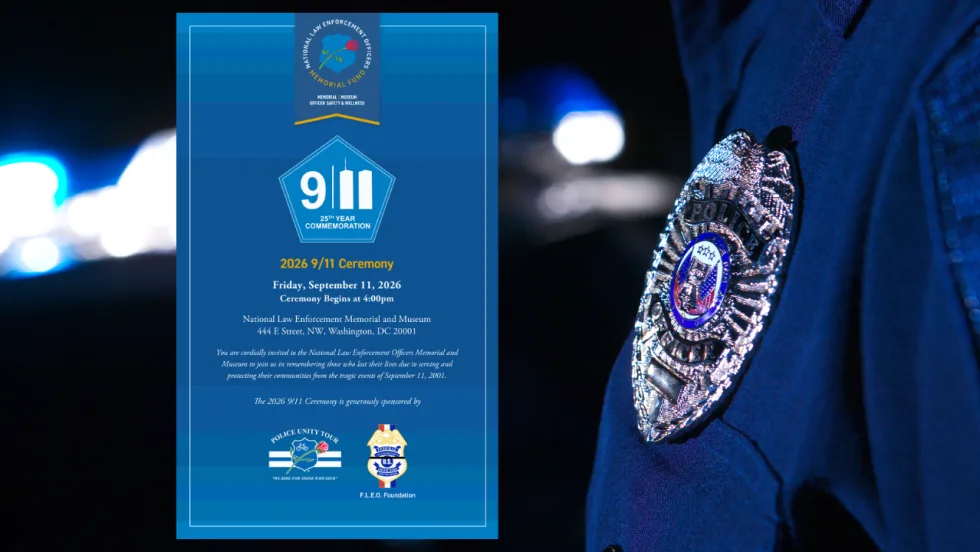
National Law Enforcement Memorial and Museum Hosting 9/11 25th-Year Commemoration Ceremony
The National Law Enforcement Memorial and Museum is hosting a 9/11 25th Year Commemoration Ceremony on Sept. 11 at 4 p.m.
Read More →
National Law Enforcement Officers Memorial Fund Announces June 2026 Officers of the Month
The National Law Enforcement Officers Memorial Fund (NLEOMF) named 15 officers of the Chico Police Department (California) as the Officers of the Month for June 2026 for their roles in responding to an active-shooter incident at a public library.
Read More →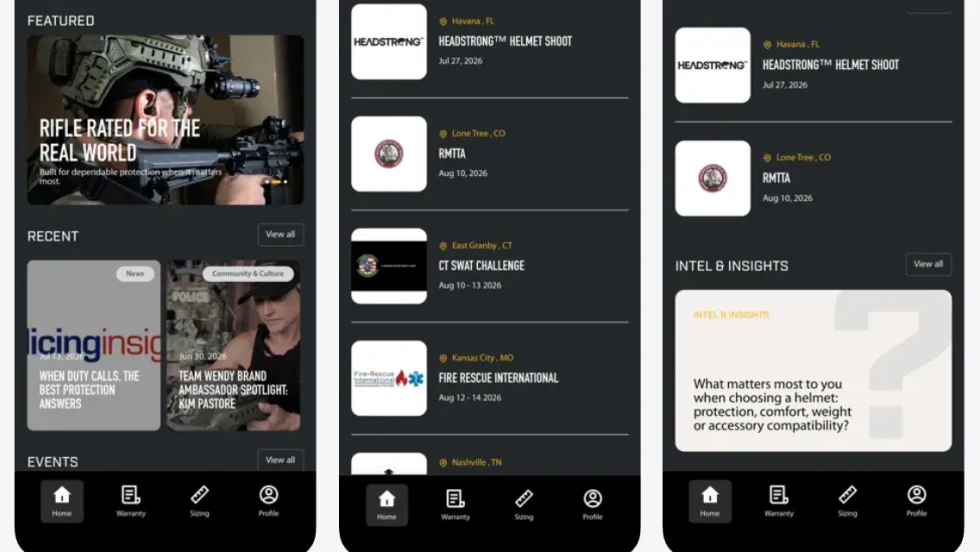
Team Wendy App Creates New Digital Hub for Helmet Owners
The Team Wendy Community App provides one location for warranty registration, size-fit tools, product updates, and community connection. For helmet owners, the new app creates a simpler path to the information and tools that matter most.
Read More →