



Blue-On-Blue Shootings
Recognizing the potential for a blue-on-blue incident—and doing something about it—can go a long way toward preventing such tragedies. That initiative can take many forms, from anticipatory training to recognizing the implications of an errant operation.

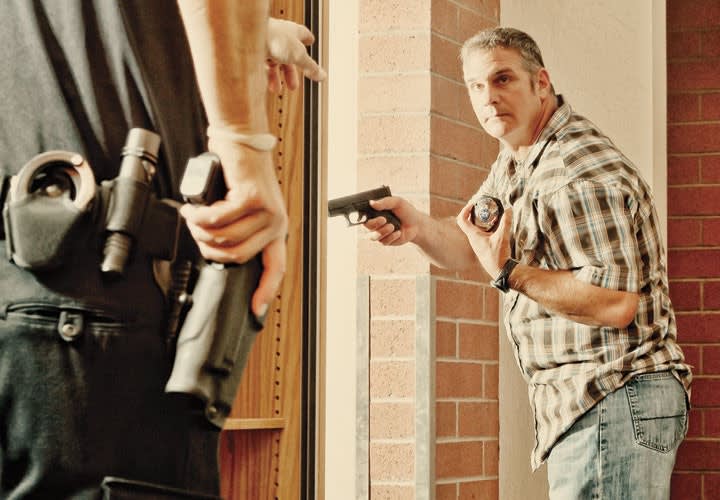
Photo: Mark W. Clark
Each year, hundreds of thousands of America's finest visit firing ranges to engage a multitude of targets with a variety of weaponry. They fire from stationary, prone, and kneeling positions; while on the run, taking advantage of whatever cover and concealment they might find on a given course.
Throughout, there is many a purpose at work. The development of muscle memory, the conditioning of split-second decision making, the learning of different tactics—all aimed at risk reduction: To lessen the likelihood that they or an innocent might be shot in the future.
That desire to mitigate risk finds officers occasionally taking aim at a "friendly" target that has pneumatically popped into view. Most of the time, the trigger finger is held in abeyance. But when that finger exerts enough pressure on the trigger and the "friendly" is hit, the shooter's score is docked.
When the "friendly" is flesh and blood, the shooter and the "friendly's" family experience grief that cannot be described in just a few words.
On Jan. 9, 2011, plainclothes officer William Torbit Jr. responded to a fight call at a Baltimore nightclub. He was attempting to break up the fight when he was attacked by several men. He retrieved his service weapon just as additional Baltimore officers arrived on scene. The arriving uniformed personnel, not realizing that Torbit was a fellow officer, reacted to the perceived threat posed by the firearm and opened fire. Torbit, an eight-year veteran, was killed at the scene.
Like Torbit, Nassau County police officer Geoffrey Breitkopf was wearing plain clothes when he responded to the scene of a knife-wielding suspect last March. The suspect had just been shot and killed inside a home when Breitkopf exited his vehicle and approached the scene on foot. A retired officer, noting that Breitkopf was carrying a rifle, yelled, "Gun!" at which time a Metropolitan Transportation Authority police officer opened fire. Breitkopf, a 12-year veteran, was mortally wounded.
Last New Year's Eve, Nassau County would again be impacted by such a tragedy. This time the sight of two men struggling in the aftermath of a pharmacy robbery and the sound of gunshots brought a retired Nassau County police lieutenant and an off-duty New York City police officer to a confrontation between the suspect and ATF Special Agent John Capano. During their struggle, Capano—who was in the pharmacy to pick up medication for his terminally ill father—fired at the suspect. In the aftermath of the incident, both were dead. Capano was shot by the retired lieutenant.
Shoot/Don't Shoot
Recognizing the potential for a blue-on-blue incident—and doing something about it—can go a long way toward preventing such tragedies. That initiative can take many forms, from anticipatory training to recognizing the implications of an errant operation.
Ted L. Bader, a former agent-in-charge of a federal agency in southern Idaho, once served on the board of directors of a local drug task force. He recalls a near disastrous episode.
"One of my agents was working with the FBI on a sting operation involving the undersheriff of a small county," Bader says. "The undersheriff was believed to be involved in an alien smuggling ring and unlawfully issuing driver licenses. Undercover federal agents were to purchase 15 pounds of marijuana from the ring. Two days before, I found that drug task force members working with this sheriff's office were scheduled to sell 15 pounds of marijuana to a dope ring that they'd been working. Both teams were prepared to make arrests at that time. It immediately became clear to me that we had an emergent situation that could have disastrous results, both from a physical hazard and a public relations standpoint if immediate action was not taken."
Fortunately, a potentially hazardous situation was averted when Bader met privately with the sheriff and advised him of the problem. Doing so entailed revealing the cause for the federal investigation, which compromised the investigation and resulted in the suspected dirty undersheriff being acquitted. Bader himself became the subject of an internal affairs investigation due to FBI allegations that he had deliberately compromised the investigation because he was also involved in the smuggling ring.[PAGEBREAK]"The investigation eventually cleared me," says Bader. "But it also caused a screaming match between me and my superiors. It appears that the FBI was more concerned with the sting operation than they were with cops shooting it out with cops."
Many larger agencies—such as the LAPD and the NYPD—provide specialized training to their undercover officers to help avoid misidentification in the field. By using color of the day or other code words, they can identify themselves as fellow officers when they cross paths with uniformed personnel. Elsewhere, Simunition scenarios can help officers prepare for this type of situation by introducing one added variable to the mix: the armed "friendly."
The shoot/don't shoot decision is particularly difficult when an officer is presented with the image of an unidentified person pointing a gun at another. One study revealed that differences in the biomechanic responses of subjects narrowed considerably when there was the perception of a "victim" involved in the scenario, thereby raising the stakes and the perceived exigency.
The reality is that we are more apt to fixate on the implications of a firearm than we are on the backstory of the person wielding it. This fact should be familiar to most veteran officers. More than that, it should be considered each time we are faced with the prospect of taking police action without the benefit of professional identifiers.
Training officers to correctly assess the dynamics of an active shooter scenario and react appropriately under mounting stress is the key to minimizing the likelihood of another blue-on-blue tragedy. But such training should be tailored so that "role players" also have the opportunity to evaluate the situation from a non-uniformed perspective.
The chances of an officer becoming involved in an off-duty incident are high, and the circumstances leading to such an incident are unpredictable. Whether you find yourself on the uniformed or non-uniformed end of the barrel, take a split-second to consider the implications of your subsequent actions.
Focusing On the Gun
Sgt. Michael Harding of the Los Angeles County Sheriff's Department's Tactics and Survival Training Unit cautions that officers responding to an active shooter event must be cognizant that there may be both off-duty officers as well as citizens who legally carry firearms acting in support of law enforcement.
"We have seen in many evolutions of training that in an active shooter event most responders are at a heightened level of awareness, adrenaline is flowing, and they are obviously looking to stop potential threats as they maneuver through the area," observes Harding.
The problem, according to Harding, is that first responders are thinking, find the shooter and take him out, so they are geared up to look for a person with a gun. "The initial information that is broadcast over the radio may not be as clear as we would like as first responders. Therefore, we may not have adequate information when we arrive at the scene. However, we do have to acknowledge that there may be other people there who may be armed who are not the bad guys," he says.
To address such realities, the LASD has instituted challenge procedures in its training, encouraging its deputies to take the time and opportunity to create a reactionary gap, stay behind cover, make proper assessments, and read behaviors of persons who are potentially or obviously armed.
"Challenge them to ensure that they are in fact suspects that pose a threat rather than an off-duty cop or a citizen possessing a CCW," suggests Harding. "We challenge them by telling them who we are. We challenge them by placing them in a position of disadvantage, maybe gun down, back away, on the ground, and hopefully they do. We also assume that if it is a bad guy that we're challenging, he will turn around and run at a faster pace or he will face us and engage. As long as we have tactical advantage behind cover, then we can properly address that threat."
Once the actual threat has been neutralized and the scene stabilized, it is important that officers in command effectively communicate the status to all personnel on scene. Immediate notification will obviate the need for others, including off-duty officers, to respond. This may also help to avoid setting tragic events into motion such as in the Breitkopf shooting.
Should You Respond?
Former Sedgwick County (Kan.) Sheriff's Office sergeant Steve Nelson appreciates the considerable latitude afforded him to carry a firearm pursuant to the Law Enforcement Officer Safety Act (LEOSA), which allows him to legally carry a gun in every state. Still, the prospect of carrying a firearm in varying jurisdictions and taking necessary action concerns him. "Even new guys on my former department or adjoining ones wouldn't have any idea who I was in a situation where I was forced to act," he says.[PAGEBREAK]Undercover and off-duty police officers also have to ask themselves if their acting in a law enforcement capacity might be putting themselves in harm's way. Considerations that may affect them include a lack of equipment normally associated with the situation, including ballistic protection, radio communication, and a variety of lethal and less-lethal weaponry. Jurisdictional issues are to be weighed, as well as the extent to which an actual exigency exists.
Many departments go out of their way to discourage officers from taking off-duty police action. They tell their cops things like, "Remember, you have no legal or departmental obligation to get involved, especially if such intervention places you in a position of peril or such intervention requires that you behave recklessly, carelessly, or in a suicidal manner."
Survival Tactics
But should an officer determine that his or her involvement in a situation is obligatory, Harding cautions that responsibility for avoiding misidentification of non-uniformed officers falls equally on the shoulders of off-duty officers.
"What we tell our off-duty officers if they are in an active shooter situation as a first responder, maneuvering and looking for the threat, is that they keep their weapon inside their holster, concealed, until they get to a threat, and only draw when they absolutely and positively know that they are going to use that weapon to stop a threat. After doing so, they should then reholster, conceal the weapon, and retreat back to a cover position with their hands up."
Even if a non-uniformed officer holds his or her badge up, it may not be readily visible to responding uniformed officers. The badge is unidirectional, that is it can only be seen in one direction. If an officer comes in from a different direction, he may see only the weapon in play. Responding officers under combat stress may also choose to engage immediately upon seeing the gun.
Steve Papenfuhs, a retired sergeant and current marketing director for Victory Tactical Gear, recommends that off-duty officers adhere to many of the same tactical concepts they would on duty. Papenfuhs gives the following advice:
Move to a position of cover and maintain that cover. "Use that cover like cops are trained to do. You're going to have an on-duty officer arrive on scene and he's going to get a flash recognition through body mechanics, posture, positioning. That’s going to be the first thing this guy sees from a distance. He's not going to see your badge from a distance. He's not going to see your face from a distance. He's not going to hear your voice from a distance. But from 100 yards away, he's going to see recognizable body language. That means use cover if cover is available," Papenfuhs says.
Keep your head moving and your eyes scanning. That off-duty officer needs to, as best he can, know that other officers are present.
Give good, clear, concise, calm verbal commands to suspects and bystanders. "Being calm expresses itself in body language and tone of voice. If you maintain that calm, cool, collected command posture, fellow officers are going to recognize that," Papenfuhs says.
Don't point your gun at the bad guy. "I would suggest that a low ready will be too threatening at that point. Just bring it into a combat tuck. I would prefer that responding officers not see the gun," Papenfuhs explains. "I want them to command me to show my hands, and when they do so, I'm going to say, 'I'm an off-duty officer with a firearm. I'm putting it down now.' Or 'I'm turning now.' Give a good explicit response to the responding officers."
Protocol Needed
Cops are not the kind of people who would let a victim's cries for help go unanswered. Several blue-on-blue tragedies have involved representatives from more than two law enforcement agencies and that illustrates their willingness to intervene on behalf of others, as well as the dangers they face in doing so.
There is much more that can be done to prevent these shootings, and given their rippling effects—destroying lives, splintering families and departments—more should be done. The establishment of a national protocol for dealing with not readily identifiable "friendlies"—be they active undercover operatives, off-duty personnel, vacationers, or retirees—would certainly go a long way toward mitigating the likelihood of such events.
It is worth noting that of the officers killed while acting in an off-duty capacity during the course of the past 30 years, more than half have been African-American. Of these officers, few ever fired their weapons. While cops are understandably sensitive to accusations of racial profiling, it would be unconscionable to ignore the role of race in blue-on-blue shootings and perniciously apathetic not to address it.
No doubt, those officers who have fired their service weapons with regret would desperately want to be able to go back in time and change things. To take that one additional split-second to assess the scene or consider other options—anything that might lead to a better outcome. But continually second-guessing themselves might well be a masochistic study in futility and could even prove detrimental should the officer fail to react appropriately when a split-second response is truly required in some subsequent event.
Papenfuhs is sympathetic to their plight. But he would ask them, their critics, and their fellow officers to remember the omnipresent constraints under which they operate, particularly as they relate to time.
He compares an officer's reaction-making process to those of pilot Chesley "Sully" Sullenberger's successful water landing of US Airways flight 1549. From the time the airplane struck a flock of birds and immediately lost two engines, he had only three-and-a-half minutes in which to assess the viability of his aircraft, coordinate a possible landing at an alternate airport, decide that the plane would not reach the airport, and ultimately decide to land the plane in the Hudson River. Sully's quick thinking and calm reaction saved the lives of 155 passengers and crew.
"Three-and-a-half minutes," Papenfuhs muses. "That's an eternity in law enforcement problem solving. Cops get a few seconds—if not milliseconds—to solve life-and-death problems."
Enjoyed reading this article? Would you like more? Save 20% when you subscribe to POLICE today, click here.
More Patrol
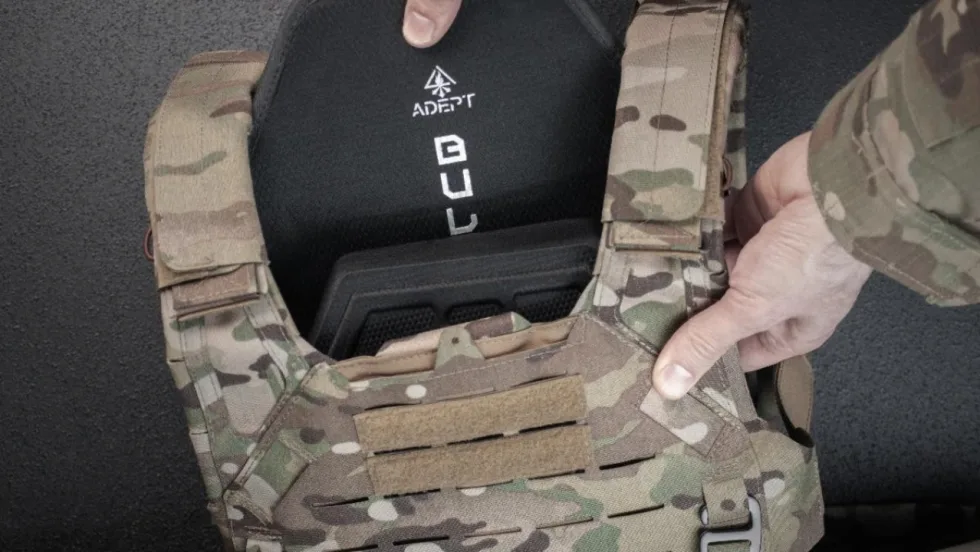
Adept Armor Introduces Two New Rifle Plates
Adept Armor has launched two new Level IV ballistic plates, the Emperor and the Archon Mark 2, which brings Adept Armor’s new Quatroid ceramic to the high-threat, performance-value center of the range at 5.2 pounds.
Read More →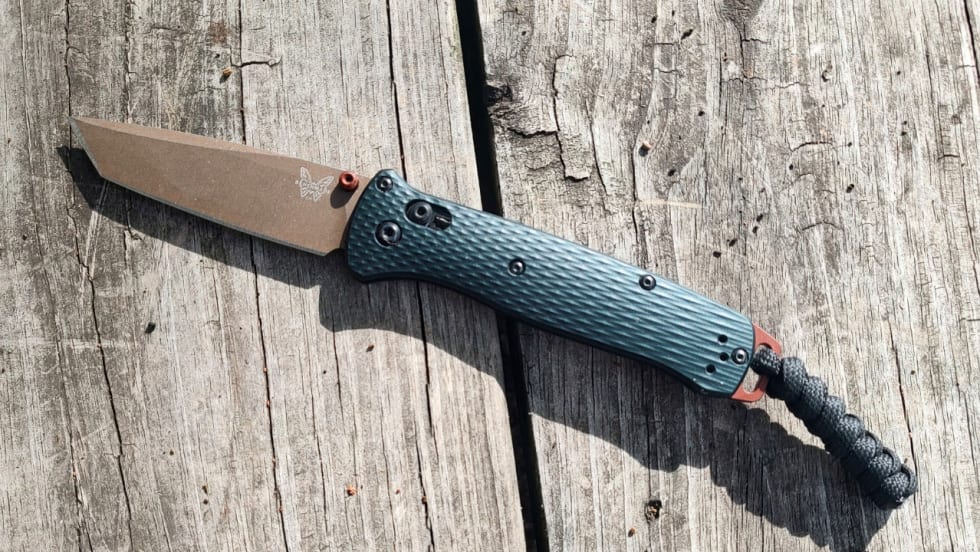
POLICE Product Test: Benchmade Bailout
The Benchmade Bailout is a slim, lightweight carry knife with a deep-ride pocket clip and comes in a variety of blade steels and scales. Here is a detailed review of the Taiga Green Bailout, released earlier this year.
Read More →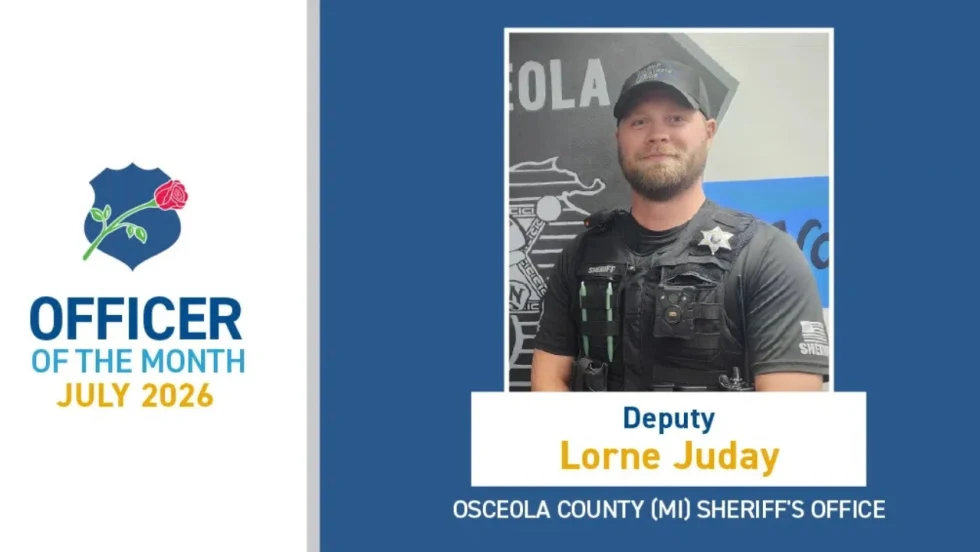
NLEOMF Announces July 2026 Officer of the Month
NLEOMF honored a Michigan deputy sheriff as the July 2026 Officer of the Month for rescuing a trapped driver from a burning vehicle following a Fourth of July crash.
Read More →
Streamlight to Showcase Newest Lighting Products at National Safety Council’s Safety Congress & Expo 2026
Streamlight will showcase its latest lights, including the Portable Scene Light III and the LiteBox 1Million, at the 2026 National Safety Council (NSC) Safety Congress & Expo.
Read More →
The 2027 World Police & Fire Games Set for Perth, Australia
The 2027 World Police & Fire Games (WPFG) will take place in Perth, Western Australia, from Friday, March 12 through Sunday, March 21, 2027.
Read More →
5.11 Partners with National Fallen Firefighters Foundation to Support #ForThe343
5.11 has joined the nationwide movement honoring the 343 New York City Fire Department firefighters lost on Sept. 11, 2001.
Read More →
Team Wendy Announces Title Sponsorship of the Jorge Pastore Foundation
Team Wendy’s 3-year partnership with the Jorge Pastore Foundation expands access to programs that strengthen those who serve.
Read More →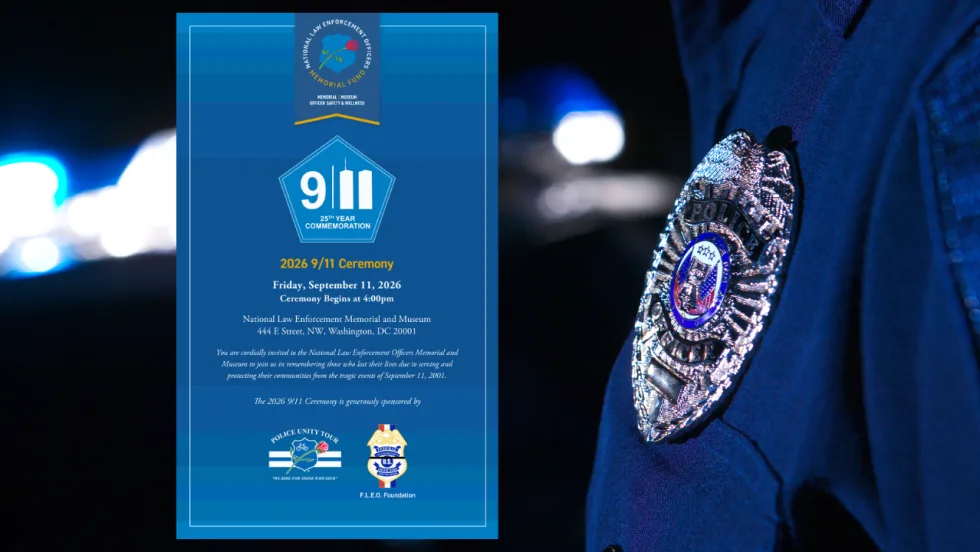
National Law Enforcement Memorial and Museum Hosting 9/11 25th-Year Commemoration Ceremony
The National Law Enforcement Memorial and Museum is hosting a 9/11 25th Year Commemoration Ceremony on Sept. 11 at 4 p.m.
Read More →
National Law Enforcement Officers Memorial Fund Announces June 2026 Officers of the Month
The National Law Enforcement Officers Memorial Fund (NLEOMF) named 15 officers of the Chico Police Department (California) as the Officers of the Month for June 2026 for their roles in responding to an active-shooter incident at a public library.
Read More →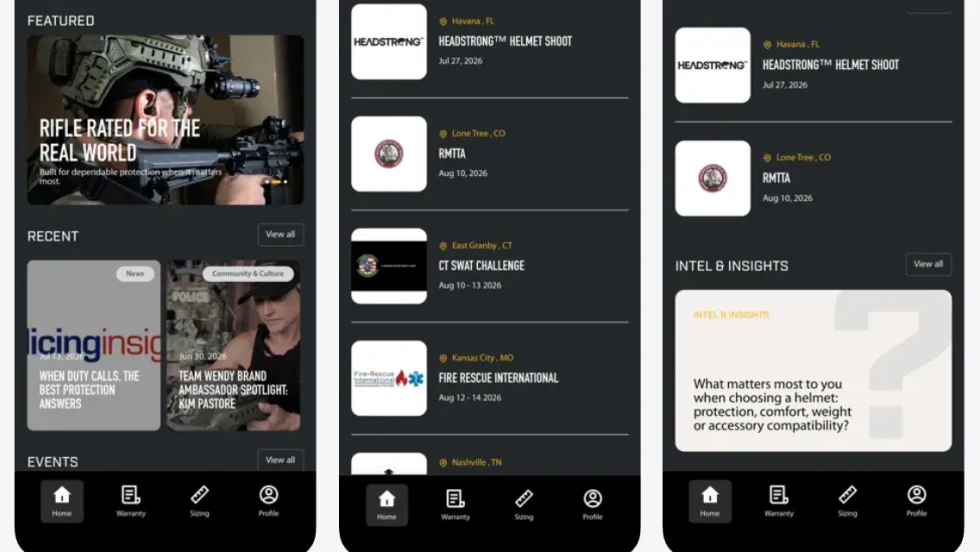
Team Wendy App Creates New Digital Hub for Helmet Owners
The Team Wendy Community App provides one location for warranty registration, size-fit tools, product updates, and community connection. For helmet owners, the new app creates a simpler path to the information and tools that matter most.
Read More →