



Binocular Basics
Look on the front seat of the vast majority of police cars today and I'd wager you'll see a beat up pair of K-Mart binoculars (or worse).


Let's face it, when it comes to the glamour spotlight, a cop's duty sidearm gets the bright light. A uniformed police officer just wouldn't be the same without a pistol playing a balancing act with a portable radio on the other side of a duty belt.
Yet, while that hunk of polymer and steel may garner the most attention in the press, when it comes to cop equipment, the role a decent pair of binoculars can play in the day-to-day grind may actually be just as important. "How's that, again?" you say?
Look on the front seat of the vast majority of police cars today and I'd wager you'll see a beat up pair of K-Mart binoculars (or worse). At least most cops are thinking in the right direction, but all too often they short-change themselves in this all-important bit of help. Just as you wouldn't buy the discount duty handgun (we hope), so the same rules should apply to that trusty pair of miscreant seekers on the seat beside you.
The Good/Bad and Ugly
This isn't rocket science but since, as a breed, we cops are often cheapskates, we have a tendency to penny pinch in all the wrong places at times. It's hard to turn down those "Sale Price: $12.99" Chinese mini-binocs or those "Genuine military surplus tanker binoculars," but be strong and just say no. There are a few reasons why, and let's see what they are-lest you be led astray by those tempting low prices.
Military Spec Glass
The real question is, "Whose military?" If the Lower Slobovian Reserve Home Guard and Drill Team spec a pair of $5 binoculars that later find themselves on the surplus market, does it make them a good deal? Hardly.
Most foreign governments view binoculars as disposable equipment and allow lots of plastic and glue. The U.S., on the other hand, still regards binoculars as long-term investments. So beware of "Genuine German Military Surplus" binocs since many are from former communist block countries and are often of very poor quality. They often have issues with grit and dirt inside where all the delicate parts live. If you can examine them personally, you can tell, usually, if they're junk or not, even if they look really cool.
Zoom, Zoom, Zoom
Other than costing between 20 and 25 percent more than fixed-focus binocs, being about 20 percent heavier and just about impossible to keep in collimation (everything all lined up optically), zoom models are great. Okay, actually they aren't anything close to great. Unless you pay thousands here (think Zeiss, etc.) forget it. A dime store $50 zoom binocular makes a good fishing weight.
Inspected or Not?
On some Japanese binocs you might have noticed tiny gold labels that say "passed" along with numbers like "1, 2, 3" and such. Some people think the number that follows signifies the "grade" of glass, but it doesn't. It simply designates the area or "district" in Tokyo in which the item was inspected. So don't believe those salesman stories about how a "1" means it's the best one. Nope.
Bigger is Better?
Another myth is the higher the power (or magnification) the "farther" you can see. Well, pick up any cheap pair and you can see the moon and stars. That's pretty far. But here on earth, other factors enter into the viewfinder. You can only see so far here on Terra Firma. Trees, buildings, and, hopefully, miscreants will get in the way.
As the magnification increases in your binoculars, less and less light is allowed through, until finally it's too dark to see much. Factor in heat waves and your own shaky fingers, and you'll find that much above eight or 10 power is a waste of money and won't work in the real world.
Old World Quality?
I'd imagine if you stuck with the big brand names like Zeiss, Swarovski, Steiner, and others, you'd probably be safe. But, at least a few years ago, there was no law saying Korea couldn't make optics for companies in Germany, who then stamped them "Made in Germany" and sold them. Something to think about. Remember those "Genuine German Military Surplus" good deals?[PAGEBREAK]
Roof vs. Porro Prism
Roof prism binoculars are the ones that have two straight "tubes" linked together with an adjustable bridge. Porro prisms are the common ones that have a sort of "Z" type shape in the tubes. And there is a big difference.
Due to the unique construction methods necessary to enable a roof prism binocular to transmit a clear image, they are difficult to produce well and unless the lenses are coated properly, will never have the image quality of a porro model. Since it's many times more difficult to make a high-quality roof prism, for equal amounts of money, you're much more likely to get a higher quality pair of binoculars if you go with the conventional porro model.
At the top of the scale they are about equal, but a roof prism model will never be better than a comparably priced porro prism. So, old Uncle Ed's WWII porro binocs may not be so bad after all. Having said that, today's generations of roof prism models above around $300 are pretty good. But, for the same price, you could probably get a higher quality-and a bit more rugged-binocular in a porro.
Get In Focus
So which is best? Center or individual focus? In a nutshell, the center focus models (which hold about 90 percent of the market) are fast and convenient. But all those moving parts can often spell problems. It's almost impossible to waterproof them and the collimation can drift out.
For sheer rugged dependability the individual focus models win hands-down. That's why military models and virtually all waterproof models, are individual focus binoculars.[PAGEBREAK]
Alignment
Are we smart enough to simply squint through a pair of binoculars and tell if they are out of adjustment? Probably not, unless they are severely out of alignment. But here's a simple test.
Find a spot where you can look at something at least 50 to 100 yards away. Focus the binoculars, both with the center focus and the individual right barrel focus. By the way, you focus with the center wheel first (which focuses your left eye) and then with the right focus ring (which focuses for your right eye). Now take the binocs down and rest your eyes for 30 seconds or so.
When you bring them back up, cover the left objective (big) lens with your hand. Once you're looking at your target, take your left hand away. If the image is out of focus and you can feel your eye make "corrections" to bring it into focus, toss the junk away, unless they are of high enough quality to warrant a trip to the binocular doctor for repair.
We have what's called "binocular" vision, and our own eyes can adapt surprising amounts to poor quality optics, basically focusing "inside" to make up for the shortcomings of the glass. If that's the case, you'll soon know it with eyestrain, headaches, and fatigue. Plus, you'll get grumpy.
Old Age
Not the binoculars-you. In our youth, we had the best night vision possible and, as such, could really make good use of those giant 50mm or larger objective lenses that gather as much light as possible. But the reality of age is such that as we get older, our pupils simply can't open as far as they once did. Consequently, I wouldn't get too carried away with buying those big, fancy binoculars thinking they'll give you secret night vision-unless you're 21 and just got out of the academy. If you want to see at night, buy some night vision equipment.
American or "Z" Style?
And you thought this was going to be easy. On a standard porro prism binocular, there are two basic designs: the European "Z" style and the American style. Both look outwardly the same, but if you look closely you'll notice on the American style the objective lenses are integral to the body of the tube. On the "Z" style, they are screwed into the body.
This creates a weak link and can be knocked out of alignment easily with even a minor tumble. If a lens hits on the edge, chances are pretty good it's going to be time for a trip to the binocular doctor. Something to think about.
The Lesson?
If I suddenly found myself back in a patrol car, one of the first things I'd do would be to dig out a good pair of binoculars. From searching canyons for lost kids, to watching drug deals go down a block away, to reading a license plate in a parking lot or just watching the airplanes land during your lunch break at the local airfield, good binoculars can be fun and as reliable as a good partner.
I'd buy a pair that's medium sized, porro prism, American style, with moderately sized objective lenses (remember, don't get carried away there), waterproof, with individual eyepiece focus and it probably wouldn't hurt to get some of that cool rubber "armor" on them either. Prices? Expect to pay anything between $100 and $1,000 (or more) depending on how badly you spoil yourself. Also, the new generation of image-stabilization models can actually hold still enough for you to read a license plate while your partner drives. Honest.
Ten years ago, $100 often bought you a pair of binoculars dismally depressing in the quality department. But with today's technology, lens coatings, and consumer expectations, $100 to $300 buys you a pair of binoculars that isn't too shabby at all. But they're still not entirely cop-proof. They haven't figured that one out yet.
Binoculars Resources
Bushnell
www.bushnell.com
Canon USA
www.usa.canon.com
Fujinon
www.fujinon.com
ITT Industries
www.nightvision.com
Leupold & Stevens
www.leupold.com
Minolta
www.minoltausa.com
Nikon
www.nikonusa.com
Olympus America
www.olympus.com
Pentax
www.pentax.com
Smith & Wesson
www.smith-wesson.com
Steiner
www.steiner-binoculars.com
Swarovski Optik
www.swarovskioptik.com
U.S. Night Vision
www.usnight vision.com
Zeiss
www.zeiss.com
Roy Huntington is a long-time member of the POLICE Advisory Board and won't admit just how many pairs of binoculars he owns. "Not enough," is the best we can get out of him.
More Technology
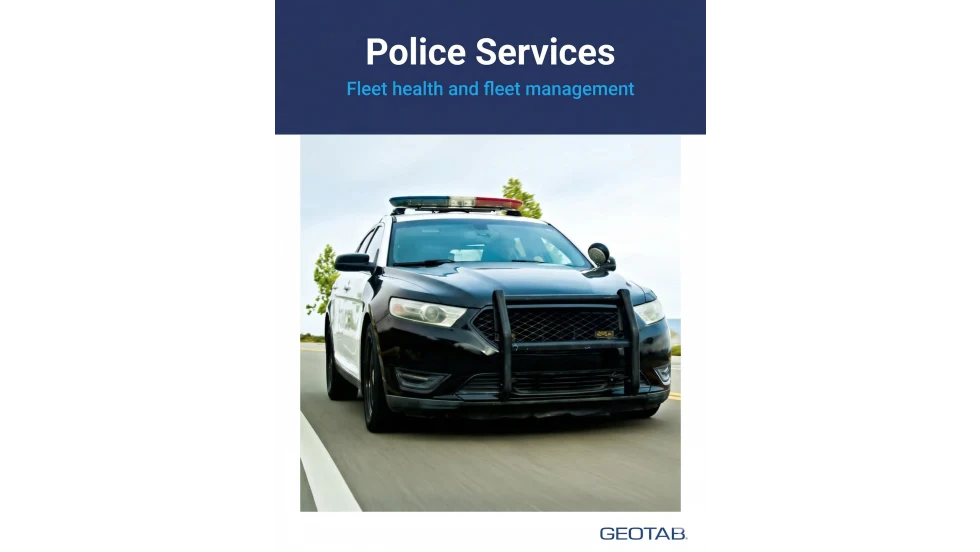
A police agency's guide to data-driven fleet management
Public trust is earned through transparency, and your fleet data can help demonstrate it. This ebook shows how police agencies can use fleet management solutions to strengthen accountability, improve officer safety and responsibly use public funds.
Read More →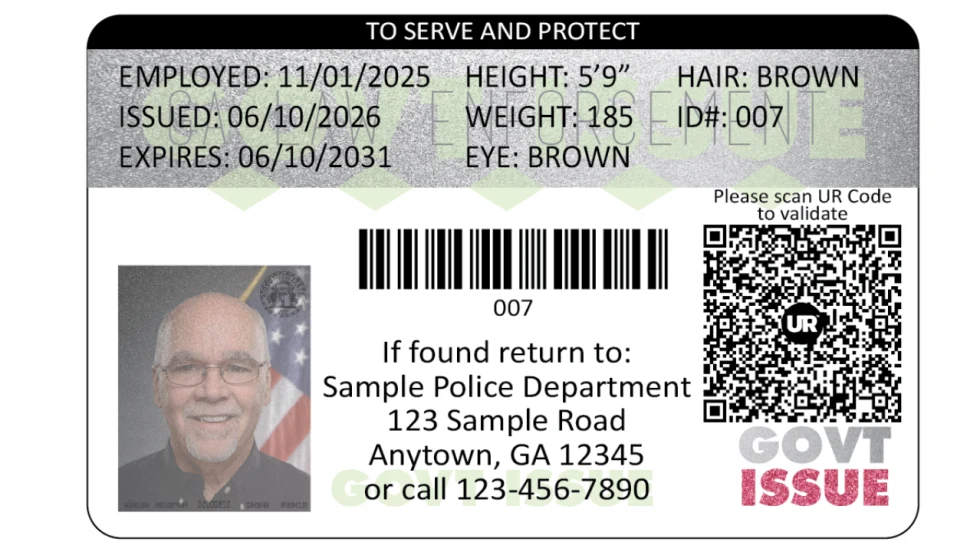
FaceTec and Police & Sheriffs Press Announce Law Enforcement UR Code Partnership
FaceTec has partnered with Police & Sheriffs Press to supply secure ID cards to law enforcement agencies. UR Codes to be added to photo IDs in over 6,000 police and sheriff's departments.
Read More →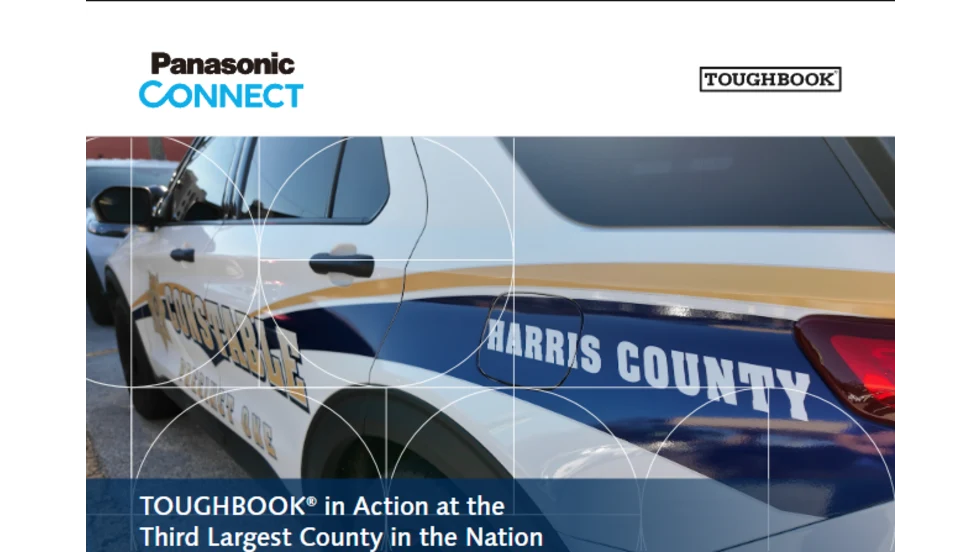
TOUGHBOOK in Action at the Third Largest County in the Nation – Harris County, TX
Learn how Harris County, one of the nation’s largest counties, modernized its law enforcement fleet with TOUGHBOOK® rugged laptops—strengthening security, productivity, and operational readiness across every unit.
Read More →
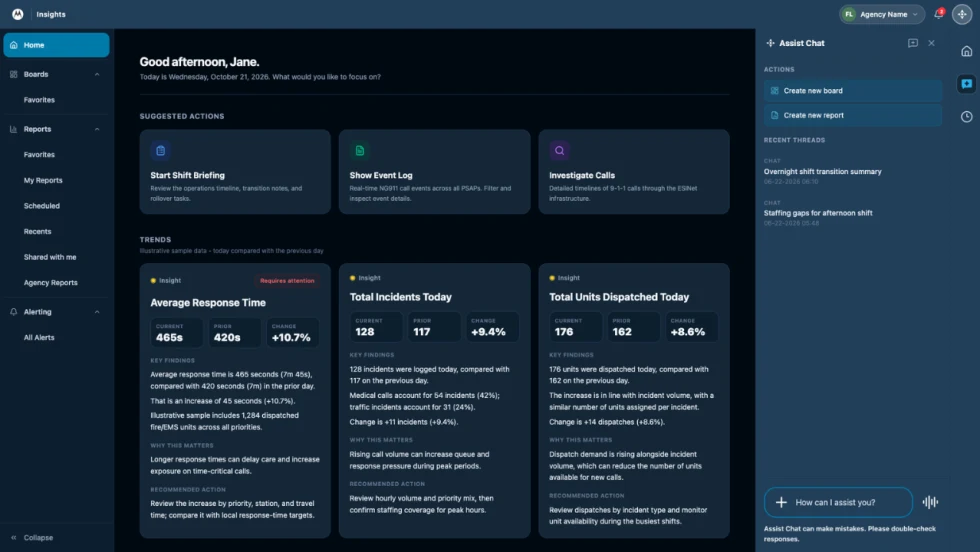
How Motorola Solutions’ New “Insights” Platform Helps Public Safety Agencies Identify Trends to Improve Their Operations
Motorola Solutions has introduced Insights, which leverages Assist, its mission-critical artificial intelligence (AI), to address these challenges and shape what’s next for public safety analytics and reporting technology.
Read More →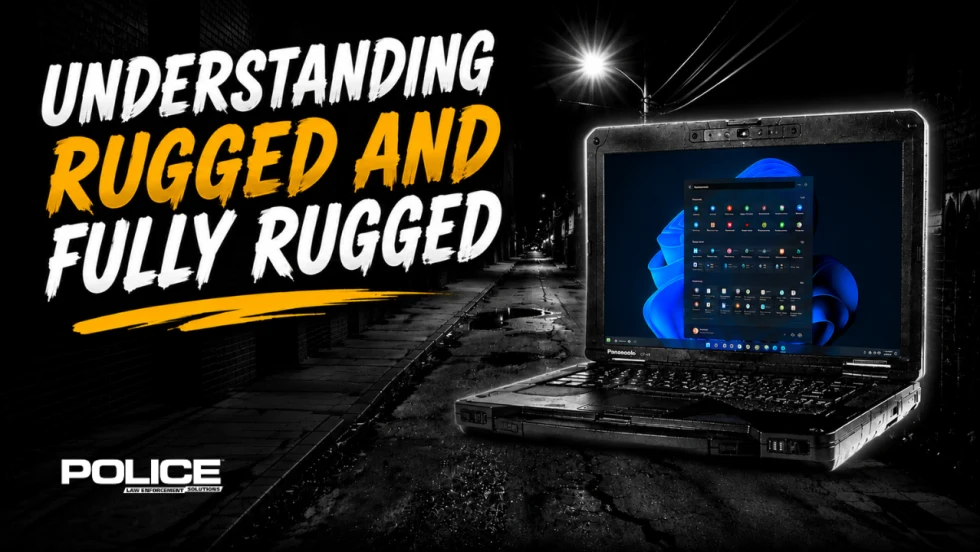
What Qualifies a Laptop as Rugged or Fully Rugged?
Police officers face a wide range of working conditions that can damage or even destroy a regular consumer laptop. Learn what qualifies a computer as rugged or fully rugged and why those devices are vital for law enforcement.
Read More →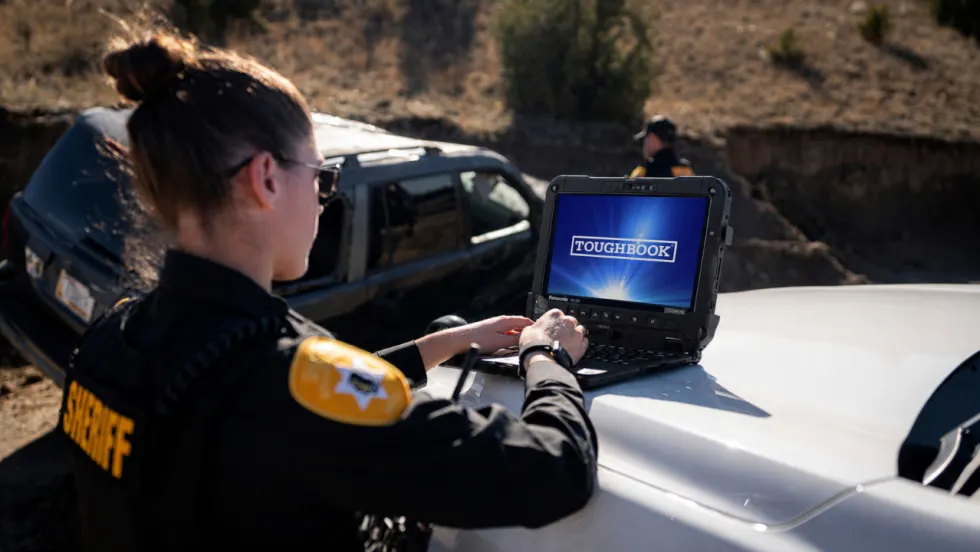
Panasonic Connect Launches the Toughbook 34 and Toughbook G3, Fully Rugged 2-in-1 Mobile Computers
Panasonic Connect has launched the Toughbook 34 and Toughbook G3 to facilitate in-vehicle dispatch, records management, and mobile command operations from any location.
Read More →
AI and analytics for law enforcement: Turning data into insights
Law enforcement agencies are managing more video, sensor data and digital evidence than ever before. Discover how AI and analytics can help turn that data into actionable insights that strengthen situational awareness, accelerate investigations and support more informed decisions.
Read More →
Vasco Electronics Adds Automatic Language Detection to Vasco Translator Q1
Vasco Electronics’ software update introduces hands-free language switching and expanded offline translation across 45 language pairs, empowering law enforcement, healthcare, and front-office enterprise teams
Read More →
North Miami Police Department Deploys Mark43
The North Miami Police Department has deployed Mark43 as part of its Five-Year Strategic Plan that represents its collective vision and goals for a more proactive police department, anchored by a core commitment to leveraging modern technology to enhance efficiency and public safety.
Read More →
Cellebrite Genesis for Enterprise Now Generally Available
Made available to the public sector in June, Cellebrite Genesis is serving a growing mix of national, regional, and local agencies worldwide, including some of the largest regional and metropolitan police departments. It is now available for enterprise organizations.
Read More →