



Beware the Lone Wolf
Lone wolves operate on the fringes of extremist movements, with such loose associations being encouraged by terrorist organizations such as al-Qaeda and Hezbollah, and that makes them harder to detect.

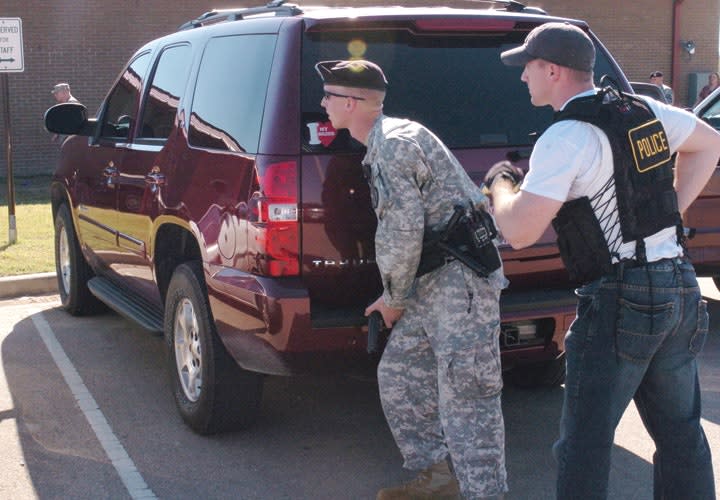
Photo courtesy of Zuma Press.
"We've put a lot of resources into combating organized terrorist groups and cells and until recently we've ignored the lone wolf terrorist," says Jeffrey Simon, author of "Lone Wolf Terrorism: Understanding the Growing Threat."
But he cautions there's reason to fear the big bad wolf, who may be coming to a "theater" near you, and he stresses the time is now for law enforcement to bone up on its defense against solitary individuals bent on destruction for a cause.
Few better examples exist of the tragedy and terror lone wolves can incite than the Fort Hood shooting of 2009 and the Boston Marathon bombings of 2013.
The Fort Hood shooting was a jihadist mass murder near Killeen, Texas, where U.S. Army Maj. Nidal Malik Hasan fatally shot 13 people and injured more than 30 others because of his extremist beliefs. The Boston bombings, which occurred in April of this year, gave Americans another sobering reminder of the tragedy lone wolf terrorists can trigger. Here Tamerlan and Dzhokhar Tsarnaev, also motivated by extremist beliefs, detonated two pressure cooker bombs near the Boston Marathon finish line, killing three people and injuring more than 260 others. Like Hasan, the brothers were not connected to known terrorist groups. They learned to build explosive weapons from an online magazine published by al-Qaeda affiliates.
These examples highlight that terrorist operations are not always broad-scale sophisticated attacks, organized with plenty of resources and funding. "Even low-level terrorist attacks by lone wolves can have a tremendous negative impact on government and society," Simon says. "When fighting terrorism, we need to be as concerned about lone wolves as we are about large-scale terrorist events."
Two years prior to the Boston bombings, Homeland Security Secretary Janet Napolitano warned that lone wolf terror plots were on the rise. "What we see now is smaller plots," she said at the time. "But we are also seeing a rise of activities by individuals who are acting by themselves, and that kind of attack is the most difficult to prevent because there is nothing to intercept."
Lone wolves operate on the fringes of extremist movements, with such loose associations being encouraged by terrorist organizations such as al-Qaeda and Hezbollah, and that makes them harder to detect.
Don Alwes, an instructor for Double Star Training Corp., who also teaches active shooter courses for the National Tactical Officers Association, emphasizes that "good intelligence on a national level, information sharing on a regional level, and when it comes right down to it, good old-fashioned community policing" are all good ways to wage war on lone wolf terrorist tactics.
The Internet Connection
The Internet increases connectedness across the globe, making it easier for would-be lone wolves to uncover ideologies and associations supporting their belief systems. In this technological age of terrorism, would-be extremists become radicalized online, studying attack strategies, tactics and weapons, potential targets, and extremist ideologies.
"Before the Internet, individuals had to make more of an effort to be engaged," says Simon. "Now they can turn on a computer and read a blog on extremism or learn about a terrorist group. They can turn to the Internet for advice on how to make explosives. An online jihadist magazine taught the Tsarnaev brothers to make pressure cooker bombs."
But the Internet presents a double-edged sword because while lone wolves tailor their tactics online, they also brag about them there. They use social media, chat rooms, and email to share their intentions and actions with others. "And the more these individuals use the Internet, the better the chances are of learning about would-be attacks before they occur," Simon adds.
According to Brad Barker, president of HALO Corporation, a San Diego, Calif.-based counter-terrorism training consultant, in a high percentage of adjudicated cases perpetrators shared their intentions or exhibited indicators online. "Social media outlets are where they share and propagate intelligence indicating means, motive, and opportunity," he says.
Hasan espoused beliefs in e-mails and in person that should have generated concern about his intentions, while the Tsarnaev brothers made radical statements about their beliefs and intentions online.
Because of this, Barker believes the Internet represents the first space law enforcement needs to inhabit to thwart lone wolf attacks.
"Software programs allowing law enforcement to crawl social media and open-source Internet looking for keywords and images of weapons are available," Barker says. "You would not believe the number of felonies that are recorded by perpetrators just prior to, after, or even during an event. They boast, 'This is what I'm planning, this is what I'm doing, and this is what I just did.' "
Many agencies already troll the Internet for intel, says Michael Downing, commanding officer of the Counter-Terrorism and Special Operations Bureau of the Los Angeles Police Department. In fact, he says large departments such as the LAPD rely heavily on the Internet to pursue and hunt bad guys.
"But look at how many Websites, chat rooms, and social media outlets criminals can use," he says, explaining the complexity of the problem. "Law enforcement's use of social media and the Internet needs to grow and we need to become more skilled at using it because it is a training camp for violent extremists who are using the Internet to post propaganda, recruit members, finance their operations, and send encrypted covert messages."
Monitoring such information may soon become even more difficult as the result of disclosures by NSA contractor Edward Snowden, who leaked classified details of top-secret U.S. and British government mass surveillance programs. The Snowden case demonstrated that the minute the government shows signs of over-arching invasions of privacy, public outcry over its efforts can be heard loud and clear. But Alwes believes people lose their expectation of privacy when using a public venue such as the Internet to plan, coordinate, and talk about an attack. "If someone makes statements about wanting to hurt others, we should be paying attention to that," he says.
Hello Neighbor
In the days of old, foot patrol officers walked their beats chatting up citizens in the neighborhood, becoming a trusted friend to those who lived there. That friend in uniform became the first person citizens turned to when things were amiss, but with today's officers spending the majority of their time cruising in heated/air-conditioned vehicles with the windows rolled up, this is no longer the case.
But it should be, says Downing, who indicates community outreach plays a critical role in proactively preventing and responding to lone wolf attacks. The LAPD, he says, has engaged in community outreach, especially in minority communities, for more than seven years. "Relationships in those communities have blossomed and developed into relationships built on trust," he says. "And as trusted friends of the community, when there is something wrong, citizens come to us because they know we are ready and willing to help.
"We have to create an environment where it's harder for these things to take root and easier for officers to detect them when they do," Downing continues. "When you work with communities that feel victimized, oppressed, and have grievances, and give them a voice and opportunities to participate, you develop good intelligence."
When citizens mistrust police, they may not report suspicious activity. Even with established and trusting relationships with the local men and women in blue, citizens may not share information on criminal acts. Police hope that technology such as crowd sourcing can change that.
Crowd sourcing provides the public with a means of reporting criminal activity in real-time from mobile devices. With 80 percent of the population owning at least one personal electronic device, this strategy becomes a boon to law enforcement intelligence. To date, more than 700 U.S. law enforcement agencies have deployed digital or cyber BOLO capabilities, where citizens can text, Tweet, or use other social media to communicate with law enforcement in real-time, and as they disseminate these messages, the system geotags and timestamps them.
"Digital BOLO capabilities give law enforcement real-time situational awareness so they know where, when, who, and what occurred," says Barker. "This is actionable intelligence coming to law enforcement that can be used to make decisions."
Know the Signs
After a lone wolf strikes, a wealth of Monday morning quarterbacking takes place, with people coming out of the woodwork to say they knew something wasn't right with the suspect.
"Typically, there are cries for help (before the attack), but these cries are never acknowledged until after the fact," says Simon.
The day of the Boston bombings was not the first time the FBI had heard of Tamerlan Tsarnaev. A "foreign government" had asked the bureau to check him out in early 2011, warning that he was a follower of radical Islam. In the case of Hasan, the warning signs were also there. Hasan made statements justifying homicide bombings, spewed of anti-American hatred, and reached out to al-Qaeda.
Simon believes law enforcement officers must learn the common behavior recognition patterns or pre-incident indicators of lone wolves and then engage community members to make reports when they spot them. The Department of Homeland Security has devised the "If you see something, say something" campaign, which Simon calls somewhat effective. "It's on the right track," he says. "A lot of people say nothing and do nothing when they spot an individual showing signs of trouble," he says.
Individuals need to feel confident enough to confide in law enforcement and share what they've seen. And when they do, law enforcement must be prepared to act, adds Simon. "When people start exhibiting these behavior patterns and indicators, law enforcement needs to start peeling back the onion and asking: Is this person under stress? Is everything OK? Are they seeing a professional? Are they on meds? Are they taking their meds?" he says.
Arguably this is where law enforcement needs the most help, insists Barker. "Where we need the attention, where we need the help, where we need funding is to the left of the 'flashpoint' or incident, where we need to identify pre-incident indicators." He suggests studying past lone wolf crimes to identify the common behavioral patterns and indicators seen before an event. "They need to be analyzed to determine what the catalysts are," he says.
With the right training in place, law enforcement officers will spot strange behaviors and indicators in the course of their jobs. "Law enforcement has an uncanny ability to identify negative behavior, a sort of sixth sense," says Barker. "And law enforcement has the desire and the aptitude to do the right thing based on what they've been taught. So you have to acknowledge these behaviors and indicators and develop training curriculum to work before the flashpoint occurs."
Tell Them About It
The last piece of the puzzle is information sharing. At the local level police may hear something from the community; at the state and federal level, there may be intelligence coming in from other sources. The point is that to be effective law enforcement at all levels must share the information they gather.
"I can tell you that there have been improvements since 9/11 but it's still nowhere near perfect in terms of information sharing," says Alwes. Joint Terrorism Task Forces have beefed up intelligence sharing between state and local and federal law enforcement. But when one considers that there are 800,000 law enforcement officers and 18,000 agencies in this country, communications among them becomes a challenge.
Downing stresses that cultural barriers, restrictions on access to information, and physical boundaries all complicate communications between law enforcement entities, making them less authentic and largely ineffective.
"When the FBI was done investigating Tsarnaev, officials should have let local law enforcement know they were done with him, but that they had had a concern with him," Downing says. "State and local authorities have many more tools available to monitor such individuals. They are out in the community 24/7, have relationships with the community, and know state and local laws that they can use to develop more actionable intelligence."
Combating lone wolf terrorism requires law enforcement to work together for the better good. "This cannot be solely a federal government problem," says Downing. "The state and locals have got to be involved because this threat is decentralized, and state and locals are often in a position to complement what the government is doing in a big way."
Leigh Hunt is a freelance writer based in Fort Atkinson, Wis.
More Patrol

Adept Armor Introduces Two New Rifle Plates
Adept Armor has launched two new Level IV ballistic plates, the Emperor and the Archon Mark 2, which brings Adept Armor’s new Quatroid ceramic to the high-threat, performance-value center of the range at 5.2 pounds.
Read More →
POLICE Product Test: Benchmade Bailout
The Benchmade Bailout is a slim, lightweight carry knife with a deep-ride pocket clip and comes in a variety of blade steels and scales. Here is a detailed review of the Taiga Green Bailout, released earlier this year.
Read More →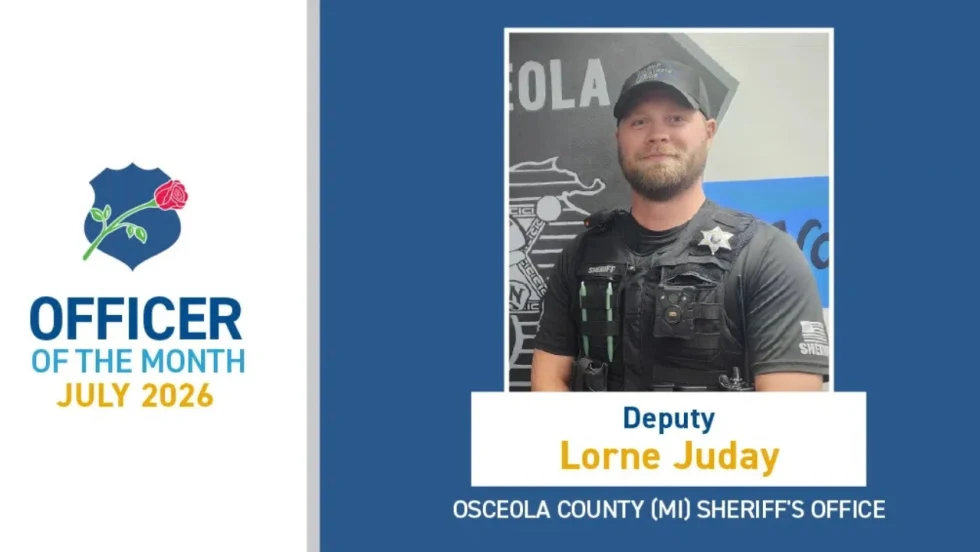
NLEOMF Announces July 2026 Officer of the Month
NLEOMF honored a Michigan deputy sheriff as the July 2026 Officer of the Month for rescuing a trapped driver from a burning vehicle following a Fourth of July crash.
Read More →
Streamlight to Showcase Newest Lighting Products at National Safety Council’s Safety Congress & Expo 2026
Streamlight will showcase its latest lights, including the Portable Scene Light III and the LiteBox 1Million, at the 2026 National Safety Council (NSC) Safety Congress & Expo.
Read More →
The 2027 World Police & Fire Games Set for Perth, Australia
The 2027 World Police & Fire Games (WPFG) will take place in Perth, Western Australia, from Friday, March 12 through Sunday, March 21, 2027.
Read More →
5.11 Partners with National Fallen Firefighters Foundation to Support #ForThe343
5.11 has joined the nationwide movement honoring the 343 New York City Fire Department firefighters lost on Sept. 11, 2001.
Read More →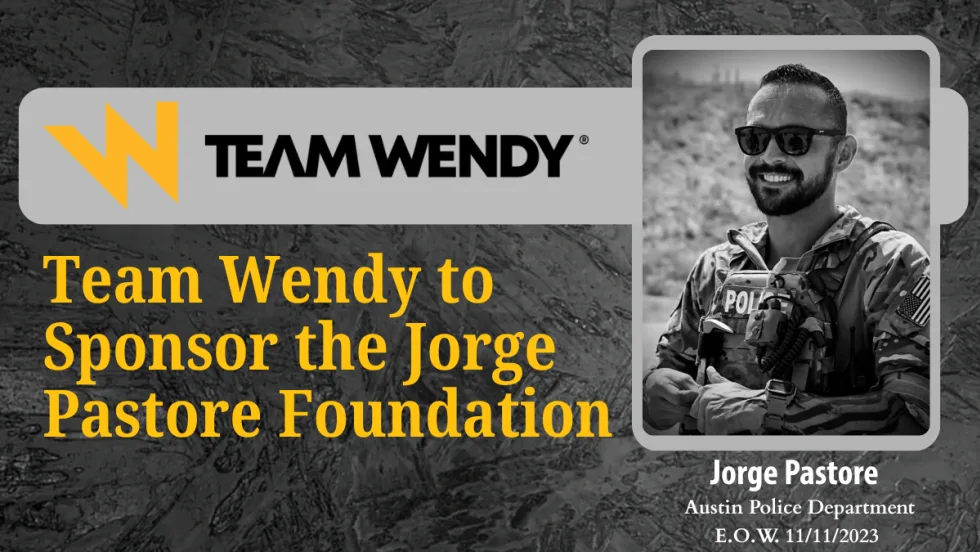
Team Wendy Announces Title Sponsorship of the Jorge Pastore Foundation
Team Wendy’s 3-year partnership with the Jorge Pastore Foundation expands access to programs that strengthen those who serve.
Read More →
National Law Enforcement Memorial and Museum Hosting 9/11 25th-Year Commemoration Ceremony
The National Law Enforcement Memorial and Museum is hosting a 9/11 25th Year Commemoration Ceremony on Sept. 11 at 4 p.m.
Read More →
National Law Enforcement Officers Memorial Fund Announces June 2026 Officers of the Month
The National Law Enforcement Officers Memorial Fund (NLEOMF) named 15 officers of the Chico Police Department (California) as the Officers of the Month for June 2026 for their roles in responding to an active-shooter incident at a public library.
Read More →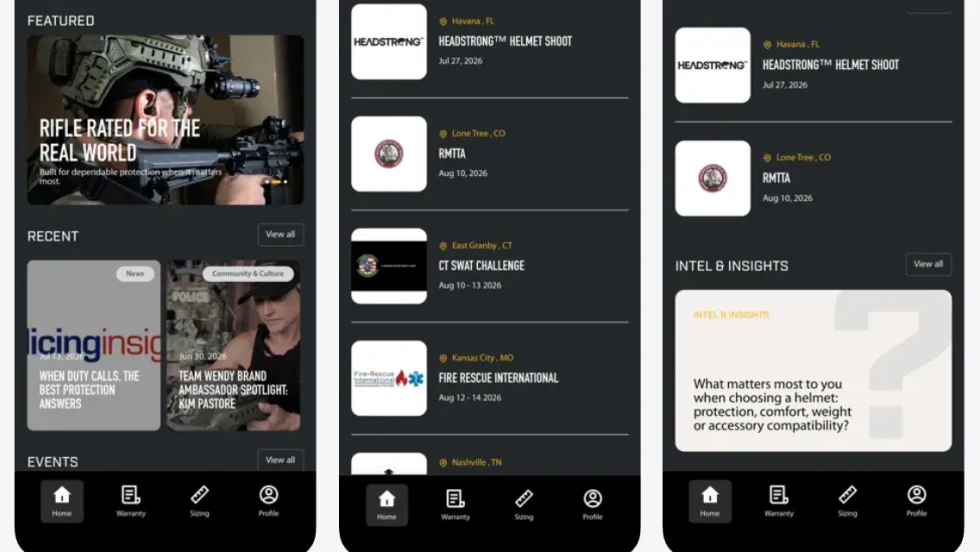
Team Wendy App Creates New Digital Hub for Helmet Owners
The Team Wendy Community App provides one location for warranty registration, size-fit tools, product updates, and community connection. For helmet owners, the new app creates a simpler path to the information and tools that matter most.
Read More →