



Bearing Bad News
Make the notification as soon as possible following the incident. Making a personal notification is always a race against time, and it's far better that they hear it from you, in person, rather than finding out on the news or through the grapevine that their loved one has died.

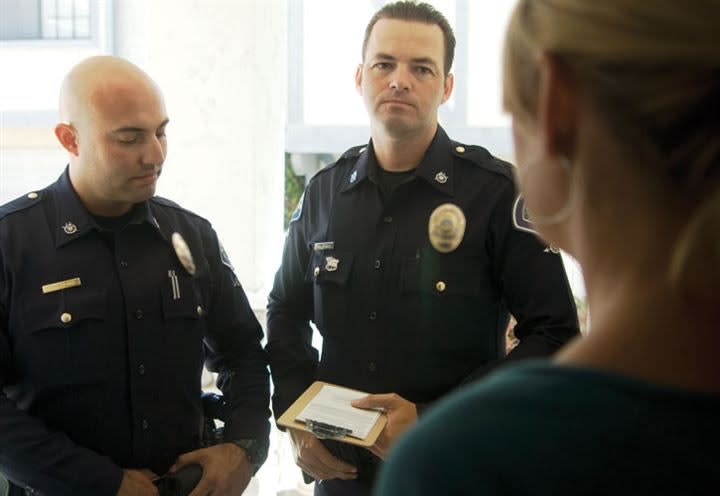
Two police officers are given the difficult task of making a death notification. A young man was killed in an automobile crash several miles away in another jurisdiction.
The officers grab the teletype sent to them from the neighboring police department where the accident took place, read the information and the address of the boy's parents, the next of kin that they are about to notify, and head out together.
It's 2:30 a.m., dark, and the officers are concentrating on reading house numbers to make sure that they stop at the correct address. They get out of the squad car and walk up to the front door of the boy's parents. One of the officers knocks. After a while a woman, presumably the boy's mother, answers the door.
Seeing two officers standing on the front porch at 2:30 in the morning is not a good sign. The woman asks the officers, "What's wrong?" "What happened?" At about this point the two officers look at each other, and they both suddenly realize that they haven't discussed with each other which of them was going to actually make the notification.
Thankless Task
Making death notifications is among the most difficult duties that an officer is asked to perform. It's difficult because what you are about to tell those being notified will turn their world upside down and can create an emotional firestorm.
Those of us who are called upon to make death notifications know that we really only get one opportunity to get it right, and often the next of kin that we are notifying will remember very specific things about us. They will remember the way we said the dreaded words, the way we looked, and how caring and compassionate we seemed to be...or not be.
Show Compassion
Because making death notifications is such an important task, I would like to share what I have learned from personal experience, research, and having talked to many officers that I have had the privilege of working with and or training.
First, not everyone is suited to making death notifications. If an officer has just gone through something difficult and emotionally draining in his or her own life, making a notification now would not be a good thing. Empathy comes much easier for some officers than for others. If you are in a supervisory role, it's a good idea to keep in mind those on your shift in your department who seem to have empathy and use them for this thankless task.
Whenever possible, go and speak with the loved ones in person, don't just call. There are those unfortunate scenarios that make a personal notification next to impossible but because we don't know the health condition or the mental state of those we contact, generally it is best to make the notification in person. It's also a good idea to give your local EMS people a "heads-up" that you are about to make a death notification and they could be called upon if needed.
Make the notification as soon as possible following the incident. Making a personal notification is always a race against time, and it's far better that they hear it from you, in person, rather than finding out on the news or through the grapevine that their loved one has died.
Go out in twos. Generally speaking if you go out to make a notification in a team of two, you can both complement each other and watch out for each other.
If your department has a chaplain that you are comfortable working with, send him or her out with an officer to help with the notification. It's also a good practice for both people doing the notification to drive separate cars in case one of the officers gets called to respond to another incident.
Having someone stay with those notified until other family, friends, or clergy arrive is also important. You never want to leave a person you've just notified alone. People have had heart attacks, fainted, had strokes, and even died upon hearing that their loved one has died.
[PAGEBREAK]Sorry For Your Loss
Before you go up to the door and knock on it, decide as a team which of you is going to make the actual notification, and who is there in a supportive role. By working as a team, you can more effectively help those you are notifying.
Take a deep breath, and say to yourself, "Be calm." If you are religious, offer a silent prayer for you, your partner, and the person(s) that you are about to notify, then knock on the door.
After knocking on the door, introduce yourselves and ask if they are the family you are supposed to notify. You want to be certain that these are the correct people to be contacting, the next of kin.
Then ask the resident being notified if you can enter their home. (Note: sometimes people won't invite you inside so you are left with no other option than talking to them through the door.). Once inside, if you can get the person(s) to sit down that is good, but not necessary. Because everyone is dumping so much adrenaline at this point, often people won't sit down until you tell them what is going on.
Ask as calmly as you can, and slowly while making good eye contact say, "Are you the parents of [Name]? I'm afraid that I have some very bad news for you..... (pause here momentarily to give those being notified a moment to psychologically prepare themselves). [Name] has been involved in a serious automobile accident, and he/she has died. (Pause) I'm so sorry. They did everything they could to save him/her."
Saying you are sorry expresses emotion, it makes you human. Continue to use the word "dead" or "died" throughout the ongoing conversation, and continue to use the victim's name. This helps those being notified come to the realization that their loved one has died.
Say the Word
Avoid using euphemisms. Don't say that their loved one has passed on....or "I know how you feel." Using dead or died is clear and to the point. When said with compassion, it is the best way to let someone know that a loved one is gone.
Avoid the "God clichés" such as "It was God's will" or "God never gives us more than we can handle." When we find ourselves reaching for these kinds of expressions, although well meaning, they are not generally helpful to those we are saying them to, and they often spring out of our nervous need to "say something."
Because of the life-altering bad news that we are sharing, it is important that we have the calm strength to "hold" what is often an emotional explosion. It is important to let them vent, and it is our job to ride it out with them, and to make sure that their reaction isn't a threat to themselves or others.
Remember to speak slowly, because in the midst of an adrenaline dump the people you're speaking with are not going to be thinking as clearly as they would under normal circumstances.
Maintain good eye contact. It's important for them to feel connected to you, for you are, in a very real sense, a lifeline to them in the midst of that critical incident.
[PAGEBREAK]Take Cues From Them
Mirror their body language. If they sit down, please don't stand over them, but squat down to their level. This helps those notified know that you are with them.
The use of touch is a tough call, and is often brought up at the training sessions that I teach. But you have to be very careful in the use of touch. If I sense that a person might benefit from me gently placing my hand momentarily on his or her forearm, I will do so, usually when I'm about to leave or move away from them.
Learn to listen. Once you have made the notification one of your most important jobs is to just listen.... Sometimes that is hard to do, as you will want to fill up those awkward moments of silence with words. Please remember that beyond saying you are genuinely sorry and meaning it, there are no magic words to make everything OK.
A good communication technique is to mirror back or rephrase a part of what those notified might be saying to you. This is often done by saying, "What I hear you saying is...." But don't overuse this because it can make you sound like a parrot.
Another communication technique is to accurately reflect emotion. This can be very effective and can help to validate what those being notified are feeling. I usually state this by saying, "You seem angry...."
Being able to listen and reflect back to those being notified what they are telling us validates to them that they are being heard and what they are going through is very important. It also tells them that you care.
It's also important after making the notification to ask, "Is there anything I can do for you?" "Would you like me to make some phone calls for you?"
Remember that any information you can give to those notified helps to empower them. They have just lost a loved one. They will generally have many questions. Their world has been turned upside down, so the more you can help them obtain information (when appropriate), the sooner they can get some control back in their lives. But if you promise to find answers for them to questions that you can't answer, be sure to follow up.
When notifications are made at a place of work, ask the person's supervisor if there is a private place, an office where you can meet with the employee. Tell the supervisor that it is a family emergency, and it's very important that you talk to that person in private.
Often the people you notify will have strong emotional reactions to the notification. Once they have emotionally vented they sometimes apologize for their strong reactions. Assure them that their reaction is a normal reaction to an abnormal event.
Not all police departments have the people resources to do this, but if someone can stop in or give the notified family a phone call to check and see how they are doing, it goes a long way in showing them that you care.
Finally, after the notification talk to your partner about the notification about what went well, and what didn't seem to work.
Following the strategies that I've presented will hopefully make a very difficult situation run a little smoother. You and your partner will not have to face that awkward moment on the front porch of a residence during a death notification because you did not prepare for the challenges ahead. Instead, you will be able to perform this difficult but very important task with empathy, compassion, and dignity.
Greg Young is the head chaplain and debriefer for the Germantown (Wis.) Police Department, a trainer for the International Critical Incident Stress Foundation, and an International Law Enforcement Education Training Association trainer.
More Patrol

Streamlight Portable Scene Light III Wins 2026 OH&S New Product of the Year Award
Streamlight’s Portable Scene Light III has won the 2026 Occupational Health & Safety (OH&S) New Product of the Year Award in the Lighting category.
Read More →
Adept Armor Introduces Two New Rifle Plates
Adept Armor has launched two new Level IV ballistic plates, the Emperor and the Archon Mark 2, which brings Adept Armor’s new Quatroid ceramic to the high-threat, performance-value center of the range at 5.2 pounds.
Read More →
POLICE Product Test: Benchmade Bailout
The Benchmade Bailout is a slim, lightweight carry knife with a deep-ride pocket clip and comes in a variety of blade steels and scales. Here is a detailed review of the Taiga Green Bailout, released earlier this year.
Read More →
NLEOMF Announces July 2026 Officer of the Month
NLEOMF honored a Michigan deputy sheriff as the July 2026 Officer of the Month for rescuing a trapped driver from a burning vehicle following a Fourth of July crash.
Read More →
Streamlight to Showcase Newest Lighting Products at National Safety Council’s Safety Congress & Expo 2026
Streamlight will showcase its latest lights, including the Portable Scene Light III and the LiteBox 1Million, at the 2026 National Safety Council (NSC) Safety Congress & Expo.
Read More →
The 2027 World Police & Fire Games Set for Perth, Australia
The 2027 World Police & Fire Games (WPFG) will take place in Perth, Western Australia, from Friday, March 12 through Sunday, March 21, 2027.
Read More →
5.11 Partners with National Fallen Firefighters Foundation to Support #ForThe343
5.11 has joined the nationwide movement honoring the 343 New York City Fire Department firefighters lost on Sept. 11, 2001.
Read More →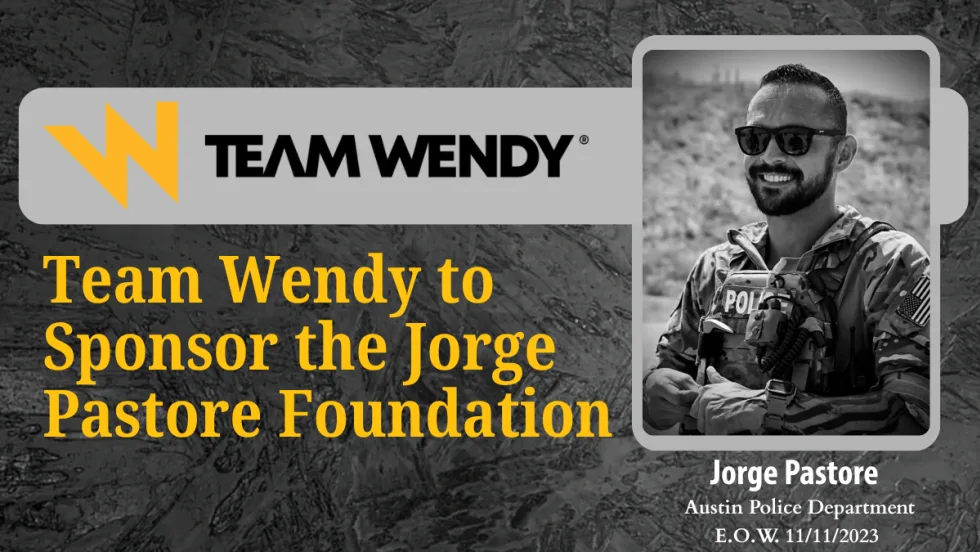
Team Wendy Announces Title Sponsorship of the Jorge Pastore Foundation
Team Wendy’s 3-year partnership with the Jorge Pastore Foundation expands access to programs that strengthen those who serve.
Read More →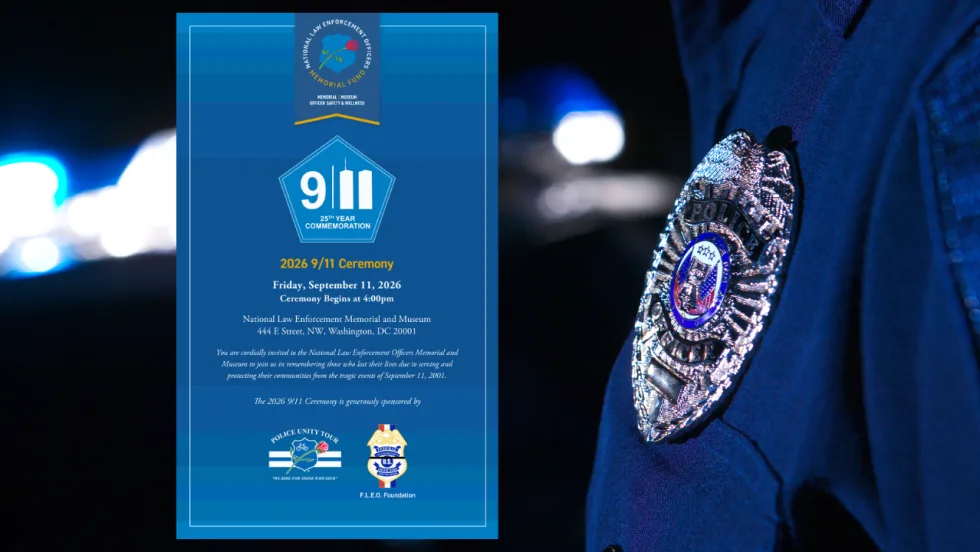
National Law Enforcement Memorial and Museum Hosting 9/11 25th-Year Commemoration Ceremony
The National Law Enforcement Memorial and Museum is hosting a 9/11 25th Year Commemoration Ceremony on Sept. 11 at 4 p.m.
Read More →
National Law Enforcement Officers Memorial Fund Announces June 2026 Officers of the Month
The National Law Enforcement Officers Memorial Fund (NLEOMF) named 15 officers of the Chico Police Department (California) as the Officers of the Month for June 2026 for their roles in responding to an active-shooter incident at a public library.
Read More →