



Be On the Lookout
Numerous high-tech gadgets are now being deployed by law enforcement to catch or stop car thieves.

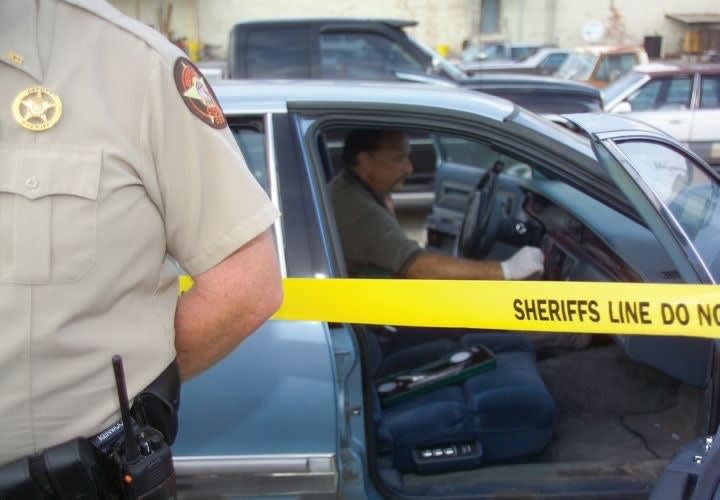
Numerous high-tech gadgets are now being deployed by law enforcement to catch or stop car thieves. Some agencies have set up special “sting” cars equipped with tracking systems and video surveillance gear. These have led to arrests of entire car theft rings and the seizure and shuttering of chop shops. As such they get a lot of press. But they can’t take the place of the best auto-theft recovery tool ever created, the well-educated patrol officer.
Patrol officers have always been the backbone of the police department, and they play a crucial role in the fight against auto theft. A well-trained, experienced officer can spot a stolen car driving down the highway or one “dumped” on the side of a county road. And some departments have cops who just seem to have a nose for finding stolen cars.
How do they do it? Simple; they learned easy techniques for spotting stolen cars early in their careers, and they apply them consistently in their daily duties. Any officer can learn these techniques, and any department can teach their officers these tips to increase their effectiveness in recovering stolen vehicles.
Here is a list of simple things to look for when searching for stolen vehicles:
• Look for broken car windows, especially wing windows. This is still the preferred way of vehicle entry for amateur car thieves. Breaking a small wing window and unlocking the door gets them into the car. Starting it is easy after that.
• Look for vehicles out of place. Vehicles that are parked in the middle of nowhere, between businesses, or in empty parking lots should send up a red flag to any passing officer. Thieves will normally “dump” stolen vehicles in crowded parking areas during peak hours. After the business is closed, the parking lot is cleared, except for the stolen car. Shopping malls are famous for this.
• Look for “stripped” vehicles. Many car thieves steal cars just for their parts. This is especially true in today’s “street racer” culture, where performance parts are worth a small fortune. Honda, Mitsubishi, and Acura are popular car makes for street racers, and that makes certain models of these cars popular for auto theft. These vehicles can frequently be found missing interior parts, such as seats and dashboards or engine parts.[PAGEBREAK]
• Look for vehicles with windows rolled down or missing. Most people don’t leave their windows rolled down when they park their car, especially at night. If you see a vehicle parked with its windows down, especially if it is parked out of place, take a closer look.
• Check with surrounding cities. Just because your city doesn’t have a lot of Hondas stolen doesn’t mean a nearby city hasn’t experienced a rash of “missing” Civics. Most car thieves know if they drive the car to a different city they have a better chance of not getting caught.
• Check the VIN. The Vehicle Identification Number (VIN) is the quickest and easiest way to identify a stolen car. If your instincts tell you a car is stolen, check it out. When you are on a vehicle stop of a suspicious vehicle, confirm the last four or six numbers of the VIN. These numbers are specific to only that vehicle; the other ones are specific to that vehicle model. If the VIN doesn’t match the license plate, you may have a “cold-plated” stolen vehicle. A thief will attach a different license plate, usually from the same type and similar year of vehicle. This is called “cold plating.” Run the entire VIN when this happens.
• Know the “hot” vehicles in your area and keep an eye out for them. What kind of car gets stolen the most in your city? Toyota Camry? Saturn? Know your area and notice the makes and years of vehicles that are getting stolen the most. This will help you see them better as they drive down the road in front of you or when you see them “dumped” somewhere.
• Most important of all, follow your instincts. If you think a vehicle is stolen, dig into it until you are satisfied it’s not. Remember, it may be an unreported stolen car. In that case, when you have exhausted all other techniques, document who was driving the car. If it is reported stolen later, you can always track down the driver. Time is on your side in law enforcement.
Using these techniques can greatly increase the vehicle recoveries in your agency. Patrol officers are the eyes and ears of the police department, and they are in the best position to locate these stolen vehicles every day. Good luck, and happy hunting.
For additional reading and lists of the Top Ten Most Stolen Cars and U.S. Car Theft Capitals, go to "Grand Theft Arizona", (POLICE, October, 2004).
Dan Pasquale is an auto-theft detective for the City of Tracy Police Department in northern California. This is his second contribution to POLICE magazine.
More Patrol

Streamlight Portable Scene Light III Wins 2026 OH&S New Product of the Year Award
Streamlight’s Portable Scene Light III has won the 2026 Occupational Health & Safety (OH&S) New Product of the Year Award in the Lighting category.
Read More →
Adept Armor Introduces Two New Rifle Plates
Adept Armor has launched two new Level IV ballistic plates, the Emperor and the Archon Mark 2, which brings Adept Armor’s new Quatroid ceramic to the high-threat, performance-value center of the range at 5.2 pounds.
Read More →
POLICE Product Test: Benchmade Bailout
The Benchmade Bailout is a slim, lightweight carry knife with a deep-ride pocket clip and comes in a variety of blade steels and scales. Here is a detailed review of the Taiga Green Bailout, released earlier this year.
Read More →
NLEOMF Announces July 2026 Officer of the Month
NLEOMF honored a Michigan deputy sheriff as the July 2026 Officer of the Month for rescuing a trapped driver from a burning vehicle following a Fourth of July crash.
Read More →
Streamlight to Showcase Newest Lighting Products at National Safety Council’s Safety Congress & Expo 2026
Streamlight will showcase its latest lights, including the Portable Scene Light III and the LiteBox 1Million, at the 2026 National Safety Council (NSC) Safety Congress & Expo.
Read More →
The 2027 World Police & Fire Games Set for Perth, Australia
The 2027 World Police & Fire Games (WPFG) will take place in Perth, Western Australia, from Friday, March 12 through Sunday, March 21, 2027.
Read More →
5.11 Partners with National Fallen Firefighters Foundation to Support #ForThe343
5.11 has joined the nationwide movement honoring the 343 New York City Fire Department firefighters lost on Sept. 11, 2001.
Read More →
Team Wendy Announces Title Sponsorship of the Jorge Pastore Foundation
Team Wendy’s 3-year partnership with the Jorge Pastore Foundation expands access to programs that strengthen those who serve.
Read More →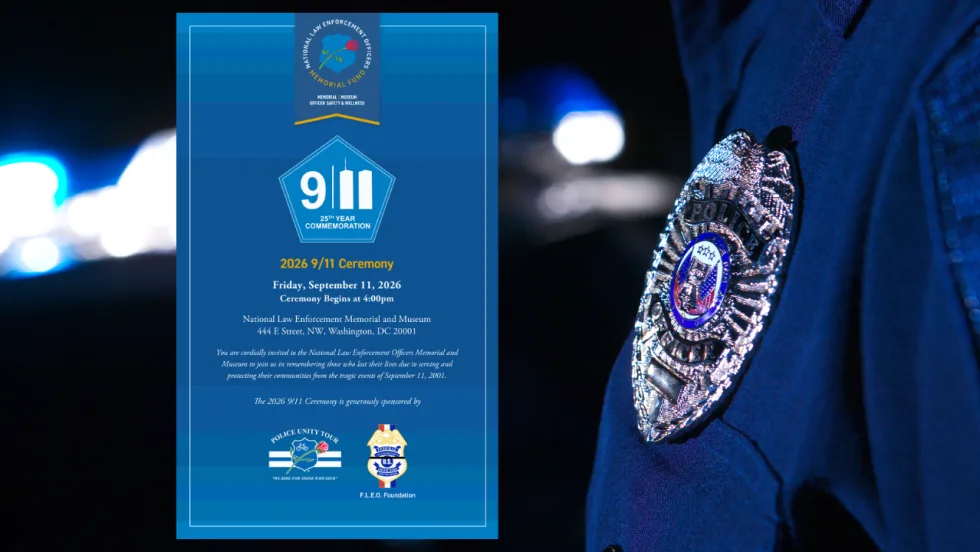
National Law Enforcement Memorial and Museum Hosting 9/11 25th-Year Commemoration Ceremony
The National Law Enforcement Memorial and Museum is hosting a 9/11 25th Year Commemoration Ceremony on Sept. 11 at 4 p.m.
Read More →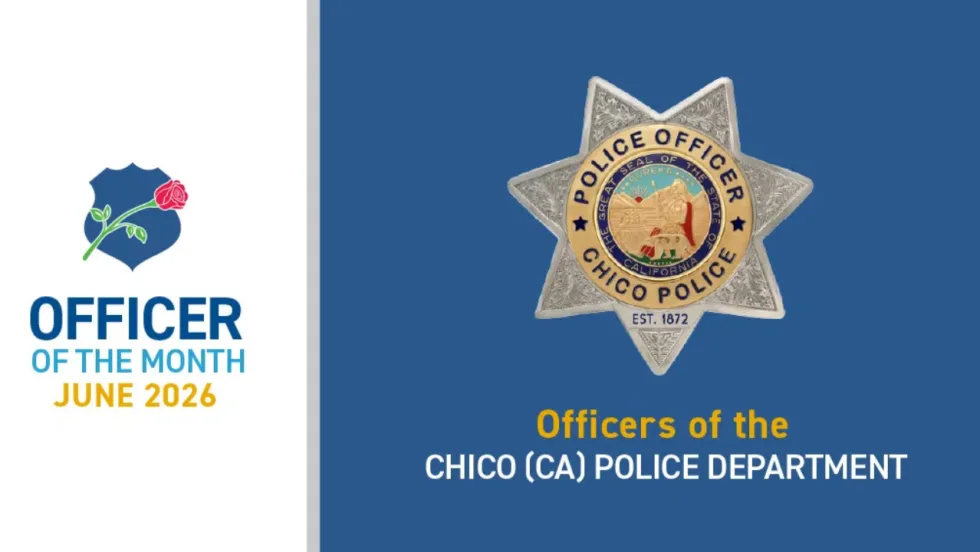
National Law Enforcement Officers Memorial Fund Announces June 2026 Officers of the Month
The National Law Enforcement Officers Memorial Fund (NLEOMF) named 15 officers of the Chico Police Department (California) as the Officers of the Month for June 2026 for their roles in responding to an active-shooter incident at a public library.
Read More →