



Bank Robberies
Though almost all bank robberies are investigated by the FBI, there is much that a local agency can do to assist in the prevention and apprehension of bank robbers.

Though almost all bank robberies are investigated by the FBI, there is much that a local agency can do to assist in the prevention and apprehension of bank robbers.
Bank jobs are attractive to bad guys. Most savvy people know that bank employees are trained to offer no resistance and just turn over the money. And as street crimes go, bank robberies yield some of the largest takes: usually over $4,000.
There are almost three times as many bank outlets-mostly mini-branches-now than there were 35 years ago. Mini-branches are popular with customers because they are often located in larger stores, and banks like the mini-branches because they are cheaper to operate.
Criminals also like mini-branches because they provide easy access, usually are manned by only one or two tellers, and are not protected by sophisticated security systems.
Adding to their convenience, many smaller bank branches offer extended operating hours and have standardized layouts that allow robbers to feel comfortable in different branches. Especially in busy environments such as grocery stores, it isn't difficult for bank robbers to blend in with regular customers and appear to conduct regular bank business. The average bank robbery takes less than three minutes, oftentimes occurring so quickly that other customers are not aware of anything happening.
Number Crunching
Some banks tend to be hit more than once. This may be due to the conditions that made the bank attractive to a criminal in the first place. Whatever the reason, officers should know that about a third of repeat bank robberies occur within 60 days of the previous crime.
About 25 percent of banks robberies occur on Fridays and most occur during the day shift between 9 a.m. and noon. Research indicates that many bank robbers prefer to strike on Friday afternoons in the winter when the extended hours intersect with the early winter darkness. The darkness and cold allow for "natural disguises" such as hats, high collars, and scarves.
And inclement weather may slow police response time or may leave officers encumbered with other duties like traffic control or crash investigation. Fridays may also be attractive to criminals because of increased payday traffic at the bank or because they need to finance a weekend of partying.
Much to crooks' chagrin, bank robbery clearance rates are around 60 percent. Several factors contribute to this high number. First, bank robberies usually occur during the day. Second, because of the nature of banks, there are usually multiple witnesses and photographic evidence of any robberies. Overall, robberies are reported very quickly and police response times are outstanding. Effective initial response of the patrol division helps keep this number high.
Amateur or Professional?
As a responding officer, you should immediately try to ascertain whether amateurs or professionals committed the robbery.
Amateur bank robbers usually work alone; professionals work in teams. Amateurs usually wait patiently in line and then hand the teller a note; they often do not use weapons. Professionals may stage a takeover, complete with weapons, loud demands, and aggressive behavior.
Professionals will take steps to obscure cameras and may use disguises. Many amateurs (about 60 percent) do not use disguises. A lone amateur will hit one teller window and leave quickly, whereas the professionals will target as many teller windows as possible. Many professionals like to hit banks when they first open, knowing large amounts of cash will be on hand and fewer witnesses will be present. Amateurs prefer to wait until midday when they can blend in with daily traffic.
Early Withdrawals
A robber's method of escape is also very telling. Many lone offenders do not use cars in order to avoid problems with parking and retrieving the vehicle. Professionals, on the other hand, designate one member as the get-away driver. (Almost 75 percent of professionals use cars to leave the scene.)
Professionals favor bank branches on multiple-lane roadways with two-way traffic that is not too heavy. Many bank robberies occur on secondary roads, more than two miles from major highways.
Amateurs want walk-up convenience to the scene, preferring banks near wooded areas, small streets, railroad tracks, or creeks. Amateurs will avoid banks that are too remote, as they can't afford the exposure of walking across a huge parking lot.
Bank Profiling
When initially investigating a bank robbery, try to get into the mindset of the offender and think of things he knew or should have known. Was the bank hit at a vulnerable time, like right after a money transfer? Was there a diversion set-up, like a bomb call across town? Does the bank traditionally hold more cash on certain days? Was the bank hit when staffing was low? Were there other banks close by that were not hit? Why was this branch selected? If it appears the robber(s) addressed these matters in planning the heist, your agency may well be dealing with a professional bank robbery organization. If these issues were ignored, the bank robbery is likely the work of an amateur.
Most of the "target hardening" required to prevent a bank robbery is the responsibility of the bank itself.
Regardless, your agency should periodically inspect the bank's video system. Although 98 percent of banks have video surveillance, many times the quality of the video image is substandard and not useful due to antiquated equipment, the presence of barriers between the offender and the camera, or poor camera placement. Most of these problems can be identified by inspection.
Heading Them Off at the Pass
An officer on patrol can help prevent bank robberies by using basic street crime tactics. First, knowing that banks that have been hit are likely to be hit again, you should take steps to find out why that particular branch was hit. By working with experts investigating the previous robbery, you can identify factors of vulnerability and learn how to prevent future robberies. Studying previous robberies and high-risk bank branches will help you get into the mindset of the bank robber.
When you're on patrol, always be alert for people loitering around the front of banks. Anyone hanging around the front of a bank should be viewed with extra suspicion and should be immediately addressed. Also monitor people entering the bank. Are they dressed appropriately for the weather or are they overdressed?
Also be aware of vehicles circling the block or double parked in front of a bank. Pay extra attention to vehicles backed into parking spaces around banks.
Most importantly, the officer on patrol should constantly be thinking "if/then." If there is a bank robbery, then what should I do? What routes would an offender use in a car? Where would an offender run? Toward what part of town would he be heading?
By mentally preparing for an event, you will be better prepared when the event actually happens. In many critical incidents, officers drive directly to the scene. But in the case of a robbery that's already occurred, the offender will not be at the scene.
Avoid wasting time and resources by mentally preparing an effective response to a bank robbery.
More Patrol

Adept Armor Introduces Two New Rifle Plates
Adept Armor has launched two new Level IV ballistic plates, the Emperor and the Archon Mark 2, which brings Adept Armor’s new Quatroid ceramic to the high-threat, performance-value center of the range at 5.2 pounds.
Read More →
POLICE Product Test: Benchmade Bailout
The Benchmade Bailout is a slim, lightweight carry knife with a deep-ride pocket clip and comes in a variety of blade steels and scales. Here is a detailed review of the Taiga Green Bailout, released earlier this year.
Read More →
NLEOMF Announces July 2026 Officer of the Month
NLEOMF honored a Michigan deputy sheriff as the July 2026 Officer of the Month for rescuing a trapped driver from a burning vehicle following a Fourth of July crash.
Read More →
Streamlight to Showcase Newest Lighting Products at National Safety Council’s Safety Congress & Expo 2026
Streamlight will showcase its latest lights, including the Portable Scene Light III and the LiteBox 1Million, at the 2026 National Safety Council (NSC) Safety Congress & Expo.
Read More →
The 2027 World Police & Fire Games Set for Perth, Australia
The 2027 World Police & Fire Games (WPFG) will take place in Perth, Western Australia, from Friday, March 12 through Sunday, March 21, 2027.
Read More →
5.11 Partners with National Fallen Firefighters Foundation to Support #ForThe343
5.11 has joined the nationwide movement honoring the 343 New York City Fire Department firefighters lost on Sept. 11, 2001.
Read More →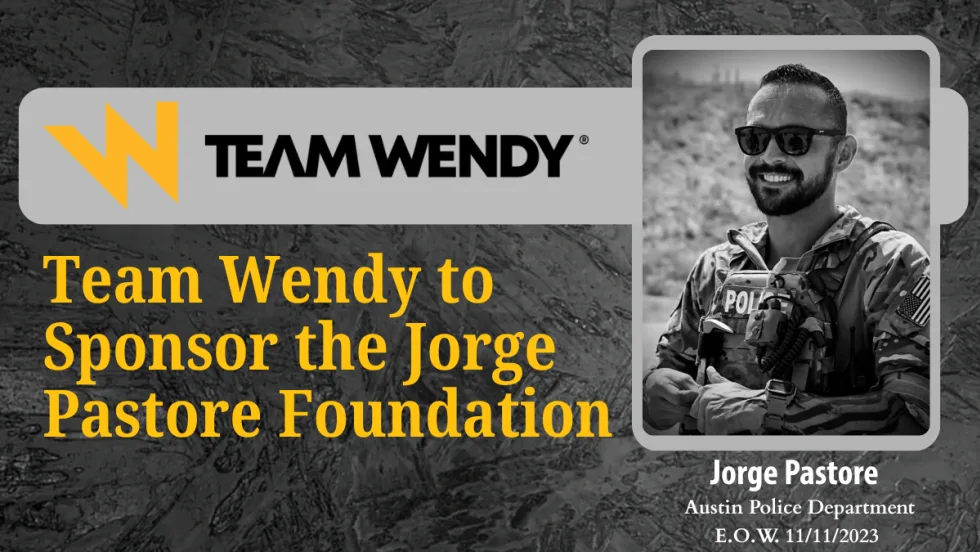
Team Wendy Announces Title Sponsorship of the Jorge Pastore Foundation
Team Wendy’s 3-year partnership with the Jorge Pastore Foundation expands access to programs that strengthen those who serve.
Read More →
National Law Enforcement Memorial and Museum Hosting 9/11 25th-Year Commemoration Ceremony
The National Law Enforcement Memorial and Museum is hosting a 9/11 25th Year Commemoration Ceremony on Sept. 11 at 4 p.m.
Read More →
National Law Enforcement Officers Memorial Fund Announces June 2026 Officers of the Month
The National Law Enforcement Officers Memorial Fund (NLEOMF) named 15 officers of the Chico Police Department (California) as the Officers of the Month for June 2026 for their roles in responding to an active-shooter incident at a public library.
Read More →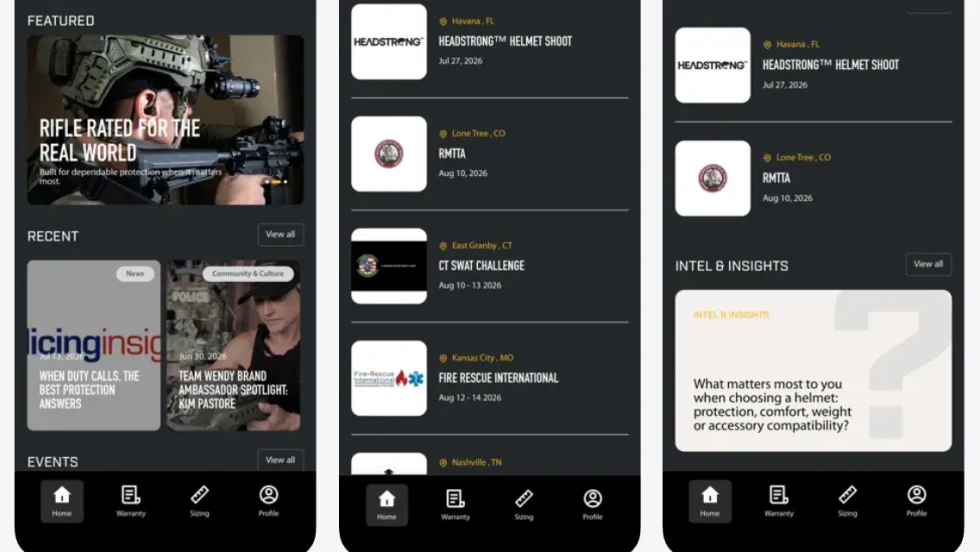
Team Wendy App Creates New Digital Hub for Helmet Owners
The Team Wendy Community App provides one location for warranty registration, size-fit tools, product updates, and community connection. For helmet owners, the new app creates a simpler path to the information and tools that matter most.
Read More →