



Arresting Foreign Nationals
The world is, as they say, getting smaller. International travel and relocation are commonplace, which means that police officers everywhere are more likely to encounter crime victims, witnesses, and suspects who are not U.S. citizens. Because of federal law, special procedures may sometimes apply when dealing with foreign nationals.

The world is, as they say, getting smaller. International travel and relocation are commonplace, which means that police officers everywhere are more likely to encounter crime victims, witnesses, and suspects who are not U.S. citizens. Because of federal law, special procedures may sometimes apply when dealing with foreign nationals.
Vienna Convention on Consular Relations
Under Article VI of the U.S. Constitution, treaties signed by the United States are the supreme law of the land. Where a treaty imposes a duty on local police officers, it is as binding as any federal statute or constitutional provision. One such treaty is the Vienna Convention on Consular Relations, which this country ratified in 1969.
Picture this: You are traveling on vacation in a foreign country and find yourself in the custody of the local constabulary, whether because of drunk driving, misbehavior, or misunderstanding. The locals are not impressed with your badge and probably don’t understand when you try to tell them in your native language about your involvement in some questionable circumstances. Who you gonna call?
If you happen to be in one of the 195 countries that have signed the Vienna Convention, you’re going to call the American consul, who will be allowed to visit you and get assistance started. The consul will arrange legal counsel and bail, get word to your family, communicate with local officials about your need for medical care or other accommodation, and help to correct misunderstandings, if possible. At such a time, you will be very thankful for the protection of the Vienna Convention.
Treaties are Reciprocal
Far more likely than the scenario just described is this one: You arrest and jail a foreign national on suspicion of having committed a crime in your jurisdiction. He gets arraigned in a day or two and criminal proceedings are scheduled. In the meantime, he’s unable to communicate that he is a diabetic and needs insulin. He becomes very ill and has to be hospitalized.
Provisions of the Vienna Convention were designed to allow foreign-custody situations to be handled like the former scenario, rather than the latter. The treaty is binding on all countries that have signed it, but if American officials fail to comply it is more difficult for the United States to demand compliance from other countries where our citizens’ rights are involved.
Notice and Access
The essential provisions of the Vienna Convention are notice and access. When you arrest a person who is a suspected foreign national from any of the signatory countries, it is your legal obligation to provide the notices and rights of access guaranteed by the treaty. This includes a duty to inform the arrestee of his right to consular notification. (To obtain a complete list of participating countries and additional information, contact the U.S. State Department at 202-647-4415 or 202-647-1512, or visit http://travel.state.gov/consul_notify.html)
In some cases, it is mandatory that you notify the appropriate consul of the arrest (or death) of a foreign national. In other cases, this notice is optional, depending upon whether or not the arrested person requests it. However, the notification rules do not apply to temporary detention for traffic citation.
At least 58 countries have entered into reciprocal agreements with the U.S. for mandatory notifications. This list includes such nations as China, the Philippines, Russia, and the United Kingdom. If you take one of their nationals into custody, you are required to notify their consul.
If the arrestee is not from one of the mandatory-notification countries but is from another signatory country (such as Canada or Mexico), you must offer the person the opportunity to have his consul informed of his arrest and location. If he so elects, you must provide prompt notification and allow access, subject to reasonable restrictions as to time, place, and security. Sample advisement cards and fax notification forms and numbers are available from the State Department.[PAGEBREAK]
Vienna Convention on
Diplomatic Relations
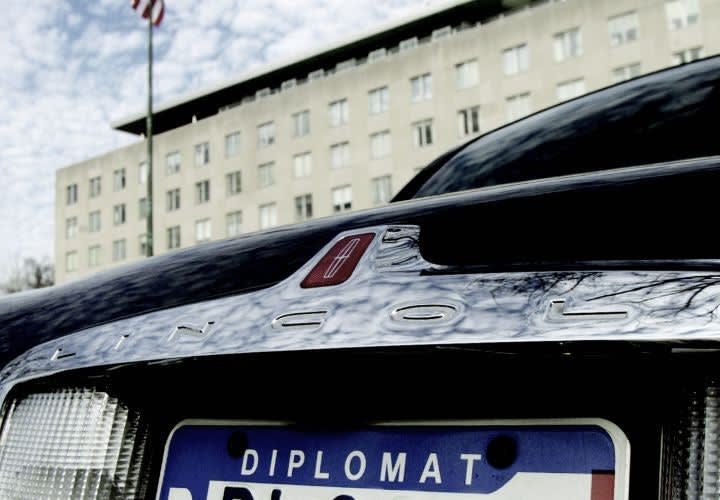
Another treaty to which the United States is a signatory (since 1972) provides for diplomatic immunity. The diplomatic convention is intended to secure uniform, reciprocal protection of national sovereignty through specified immunities for diplomatic agents from criminal and civil process.
There are different levels of immunities. Some agents and their family members are absolutely immune to detention, arrest, prosecution, or search (person, vehicle, and residence). Others are immune to minor offenses and some have immunity only for their official acts.
To assist in identifying diplomats and determining who has what kind of immunity, the State Department issues identification cards to all diplomatic personnel with a brief statement of their particular immunities printed on the back. If you should confront a person who asserts a diplomatic immunity, you should request diplomatic identification and check the reverse of the card. In case of questions you may telephone the State Department at 202-647-7277 before deciding whether an individual is subject to arrest or search.
Registration, Plates, and Licenses
Diplomats are not required to have a state-issued driver’s license, vehicle registration, or license plates. Instead, the State Department issues these items and designates the particular level of diplomatic use of vehicles with license plate prefixes or suffixes (“D” for diplomats, “C” for consuls, “S” for administrative staff, and “A” for international organizations such as high-level United Nations officials). But the license plate should not be relied upon as proof of the status of the driver or passengers in lieu of their official identification cards.
Exceptions
Nothing in the Vienna Convention prevents police officers from taking necessary measures to protect public safety. Although it would be rare for an immune official to create an incident that might get him or her expelled or prosecuted, officers should remember that diplomatic immunity is not a barrier to protection of public safety. In exigent circumstances, take all reasonable and necessary steps to secure your safety and the safety of others, and consider issues of immunity only after the situation is under control. An impaired driver, for example, need not be permitted to drive away from a stop, but should be driven by unimpaired staff or sent home by taxi.
Also, since sovereign immunity belongs to the nation, rather than the individual diplomat, it can be waived by the sending nation, thereby making the individual subject to prosecution. Therefore, in any case where a person subject to diplomatic immunity is suspected of a serious or violent crime, appropriate reports should be made and available evidence preserved. It is the stated policy of the State Department to request a waiver of immunity in every case where the prosecutor advises that charges would be pursued except for diplomatic immunity.
Traffic citations may be issued to members of the diplomatic and consular corps. The State Department should be notified of any such citations. And because that department issues the driver’s license it can suspend the license upon the accumulation of too many moving violation “points” or for driving under the influence.
It’s the Law
A general guideline for meeting obligations and respecting immunities under these two Vienna Conventions is to treat foreign nationals and diplomats as you would want Americans to be treated abroad under similar circumstances. Remember that compliance with treaties is not an option—it’s the law.
Devallis Rutledge, a former police officer and veteran prosecutor, is Special Counsel to the Los Angeles County District Attorney.
More Patrol

Team Wendy Introduces the EXFIL Endurance Ballistic Helmet, Engineered to Reduce the Burden of Extended Wear
Team Wendy has launched its EXFIL Endurance, a new lightweight ballistic helmet engineered to deliver protection, comfort, and fit during demanding, extended operations.
Read More →
The First Responders Children’s Foundation National First Responders Day Roll Call of Heroes Ceremony Returns to Times Square, NYC
First Responders Children’s Foundation (FRCF), in collaboration with T-Mobile, will host the Roll Call of Heroes ceremony in Times Square to commemorate National First Responders Day on Wednesday, Oct. 28. During the event, FRCF will present 18 Hero Awards.
Read More →
Streamlight to Showcase Newest Lighting Products for Law Enforcement Professionals at IACP 2026
Streamlight will showcase its newest lights for law enforcement at the International Association of Chiefs of Police Annual Conference & Expo. Featured lights will include the TLR-3 X, the PolyTac 1X, and more.
Read More →
Streamlight Portable Scene Light III Wins 2026 OH&S New Product of the Year Award
Streamlight’s Portable Scene Light III has won the 2026 Occupational Health & Safety (OH&S) New Product of the Year Award in the Lighting category.
Read More →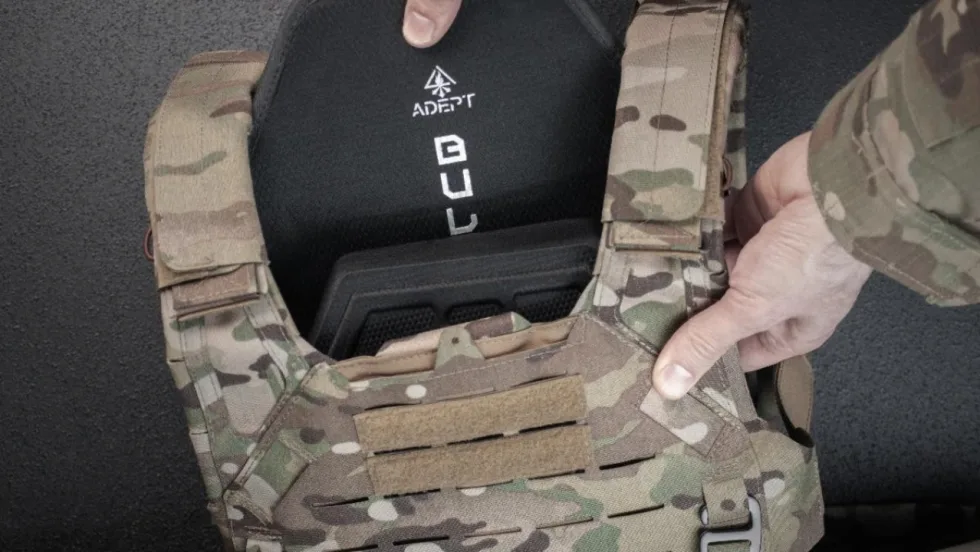
Adept Armor Introduces Two New Rifle Plates
Adept Armor has launched two new Level IV ballistic plates, the Emperor and the Archon Mark 2, which brings Adept Armor’s new Quatroid ceramic to the high-threat, performance-value center of the range at 5.2 pounds.
Read More →
POLICE Product Test: Benchmade Bailout
The Benchmade Bailout is a slim, lightweight carry knife with a deep-ride pocket clip and comes in a variety of blade steels and scales. Here is a detailed review of the Taiga Green Bailout, released earlier this year.
Read More →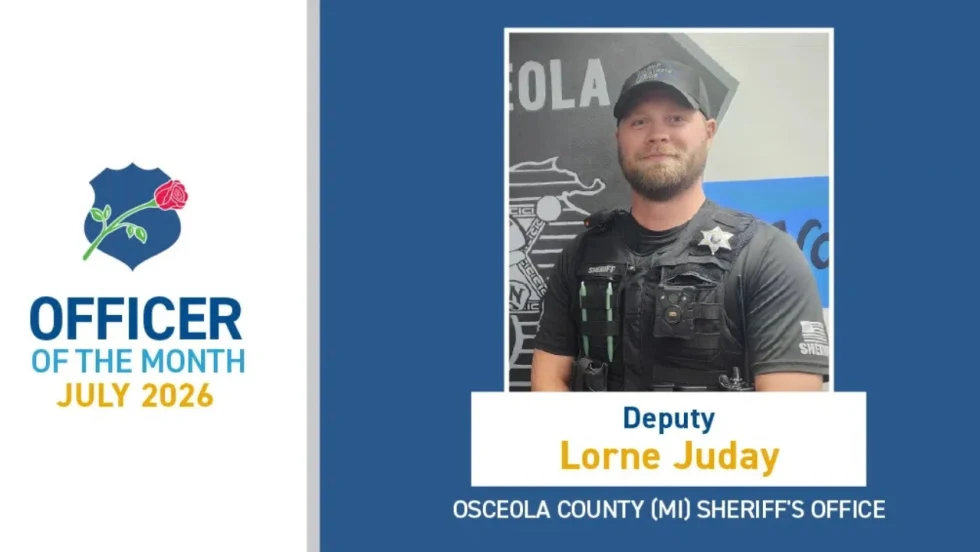
NLEOMF Announces July 2026 Officer of the Month
NLEOMF honored a Michigan deputy sheriff as the July 2026 Officer of the Month for rescuing a trapped driver from a burning vehicle following a Fourth of July crash.
Read More →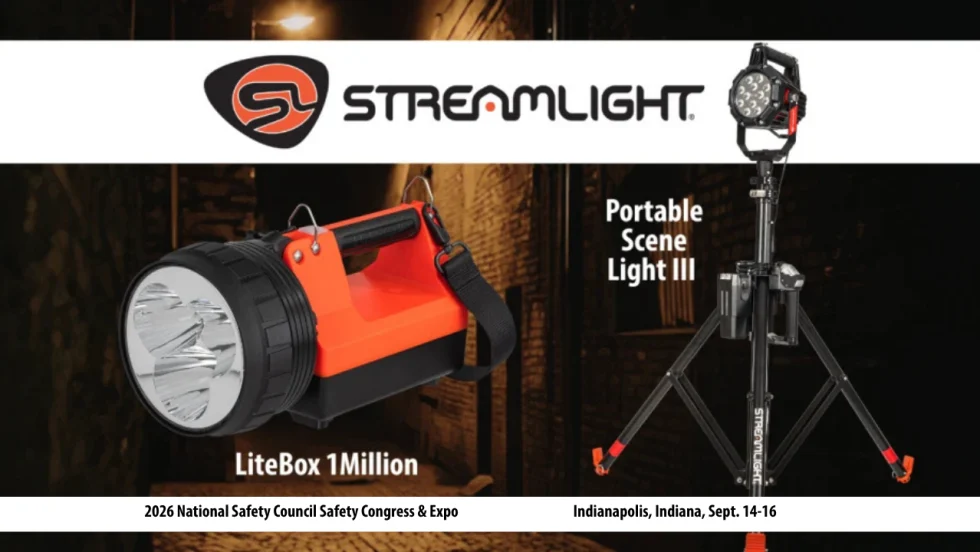
Streamlight to Showcase Newest Lighting Products at National Safety Council’s Safety Congress & Expo 2026
Streamlight will showcase its latest lights, including the Portable Scene Light III and the LiteBox 1Million, at the 2026 National Safety Council (NSC) Safety Congress & Expo.
Read More →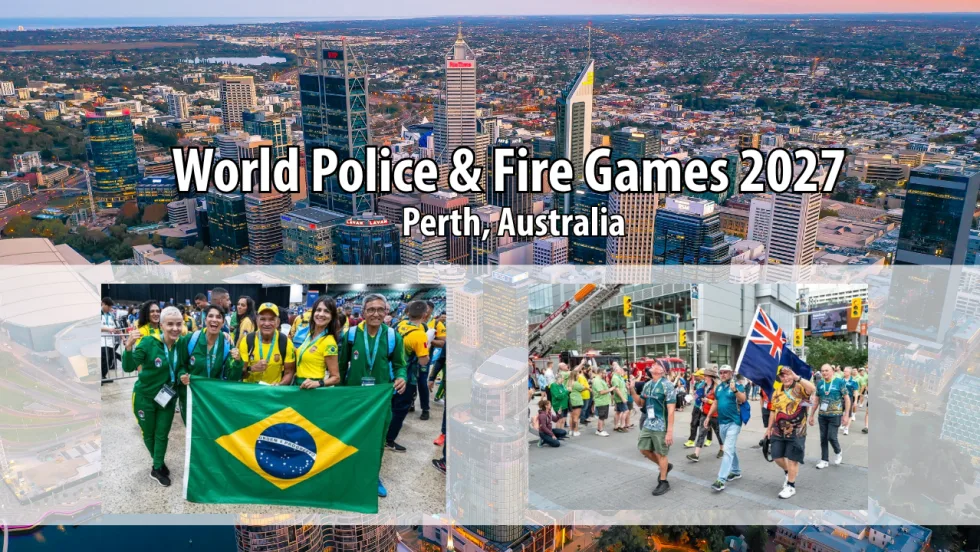
The 2027 World Police & Fire Games Set for Perth, Australia
The 2027 World Police & Fire Games (WPFG) will take place in Perth, Western Australia, from Friday, March 12 through Sunday, March 21, 2027.
Read More →
5.11 Partners with National Fallen Firefighters Foundation to Support #ForThe343
5.11 has joined the nationwide movement honoring the 343 New York City Fire Department firefighters lost on Sept. 11, 2001.
Read More →