



Are We Teaching Cops To Run?
When a gunfight begins you need to end it, period. But many of you have been taught that your first need is to find cover. Which may be teaching you to run away from a fight instead of doing your duty, which is to "run toward the gunfire."

More than a decade ago I started studying officer-involved gunfights. Having accepted the huge responsibility of training officers to use their weapons in deadly encounters, I believed it was critical to learn from others.
Firearms training is a serious business. Unfortunately that's not a sentiment always shared by all police firearms instructors. All too often they make the training about them and their favored tactics and not the needs of their students in actual gunfights.
Leaving all the political correctness and legal soft shoe aside, gunfighting is just that: fighting with a gun. But some police firearms trainers don't acknowledge the "fight" as part of the equation.
Once the guns come out and the bullets start to fly, gunfighting is no longer an academic exercise, it is a fight plain and simple. I've been training to fight or teaching people to fight since 1972 when I took my first martial arts lesson, so the warrior mindset has become a part of my very being. When I was tasked with police firearms training, I saw it as nothing more than another fighting system.
One of the most critical things we should take from the military or warrior mindset is the emphasis on winning and the need to always be deliberate and often aggressive in a fight. I believe this is where police training is often lacking.
As my father told me long ago, "I don't expect you to start the fight, but I expect you to finish it!" As a police officer, you may not have started the fight, but it's your job to end it. In fact, seldom do we ever start the fight. Police work is all about reaction and that makes this all the more difficult.
When a gunfight begins you need to end it, period. But many of you have been taught that your first need is to find cover.
Which may be teaching you to run away from a fight instead of doing your duty, which is to "run toward the gunfire." When a gunfight begins you may have to move toward the threat using your pistol as cover in order to end it and end it quickly.
Going for Cover
Don't get me wrong. When available, and when it ensures or increases the likelihood of winning the fight, cover should be sought.
Whenever you approach a situation you should be identifying cover. Just remember the more attention you pay before the fight starts, the better off you are. Identify what will stop bullets and where it is. When the gunfight begins it may come in handy.
But let's be clear. Just because cover is available and you have cataloged it in your mind before the fight, that does not mean the best thing to do once the fight starts is run for cover. This is especially true if doing so requires you to give your back to the threat.
The best thing to do may be to advance on the threat, returning fire, and ending the fight. The surest and quickest way to end a gunfight is to win it. Be deliberate in your actions and aggressively end the fight.
Sun Tzu wrote: "Whoever is first in the field and awaits the coming of the enemy will be fresh for the fight; whoever is second in the field and has to hasten to battle will arrive exhausted." He's absolutely right, and unfortunately, police officers are almost always second to the fight.
It's not our fault that we are late to the fight. It's just the nature of what we do: We have to react to the other guy, so it's very rare that we can act first. That means we have to be better prepared, better trained, and have the ability to press the fight after starting behind the curve. That is not fair, but it's simply the way it is.[PAGEBREAK]
I recognize there are a ton of tactical gurus out there that will disagree with me about pressing the fight. But I'm OK with that.
This is not about the tactic as much as the decision-making process. The tactic that should never change is to win the fight, by whatever means you can. The sooner it ends the better it is for you and everyone else.
My argument is about what to do when the fight starts. There are opinions ad nauseum as to what to do before or after. This is about what to do when you are in a gunfight, not what happens before or after. The sooner it is over the more likely you will have the time to have that discussion with all the tactical gurus you can find.
Case By Case
Don't get me wrong. It is not inappropriate for you to be trained to seek cover. I contend it is inappropriate for you to be trained to "always" seek cover, regardless of the situation.
If a pattern is established in your training that as soon as the bullets fly you should "run to cover" we are not training you to win, we are training you to run. Sometimes running to cover may do nothing more than get you shot in the back.
Sometimes the best way to survive is to end the fight and that may not involve moving to cover. Also, running away to fight another day just may get your partner killed next week or 10 minutes later. Someone willing to kill cops today will be willing to do so tomorrow or next week so you need to stop that from occurring. That may be as simple as containing them, it may be as nasty as killing them, but either way the problem needs solving now and you are the one to do it.
Sometimes it just flat out sucks to be a cop. You are always behind the curve. That means you may be close to the threat, you may not. There may be cover, there may not be. You may have time, you may not. It may be more lethal to go to cover than to advance on the threat. If it were always the same it would be easy, but it isn't. To quote Clint Smith, "A gunfight is not what you make it, it simply is what it is."
How well you are able to deliberately act once that fight starts will determine how it ends. Training you to win gunfights means you need to be taught to act and you need to be given the tools necessary to act given any situation.
Is it inappropriate for you to be trained to seek cover to reload? Of course not. But I think your trainers are presenting you with problems if they train you to "always" seek cover to reload.
And don't use shooting competitions for examples of how you should be trained to shoot in combat. Shooting competitions are games. They have rules, and you can make all the rules you want. That is great, I play the games too and love them. But it is important to recognize that shooting competitions are games where you test your skills and have fun. Not all of them are realistic, nor are the tactics necessarily viable in a fight.
Law enforcement training is about gunfighting, not games. There is no timer, no rules, and the winner is breathing and the loser often is not. I prefer to win the fight and discuss tactics afterwards.
If you have been trained to "always" seek cover when the bullets fly, that is what you are always going to do. You need to train to win, and that may mean moving to cover, or it may not.
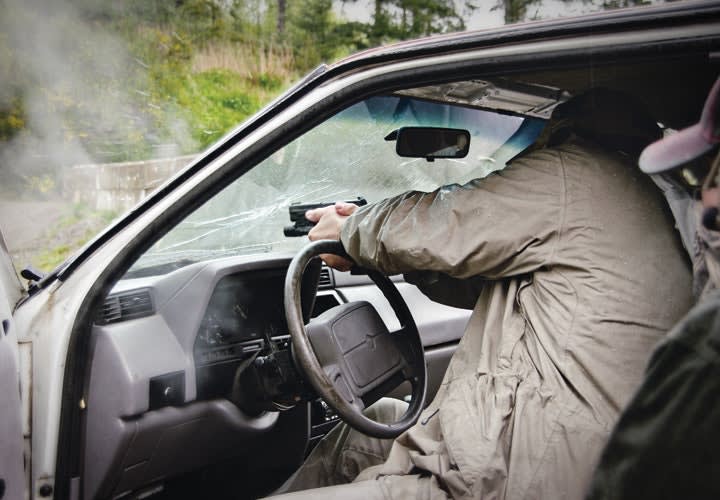
You also need to be able to reload under fire, with or without cover. When you are out of bullets in a gunfight, you have to reload your gun. You need to know how to do that, and fast. You may have to reload while moving to cover or while moving toward the threat. You may also have to reload in your car, under your car, or behind a tree.
You do not get to pick where the fight is going to be; you don't even get to decide whether to join the fight. All you get to do is win it, lose it, or set up a draw once it starts. You don't know until you are in the fight what will work.
This is why it is so critical that your firearms instructors take their jobs seriously. Teaching you the skills needed to win a gunfight is not simple, and it requires great effort and thought. Your instructors cannot simply teach "one thing" and "one mindset." They have to prepare you to win a fight and that means hard work for you, and even harder work for them.
Dangerous Patterns
Over the last few years a dangerous trend has emerged. The focus on firearms training in law enforcement is often about the latest equipment, or latest tactic. These should enhance your abilities, not determine your decisions.
Tools and tactics should allow you to use your mind to apply what is needed to survive. Scientific studies of late make this clear. It is the ability to observe the problem and act that is critical. It is not the tactic but the ability to apply it that is critical.
On its own a tactic may or may not be a problem, but if it "patterns" the wrong mindset, it can be. If you train that "all gunfights occur at seven yards," you are not prepared to win when that fight occurs at 25 yards. If you are trained to "always move to cover," you are not prepared to win when no such option exists. When you are trained to always "create distance," you are not prepared to fight at a close distance to the threat when that is what is required.
Sometimes the best thing to do in training is break the pattern and think. Clearly you must learn how to shoot, what to shoot, and when to shoot. You must also know how to apply those things in a real gunfight. Once the shooting starts your training must have prepared you to win the gunfight, otherwise all the rest is meaningless.
Lt. Dave Bahde retired from the South Salt Lake (Utah) PD and is an experienced SWAT team leader and firearms instructor.
More Patrol

Adept Armor Introduces Two New Rifle Plates
Adept Armor has launched two new Level IV ballistic plates, the Emperor and the Archon Mark 2, which brings Adept Armor’s new Quatroid ceramic to the high-threat, performance-value center of the range at 5.2 pounds.
Read More →
POLICE Product Test: Benchmade Bailout
The Benchmade Bailout is a slim, lightweight carry knife with a deep-ride pocket clip and comes in a variety of blade steels and scales. Here is a detailed review of the Taiga Green Bailout, released earlier this year.
Read More →
NLEOMF Announces July 2026 Officer of the Month
NLEOMF honored a Michigan deputy sheriff as the July 2026 Officer of the Month for rescuing a trapped driver from a burning vehicle following a Fourth of July crash.
Read More →
Streamlight to Showcase Newest Lighting Products at National Safety Council’s Safety Congress & Expo 2026
Streamlight will showcase its latest lights, including the Portable Scene Light III and the LiteBox 1Million, at the 2026 National Safety Council (NSC) Safety Congress & Expo.
Read More →
The 2027 World Police & Fire Games Set for Perth, Australia
The 2027 World Police & Fire Games (WPFG) will take place in Perth, Western Australia, from Friday, March 12 through Sunday, March 21, 2027.
Read More →
5.11 Partners with National Fallen Firefighters Foundation to Support #ForThe343
5.11 has joined the nationwide movement honoring the 343 New York City Fire Department firefighters lost on Sept. 11, 2001.
Read More →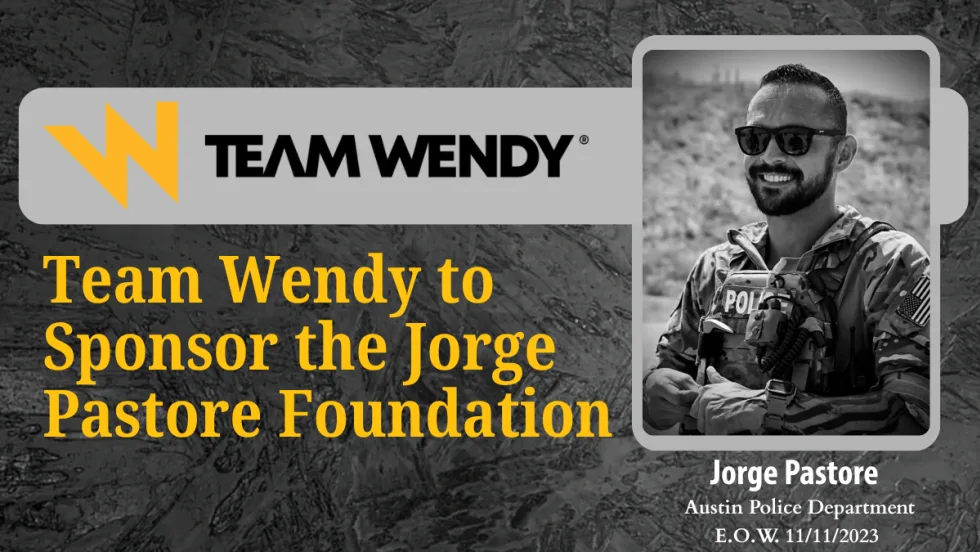
Team Wendy Announces Title Sponsorship of the Jorge Pastore Foundation
Team Wendy’s 3-year partnership with the Jorge Pastore Foundation expands access to programs that strengthen those who serve.
Read More →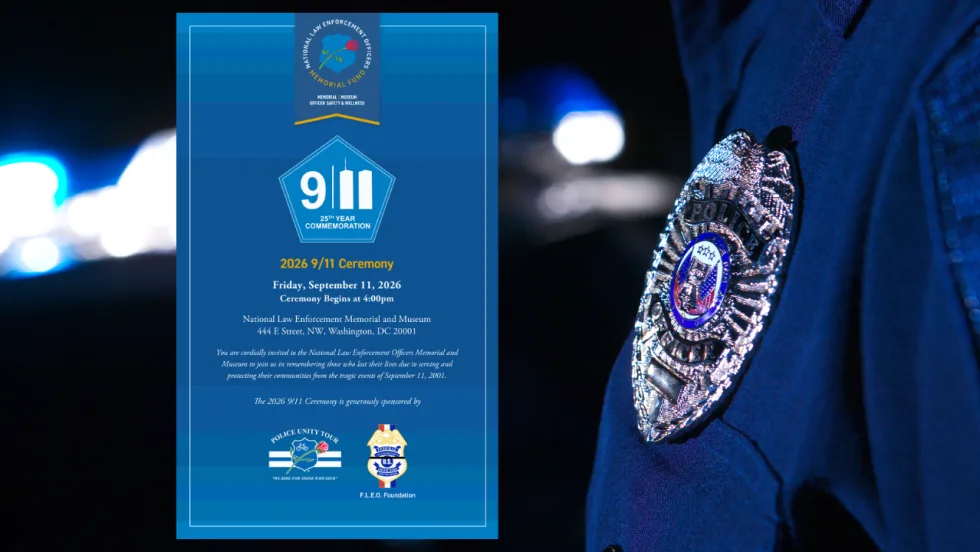
National Law Enforcement Memorial and Museum Hosting 9/11 25th-Year Commemoration Ceremony
The National Law Enforcement Memorial and Museum is hosting a 9/11 25th Year Commemoration Ceremony on Sept. 11 at 4 p.m.
Read More →
National Law Enforcement Officers Memorial Fund Announces June 2026 Officers of the Month
The National Law Enforcement Officers Memorial Fund (NLEOMF) named 15 officers of the Chico Police Department (California) as the Officers of the Month for June 2026 for their roles in responding to an active-shooter incident at a public library.
Read More →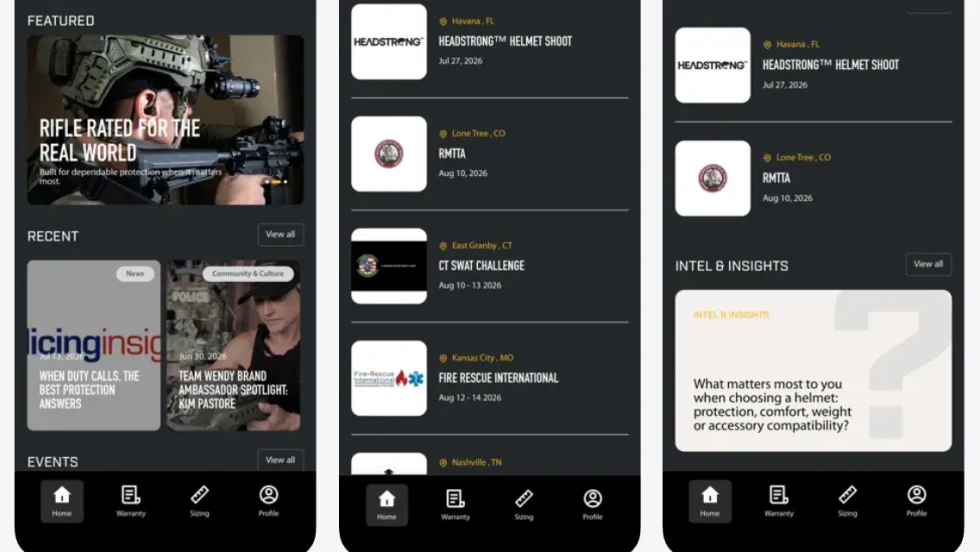
Team Wendy App Creates New Digital Hub for Helmet Owners
The Team Wendy Community App provides one location for warranty registration, size-fit tools, product updates, and community connection. For helmet owners, the new app creates a simpler path to the information and tools that matter most.
Read More →