



Anticipatory Search Warrants
Can you get a search warrant in advance that will authorize you to enter and search for the suspected items once the designated time arrives or the triggering event occurs? According to a 2006 U.S. Supreme Court decision, the answer is, yes.

Here's a recurring situation. You've been investigating a particular suspect and you get reliable information that evidence or contraband is going to be at his house or other premises at a certain time or when a particular event happens. This event might not be scheduled to occur until a weekend or the middle of the night, when the courthouse is closed and a magistrate might be hard to find.
Can you get a search warrant in advance that will authorize you to enter and search for the suspected items once the designated time arrives or the triggering event occurs? According to a 2006 U.S. Supreme Court decision, the answer is, yes.
U.S. v. Grubbs
In U.S. v. Grubbs, postal inspectors operated a controlled Website offering child pornography. California resident Jeffrey Grubbs placed an order for a videotape that depicted a minor engaged in explicit sexual conduct. Officers from the Postal Inspection Service arranged for a controlled delivery of a package containing the tape to Grubbs' residence.
An inspector then sought an anticipatory search warrant based on an affidavit that set forth the probable cause and stated, "Execution of this warrant will not occur unless and until the parcel has been received by a person and has been physically taken into the residence." This triggering event was not listed on the warrant itself.
A federal magistrate judge issued the warrant as requested. Two days later, the package containing the tape was delivered to Grubbs' house, where his wife signed for it and took it inside. A few minutes later, officers entered to serve the warrant. They had searched approximately 30 minutes before they showed the warrant to Grubbs.
Based on the evidence seized under the warrant, Grubbs was convicted on federal child pornography charges. He appealed to the Ninth Circuit Court of Appeals.
The Ninth Circuit Ruling
Although the Ninth Circuit had previously upheld anticipatory warrants, it found two reasons to suppress the evidence and reverse the conviction in this particular case.
First, the Ninth Circuit ruled that an anticipatory warrant is invalid unless the triggering event is expressly stated on the warrant itself, instead of merely being recited in the affidavit.
Second, the court held on the basis of its previous decisions in other cases that execution of a warrant violates the Fourth Amendment and the federal rules of criminal procedure if the warrant is not shown to the occupant at the outset of the search, in order to allow the occupant to "police the officers' conduct" and make sure they do not exceed the scope of search.
The Supreme Court Ruling
The U.S. Supreme Court unanimously reversed the Ninth Circuit. Before turning to the two grounds upon which the Ninth Circuit had based its ruling, the Supreme Court first considered the general validity of anticipatory search warrants (an issue the Court had never previously addressed).
In finding anticipatory warrants acceptable under the Fourth Amendment, the court pointed out that in reality, all search warrants are anticipatory, since the magistrate's decision to issue the warrant presupposes that the objects of the warrant will be at the location when the warrant is served, hours or days later.
The decision reads: "Because the probable-cause requirement looks to whether evidence will be found when the search is conducted, all warrants are, in a sense, 'anticipatory.' In the typical case where police seek permission to search a house for an item they believe is already located there, the magistrate's determination that there is probable cause for the search amounts to a prediction that the item will still be there when the warrant is executed. Thus, when an anticipatory warrant is issued, the fact that the contraband is not presently located at the place described in the warrant is immaterial, so long as there is probable cause to believe that it will be there when the search warrant is executed."
The court then set forth the two special requirements for an affidavit supporting a valid anticipatory search warrant. "For a conditioned anticipatory warrant to comply with the Fourth Amendment's requirement of probable cause, two prerequisites of probability must be satisfied. It must be true not only that if the triggering condition occurs there is a fair probability that contraband or evidence of a crime will be found in a particular place, but also that there is probable cause to believe the triggering condition will occur. The supporting affidavit must provide the magistrate with sufficient information to evaluate both aspects of the probable-cause determination."
Examining the affidavit submitted by the postal inspector, the Supreme Court found that both prerequisites were met. And turning to the Ninth Circuit's view that the triggering event must be listed on the warrant itself, the Supreme Court said, "That principle is not to be found in the Constitution."
The Court rejected the Ninth Circuit opinion that occupants of the premises to be searched have a right to examine the warrant in order to "police" the police while the search is conducted. The Court found that the Constitution imposes no requirement that the warrant itself reflect the information, establishing probable cause contained in the affidavit and added, "Much less does the Constitution require description of a triggering event."
The Supreme Court also made short work of the Ninth Circuit's pronouncements that a search warrant must be exhibited to occupants at the outset of the search. "In fact, however, neither the Fourth Amendment nor Rule 41 of the Federal Rules of Criminal Procedure imposes such a requirement."
Having upheld the validity of anticipatory warrants while rejecting both of the grounds upon which the Ninth Circuit had ordered evidence suppressed and Grubbs' criminal conviction reversed, the Supreme Court remanded the case to the Ninth Circuit to reinstate the conviction.
The Grubbs decision confirms the constitutional validity of anticipatory warrants when the proper showing is made that contraband or evidence will likely be found at the target location at a given time, or when a specified triggering event occurs. (Always check your state rules.)
Other Circuit Opinions
Even before the Supreme Court approved of anticipatory search warrants, most of the federal circuit courts across the country had already upheld them, primarily in drug and pornography cases involving either controlled deliveries or reliable informants.
First Circuit: Anticipatory warrant was valid where the affidavit contained information showing that child pornography would be in a targeted parcel to be delivered in the mail. (U.S. v. Gendron)
Second Circuit: Specified delivery and acceptance of cocaine at defendant's home would trigger anticipatory warrant. (U.S. v. Becerra)
Fourth Circuit: Child pornography was shown to be "on a sure course" to defendant's address through the mails; anticipatory warrant valid. (U.S. v. Dornhofer)
Fifth Circuit: Mailed parcel containing cocaine. (U.S. v. Wylie)
Sixth Circuit: Triggering event would be acceptance of controlled delivery of cocaine at the target residence. (U.S. v. Miggins)
Seventh Circuit: Affidavit established probable cause to believe that once defendant returned to his hotel room, he would possess cocaine. (U.S. v. Brack)
Eighth Circuit: Drugs probably would be inside residence. (U.S. v. Walker)
Tenth Circuit: Controlled delivery of cocaine. (U.S. v. Hernandez-Rodriguez)
Eleventh Circuit: Reliable informant established that heroin sale was scheduled to take place. (U.S. v. Santa)
Devallis Rutledge, a former police officer and veteran prosecutor, is Special Counsel to the Los Angeles County District Attorney.
More Patrol
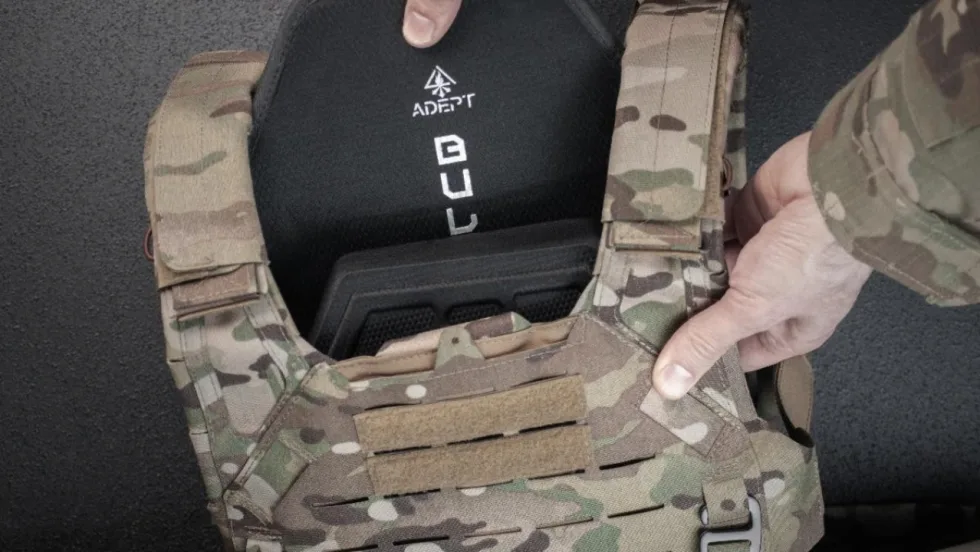
Adept Armor Introduces Two New Rifle Plates
Adept Armor has launched two new Level IV ballistic plates, the Emperor and the Archon Mark 2, which brings Adept Armor’s new Quatroid ceramic to the high-threat, performance-value center of the range at 5.2 pounds.
Read More →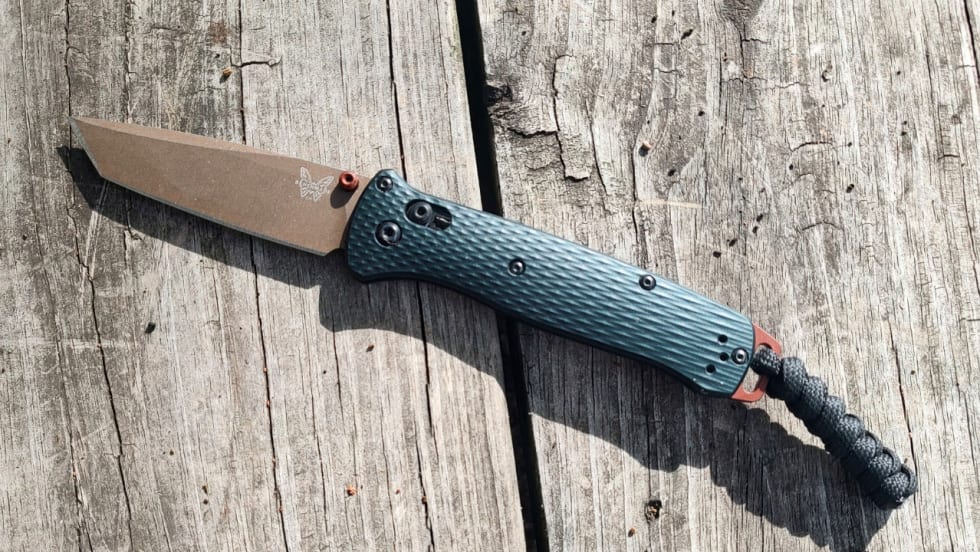
POLICE Product Test: Benchmade Bailout
The Benchmade Bailout is a slim, lightweight carry knife with a deep-ride pocket clip and comes in a variety of blade steels and scales. Here is a detailed review of the Taiga Green Bailout, released earlier this year.
Read More →
NLEOMF Announces July 2026 Officer of the Month
NLEOMF honored a Michigan deputy sheriff as the July 2026 Officer of the Month for rescuing a trapped driver from a burning vehicle following a Fourth of July crash.
Read More →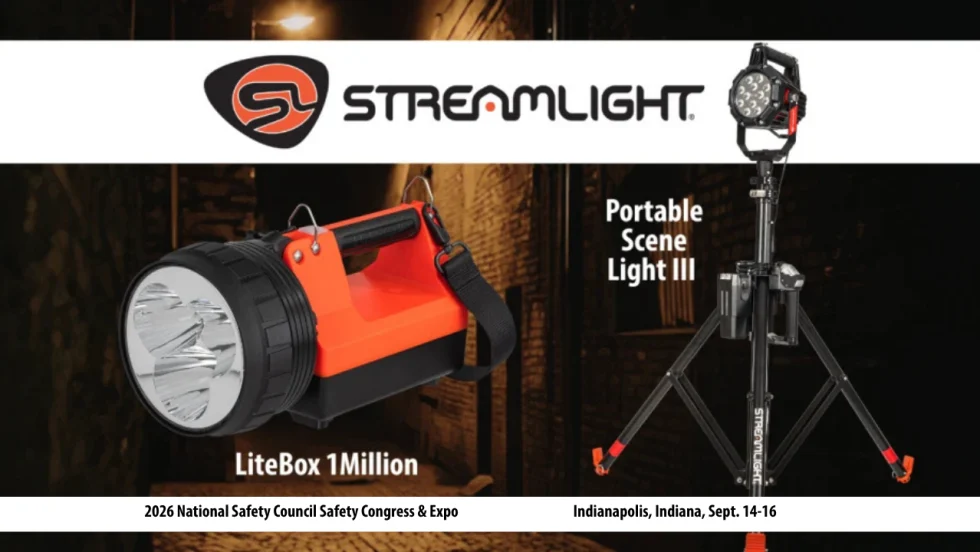
Streamlight to Showcase Newest Lighting Products at National Safety Council’s Safety Congress & Expo 2026
Streamlight will showcase its latest lights, including the Portable Scene Light III and the LiteBox 1Million, at the 2026 National Safety Council (NSC) Safety Congress & Expo.
Read More →
The 2027 World Police & Fire Games Set for Perth, Australia
The 2027 World Police & Fire Games (WPFG) will take place in Perth, Western Australia, from Friday, March 12 through Sunday, March 21, 2027.
Read More →
5.11 Partners with National Fallen Firefighters Foundation to Support #ForThe343
5.11 has joined the nationwide movement honoring the 343 New York City Fire Department firefighters lost on Sept. 11, 2001.
Read More →
Team Wendy Announces Title Sponsorship of the Jorge Pastore Foundation
Team Wendy’s 3-year partnership with the Jorge Pastore Foundation expands access to programs that strengthen those who serve.
Read More →
National Law Enforcement Memorial and Museum Hosting 9/11 25th-Year Commemoration Ceremony
The National Law Enforcement Memorial and Museum is hosting a 9/11 25th Year Commemoration Ceremony on Sept. 11 at 4 p.m.
Read More →
National Law Enforcement Officers Memorial Fund Announces June 2026 Officers of the Month
The National Law Enforcement Officers Memorial Fund (NLEOMF) named 15 officers of the Chico Police Department (California) as the Officers of the Month for June 2026 for their roles in responding to an active-shooter incident at a public library.
Read More →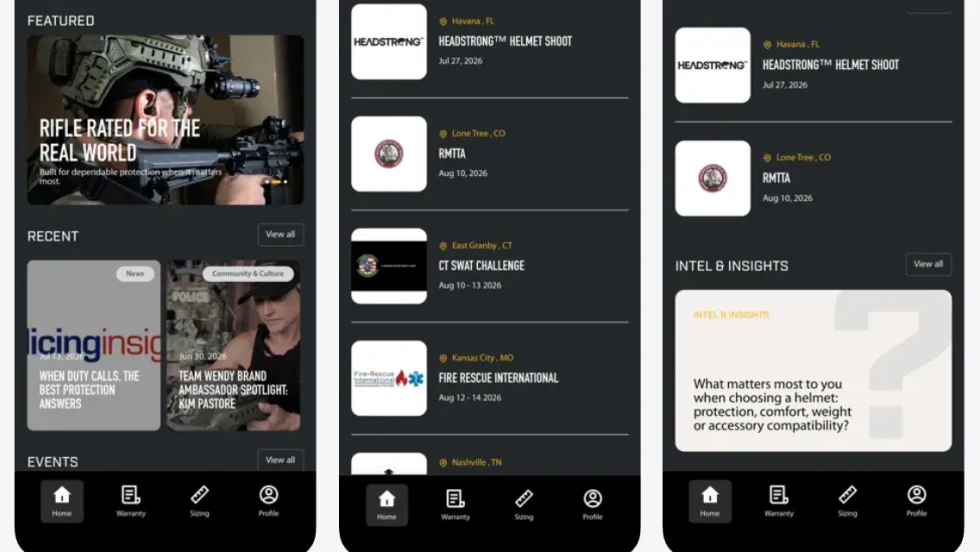
Team Wendy App Creates New Digital Hub for Helmet Owners
The Team Wendy Community App provides one location for warranty registration, size-fit tools, product updates, and community connection. For helmet owners, the new app creates a simpler path to the information and tools that matter most.
Read More →