



After-Action Reports on the Riots of 2020
The unrest after the death of George Floyd overwhelmed many agencies and resulted in injuries to thousands of officers. What needs to be done before the next incident ignites protests and riots?

The in-custody death of George Floyd last May triggered waves of protests and rioting unlike any the United States had seen since “The Long Hot Summer of 1967.” Almost every major American city experienced multiple protests, some unlawful, and some extremely violent. Some unrest is still ongoing, especially in Seattle and Portland.
Nationwide Unrest
Last October the Major City Chiefs Association (MCCA) issued “Report on the 2020 Protests & Civil Unrest.” This report looked at unrest in the 68 largest municipal and county jurisdictions in the United States and Canada from May 25, 2020 to July 31, 2020. MCCA members say they experienced 8,700 total protest events during that roughly two-month period. One city, unidentified but likely Portland, reported 1,100 protest events during that period. The average number of protest events in a single jurisdiction was 128.
The MCCA report looked at three types of protest events: peaceful and lawful protests, protests with unlawful but non-violent civil disobedience such as blocking roads and highways, and protests with acts of violence, in other words “riots.”
Of the 8,700 protest events reported by MCCA members, 3,692 involved unlawful acts of civil disobedience. Five hundred of these occurred in a single city. Eight of the reporting cities—Columbus, Denver, Detroit, Memphis, Portland, Sacramento, San Diego, and Tucson—said that every protest during the May 25 to July 31 period involved unlawful but non-violent acts. Some of these protests may have also involved violence. MCCA reports that 574 of the protests it studied involved violence. One city accounted for 100 of these riots.
Looting and arson were common during the period studied. The 68 cities and counties reported that they experienced 2,385 incidents of looting and 624 incidents of arson, including 97 police vehicles burned.
More than 2,035 law enforcement officers were injured at the protests and riots during the time frame studied. The most common weapon used by the rioters against officers in the reporting cities and counties were thrown projectiles, including rocks, bricks, glass bottles, and frozen water bottles. The report says violent protesters often used a front line of peaceful protesters as human shields while they assaulted officers with thrown objects.
Officers were also commonly assaulted with commercial fireworks, impact weapons, and lasers targeting their eyes. Nearly half of the respondents said rioters had used incendiary devices. MCCA reports that some rioters used the tactic of throwing firebombs behind the officers so that they could be trapped between barriers built by the mob and the flames. A little more than half of reporting jurisdictions said they had encountered firearms during the protests and riots. One agency reported that four of their officers were shot by rioters.
The peak of the violence, according to MCCA, came during the first weekend of the protests, May 29 through June 1. The report says that violent extremists collaborated online and through social media to organize violence. “More than three quarters of agencies (78%) discovered persons that seemed to self-identify with far left ideologies, and more than half (51%) discovered persons that seemed to identify with violent far-right ideologies,” the report says.
MCCA member agencies arrested 16,241 protesters and rioters from May 25 to July 31. Nearly 17% of these arrests were for felonies and 7% of the total involved violence. Many of the cases were quickly dismissed, which may explain why 52% of the reporting agencies said they arrested the same people twice for “protest-related crimes.”
Confusion and Chaos
After the mess that was 2020, it’s expected that law enforcement agencies will be heavily criticized in after-action reports. Major critical reports have been released on the response of the Chicago Police Department and the Los Angeles Police Department.
A report by the Inspector General for the City of Chicago calls to task the city and police department’s leadership for a confused and uncoordinated response to the protests and riots that endangered the protesters and the police.
“The bottom line here is that the leadership of the department failed, and in doing so they endangered members of the public and hung the members of the department out to dry. You had thousands of CPD members out on the street without adequate directions or supervision or policy guidance and equipment,” Deborah Witzburg, deputy inspector general for public safety told the Chicago Tribune.
The report paints a picture of an agency that was unprepared for the scale of the unrest. Saturday May 30 was the worst. A deputy chief told the inspector general that the department expected a “few hundred protesters, but instead there were 30,000.”
Similar problems plagued the LAPD. A report commissioned by the City Council found that department leaders, including command staff, did not have the training to handle widespreadunrest.
The report also slammed the department’s less-lethal training. Officers who took the two-hour course in how to use 40mm launchers only shot stationary targets, the report says. “The 40mm training was problematic for several reasons, including that the dynamics dramatically change in a crowd control situation when the person engaging in the criminal behavior is not standing still,” the report said. “There also may be other people in front, behind, or to the side of the intended target. In such cases, the officer operating the 40mm weapon must be very precise in its application to minimize the risk to bystanders.”
As in Chicago, LAPD officers had to cope with both the protesters and/or rioters and confusing and contradictory commands. “There were times when command staff officers arrived on the scene of a protest and issued orders without coordination with the incident commander, who was supposed to be in charge of the entire police response to a protest. This created confusion. Multiple command staff officers gave orders, sometimes conflicting, regarding the same protest. Members of the LAPD command staff confirmed that they did not always know who was in charge, which led to a chaos of command,” the report says.
The LAPD union, the Los Angeles Police Protective League, responded to the report, saying that it echoed comments from their member officers that they were not properly trained or equipped to respond to the type of unrest they experienced after George Floyd’s death in Minneapolis.
“The level of violence, looting, and arson that overwhelmed portions of Los Angeles would have been difficult to predict, but once it was clear that elements within the peaceful protests were intent on destruction, then our members should have been provided the necessary support and resources to address the violence and keep them safe,” the union said in a statement.
Preparing for the Next Time
It’s clear from the after-action reports on the George Floyd protests and riots of 2020 that many agencies were not prepared for the explosion of unrest that rocked the country. Some did not have the training; some did not have the equipment, and some did not have either.
Law enforcement agencies need to train their officers in crowd control techniques that protect the right of the public to peaceful protest while preventing anarchic violence in the streets. That of course is easier said than done, especially when the tactics of the violent actors are so insidious that they cause injury to innocents by using them as shields while attacking you.
The training has to start with policies based on established law. What does the law say about what you can and can’t do at a protest? Your agency need to establish policy based on that law, then train officers to follow that policy even when they are under the extreme stress of a riot.
Attorney Eric Daigle, founder of the Daigle Law Group, writes: “Law enforcement must carefully balance the First and Fourth Amendment rights of citizens with the protection of the public and their property. It should be the mission of law enforcement to protect lawful activity while identifying and addressing unlawful behavior in crowd management situations.”
Agencies need to have policies, procedures, and training implemented before the next wave of unrest. This is not something that can be done on the fly when mobs are looting stores and attacking officers. One of the most important things an agency must establish is what constitutes an unlawful assembly.
“Departments are encouraged to examine their policies and operational plans in order to specifically address the process and procedure for declaring an unlawful assembly. The definition of an unlawful assembly is usually covered by state statute and should be reviewed when drafting these policies. The manner in which departments must declare an unlawful assembly is clearly identified in governing law…. The decision to declare a crowd unlawful must be based upon reasonable and articulable facts. Dispersal orders should be clear, loud, and given multiple times, and the crowd must be given clear pathways in which to leave the area,” Daigle writes.
Now is the time for agencies to review their policies, train their officers, and inventory riot gear. It’s also the time to establish who will be in charge during the response to civil unrest and to develop a plan for how to respond. Waiting until the next crisis is just a way to get more officers and more protesters hurt and to get your agency sued.
More Patrol

Adept Armor Introduces Two New Rifle Plates
Adept Armor has launched two new Level IV ballistic plates, the Emperor and the Archon Mark 2, which brings Adept Armor’s new Quatroid ceramic to the high-threat, performance-value center of the range at 5.2 pounds.
Read More →
POLICE Product Test: Benchmade Bailout
The Benchmade Bailout is a slim, lightweight carry knife with a deep-ride pocket clip and comes in a variety of blade steels and scales. Here is a detailed review of the Taiga Green Bailout, released earlier this year.
Read More →
NLEOMF Announces July 2026 Officer of the Month
NLEOMF honored a Michigan deputy sheriff as the July 2026 Officer of the Month for rescuing a trapped driver from a burning vehicle following a Fourth of July crash.
Read More →
Streamlight to Showcase Newest Lighting Products at National Safety Council’s Safety Congress & Expo 2026
Streamlight will showcase its latest lights, including the Portable Scene Light III and the LiteBox 1Million, at the 2026 National Safety Council (NSC) Safety Congress & Expo.
Read More →
The 2027 World Police & Fire Games Set for Perth, Australia
The 2027 World Police & Fire Games (WPFG) will take place in Perth, Western Australia, from Friday, March 12 through Sunday, March 21, 2027.
Read More →
5.11 Partners with National Fallen Firefighters Foundation to Support #ForThe343
5.11 has joined the nationwide movement honoring the 343 New York City Fire Department firefighters lost on Sept. 11, 2001.
Read More →
Team Wendy Announces Title Sponsorship of the Jorge Pastore Foundation
Team Wendy’s 3-year partnership with the Jorge Pastore Foundation expands access to programs that strengthen those who serve.
Read More →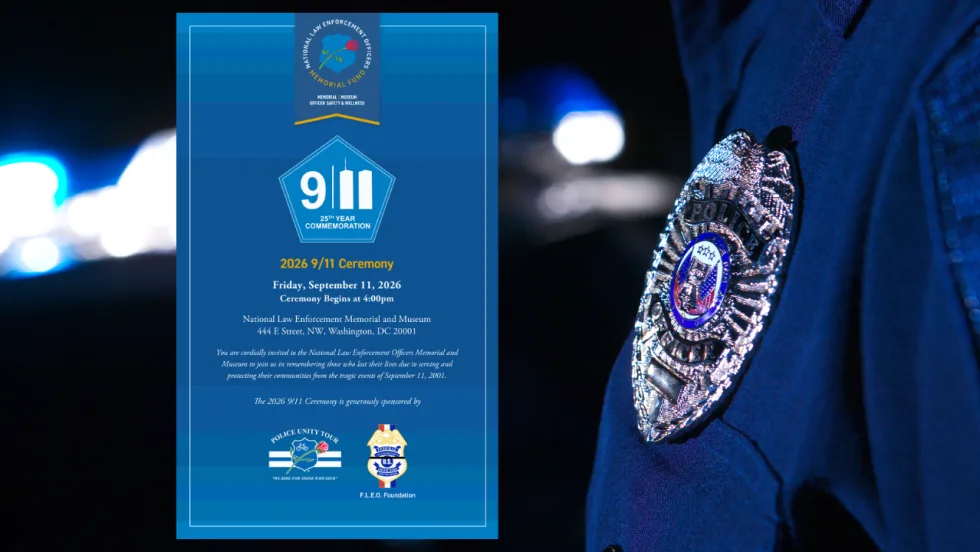
National Law Enforcement Memorial and Museum Hosting 9/11 25th-Year Commemoration Ceremony
The National Law Enforcement Memorial and Museum is hosting a 9/11 25th Year Commemoration Ceremony on Sept. 11 at 4 p.m.
Read More →
National Law Enforcement Officers Memorial Fund Announces June 2026 Officers of the Month
The National Law Enforcement Officers Memorial Fund (NLEOMF) named 15 officers of the Chico Police Department (California) as the Officers of the Month for June 2026 for their roles in responding to an active-shooter incident at a public library.
Read More →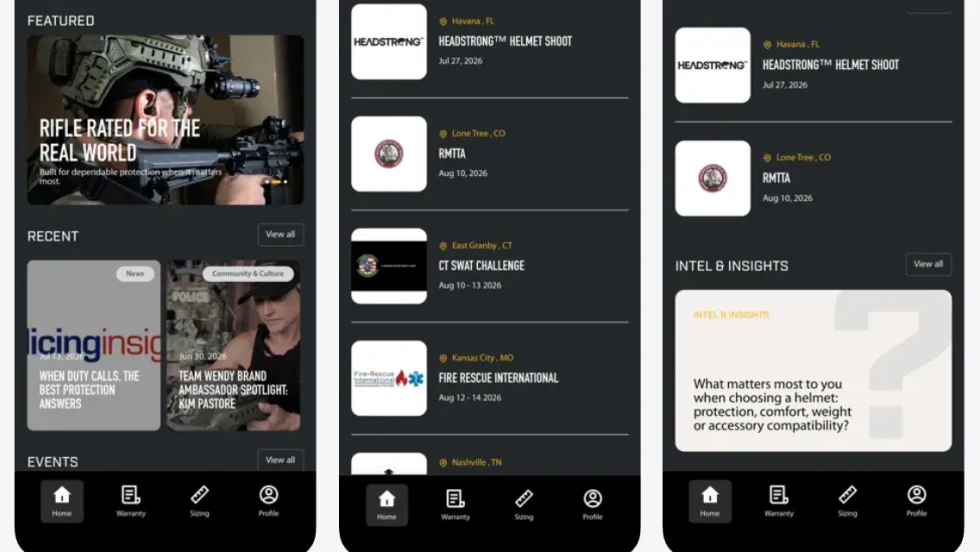
Team Wendy App Creates New Digital Hub for Helmet Owners
The Team Wendy Community App provides one location for warranty registration, size-fit tools, product updates, and community connection. For helmet owners, the new app creates a simpler path to the information and tools that matter most.
Read More →