



A Collision Course on Traffic Investigations
Like any other common task, accident investigations can become a bit routine for most patrol officers. Important details can be inadvertently missed as we try to finish up to get to the next call.

Like any other common task, accident investigations can become a bit routine for most patrol officers. Important details can be inadvertently missed as we try to finish up to get to the next call.
To counteract this, I met with our department’s traffic division to get an insight into how we, as patrol officers, can become better traffic investigators. Here are some universal tips to help your traffic reports avoid a collision with your supervisor’s red pen.
• Get good statements. Although traffic collisions are usually small police reports, they are still investigations. As with any investigation, statements are some of the best evidence you can get. Be sure to get statements from the involved drivers as to what happened, including what they were doing leading up to the collision.
Most importantly, try to dig up independent witnesses, such as a driver who happened to see the crash or a business owner who witnessed it from afar. These uninvolved witnesses can usually break the tie between dueling driver statements, giving you a clearer understanding of how the accident happened.
Also, remember to follow up the statements of those drivers who claim a lapse of consciousness. Ask about their medical history and make sure you get them to tell you why they feel they “blacked out.” These drivers can be dangerous, and may need to be re-examined by the local department of motor vehicles.
• Avoid police or local jargon. We all fall victim to this in just about any report. Just because everyone in your city knows the name of the local hospital doesn’t mean the insurance agent in another time zone does. Make sure you accurately record the names and addresses of businesses and people so that anyone, including yourself can contact them easily.
Police jargon such as “code four” and crime codes that only police officers use on a daily basis will confuse some readers. Traffic collisions are some of the most well-traveled reports in your department. Your accident reports will be read not only by fellow cops, but by both involved parties, by countless people at the involved insurance companies, by city engineers, and by court personnel.
• Become a shutterbug. Let’s face it; a picture truly is worth a thousand words. This is especially true in the world of collision investigation, where the damage to and the positioning of vehicles at the scene is usually the best evidence available. Taking good photos of the scene as you found it will not only prove your findings, it will protect you in court and aid you in your investigation and report writing once you’ve left the scene.
In today’s digital age, photos are cheap and easy to store. Take a bunch of pictures and book them all. When your simple traffic accident turns into a courtroom marathon, you’ll be ready.
• Take good measurements. Do you know your pace length? Many officers will rely on another officer’s measured pace and adopt it as their own. However, just as officers come in all shapes and sizes, we all have a different walking pace and length.
Take the time to measure your own pace accurately by walking a known-distance line or use a rolling-tape device to get accurate measurements. When you’re at especially involved accident scenes, consider using orange spray paint to mark important measuring points. This will make them semi-permanent and keep them around for a few more weeks in case you need to go back and double-check something. Details count. As with any report, don’t forget the little things.
For example, penmanship is one trait that seems to be scarce amongst us as police officers. Be sure to write as neat as possible to ensure everyone reading this report will have a clear understanding of what took place.
Also, draw clear diagrams of the collision and surrounding area, and be sure to label all evidence points at the scene.
Finally, when deciding the cause of the collision, be sure to use the most applicable section, not only the generic sections such as “unsafe speed.” Look up the most specific section or run it by a traffic officer to get his or her opinion.
These tips were designed as a refresher course on traffic collision investigation for all patrol officers. Try a few of them at your next traffic collision and see what a difference they make.
I would like to thank Officer Mike Reiter and the Tracy (Calif.) Police Department traffic unit for their help with this article.
More Patrol

The First Responders Children’s Foundation National First Responders Day Roll Call of Heroes Ceremony Returns to Times Square, NYC
First Responders Children’s Foundation (FRCF), in collaboration with T-Mobile, will host the Roll Call of Heroes ceremony in Times Square to commemorate National First Responders Day on Wednesday, Oct. 28. During the event, FRCF will present 18 Hero Awards.
Read More →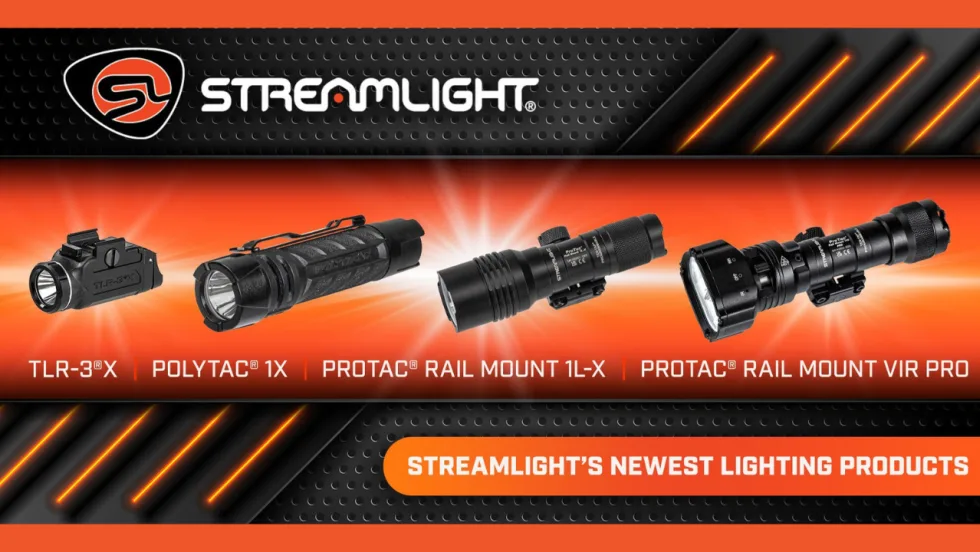
Streamlight to Showcase Newest Lighting Products for Law Enforcement Professionals at IACP 2026
Streamlight will showcase its newest lights for law enforcement at the International Association of Chiefs of Police Annual Conference & Expo. Featured lights will include the TLR-3 X, the PolyTac 1X, and more.
Read More →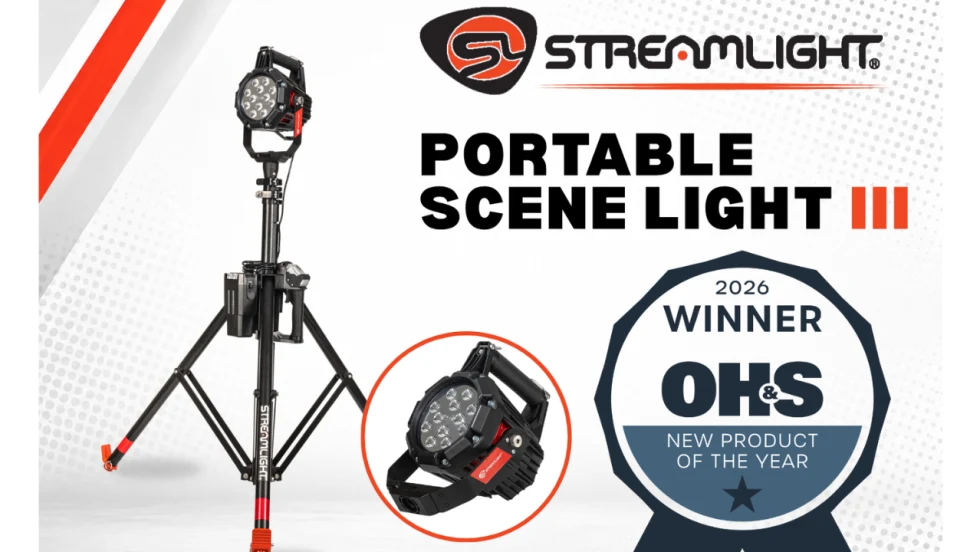
Streamlight Portable Scene Light III Wins 2026 OH&S New Product of the Year Award
Streamlight’s Portable Scene Light III has won the 2026 Occupational Health & Safety (OH&S) New Product of the Year Award in the Lighting category.
Read More →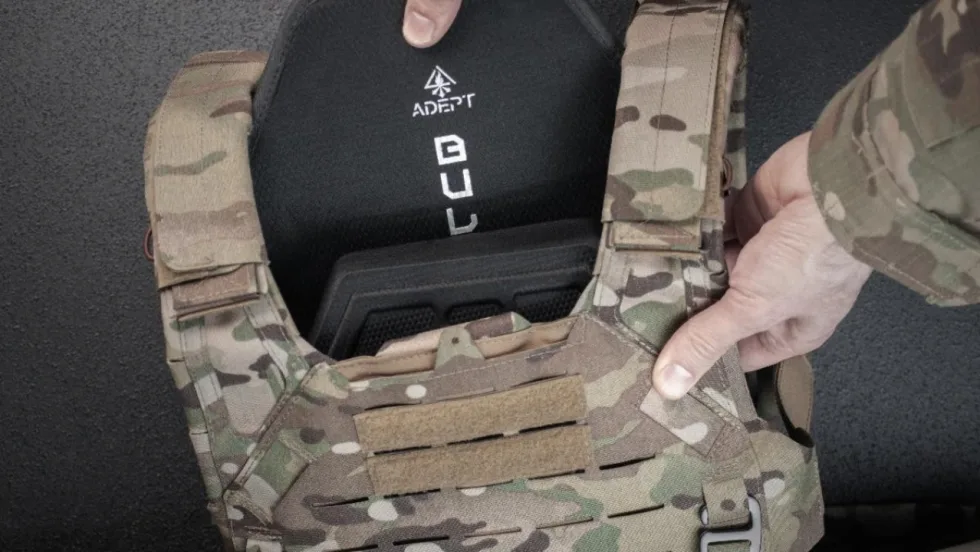
Adept Armor Introduces Two New Rifle Plates
Adept Armor has launched two new Level IV ballistic plates, the Emperor and the Archon Mark 2, which brings Adept Armor’s new Quatroid ceramic to the high-threat, performance-value center of the range at 5.2 pounds.
Read More →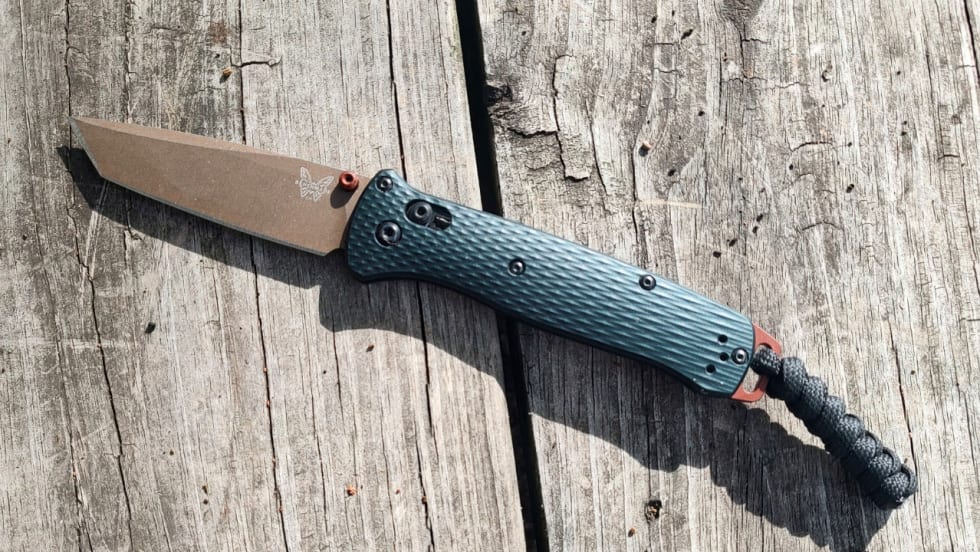
POLICE Product Test: Benchmade Bailout
The Benchmade Bailout is a slim, lightweight carry knife with a deep-ride pocket clip and comes in a variety of blade steels and scales. Here is a detailed review of the Taiga Green Bailout, released earlier this year.
Read More →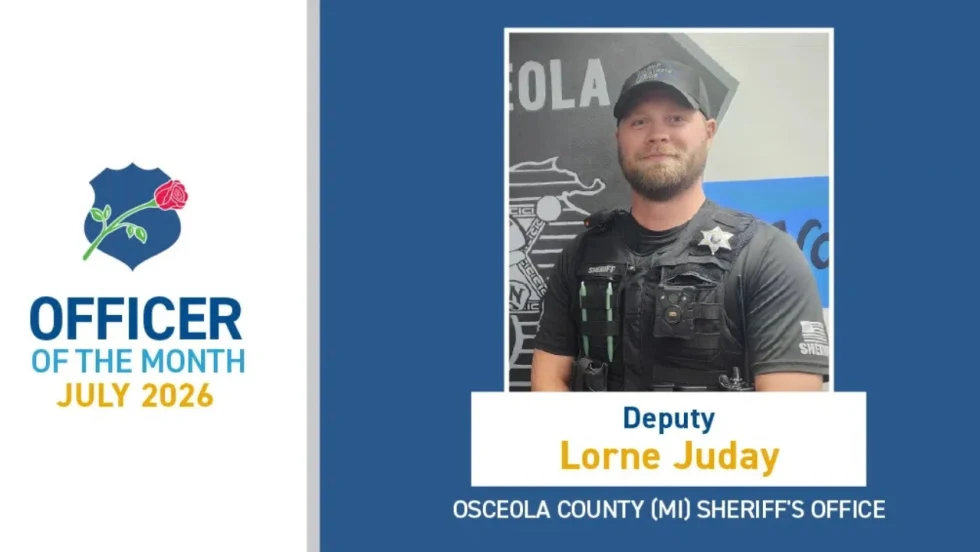
NLEOMF Announces July 2026 Officer of the Month
NLEOMF honored a Michigan deputy sheriff as the July 2026 Officer of the Month for rescuing a trapped driver from a burning vehicle following a Fourth of July crash.
Read More →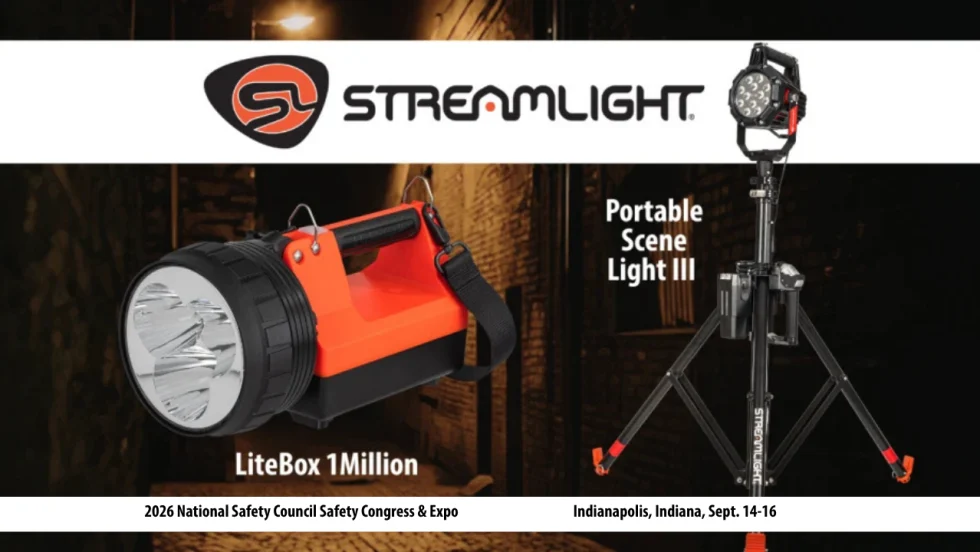
Streamlight to Showcase Newest Lighting Products at National Safety Council’s Safety Congress & Expo 2026
Streamlight will showcase its latest lights, including the Portable Scene Light III and the LiteBox 1Million, at the 2026 National Safety Council (NSC) Safety Congress & Expo.
Read More →
The 2027 World Police & Fire Games Set for Perth, Australia
The 2027 World Police & Fire Games (WPFG) will take place in Perth, Western Australia, from Friday, March 12 through Sunday, March 21, 2027.
Read More →
5.11 Partners with National Fallen Firefighters Foundation to Support #ForThe343
5.11 has joined the nationwide movement honoring the 343 New York City Fire Department firefighters lost on Sept. 11, 2001.
Read More →
Team Wendy Announces Title Sponsorship of the Jorge Pastore Foundation
Team Wendy’s 3-year partnership with the Jorge Pastore Foundation expands access to programs that strengthen those who serve.
Read More →