



A Capital Success Story
According to media accounts, nearly 100 officers who joined the force during a 1989-90 recruitment drive-when background screening and standards were all but non-existent-were later charged with criminal wrongdoing.

Policing the inner-city landscape is always high-risk business. Clearly, there are situations where force must be used to protect the lives of officers and the public. Sadly, this is a running commentary on the state of our ever increasingly violent society.
No one topic generates more controversy than the discretionary use of force an officer must use to defend himself and others in the line of duty. We have seen the media headlines from large cities all over the country, often accompanied by graphic video footage of officers assaulting the citizenry. Based solely on this television newscast evidence, many officers are convicted in the court of public opinion long before a court of law.
What steps can be taken to avoid these incidents? How can the police provide quality protection in the area of order maintenance without sacrificing officer safety?
Take the following set of actual circumstances into account. If it happened in your agency, how would it be handled?
D.C.: The Rocky Past
Washington, D.C., is not a state, nor a city. The district is a netherland, the political handiwork of our forefathers seeking a centralized base for the national government. As the federal capital city, Uncle Sam comes first and the needs of the local government and its agencies fall a distant second.
Often treated as the bastard child of the feds, the movement of the limited home rule took root during the early 1980s. It has proved tumultuous at best. The most notable figure of this effort was two-time mayor Marion Barry.
The Metropolitan Police Department (MPD) suffered immensely under this administration. Dishonor of the badge was alleged by numerous sources during this time. According to media accounts, nearly 100 officers who joined the force during a 1989-90 recruitment drive-when background screening and standards were all but non-existent-were later charged with criminal wrongdoing. Almost 25 percent of those were involved with acts of domestic violence. Many were led out of police academy classes in handcuffs. Others were arrested while coming to work at district station houses.
Morale throughout the organization was abysmal. Of all patrol officers, only one in ten was working the street and almost one-third of the department made no arrests. Difficult working conditions indeed, especially when the traditional voices of the street cop, such as the union, were weak and failed to assert the protections afforded to their membership.
Fiscal misappropriations created a different array of problems. Funds were wasted and, even worse, missing. More than half of the department's vehicles were inoperable and many that were deployed had faulty communications equipment. It was not uncommon for officers to buy their own fuel for patrol vehicles or use their personal cars on the beat. Police stations were in poor condition and disrepair. Simple office technologies such as computers and fax machines were scarcely available.
To compound the situation, the nation's worst crack cocaine epidemic festered in the District. It began in the mid-1980s and was a major factor in the skyrocketing murder rate. Homicides more than tripled as the outbreak spread, rising from 148 in 1985 to 482 in 1991. Although crack use eventually fell off, the District's 260 murders in 1998 were 75 percent higher than the number of murders in 1985, before crack cocaine hit the streets. Commenting on this plague, Mayor Barry once stated, "Outside of the killings, crime is actually down in the District."
Once considered among the elite cop agencies in the country, Washington's police force was in a state of chaos. Criminals operated openly without fear of apprehension. This further alienated the police from the public. A climate of mistrust developed and pervasive crime became a way of life in the killing streets of the District.
Shortcoming or Scandal?
In 1996, an investigative reporter for the Washington Post who was working on a story about the MPD stumbled upon something out of the ordinary. While examining the data for the FBI's Supplementary Homicide report, "Code 81" was not listed.
Why was this a major concern? Code 81 designated justifiable homicide by a law enforcement officer.
A check with the FBI's internal records showed 287 missing homicide records from the department. The evidence smacked of cover-up and scandal.
The Washington Post launched an extensive investigation culminating in a 1999 Pulitzer Prize-winning exposé about the MPD and the inadequacies in investigating use-of-force incidents. According to the numbers compared by the Post, officers of the District had the highest per-capita rate of officer-involved shootings, including much larger cities such as New York and Los Angeles.
But that was just the tip of the iceberg. Making the most of the Freedom of Information Act, the Post assembled a comprehensive record of court documents- civil and criminal-involving the use of force by police officers. It appeared obvious that MPD was not forthcoming to the public. Moreover, its members used deadly force more than any police agency in the country.
The Post series placed newly appointed MPD Police Chief Charles Ramsey in an arduous position. He had just stepped in as MPD's top cop, promising district officials and community members a closer, interactive relationship with the police department based on open communication, neighborhood involvement and trust.
The District was watching. So was the watchful eye of the Department of Justice, especially the U.S. Attorney's Office, which had often responded to such MPD policy predicaments with court decrees.
The officers were hoping this latest indignity, from what they considered to be a cop-critical rag, would produce the long-awaited opportunity to modernize the force, considering the past two decades of widespread neglect.
Was this going to be another smoke- and-mirrors show in the nation's seat of government or a real opportunity for change? This shaky situation left many doubts about the future operations of patrol and specialized units alike. Previous "touchy-feely" programs instituted by the MPD had been miserable failures, mere window dressing for federal funding. They never addressed the bona fide needs of the line officer, nor did they foster much support from a suspicious public.
Officer Skills and Safety Get Attention
In the short-term, Chief Ramsey sought recommendations from the highly respected consulting firm of Booze, Allen and Hamilton. These specialists utilized district-based teams consisting of recognized experts, ranking officials and street-level patrol officers. The chief took notice of successful use-of-force programs in jurisdictions from around the country and put the federal government on board by publicly requesting the assistance of the Department of Justice in designing programs to reduce the number of police shootings through a memorandum of agreement.
Moreover, he added more than 100,000 required hours of officer use-of-force training, focusing on an escalating continuum that included verbal persuasion, hand-control techniques, introducing protective weapons options (ASP Baton or Oleocapsicum "pepper" spray) and finally, deadly force. "The training has been updated and improved to give our officers greater confidence in their skills and safety on the streets," says Hector Deoleo, physical skills instructor at the Institute of Police Science, the police training facility of MPD.
The firearms training curriculum was entirely revamped. It doubled the required range instruction time of the previous plan and included judgment exercises, employing state-of-the-art computer simulation and mock drills with non-lethal ammunition. Officers have stated that the overhaul of the firearms training has afforded them a more tactical and less lethal mindset.
The long-term goals of the plan were to sharpen survival skills and provide a wider range of options in life-threatening situations. But this was only one side of the equation. There were still deficiencies in the investigations of these events, as well as the collection and analysis of these statistical records. This resulted in substandard guidelines for the use of force in the agency.[PAGEBREAK]
A Broader Use-of-Force Strategy
A Force Investigation Team (FIT) was created within MPD's Office of Professional Responsibility (OPR). Ramsey assembled this specialized 12-member squad to research legal concerns and observe the preparation and training programs of other local agencies such as Fairfax County (Va.) Police, Montgomery County (Md.) Police and Arlington County (Va.) Police regarding use-of-force issues.
Its goal was to adapt these model programs to the requirements of the department. The objective was to structure and implement a working organizational strategy concerning the application of force. This was only one part of the team's pivotal three-fold mission.
Another area of focus was on-scene response to all incidents of deadly force involving MPD officers and assistance with the on-scene investigation. The final, and most critical, task was to utilize the assembled data to enhance and improve upon tactics, training and equipment.
One method of accomplishing this task remains hotly debated between MPD's union, the Fraternal Order of Police (FOP) and management. A Personnel Performance Management System is now in development, despite union objections, to track both exemplary and troublesome conduct on the part of individual officers. This database, shared with the Department of Justice, permanently records and red flags alleged officer misconduct concerning the deployment of force.
MPD officials emphasize it is a necessary component for cultivating enhanced officer safety and reducing use-of-force incidents. This monitoring structure creates an endless feedback loop of information for taking corrective action and refining policy needs.
Results and Peer Kudos
Controversy notwithstanding, the initiative has yielded extraordinary results. Within one year of implementation, the number of shootings involving officers declined by 78 percent compared to 1998 FBI statistics. Also, OPR internal statistics reported incidents of alleged use of force and citizens' complaints diminished substantially.
As a matter of course, this accomplishment was swiftly rebuffed by the local news media who stated that the favorable economy was the driving force behind the crime drop, not an increase in law enforcement efficiency.
In late 2000, MPD proved them wrong. The FIT program was chosen as one of the top 10 programs of excellence in the police field. The prestigious Webber Seavey Award for Quality in Law Enforcement singled out the team for its commitment and vision in reducing use-of-force incidents. It has become the exemplary model for other agencies seeking to design use of force programs.
Chief Ramsey says, "The Department's past problems with use of force - in particular, use of deadly force - have been problems with policies, training, equipment and supervision, not problems with the quality of our officers." He continues, "We have worked very hard to provide our members with clear policies on the use of force, and to support those policies with better equipment, training and supervisory oversight. These latest statistics indicate our approach is beginning to have an impact."
By arming the street-level officer with the weapons of knowledge and judgment, along with continually upgrading equipment, policies and training, it is possible to safely maintain law and order in a densely populated urban environment. This provides a quantum leap in our response to dangerous situations, provided it is backed by reasonable, flexible and ever-evolving guidelines. The end result is a vast improvement in officer safety and the quality of life for the communities we serve.
David J. Terestre is a nationally published freelance writer on topics involving police work and the criminal justice system. Officer Terestre has 13 years of police experience and is currently assigned to the Second District of the Metropolitan Police Department, Washington, D.C. This is his second contribution to POLICE.
More Patrol
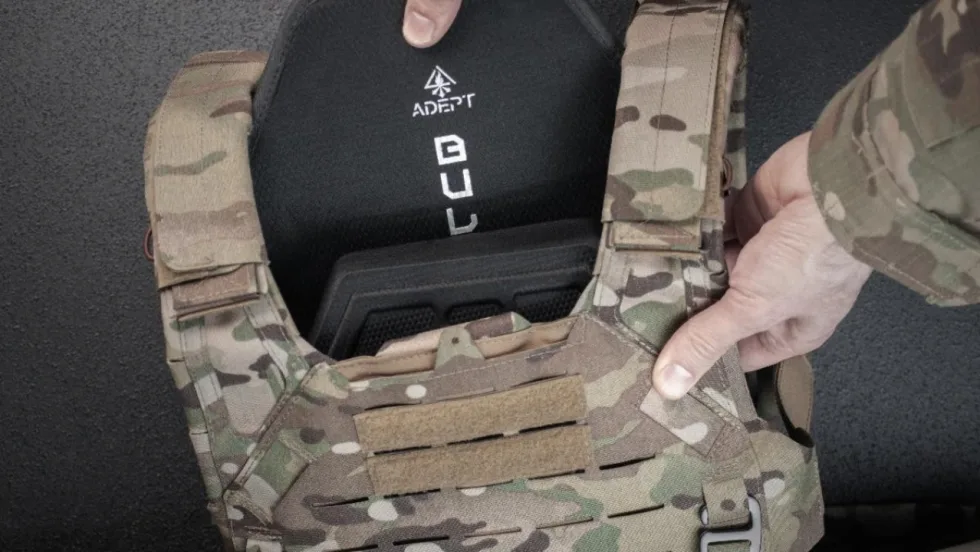
Adept Armor Introduces Two New Rifle Plates
Adept Armor has launched two new Level IV ballistic plates, the Emperor and the Archon Mark 2, which brings Adept Armor’s new Quatroid ceramic to the high-threat, performance-value center of the range at 5.2 pounds.
Read More →
POLICE Product Test: Benchmade Bailout
The Benchmade Bailout is a slim, lightweight carry knife with a deep-ride pocket clip and comes in a variety of blade steels and scales. Here is a detailed review of the Taiga Green Bailout, released earlier this year.
Read More →
NLEOMF Announces July 2026 Officer of the Month
NLEOMF honored a Michigan deputy sheriff as the July 2026 Officer of the Month for rescuing a trapped driver from a burning vehicle following a Fourth of July crash.
Read More →
Streamlight to Showcase Newest Lighting Products at National Safety Council’s Safety Congress & Expo 2026
Streamlight will showcase its latest lights, including the Portable Scene Light III and the LiteBox 1Million, at the 2026 National Safety Council (NSC) Safety Congress & Expo.
Read More →
The 2027 World Police & Fire Games Set for Perth, Australia
The 2027 World Police & Fire Games (WPFG) will take place in Perth, Western Australia, from Friday, March 12 through Sunday, March 21, 2027.
Read More →
5.11 Partners with National Fallen Firefighters Foundation to Support #ForThe343
5.11 has joined the nationwide movement honoring the 343 New York City Fire Department firefighters lost on Sept. 11, 2001.
Read More →
Team Wendy Announces Title Sponsorship of the Jorge Pastore Foundation
Team Wendy’s 3-year partnership with the Jorge Pastore Foundation expands access to programs that strengthen those who serve.
Read More →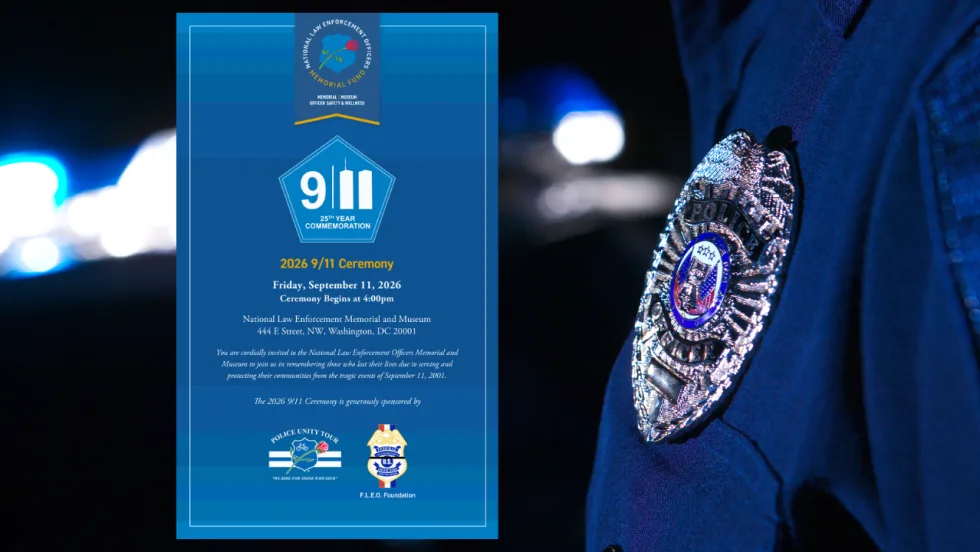
National Law Enforcement Memorial and Museum Hosting 9/11 25th-Year Commemoration Ceremony
The National Law Enforcement Memorial and Museum is hosting a 9/11 25th Year Commemoration Ceremony on Sept. 11 at 4 p.m.
Read More →
National Law Enforcement Officers Memorial Fund Announces June 2026 Officers of the Month
The National Law Enforcement Officers Memorial Fund (NLEOMF) named 15 officers of the Chico Police Department (California) as the Officers of the Month for June 2026 for their roles in responding to an active-shooter incident at a public library.
Read More →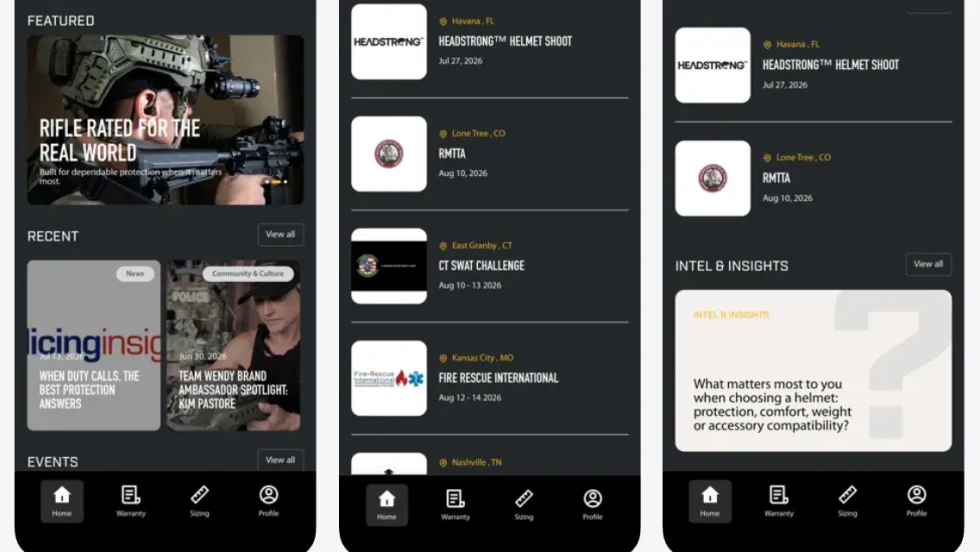
Team Wendy App Creates New Digital Hub for Helmet Owners
The Team Wendy Community App provides one location for warranty registration, size-fit tools, product updates, and community connection. For helmet owners, the new app creates a simpler path to the information and tools that matter most.
Read More →