



30 Things You Need to Know About Body Armor
Once a curious novelty, today body armor is one of those things that a lot of officers take for granted. It's something that few officers give a second thought. But there's a lot that the average officer should know about his or her concealed "life preserver."

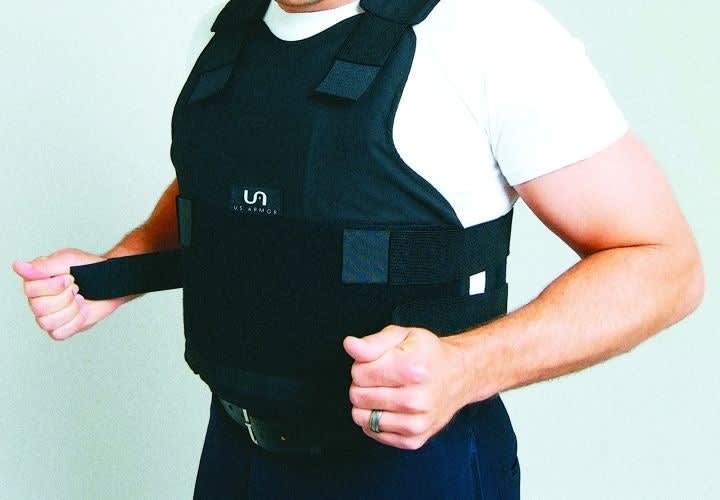
Soft body armor is one of the greatest of modern marvels. It has saved thousands of people, mostly cops and soldiers, from death or serious wounds. But for the majority of American law enforcement officers, donning soft body armor has just become part of the job.
Once a curious novelty, today body armor is one of those things that a lot of officers take for granted. It's something that few officers give a second thought. But there's a lot that the average officer should know about his or her concealed "life preserver."
To produce the following story, POLICE Magazine interviewed some of the leading experts from top armor manufacturers and asked them what you need to know. Here's what they said:
1 It's Not Really Bulletproof
Your body armor will not protect you from all threats. It is a fabric garment, not a force field. Yes, it's an extraordinary fabric garment, but no article of clothing is really "bulletproof." It's bullet resistant.
"Statistically speaking, nothing can be bulletproof, not even a manhole cover," says John Geshay, Safariland's director of marketing for soft body armor. "In an extremely small percentage of cases, a round can even go through a vest that it is rated to stop. The round itself could have an extra serration on it or something."
U.S. Armor's Georg Olsen adds the following comment. "There is no red 'S' on body armor. It does not turn you into Superman. Stuff you do that's stupid and reckless without body armor is still stupid when you are wearing body armor."
2 How Does Fabric Stop a Bullet?
The ballistic panels in soft body armor are made of extremely strong woven or non-woven fibers or a combination of the two. This material stops a bullet pretty much the way a net stops a tennis ball. It turns the bullet, slows it down, and disperses its energy throughout the panel. The mushrooming of a handgun bullet helps with this process. Also, the slower and heavier the bullet the better. High-velocity and hardened tip bullets like those fired from rifles can just cut through the fibers and punch through the vest.
3 Your Armor Should Stop Your Duty Load
The whole NIJ certification levels can be pretty confusing. There are agencies that wear Level II A vests, others wear Level II, and others wear level III A. It's hard for you or your agency to anticipate what handgun rounds will be popular with your local thugs, but there's one threat you can anticipate: Your own sidearm. A shocking number of police officers are shot with their own weapons after gun grabs or accidentally shot by other cops in training. So your vest should be able to defeat the rounds used by yourself and the other officers in your agency.
4 All Guns Are Deadly
There's a tendency among gun enthusiasts to dismiss the lethal potential of certain calibers of handguns. Don't believe it. A small round traveling at high speed can punch through body armor. Big handgun rounds like .45 ACP and .44 Magnum tend to travel relatively slowly and are easier to stop with soft body armor than 9mm and .357 SIG. Shotgun pellets are particularly dangerous. "Vests aren't even rated for shot shells," explains Corey Provenzano, director of business development for Protective Products International. "Shot shells are not all that consistent in velocity."
5 It's Not the Years, It's the Mileage
Most soft body armor sold in the United States is rated for five years of service. That's the standard of the National Institute of Justice (NIJ). But the truth is that body armor wear should really be calculated by how it's been worn. As Indiana Jones said in "Raiders of the Lost Ark," it's not the years it's the mileage. A vest that's worn every day will lose its protective capability much faster than one that has been sitting on a shelf. Unfortunately, there's no way to track wear of vests by the hour, so the NIJ set five years as a standard. Regardless, after a few years of wear, you should check your own ballistic panels. Look for tears, creases, burns, smells, and damage. If you take good care of your vest, it should easily survive five years. If you treat it like an old T-shirt, it may degrade much sooner. Follow your user care instructions.
6 Register Your Vest
That warranty card that came with your body armor was there for a reason. If your agency doesn't fill it out and send it, you should. During the xylon vest recall, a lot of companies had a hard time reaching their customers because they hadn't filled out and sent in the warranty cards.
7 Wash Your Carrier
You should have at least two carriers for your ballistic panels. This will allow you to wash one and wear the other. Keeping your carrier clean and dry will help your ballistic panels last the full five years.
8 Ballistic Panels Can Be Cleaned with a Sponge, Not a Washing Machine
The best way to clean your ballistic panels is with a damp sponge and maybe some gentle soap like dove. You can even spray some Febreeze on them. But don't throw them in the washing machine. Don't put them in the dryer. And don't iron them, not even on the lowest setting. You can't iron out creases in that many layers of ballistic fiber, and the fiber may melt or even burn.
9 Hang Up Your Vest
Ballistic panels are made of many layers of bullet resistant fiber. If they get bent out of shape, they can't be ironed or straightened out. "If you smush a sweaty vest into the bottom of your locker, it will dry in that configuration," PPI's Provenzano says. "That's really hard on a vest."
10 What Is a V-50?
Is it true that your body armor failed to stop 50 percent of bullets at a certain muzzle velocity? Absolutely. That's how it's tested. Manufacturers fire high-velocity rounds into the stuff until 50 percent of them go through. That's expressed as Velocity-50 (V-50). V-50s are generally higher than the muzzle velocities of common street rounds. "You could conceivably produce soft body armor to stop the highest velocity rounds in each caliber, but it wouldn't be very wearable," says Safariland's Geshay.[PAGEBREAK]
11 It's Not a Swimming Suit
Going for a dip in soft body armor can be a bad idea. Some will come through just fine. Others could lose some of their ballistic performance. "If a vest does become wet, water can act as a lubricant and that can help a bullet penetrate a vest," says Provenzano. PPI and other manufacturers sell vests that have been treated with water repellent materials. Some ballistic materials such as Dyneema and SpectraShield are water resistant. In fact, they are used in the marine industry. If you work around water, it would be a good idea to find out what will happen to your vest if you have to take a dive.
12 Kevlar is Not the Only Ballistic Fiber
The first viable bullet resistant fiber was DuPont's Kevlar. So for a long time people called bullet resistant vests, "Kevlar." Today, Kevlar is still a very popular bullet resistant fiber, but there are now several dozen ballistic fibers and many of them are used in the same vest. Currently, the most popular woven fibers for armor are Kevlar and Twaron. Popular polyethylene materials include Goldflex and Dyneema. Another popular ballistic material is SpectraShield. It is a hybrid of woven and laminate with fibers encased in layers of polyethylene, i.e. plastic. Each of these fibers has its pluses and minuses. For example, wovens are more flexible than laminates, but they are heavier.
13 Your Vest is Essentially Clothing
Most vests used by American law enforcement are assembled here in the United States by garment workers. They are sewn together with quilt stitches and tack stitches and other techniques just like your favorite shirt. They are inspected in the same way as your underwear by veteran garment workers who look for sewing defects. "We have a group of people who sew the vests together who have been doing it for 14 or 15 years," says PPI's Provenzano.
14 What is a Trauma Rating?
When a bullet strikes a bullet resistant vest, the kinetic energy of that bullet has to be dispersed across the vest's fibers as rapidly as possible. The quicker it's dispersed, the less trauma the wearer receives from the impact. Still, a handgun bullet is stepping out at anywhere between 800 feet per second and about 2,000 fps. So it will push the fabric inward as it slows down. The bulge that results at the rear of the ballistic panel is called backface deformation. The bigger that bulge, the more trauma the wearer will experience. This trauma rating is determined by placing the panel up against a tray of clay and shooting a bullet into the panel. The tester then measures the impression in the clay.
15 If You Are Shot in Your Armor, You Will be Able to Fight Back
There are numerous cases of officers who have been shot in their body armor. Most say the experience is like being hit with a hammer. Usually, the result is a nasty-looking bruise caused by backface deformation. But no one has died from this trauma. It's unlikely that it will even incapacitate you. Many officers shot in their armor have not missed a beat, shot back at their attacker, and neutralized the threat. And that was before the advent of the latest vest materials, which are designed to minimize the effects of blunt impact.
16 Vests Are Rigorously Tested
There is a persistent rumor in the law enforcement community that manufacturers reinforce the spots shot by the NIJ before the vests are certified. The testing protocol does not permit manufacturers to cheat in this manner.
17 How to Prevent Panel Sag
When your ballistic panels sag, your vest is not as comfortable and you may be losing protection. The best way to prevent this problem is to rotate your carriers. Most vests are sold with two carriers. Safariland recommends that you have three. By rotating carriers, you can prevent the Velcro straps from wearing out and prevent wear of the carrier fabric that can cause your panels to sag.
18 Stay Fit or Get New Armor
Soft body armor is not a ballistic-resistant version of stretch pants. If you pack on five percent to 10 percent more body weight than you had when the vest was fitted, you need a new vest. If you should lose weight, you may also need a new vest.
19 Your Carrier Offers No Ballistic Protection
We call ballistic resistant vests "vests," but the vest part isn't what will save your life. It's what goes into the vest. Never go on duty wearing just the carrier. It offers no more ballistic protection than your favorite shirt.[PAGEBREAK]
20 There's a Right Way and a Wrong Way
Ballistic panels are designed to fit into your carrier in a specific way. Flipping them can lead to tragedy. The strike face of the panel is designed to slow the bullet and disperse the bullet's energy; the back of the panel is designed to minimize trauma. "It's a one-way system," says Safariland's Geshay. "If you flip the panel, there's no guarantee that the vest will stop the round.
21 Unless It Is Stab Resistant Your Vest is Not Likely to Protect You from a Knife Attack
Stab vests are a different fiber and different weave from bullet-resistant vests. Multi-threat vests are available, but they are heavier and more expensive. There is video on the Net of a ballistic vest wearer assuming that what will stop a bullet will stop a blade. So he has his buddy stab him. He ends up bleeding profusely.
22 Your Vest Can Save Your Life in a Vehicle Accident
Each year at the International Association of Chiefs of Police (IACP) conference DuPont holds a ceremony for officers saved by Kevlar body armor. A sizable portion of these cops were saved not from the bullets of bad guys but from impacts with the steering columns of their patrol cars following vehicle accidents. In one celebrated instance of a vehicle save, a traffic officer was hit in the torso by the protruding mirror of a passing car. He was saved from serious injury because he was wearing a vest.
23 Ladies, Your Body Armor Should Be Made for You
Back in the early days of body armor, departments used to issue the same armor to men and women. That's a huge mistake. Women need more trauma protection for their chests, and they need real bra style cups like what you would find in a one-piece bathing suit.
24 It's a Vest, Not a Body Suit
The trend in clothing for young men and women is to show off their bodies with tight-fitting clothes. But your body armor should not fit like some kind of high-tech running suit. When you are being fitted, take a deep breath and hold it. That's the gap that you want between your body and the armor panels. This gap helps minimize trauma in case of bullet impact. It also makes it easier for you to run and fight on the job. "Armor functions better when it can move," says U.S. Armor's Olsen. "You want to pull on the straps and just feel some tension. A lot of new guys want to strap it on like it's a corset or a girdle. But when you do that and you have a foot pursuit, it will feel like somebody is sitting on your chest."
25 Duct Tape Is Not a Replacement for Vest Straps
Geshay says he's seen an officer use duct tape to fasten a vest to his body. This is a bad idea for several reasons. "When you duct tape it down, it doesn't move properly on your body," he says. "That can cause a coverage issue in a ballistic event. Oh, and duct tape does not add extra ballistic protection."
26 Wearing Two Vests Will Not Double Your Protection
If you could tolerate the heat and the weight, could wearing two Level III A vests give you Level III protection? No, not really. While it's true that many, many layers of ballistic panels could stop an AK round, it's unlikely that anybody could operate while burdened with that much soft armor. Lightweight level IV and Level III plates are made of hundreds of layers of polyethylene pressed by a huge machine. You really can't achieve that level of protection by wearing multiple vests.
27 You Need Front and Back Protection
In the summer, some cops like to wear just their front panels. This is a really bad idea.
28 Your Trauma Pad Is There for a Reason
Some cops love that pocket on the back of their carrier that houses the trauma pad. They like to use it for a cell phone carrier, a backup gun holster, and just a great pocket. It's there for your trauma pad; don't use it for anything else. And don't wear your vest without your trauma pad. It's there to minimize the bruising you will experience if you are shot in your vest.
29 Once Shot, Your Vest is Ruined
In the 2007 edition of POLICE Recruit (a POLICE Magazine publication), POLICE Advisory Board member John Makholm related the story of a rookie who was convinced by a veteran to test his own vest by tying it to a tree and shooting it. Don't ever do this. Once a vest gets a bullet, it's done.
30 Your Vest Can't Save You If It's in Your Car Trunk or Your Locker
The saddest thing in law enforcement is to hear that an officer was killed in the line of duty by a bullet that could have been stopped by his or her vest if only. Think about how that affects the loved ones of that officer. Then think about your loved ones coping with that grief. Wear your vest.
More Patrol

Streamlight Portable Scene Light III Wins 2026 OH&S New Product of the Year Award
Streamlight’s Portable Scene Light III has won the 2026 Occupational Health & Safety (OH&S) New Product of the Year Award in the Lighting category.
Read More →
Adept Armor Introduces Two New Rifle Plates
Adept Armor has launched two new Level IV ballistic plates, the Emperor and the Archon Mark 2, which brings Adept Armor’s new Quatroid ceramic to the high-threat, performance-value center of the range at 5.2 pounds.
Read More →
POLICE Product Test: Benchmade Bailout
The Benchmade Bailout is a slim, lightweight carry knife with a deep-ride pocket clip and comes in a variety of blade steels and scales. Here is a detailed review of the Taiga Green Bailout, released earlier this year.
Read More →
NLEOMF Announces July 2026 Officer of the Month
NLEOMF honored a Michigan deputy sheriff as the July 2026 Officer of the Month for rescuing a trapped driver from a burning vehicle following a Fourth of July crash.
Read More →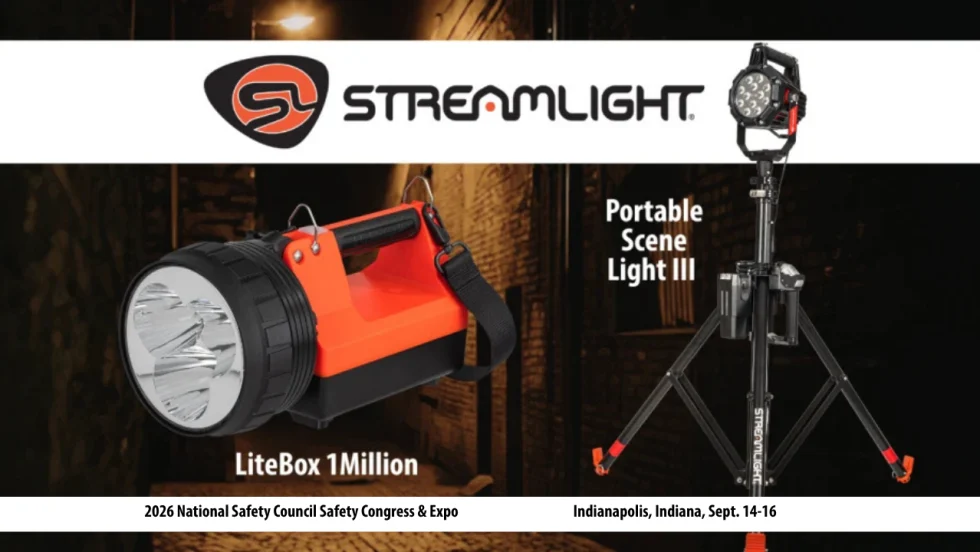
Streamlight to Showcase Newest Lighting Products at National Safety Council’s Safety Congress & Expo 2026
Streamlight will showcase its latest lights, including the Portable Scene Light III and the LiteBox 1Million, at the 2026 National Safety Council (NSC) Safety Congress & Expo.
Read More →
The 2027 World Police & Fire Games Set for Perth, Australia
The 2027 World Police & Fire Games (WPFG) will take place in Perth, Western Australia, from Friday, March 12 through Sunday, March 21, 2027.
Read More →
5.11 Partners with National Fallen Firefighters Foundation to Support #ForThe343
5.11 has joined the nationwide movement honoring the 343 New York City Fire Department firefighters lost on Sept. 11, 2001.
Read More →
Team Wendy Announces Title Sponsorship of the Jorge Pastore Foundation
Team Wendy’s 3-year partnership with the Jorge Pastore Foundation expands access to programs that strengthen those who serve.
Read More →
National Law Enforcement Memorial and Museum Hosting 9/11 25th-Year Commemoration Ceremony
The National Law Enforcement Memorial and Museum is hosting a 9/11 25th Year Commemoration Ceremony on Sept. 11 at 4 p.m.
Read More →
National Law Enforcement Officers Memorial Fund Announces June 2026 Officers of the Month
The National Law Enforcement Officers Memorial Fund (NLEOMF) named 15 officers of the Chico Police Department (California) as the Officers of the Month for June 2026 for their roles in responding to an active-shooter incident at a public library.
Read More →