



20 Things You Need to Know About Night Vision
Night vision tools are less ubiquitous in law enforcement, but as prices fall, they are becoming more common. Yet many law enforcement officers are still confused about what night vision can and can't do and what they need to know before buying it.

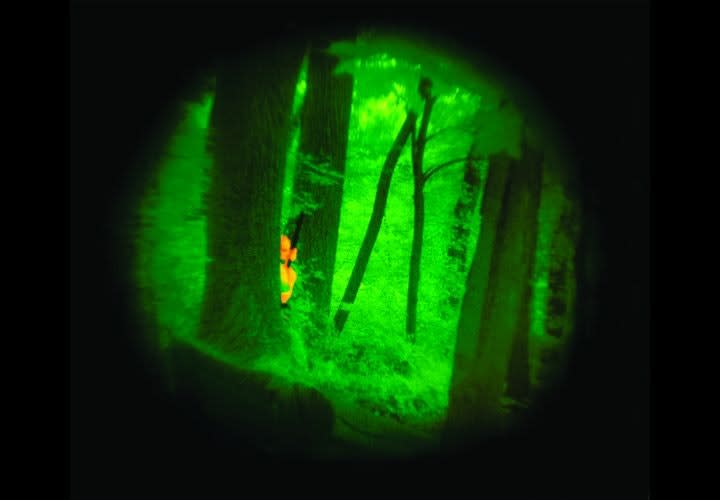
Photo courtesy of Night Vision Depot.
Editor's note: View our photo gallery, "Night Vision Devices."
Night vision has become an essential tool for the U.S. military. Pilots fly fighter planes and helicopters with night vision devices. Soldiers on the ground in Afghanistan use night vision goggles to spot and eliminate Taliban insurgents. Even unmanned aerial vehicles (UAVs) have the latest thermal cameras.
Such tools are less ubiquitous in law enforcement, but as prices fall, they are becoming more common. Yet many law enforcement officers are still confused about what night vision can and can't do and what they need to know before buying it.
1. What Should I Call It?
One of the most confusing things about night vision is what to call the stuff. There are two primary types: the image intensifier tube devices and the infrared (thermal) devices. It is a common misnomer that only the image intensifier systems—called "I²" in the industry—should be referred to as "night vision."
2. What's The Difference?
An image intensifier night vision device is an optical device that does exactly what you would think from the name. It takes available light and intensifies it. The latest I² systems can work in pitch darkness. Infrared systems measure the difference in heat and produce an electronic image of what is radiating that heat.
3. How Does I² Night Vision Work?
I² technology magnifies the amount of received photons (light packets) from sources such as starlight and moonlight. Incoming light strikes a photocathode plate inside the image intensifier tube, then the photons are magnified and transmitted through a vacuum tube where they strike a microchannel plate that causes the image to illuminate a picture in the same pattern as the light striking the photocathode. Resolution in I² devices is measured in line pairs per millimeter (lp/mm).
4. How Does Thermal Work?
Handheld thermal or infrared night vision systems use a sensor called a microbalometer that reads the difference in temperature between an object and its environment to create an image of that object. The data from the microbalometer is then sent to a display so the operator can see it. Thermal night vision is not optical.
5. What's with the I² Generations?
Generation 0 and Generation 1 no longer matter.
Generation 2—Gen 2 devices are much brighter and much more capable of light intensification than Gen 1. They are also much smaller thanks to improved microchannel plate and photocathode plate technology. Supplied to NATO allies by the U.S. military, the technology was copied and improved by the Soviets to create Gen 2+. Today, excellent Gen 2+ systems are still being produced in Russia, Belarus, and Western Europe.
Generation 3—Up to 15,000 hours of use and excellent light intensification are the benefits of Gen 3 tubes, which cannot be exported outside of the U.S. except by direct permission of the Department of Defense. The latest Gen 3 systems are Gen 3+ or Gen 3 Pinnacle. All Gen 3 tubes are made by ITT Exelis or EOTech L-3 regardless of who makes the complete system.
6. What is Auto-Gating?
Auto-gating basically prevents bright lights from whiting out the system or causing temporary blindness of the operator. It also helps the I² tube maintain the highest possible resolution during a variety of light conditions. It is especially important on I² systems that are used for aviation or on rifle optics. Although it is a feature of later Gen 3 tubes, it can also be found on some Gen 2+ systems.
7. What Good is This Stuff?
There are many applications for both I² and thermal night vision in law enforcement. I² is an excellent tool for surveillance, sniper overwatch, SWAT operations, searches of darkened warehouses, and just seeing what people are doing in the dark. Thermal systems can be used for search and rescue, evidence recovery (tossed items glow with the heat of a suspect's hands for some time after they are discarded), detecting which car has recently been driven in a parking lot, and even determining if somebody is operating a "grow" operation inside a house.
Both I² and thermal also have some drawbacks. I² can be hampered by streetlights and house lights in urban areas. It also can't see through smoke, fog, heavy rain, snow, or other obscurants. Thermal can see through smoke and other obscurants, but it is foiled by window and windshield glass. More importantly, thermal cannot produce an image sharp enough for a positive ID. It can show you that there is a guy out in the woods with a pistol, but it can't show you who that guy is.
8. What Does I² Cost?
It all comes down to quality when you discuss I² systems, and the question of quality is not just about the image intensifier tubes, it's also about the optics and the features. The most popular image intensification tools used by law enforcement are the PVS14 monocular systems and a wide variety of variants of this platform. A good Gen 2+ monocular system will probably run you $2,000. If you need a Gen 3 monocular, you are probably looking at $4,000. Additional features on these systems, especially dedicated weapon sights and attachments, can raise the price substantially.
9. What Does Thermal Cost?
Three years ago handheld thermal camera systems suitable for law enforcement operations cost as much as $10,000. Then FLIR, the company that makes most of the microbalometers used in handheld thermal systems, started to sell bunches of infrared sensors to luxury car makers. This mass use of infrared sensors has lowered the prices on basic handheld thermal cameras to around $4,000 for good quality.
10. How Do I Judge Night Vision Quality?
For thermal it's easy. It's all about resolution, with 640 x 480 usually being the best for handhelds. A good system is 320 x 240, and there are many applications where 240 x 180 will do the job. Each increase in resolution will cost you about $1,000 more on the average handheld unit. You also want to look at features such as still and video capture.
Judging the quality of I² equipment is considerably more complicated. The quality of any I² tool is determined by its optical characteristics as well as its image intensifier tube. You could take the best Gen 3 tube on the market and pair it with lousy optics, and you'd have a lousy system. So concern yourself as much with the optics as the tube. This is especially true on the edges of the image area. You don't want distortion or a fisheye effect. Resolution on an I² system is measured in lp/mm, with 64 to 72 lp/mm being the gold standard. Most applications do not require resolution that sharp; in fact some experts argue that this level of resolution exceeds the capability of the human eye. Most experts recommend a resolution of 45 lp/mm for most operations.
11. Can I Test It Before I Buy?
Most sellers of law enforcement night vision equipment have strong test and evaluation (T&E) programs. Many will even allow you to use the equipment on operations before you buy. Check with your vendor. Then turn the stuff over to your most knowledgeable night vision operator for a thorough test.
12. How Do Agencies Afford This Stuff?
There are a variety of ways that law enforcement agencies come up with the funds for acquiring night vision capabilities. Some agencies benefit from special funds set up by affluent citizens or groups of affluent citizens that permit them to purchase equipment such as night vision. Others use grants such as the Urban Area Security Initiative (UASI) grants from the Department of Homeland Security. Another source of night vision funding is asset forfeiture. And finally, some agencies just budget for the purchase of the equipment.
13. Are There Cheaper Alternatives?
Absolutely. And you may want to consider them. It's important to remember that I2 night vision was developed for use on remote battlefields where the only illumination is starlight or moonlight. You may not need that kind of image intensification. Digital camera sensors such as a charge-coupled device (CCD) or complementary metal-oxide-semiconductor (CMOS) can provide substantial low-light capabilities. Low-light imaging systems using these sensors sell for less than $500, and they can be excellent tools for patrol officers in urban or well-lit areas who want to see what's going on in the shadows. Under such conditions, they can be even more effective than I2 night vision.
14. How Do I Care For Night Vision?
Don't drop it. Don't store it for long periods of time with batteries in it. And keep the lens covers on it until you're ready to use it. Most systems come with protective cases; use them. Finally, when possible cover the optics with clear glass filters. These "sacrificial windows" will protect your lenses from scratches and dirt. Thermal systems are solid state, so there's not much to break. Just don't drop them.
15. Do I Need Special Training?
Anybody can slap on an I² device and wander around in the dark. But to get the most out of your equipment, invest in training as well as the equipment. Some sellers offer training. You may also have former military operatives in your agency who can train the rest of your officers. Finally, you may want to hire a training company. Your I² vendor can probably recommend one.
16. How Long Do Night Vision Devices Last?
Thermal cameras are solid state and with proper care can last a lifetime. I² systems have a finite lifespan because of the coatings on the tubes. A good Gen 2+ system should give you as much as 5,000 hours of use. A Gen 3 system can give you as much as 15,000 hours of operation, but 12,000 is probably more likely. If you want to extend the life of I2 equipment, shut it off when not in use.
17. Why is I² Green?
It was determined long ago that green and black give you the most detail in night vision systems. But they don't have to be green and black. Some systems use black and white images, which some users prefer. They say the black and white is not as bright and does not fatigue their eyes as much as the green and black.
18. How Do I Preserve My Natural Night Vision?
There's a belief that pirates wore patches over one eye so they would always have one eye adjusted to the dark. It's a crock. But the preservation of natural night vision is why the U.S. military prefers monoculars for ground operations.
19. What About Combination Thermal-I² Systems?
ITT Exelis makes the Dual Sensor Night Vision Goggle (DSNVG). It is exceedingly cool. You can use it as a Gen 3 I² system and as a thermal camera. More importantly, you can flip a switch on this puppy and fuse the two images together. That means you can see a heat signature through smoke or fog and see an assailant hiding behind glass. There are only two major drawbacks to this system: It's hard to get because the military is sucking them up, and it is expensive, more than $10K.
20. What's Next in Night Vision?
Get ready to hear a lot about SWIR (Short Wave Infrared) in the near future. This is the infrared camera of the future, and it has the potential to change night vision as we know it. These infrared systems have such high resolution that they can be used to make a positive ID of a suspect.
Editor's note: This article could not have been produced without the help of Spiro Demetriadi, director of sales and marketing for Morovision Night Vision; Bill Grube, president of Night Vision Depot; James Munn, chief operating officer of American Technologies Network (ATN); David Narkevicius, night vision trainer with NEK Securities Group; Vladimir Savchik, president of Luna Optics; and Andy Teich, president of FLIR Commercial Systems.
For More Information:
ATN
Autoliv/NOPTIC
EOTech/L3
FLIR
Luna Optics
Morovision/ITT
Night Vision Depot
Nivisys
N-Vision Optics
P&R Infrared
More Technology
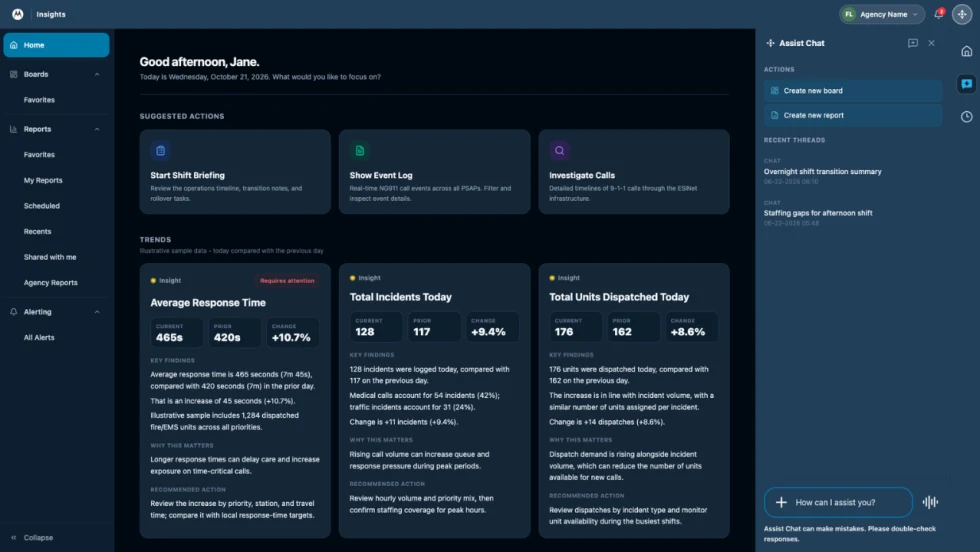
How Motorola Solutions’ New “Insights” Platform Helps Public Safety Agencies Identify Trends to Improve Their Operations
Motorola Solutions has introduced Insights, which leverages Assist, its mission-critical artificial intelligence (AI), to address these challenges and shape what’s next for public safety analytics and reporting technology.
Read More →
What Qualifies a Laptop as Rugged or Fully Rugged?
Police officers face a wide range of working conditions that can damage or even destroy a regular consumer laptop. Learn what qualifies a computer as rugged or fully rugged and why those devices are vital for law enforcement.
Read More →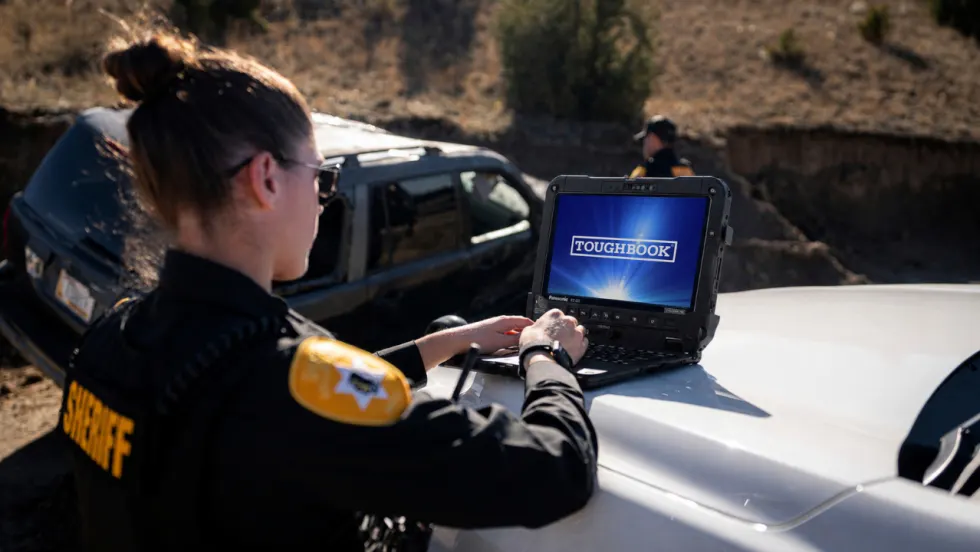
Panasonic Connect Launches the Toughbook 34 and Toughbook G3, Fully Rugged 2-in-1 Mobile Computers
Panasonic Connect has launched the Toughbook 34 and Toughbook G3 to facilitate in-vehicle dispatch, records management, and mobile command operations from any location.
Read More →

A police agency's guide to data-driven fleet management
Costs are rising and the public expects more transparency into how their tax dollars are spent. This e-book shows how police agencies can use fleet data to take control of fleet expenses while improving officer safety and demonstrating fiscal responsibility to the communities they serve.
Read More →
AI and analytics for law enforcement: Turning data into insights
Law enforcement agencies are managing more video, sensor data and digital evidence than ever before. Discover how AI and analytics can help turn that data into actionable insights that strengthen situational awareness, accelerate investigations and support more informed decisions.
Read More →
Vasco Electronics Adds Automatic Language Detection to Vasco Translator Q1
Vasco Electronics’ software update introduces hands-free language switching and expanded offline translation across 45 language pairs, empowering law enforcement, healthcare, and front-office enterprise teams
Read More →
North Miami Police Department Deploys Mark43
The North Miami Police Department has deployed Mark43 as part of its Five-Year Strategic Plan that represents its collective vision and goals for a more proactive police department, anchored by a core commitment to leveraging modern technology to enhance efficiency and public safety.
Read More →
Cellebrite Genesis for Enterprise Now Generally Available
Made available to the public sector in June, Cellebrite Genesis is serving a growing mix of national, regional, and local agencies worldwide, including some of the largest regional and metropolitan police departments. It is now available for enterprise organizations.
Read More →
2026 Vision FirstNet Users Summit to Host Emerging Leaders Training on Grassroots Advocacy for Public Safety
“Emerging Leaders Training: Understanding the Importance of Grassroots Advocacy for Public Safety," a session during the 2026 Vision FirstNet Users Summit, will offer a roadmap for unified advocacy at the federal level.
Read More →
Motorola Solutions Completes Acquisition of D-Fend Solutions
Motorola Solutions has acquired D-Fend Solutions, an industry leader in counter-drone technology. This deal provides public safety and enterprise customers with access to advanced counter-unmanned aerial systems.
Read More →