



Consensual Encounters
The well-trained, self-disciplined, smart law enforcement officer first tries a consensual encounter, before resorting to a detention that may or may not win judicial approval.

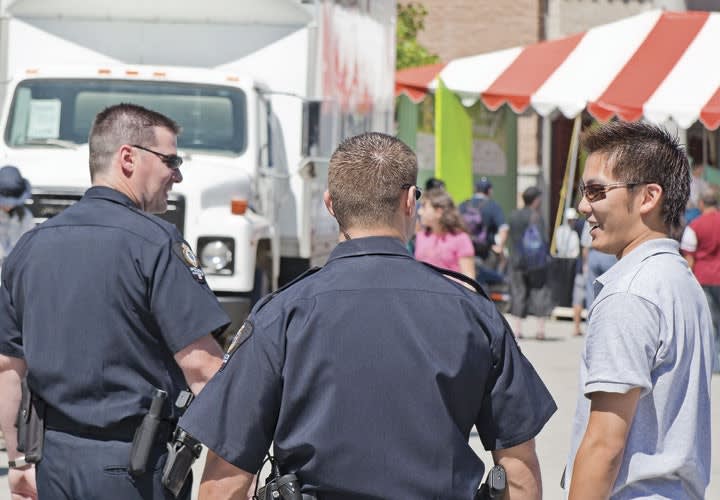
What happens if you make a ped stop, and then develop probable cause to arrest the person, and then find contraband or weapons or other evidence when you search incident to arrest, and then get told by the judge that your detention was not justified by reasonable suspicion? As you're painfully aware, what happens is that all evidence deemed the "fruit" of your unlawful detention gets suppressed, charges may get dismissed, and you may find yourself on the receiving end of administrative discipline and a civil suit. Not good.
Safety permitting, there's a smarter way to initiate contact with people, without risking the possibility of these bad outcomes flowing from an unreasonable detention. The well-trained, self-disciplined, smart law enforcement officer first tries a consensual encounter, before resorting to a detention that may or may not win judicial approval.
Three Levels of Interaction
The U.S. Supreme Court has identified three distinct categories of Fourth Amendment police-citizen interaction:
(1) Arrests, which are typically made by taking physical custody of a person and taking him to the station or the jail for booking, and which require "probable cause" as justification;
(2) Detentions, including ped stops and vehicle stops, which are justifiable by the lower standard of "reasonable suspicion;" and
(3) Consensual encounters, in which police use no commands, force, red or blue lights or sirens, but simply approach a person and engage him in conversation and make plain-view observations without any official restraints, and for which no level of justification is needed, because unlike arrests and detentions, the consensual encounter is not a Fourth Amendment "seizure" of the person.
If you believe you have PC for an arrest but the judge disagrees, you've made an unconstitutional arrest. If the judge finds your reasons for making a detention don't add up to reasonable suspicion, you've made an unconstitutional detention. But because consensual encounters do not require any showing of suspicion whatsoever, there's no opportunity for a court to find that you've made an unconstitutional consensual encounter. For Fourth Amendment purposes, the consensual encounter is risk-free; a detention is not. Therefore, which of these choices should be your preferred method of attempting contact with a suspect?
Distinguishing a Consensual Encounter From a Detention
The essential test of a detention is to look at all of the surrounding circumstances and ask whether, in view of what officers have said and done, a reasonable, innocent person in this situation would have felt that he no longer had a choice about coming or going as he pleased, but was compelled by official authority to submit to the interaction with police.
What kinds of actions could convert a consensual encounter into a detention, requiring reasonable suspicion? "Examples of circumstances that might indicate a seizure, even where the person did not attempt to leave, would be the threatening presence of several officers, the display of a weapon by an officer, some physical touching of the person, or the use of language or tone of voice indicating that compliance with the officer's request might be compelled." (U.S. v. Mendenhall) In a series of cases, the Supreme Court has expressed the distinction as follows:
"A person has been 'seized' only when, by means of physical force or a show of authority, his freedom of movement is restrained. As long as the person to whom questions are put remains free to disregard the questions and walk away, there has been no intrusion on that person's liberty or privacy as would under the Constitution require some particularized and objective justification." (U.S. v. Mendenhall)
"Our cases make it clear that a seizure does not occur simply because a police officer approaches an individual and asks a few questions. So long as a reasonable person would feel free to disregard the police and go about his business, the encounter is consensual and no reasonable suspicion is required." (Florida v. Bostick)
"The initial contact between the officers and defendant, where they simply asked if he would step aside and talk to them, was clearly the sort of consensual encounter that implicates no Fourth Amendment interest." (Florida v. Rodriguez)
"Law enforcement officers do not violate the Fourth Amendment by merely approaching an individual in a public place and putting questions to him. If there is no detention—no seizure within the meaning of the Fourth Amendment—then no constitutional rights have been infringed." (Florida v. Royer)
Scope of Investigative Activity
To attempt a consensual encounter, you could simply approach a person in a public place and ask a non-threatening, engaging question: "Hey, how you doing? Man, can you believe this weather?" The person doesn't have to remain or respond, but if he does, there are a number of things you can do:
Observe his demeanor for signs of intoxication, drug use, nervousness, or other suspicious behavior. (U.S. v. Crews)
Request ID. Although a demand for ID would convert the encounter into a detention, a request for ID does not. (INS v. Delgado) Without retaining the person's ID, you can quickly copy information, promptly return the ID, and run records checks.
Ask questions about the person's activities. (Florida v. Royer)
Request consent to search. (Florida v. Bostick)
Seize evidence discovered in plain view, or discovered under a consent search. (U.S. v. Drayton)
If in the course of these permissible activities you establish reasonable suspicion to detain and then probable cause to arrest, resulting evidence cannot be suppressed on grounds that it flowed from an unjustified detention, because it flowed instead from a consensual encounter, which requires no justification.
Limitations on Activity
Unless you have reasonable suspicion that the person is involved in criminal activity, do not turn your consensual encounter into an unlawful detention by doing any of these things:
Giving any orders or commands.
Displaying or pointing a weapon.
Surrounding the person with multiple officers or K-9.
Frisking or touching the person without consent.
Holding onto license or ID after a quick consensual examination.
Caging, cuffing, restricting, or moving the person without consent.
Overcoming Common Arguments
Although defense attorneys sometimes argue that a consensual encounter was really a detention because no reasonable person holding drugs (guns, stolen property, etc.) would feel free to ignore a police request, "This argument cannot prevail because the 'reasonable person test' presupposes an innocent person." (Florida v. Bostick)
Another common argument is that no reasonable person would feel at liberty to refuse to talk to an armed, uniformed officer. "Those factors should have little weight in the analysis. Officers are often required to wear uniforms, and in many circumstances, this is cause for assurance, not discomfort. Much of the same can be said for the wearing of sidearms. That most law enforcement officers are armed is a fact well known to the public. The presence of a holstered firearm thus is unlikely to contribute to the coerciveness of the encounter, absent active brandishing of the weapon." (U.S. v. Drayton)
The Dividends
Initiating contact with a suspect through a consensual encounter (safety permitting) can reduce citizen complaints, administrative discipline, suppression of evidence, and civil liability. These are substantial reasons not to jump the gun with a premature detention, when a consensual encounter could have done the trick.
Devallis Rutledge is a former police officer and veteran prosecutor who currently serves as special counsel to the Los Angeles County district attorney.
More Patrol

Team Wendy Introduces the EXFIL Endurance Ballistic Helmet, Engineered to Reduce the Burden of Extended Wear
Team Wendy has launched its EXFIL Endurance, a new lightweight ballistic helmet engineered to deliver protection, comfort, and fit during demanding, extended operations.
Read More →
The First Responders Children’s Foundation National First Responders Day Roll Call of Heroes Ceremony Returns to Times Square, NYC
First Responders Children’s Foundation (FRCF), in collaboration with T-Mobile, will host the Roll Call of Heroes ceremony in Times Square to commemorate National First Responders Day on Wednesday, Oct. 28. During the event, FRCF will present 18 Hero Awards.
Read More →
Streamlight to Showcase Newest Lighting Products for Law Enforcement Professionals at IACP 2026
Streamlight will showcase its newest lights for law enforcement at the International Association of Chiefs of Police Annual Conference & Expo. Featured lights will include the TLR-3 X, the PolyTac 1X, and more.
Read More →
Streamlight Portable Scene Light III Wins 2026 OH&S New Product of the Year Award
Streamlight’s Portable Scene Light III has won the 2026 Occupational Health & Safety (OH&S) New Product of the Year Award in the Lighting category.
Read More →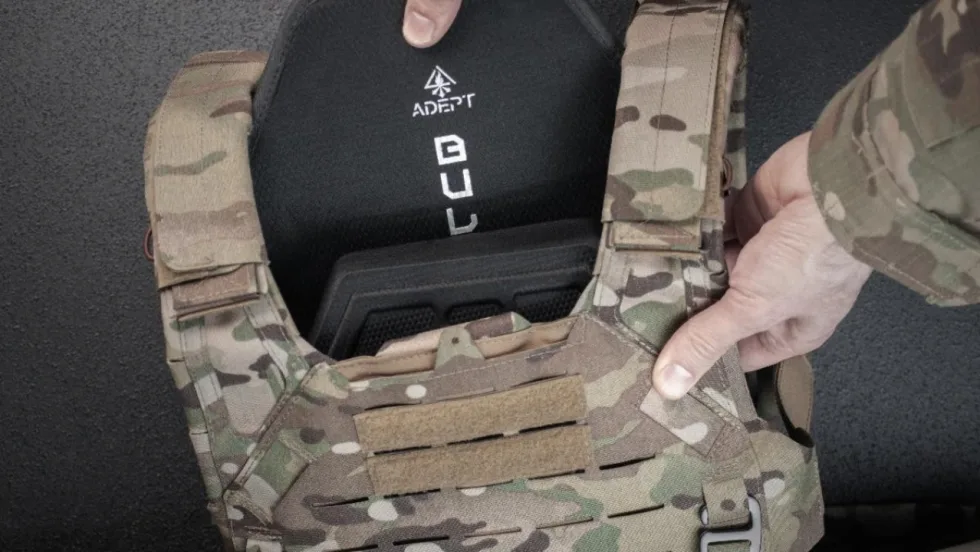
Adept Armor Introduces Two New Rifle Plates
Adept Armor has launched two new Level IV ballistic plates, the Emperor and the Archon Mark 2, which brings Adept Armor’s new Quatroid ceramic to the high-threat, performance-value center of the range at 5.2 pounds.
Read More →
POLICE Product Test: Benchmade Bailout
The Benchmade Bailout is a slim, lightweight carry knife with a deep-ride pocket clip and comes in a variety of blade steels and scales. Here is a detailed review of the Taiga Green Bailout, released earlier this year.
Read More →
NLEOMF Announces July 2026 Officer of the Month
NLEOMF honored a Michigan deputy sheriff as the July 2026 Officer of the Month for rescuing a trapped driver from a burning vehicle following a Fourth of July crash.
Read More →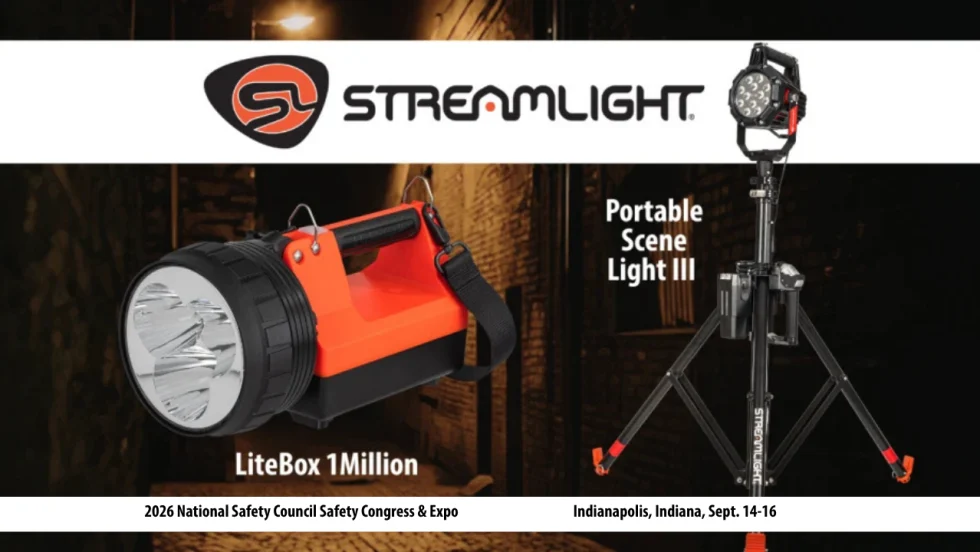
Streamlight to Showcase Newest Lighting Products at National Safety Council’s Safety Congress & Expo 2026
Streamlight will showcase its latest lights, including the Portable Scene Light III and the LiteBox 1Million, at the 2026 National Safety Council (NSC) Safety Congress & Expo.
Read More →
The 2027 World Police & Fire Games Set for Perth, Australia
The 2027 World Police & Fire Games (WPFG) will take place in Perth, Western Australia, from Friday, March 12 through Sunday, March 21, 2027.
Read More →
5.11 Partners with National Fallen Firefighters Foundation to Support #ForThe343
5.11 has joined the nationwide movement honoring the 343 New York City Fire Department firefighters lost on Sept. 11, 2001.
Read More →