



Shots Fired: Burton, Michigan 07/01/2009
At the sound of Barksdale's commands, Kalahar spun the shotgun toward him and leveled it. As the man flinched, Barksdale's finger squeezed the trigger of his gun—repeatedly.

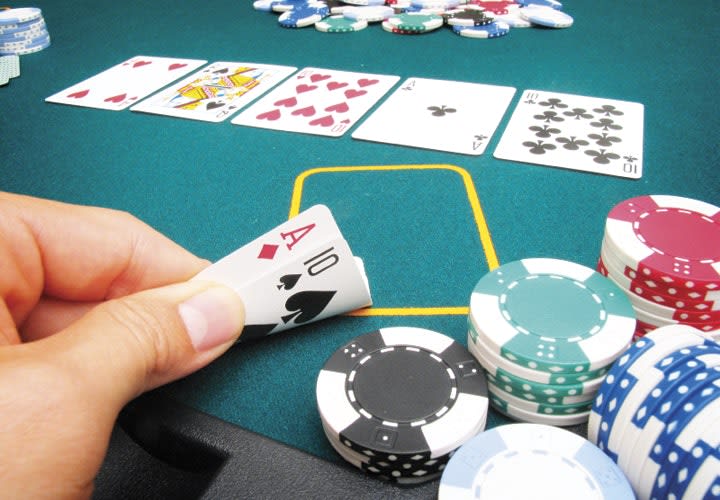
Photo courtsey of iStockPhoto.com.
Don't stand on soft 17s. Don't take the dealer's bust card. Don't split 10s. Veteran gamblers know that there are some things you just don't do in a casino. Walking away with all of the casino's cash is one of those things that rarely happens. And if by some miracle you happen to get away with robbing one, you'd be well advised not to push your luck by trying it a second time.
Such wisdom might have profited Matthew J. Kalahar, had he chosen to act on it. It wasn't as though the 45-year-old hadn't been warned.
After bursting into the Palace Poker Room in Burton, Mich., and clearing a load of cash, Kalahar actually returned to the location as a patron, this time sans mask and gun. Asking what all the excitement was about, he was told that the place had just been robbed.
"He was lucky," another customer said of the robber. "The chief had just left."
"I doubt one guy could have made a difference," Kalahar speculated.
"Well, you don't know the chief."
Bad Deal
The "chief" is Brad Barksdale. Having attended the police academy in 1977, Barksdale rose through the ranks of the Flint Police Department before becoming its chief 22 years later. After four years at the department's helm, he retired and went into consulting work. And when he was not working, Barksdale liked to drop in to the Palace Casino and play some Omaha Hi-Lo.
Barksdale had made several security recommendations to the casino's management prior to the robbery. Some of these suggestions such as hiring guards and securing the doors had been acted upon. Others—installing a video surveillance system and hiring armed security—had not been acted upon at the time of the robbery.
By July 1, Barksdale had become accustomed to those changes that had been made such as having to wait for the front door to be opened by a security guard when he showed up at night intending to play some poker. On this night, he was told there weren't enough people to seat a game of Omaha Hi-Lo. Deciding to hang around for a bit, the former police chief sat before the pit boss' computer and indulged in some simulated play.
Around 1 a.m. the novelty of computer play had worn off and Barksdale got up to leave. But as he started toward the door, there was a loud boom—the blast of a 12-gauge, pump-action shotgun demolishing the front door of the casino. The elderly security guard who'd started for the door turned to run as glass blew inward towards him. Hot on its heels was a masked man wielding the shotgun—Kalahar.
Taking Aim
"Everyone get down!" the gunman yelled as he tracked the unarmed guard's flight from him.
Barksdale, 40 feet away atop an elevated walkway, was not going to allow Kalahar to finish whatever it was he'd started. To that end he reached inside his coat for one of the two shoulder holsters hidden beneath. Each holster contained a semi-automatic FN Five-Seven, and as the shooter entered the poker hall on a dead-run toward him, Barksdale drew his first gun and took aim.
"Drop it!"
At the sound of Barksdale's commands, Kalahar spun the shotgun toward him and leveled it. As the man flinched, Barksdale's finger squeezed the trigger of his gun—repeatedly.
The former chief had spent years developing a variety of shooting skills, skills that field situations had a way of showcasing. Generally, this proved to the detriment of those who'd exhibited an inclination toward trying to kill him. Now that range training was once again being put to the test. Barksdale's well-practiced point-shooting tracked the gunman as Kalahar dove behind a chip distribution counter
With Kalahar's disappearance from sight, Barksdale speculated what the man's next move might be. Reload and reengage? And if so, from what side of the counter?
An end?
Over the top?
Or through it?
No matter. Barksdale wasn't about to wait and find out. He continued firing, peppering the counter's facade with 5.7mm rounds. He reflexively assumed a seated position with his legs crossed to provide a protective barrier against any potential incoming rounds.
Barksdale knew his magazine was getting low, so he stopped firing but kept his first gun trained on the threat zone while he retrieved the second from its holster.
Normally, he would have migrated for cover and covered the counter pending the response of Burton's finest. But earlier he'd spoken with an off-duty officer who was also in the casino, one who had said that since he had planned to drink he had left his gun outside. Despite Barksdale's commands for the police sergeant to remain behind cover, the officer popped up and headed over to the counter to check on the status of the shooter. As the unarmed officer was putting himself in an untenable position, Barksdale felt that his hand was being forced and he moved up, as well.
The sergeant moved to the right side of the counter, Barksdale went over the left end.
The sergeant retrieved and secured the suspect's fallen shotgun, then stripped Kalahar of his mask. With his face exposed, it became evident that Kalahar was no longer a threat. He would be pronounced dead at the scene shortly thereafter.
The Gunman
Kalahar had no prior criminal history prior to the night of the shooting, at least none that was recorded. But plainly the man had his fair share of demons—toxicological results determined that he'd been under the influence of cocaine at the time of the shootout.
Whatever impairment that intoxication might have rendered, it did not preclude his ability to replicate the more successful elements of his first robbery. This included his donning of dark gloves and darkening his eyes with black polish prior to donning a mask and bandana so as to hide his racial identity (Kalahar was white). Moreover, he'd apparently decided to add murder to his bucket list.
"He actually shot the guard—who was close to seventy years old—but the round he fired was birdshot," says Barksdale. "The glass was Plexiglas and that slowed the shot down quite a bit, enough that it didn't penetrate the guard's skin. Still, the guard had gray spots all over his shirt where the shot hit him."
Kalahar was more than capable of shooting an unarmed security guard, but he was less prepared to deal with the chief. His split-second decision to engage Barksdale might have proven less fateful for him had he not neglected to re-chamber a shell prior to doing so.
"That was why I saw him flinch," says Barksdale. "He tried to pull the trigger, but it wasn't happening."
The Chief
Unlike Kalahar, getting into a firefight wasn't exactly foreign territory for the retired street cop.
"I'd worked my way up to chief during my years with Flint," Barksdale says. "During that time, I worked Narco and was involved in several incidents where people made the questionable decision of trying to kill me. They didn't."
None of these incidents cost Barksdale a night's sleep, and while he feels for the family Kalahar left behind, he does not regret the actions that he took that night. Indeed, he cites his mindset as an imperative part of both his survival and that of the security guard.
"I'm a firearms instructor and use-of-force instructor," says Barksdale. "I practice what I preach and take care of the task at hand, and I do not worry about the consequences."
Barksdale believes that an inhibited mindset is one of the greatest threats confronting a police officer—on-duty or off, active, or retired. It is the reticence to act for fear of some civil or administrative costs that can slow some people down.
"You gotta do what you gotta do and worry about the consequences later," he notes. "I have fairly good gun control, so it was just a matter of concentrating and hitting the target."
When it comes to tactics, Barksdale says that he doesn't believe he would have changed a thing, not even his approach on the counter when the unarmed off-duty officer placed himself in danger by attempting to check on the robber.
"I didn't want to do that. My preference was to stay where I was and watch everybody. But I also knew that he didn't have a gun, and he was going to poke his head behind the counter and check on the dude. So I went to the bar to cover him."
News reports claimed that of the 17 rounds fired by Barksdale, only one had struck Kalahar. Barksdale finds the news reports difficult to reconcile with his own observations that night.
"That doesn't mesh with my observations and knowing how I shoot," Barksdale states. "I routinely drop milk jugs approximating the size of a human head at a hundred yards, and it's not as though I haven't been in shootings before. I know what I'm capable of."
An additional basis for Barksdale's skepticism was his having been told by common acquaintances about a nurse who'd seen Kalahar's body and said that it was obvious that he'd sustained multiple injuries.
The Five-Seven
Barksdale became a fan of the FN Five-Seven when he was allowed to fire one belonging to a fellow range instructor. Immediately, he was intrigued that while the rounds were longer than those of many handguns encountered in the field, their diameter was smaller than the 9mm. And while the grip was a little longer than his SIG 9mm, its heft felt the same.
But more importantly, he was impressed with its performance that day.
Firing the Five-Seven for the first time into a ballistic vest at 50 yards, Barksdale found that two of the rounds were within a half inch of one another—and the third had double-impacted on one of its predecessors. "That thing fires with laser-sighted accuracy," he says.
While he remains fond of the Five-Seven, one can hear something akin to dismay in Barksdale's voice when he expressed mystification at his inability to put the suspect down quicker.
"Those 5.7mm rounds are like mini-.223 rounds," Barksdale observes. "Nearly three times as big as a .22 Magnum. I would have thought Kalahar would've been out of commission a little sooner."
Ironically the casino had tried to hire Barksdale to provide security between the first and second robberies.
"They talked about hiring me," he recalls. "When I told them my rate, they were hesitant about it."
An argument could be made that they received the same benefits of Barksdale's experience and vigilancefor free.
As it stands, they were ecstatic for his intervention, the county DA didn't see any problem with the shooting, and the Michigan Chiefs of Police Association awarded Barksdale the medal of valor a couple of years later.
Brad Barksdale continues to work as a consultant…and squeezes in the occasional game of poker.
More Training
Registration Underway for Sixth Annual First Responders Relay
The California Police Athletic Federation’s annual First Responder Relay will welcome first responder teams from across the globe to compete along Ventura's scenic coastline on Oct. 11. Registration is underway.
Read More →
Vector Solutions Launches Comprehensive Online Dispatch Training Catalog for Emergency Communications Professionals
Vector Solutions’ new catalog of 35 expert-developed online courses can help emergency communication centers strengthen training, meet certification requirements, and simplify continuing education.
Read More →
Tools for Active Shooter Response Training
What technologies help prepare officers for active shooter response situations? This behind-the-scenes look at law enforcement training explores shot simulators, smart firearms, laser target systems, and the tools used to build safer, more effective training environments.
Read More →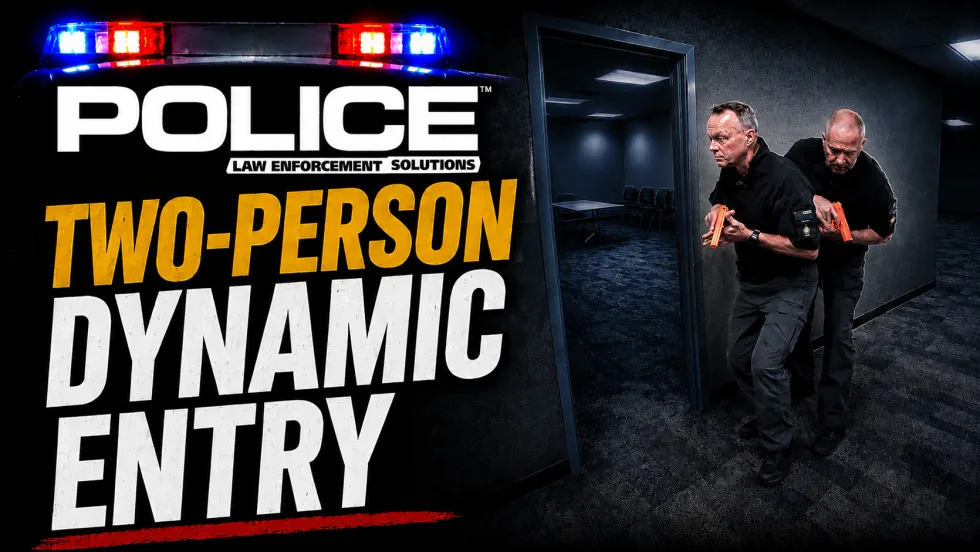
Two-Officer Tactical Doorway Entry Techniques
Entering a room during active-threat situations requires communication, coordination, and disciplined tactical movement. In this video, trainers from the United States Deputy Sheriff’s Association demonstrate critical room entry concepts, including fatal funnel awareness, team coordination, and safe tactical movement.
Read More →
High Compressed Ready Explained | Muzzle Control For Room Entry
In this video, Mike Willis, law enforcement national training and program director for the United States Deputy Sheriffs’ Association, demonstrates the high compressed ready position and discusses muzzle control during room entry.
Read More →
Why Attend the DroneSense Innovation Summit by Versaterm?
Let’s hear from Ryan Bracken, head of product, about why your agency should send someone to the first annual DroneSense Innovation Summit by Versaterm in April.
Read More →
Caswell Live Fire Spins Off from InVeris
Caswell Live Fire has spun off from parent company InVeris, coinciding with the 100th anniversary of Caswell’s founding. Over the past 100 years, Caswell has developed pioneering solutions that support military, law enforcement, and commercial clients worldwide.
Read More →
When Do You Transport a Wounded Officer Instead of Waiting for EMS?
Thumbnail for video series POLICE Topics, Tactics & Tips with a yellow headline that reads When Do You Transport a Wounded Officer Instead of Waiting for EMS?
Read More →
How to Pick Your High-Risk Stop Location for Tactical Advantage
Hear veteran trainer Mike Willis, of the United States Deputy Sheriff’s Association, explain several considerations that can help you wisely pick your best spot to initiate high-risk or felony traffic stops.
Read More →
Coffee Break with Police Experts: Using Your Patrol Vehicle for Cover
In this video, hear from Dustin Mowery, a product specialist at Team Wendy, as he discusses how to best use a patrol vehicle for cover.
Read More →