



Lead, Don't Blame
In today's world there are supervisors who act to protect themselves from the fear of failing, the fear of confrontation, and the fear of dealing with their own mediocrity.



When something goes wrong at an agency, administrators go into self-preservation mode. This, in turn, has a cascading effect all the way down to the last supervisor in the office. The blame game begins as a quest for the lowest common denominator in order to find the one to blame. When it's over, most everyone sighs with relief because it wasn't pinned on them. In other words, leadership doesn't rule the day; fear does. In today's world there are supervisors who act to protect themselves from the fear of failing, the fear of confrontation, and the fear of dealing with their own mediocrity.
There are many unfortunate outcomes from playing the blame game. Problems are seldom resolved, innovation gets quashed, and the only form of forward thinking revolves around how to limit one's own exposure to the absolute minimum. Supervisors may talk about accountability, but in reality there is a tendency to sidestep it by using blame as a smokescreen. If you are in a leadership position you should consider what WWII General George S. Patton once said: "Lead me, follow me, or get out of my way." He was never quoted as saying, "Or learn to blame others."
Blame has an interesting place in our physiological makeup. It's a defense mechanism that helps preserve your sense of self-esteem by avoiding your own flaws or failings. It's also used when we're in the attack mode. Blame is used to hurt others professionally or personally. The main reason it works so well is it takes the focus off of you. Like children, some supervisors learn early that it's easier to blame someone else than to accept responsibility.
I also want to point out that blame is a tool often used by liars. When the heat is on, liars will say anything to keep from getting into trouble. Casting doubt shifts attention to someone else while they think up their next move.
Here are some things to look at if you are tired of dealing with the blame game.
1. It's a bit cliché, but look in the mirror. Change always starts with the individual. How do you handle the dropped ball or serious mistake? Do you go for blame or try to fix the root cause of the problem? Take a look at the culture you have created around your leadership position. Are you blame oriented or solution oriented?
2. Choice equals options. Leaders have to make it clear that employees always have options. They can choose any course of action they wish. The problem for some is understanding that all decisions are choices. Once you speak in terms of choices and options, your subordinates start to realize it's a lot harder to blame others.
3. Set clear goals, objectives, and deadlines. This is not new but there are supervisors who choose to ignore it. Letting people know what's expected of them helps cut wiggle room for excuses. Shame on the supervisor who lets a subordinate get away with something because he or she failed to give clear guidance. Remember the 80/20 rule; 20% of your subordinates give you 80% of your headaches. Make sure you always keep that 20% in mind.
4. Think in terms of solutions, not problems. When your unit uses a solutions-based approach, everyone benefits. You are no longer looking for who caused the problem, but what caused it. Is the issue with Officer Smith or the fact that he received little to no cooperation? If you only addressed Officer Smith for not completing a task, you missed the bigger picture and did nothing to solve the problem.
5. Failure is not an option. You want solutions, not excuses. Keeping high standards is a way to help people learn to accept responsibility. If everyone has skin in the game, they take their personal performance much more seriously.
6. Communicate. Explaining you were having problems after the deadline has passed is unacceptable. When a problem arises, everyone needs to own it in order to solve it. Walking away and blaming others never solves anything. When people believe it's not their problem, they rarely take any action to help solve it. Encourage communication so you can solve problems together.
We've all witnessed people in leadership positions who are quick to dodge responsibility, and they command little respect. True leaders understand the fastest way to make an issue go away is to own it, deal with it, and take it to its logical conclusion. To do anything else will only make it worse. Don't like the blame game? My advice is to stop playing it.
Amaury Murgado retired a senior lieutenant from the Osceola County (FL) Sheriff's Office.
More Training

Registration Underway for Sixth Annual First Responders Relay
The California Police Athletic Federation’s annual First Responder Relay will welcome first responder teams from across the globe to compete along Ventura's scenic coastline on Oct. 11. Registration is underway.
Read More →
Vector Solutions Launches Comprehensive Online Dispatch Training Catalog for Emergency Communications Professionals
Vector Solutions’ new catalog of 35 expert-developed online courses can help emergency communication centers strengthen training, meet certification requirements, and simplify continuing education.
Read More →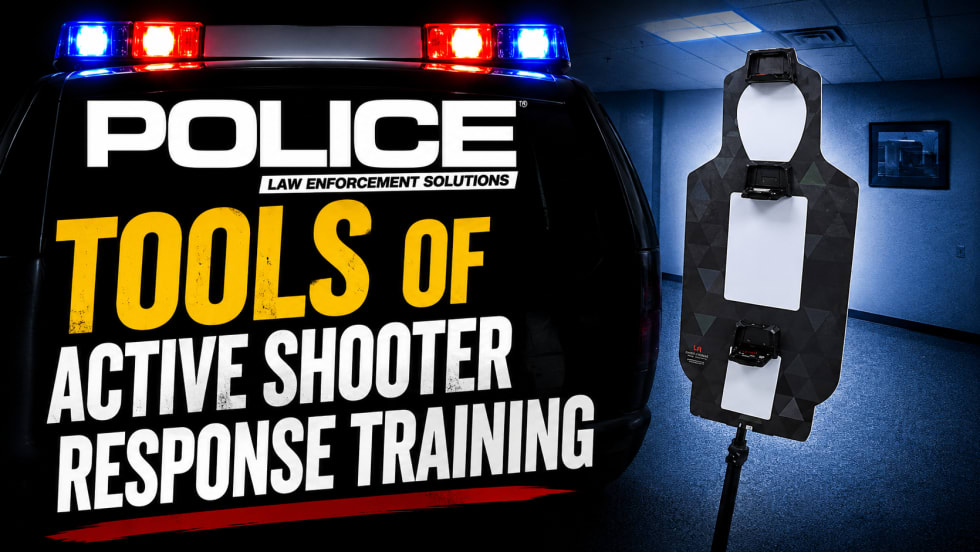
Tools for Active Shooter Response Training
What technologies help prepare officers for active shooter response situations? This behind-the-scenes look at law enforcement training explores shot simulators, smart firearms, laser target systems, and the tools used to build safer, more effective training environments.
Read More →
Two-Officer Tactical Doorway Entry Techniques
Entering a room during active-threat situations requires communication, coordination, and disciplined tactical movement. In this video, trainers from the United States Deputy Sheriff’s Association demonstrate critical room entry concepts, including fatal funnel awareness, team coordination, and safe tactical movement.
Read More →
High Compressed Ready Explained | Muzzle Control For Room Entry
In this video, Mike Willis, law enforcement national training and program director for the United States Deputy Sheriffs’ Association, demonstrates the high compressed ready position and discusses muzzle control during room entry.
Read More →
Why Attend the DroneSense Innovation Summit by Versaterm?
Let’s hear from Ryan Bracken, head of product, about why your agency should send someone to the first annual DroneSense Innovation Summit by Versaterm in April.
Read More →
Caswell Live Fire Spins Off from InVeris
Caswell Live Fire has spun off from parent company InVeris, coinciding with the 100th anniversary of Caswell’s founding. Over the past 100 years, Caswell has developed pioneering solutions that support military, law enforcement, and commercial clients worldwide.
Read More →
When Do You Transport a Wounded Officer Instead of Waiting for EMS?
Thumbnail for video series POLICE Topics, Tactics & Tips with a yellow headline that reads When Do You Transport a Wounded Officer Instead of Waiting for EMS?
Read More →
How to Pick Your High-Risk Stop Location for Tactical Advantage
Hear veteran trainer Mike Willis, of the United States Deputy Sheriff’s Association, explain several considerations that can help you wisely pick your best spot to initiate high-risk or felony traffic stops.
Read More →
Coffee Break with Police Experts: Using Your Patrol Vehicle for Cover
In this video, hear from Dustin Mowery, a product specialist at Team Wendy, as he discusses how to best use a patrol vehicle for cover.
Read More →