



New Mexico State Police Deploy Columbitech Mobile VPN
The New Mexico State Police have deployed a FIPS 140-2 certified Columbitech Mobile VPN (virtual private network) on laptops used in more than 500 police cars across the state, the company announced.

The New Mexico State Police have deployed a FIPS 140-2 certified Columbitech Mobile VPN (virtual private network) on laptops used in more than 500 police cars across the state, the company announced.
The Columbitech Mobile VPN improves officers' safety by providing secure, uninterrupted access to mission-critical applications such as vehicle registration and warrant databases as officers move in and out of coverage and connects via 3G, 4G, Wi-Fi, and satellite. Two-factor authentication and 256-bit AES encryption protect against unauthorized access and eavesdropping.
"It is absolutely mission-critical that our officers can access information from their laptops at any time to find out who they are dealing with before they approach somebody in a car," said Darrell Graham, IT systems manager of the New Mexico State Police. "Columbitech's mobile VPN ensures that officers always have access to information such as vehicle registrations, warrants and FBI databases so they can call for backup and avoid dangerous situations."
In a mountainous state with large areas with no cellular coverage, New Mexico troopers often rely on satellite links to communicate. Prior to implementation, laptops often lost the connection to the network, causing sessions to drop and applications to crash. Unlike the legacy VPN that didn't handle roaming well, Columbitech Mobile VPN creates a persistent network connection, and officers in the field can continue to work as usual even if the computer roams or temporarily loses the connection.
Columbitech's VPN solution is designed to handle high-latency satellite networks. It uses advanced data compression, providing up to 100 percent faster throughput with significant impact on performance and costs for satellite communication.
Additionally, the Columbitech VPN has the capability to filter data traffic. The state of New Mexico uses this feature to restrict which applications can be accessed over satellite and allows access only to officer-safety apps, which lowers the monthly satellite bill, acording to Columbitech.
"Columbitech's unique combination of FIPS 140-2 certification and mobility features, including session persistence and advanced data compression, makes our mobile VPN ideal for any public safety agency looking to provide mobile workers secure and persistent access – independent of network availability,” said Tobias Englund, president of Columbitech.
Columbitech Mobile VPN is a software-based VPN built on the TLS protocol. It includes a VPN client that's installed on a laptop, tablet, or smartphone. A VPN server runs on a Windows or Linux server with support for virtualization.
More Technology
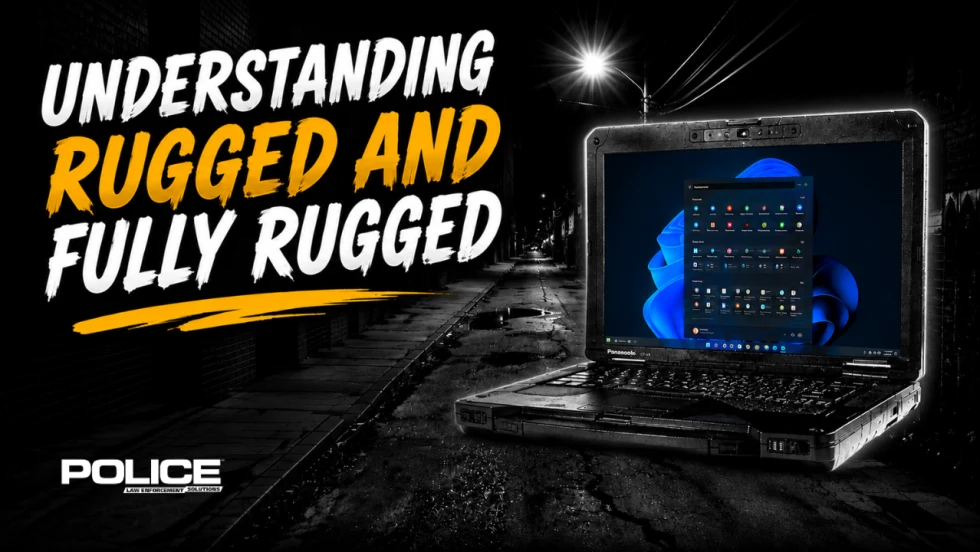
What Qualifies a Laptop as Rugged or Fully Rugged?
Police officers face a wide range of working conditions that can damage or even destroy a regular consumer laptop. Learn what qualifies a computer as rugged or fully rugged and why those devices are vital for law enforcement.
Read More →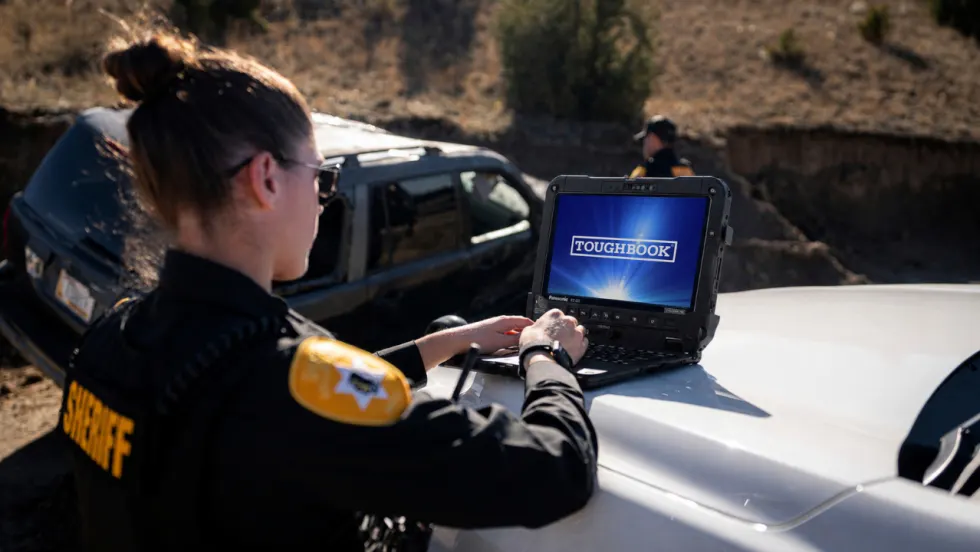
Panasonic Connect Launches the Toughbook 34 and Toughbook G3, Fully Rugged 2-in-1 Mobile Computers
Panasonic Connect has launched the Toughbook 34 and Toughbook G3 to facilitate in-vehicle dispatch, records management, and mobile command operations from any location.
Read More →
A police agency's guide to data-driven fleet management
Costs are rising and the public expects more transparency into how their tax dollars are spent. This e-book shows how police agencies can use fleet data to take control of fleet expenses while improving officer safety and demonstrating fiscal responsibility to the communities they serve.
Read More →
AI and analytics for law enforcement: Turning data into insights
Law enforcement agencies are managing more video, sensor data and digital evidence than ever before. Discover how AI and analytics can help turn that data into actionable insights that strengthen situational awareness, accelerate investigations and support more informed decisions.
Read More →
Vasco Electronics Adds Automatic Language Detection to Vasco Translator Q1
Vasco Electronics’ software update introduces hands-free language switching and expanded offline translation across 45 language pairs, empowering law enforcement, healthcare, and front-office enterprise teams
Read More →
North Miami Police Department Deploys Mark43
The North Miami Police Department has deployed Mark43 as part of its Five-Year Strategic Plan that represents its collective vision and goals for a more proactive police department, anchored by a core commitment to leveraging modern technology to enhance efficiency and public safety.
Read More →
Cellebrite Genesis for Enterprise Now Generally Available
Made available to the public sector in June, Cellebrite Genesis is serving a growing mix of national, regional, and local agencies worldwide, including some of the largest regional and metropolitan police departments. It is now available for enterprise organizations.
Read More →
2026 Vision FirstNet Users Summit to Host Emerging Leaders Training on Grassroots Advocacy for Public Safety
“Emerging Leaders Training: Understanding the Importance of Grassroots Advocacy for Public Safety," a session during the 2026 Vision FirstNet Users Summit, will offer a roadmap for unified advocacy at the federal level.
Read More →
Motorola Solutions Completes Acquisition of D-Fend Solutions
Motorola Solutions has acquired D-Fend Solutions, an industry leader in counter-drone technology. This deal provides public safety and enterprise customers with access to advanced counter-unmanned aerial systems.
Read More →
ZeroEyes, Advantech & Camden Police Partner to Bring AI Gun Detection Technology to Delaware School District
ZeroEyes has partnered with Advantech and the Camden Police Department to deploy ZeroEyes’ AI gun detection and intelligent situational awareness platform at Delaware’s Caesar Rodney School District (CRSD).
Read More →