
Police Magazine

 MENU
MENU SEARCHMENUSEARCH
Loading data...

In cases involving gang violence, get to the scene quickly, find the witnesses, and document who these witnesses are and what they say. Then if gang members do change their version of events, at least it can be explained why this person did what he or she did.
Read More →


Quickly gaining rapport and eliciting information from individuals is one of the most valuable tools in law enforcement. Obtaining admissions from suspects solves more cases than all the forensic evidence techniques combined.
Read More →In your search warrant affidavits, your reports, and your testimony you have to lay out the basis of your suspicions and justify every detention, arrest, search, seizure, entry, and use of force.
Read More →Ever since the 1964 U.S. Supreme Court decision in Massiah v. U.S., it has been the rule that any statements about a crime that were deliberately elicited from the suspect by a government official or undercover agent, after the Sixth Amendment right to counsel had “attached” and been asserted, could not be used at trial to prove guilt.
Read More →In many cases, two or more crooks commit crimes together. When you catch them, you'll generally do your best to get admissible confessions from them. Arresting multiple suspects can actually give you better chances to obtain statements.
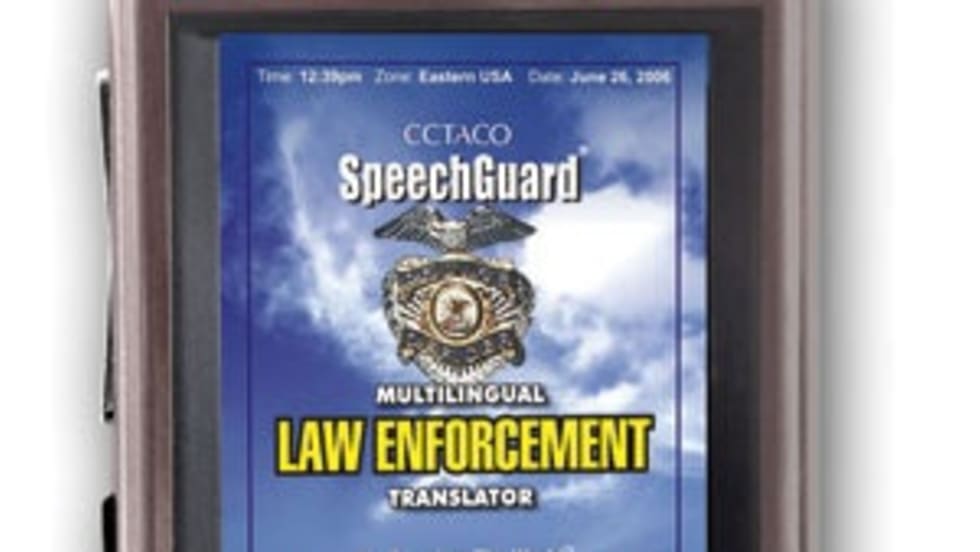
Read More →ECTACO, known for its electronic language dictionaries and translators, has developed a new hands-free, eyes-free, two-way communication system with an open platform. SpeechGuard PD-5 now allows officers to communicate thoroughly in a multitude of languages (and ways) without the assistance of a human translator.
Read More →One of the most troublesome legal issues in law enforcement is the question of when an officer may resume discussions with a suspect after some kind of Miranda "history" has occurred. The answer is, "It all depends."
Read More →TranTech has developed three additions to its MediaSolv VIS products. MediaSolv VIS Lite is an inexpensive turnkey solution that gives a small police department recording capability for up to four interview rooms.
Read More →In many instances, the suspect in a cold case turns out to be someone who is serving time for another crime. What are the considerations for conducting custodial interrogation of such a prisoner, insofar as Miranda and the Sixth Amendment right to counsel are concerned?
Read More →It might be nice if law enforcement officers never had to lie to a criminal suspect in order to solve a crime. In fact, some police advisors do suggest to officers that they should never mislead a suspect. Unfortunately, the reality is otherwise.
Read More →