



Pinpointing the Right to Counsel
Ever since the 1964 U.S. Supreme Court decision in Massiah v. U.S., it has been the rule that any statements about a crime that were deliberately elicited from the suspect by a government official or undercover agent, after the Sixth Amendment right to counsel had “attached” and been asserted, could not be used at trial to prove guilt.

Ever since the 1964 U.S. Supreme Court decision in Massiah v. U.S., it has been the rule that any statements about a crime that were deliberately elicited from the suspect by a government official or undercover agent, after the Sixth Amendment right to counsel had “attached” and been asserted, could not be used at trial to prove guilt. (The Sixth Amendment right should not be confused with the Fifth Amendment-based Miranda “right” to counsel, as discussed in our April 2004 issue.)
The right is “asserted” when, after “attachment,” the suspect retains, requests, or is appointed counsel. But exactly when does the Sixth Amendment right to counsel “attach?” Is it upon issuance of an arrest warrant, or arrest, or the filing of a crime-charging complaint, or the return of an indictment, or first appearance before a judge or other judicial officer? To avoid engaging in interrogation at the wrong time, you need to know. A recent U.S. Supreme Court decision clarifies the answer.
Rothgery v. Gillespie County, Texas
Walter Rothgery had a felony arrest, but the charge had been dismissed following his successful completion of a diversion program. Through clerical error, the disposition was erroneously shown in records as a felony conviction. So when officers later found Rothgery with a gun, he was arrested for the crime of being a felon in possession of a firearm.
Arresting officers brought Rothgery before a magistrate judge, who reviewed the probable cause for warrantless arrest, advised Rothgery of the charge against him, and set bail. Rothgery made repeated requests for appointment of counsel, but counsel was not appointed until much later. Rothgery spent some three weeks in jail before an attorney was appointed. The attorney then brought the error to the district attorney’s attention, after which the charge was dismissed and Rothgery was freed.
Rothgery sued the county under the federal civil rights act, alleging that the county had an unconstitutional policy or practice of denying defendants their Sixth Amendment right to counsel until the prosecutor had obtained a grand jury indictment. The federal district court and the Fifth Circuit Court of Appeals dismissed the lawsuit, reasoning that attachment of the Sixth Amendment right to counsel could not occur without the prosecutor’s involvement in the crime-charging process. Rothgery appealed, and by a vote of 8 to 1, the U.S. Supreme Court reversed the dismissal and reinstated the lawsuit.
The court said that as it had twice before ruled (in Brewer v. Williams and Michigan v. Jackson), the Sixth Amendment right to counsel attaches at the beginning of adversarial judicial proceedings, such as Rothgery’s appearance before the magistrate judge:
“We have twice held that the right to counsel attaches at the initial appearance before a judicial officer. A criminal defendant’s initial appearance before a judicial officer, where he learns the charge against him and his liberty is subject to restriction, marks the start of adversary judicial proceedings that trigger attachment of the Sixth Amendment right to counsel.” (Rothgery v. Gillespie County)
As for the contention that prosecutorial crime-charging conduct controls the attachment of the right to counsel, the court stressed that it is not prosecutorial action that triggers the Sixth Amendment, but judicial proceedings:
“Under this standard [of prosecutorial triggering], attachment depends not on whether a first appearance has begun adversary judicial proceedings, but on whether the prosecutor had a hand in starting it. That standard is wrong. Neither Brewer nor Jackson said a word about the prosecutor’s involvement as a relevant fact, much less a controlling one.” (Rothgery v. Gillespie County)
In condemning the Texas county’s procedure for denying indigent defendants their right to counsel at the first judicial proceeding, the court pointed out that 43 states and the District of Columbia all appoint counsel at a defendant’s first judicial appearance. In the seven remaining states (Alabama, Colorado, Kansas, Oklahoma, South Carolina, Texas, and Virginia), it can be expected that procedures will now change to conform to the ruling in Rothgery.
Impact on Interrogation
Certain implications for law enforcement officers flow from the Rothgery decision. In some jurisdictions, judicial opinions have said that the Sixth Amendment right to counsel attaches as soon as the prosecutor files a complaint and an arrest warrant is issued, even before the defendant’s arraignment or first appearance in court. (Example: People v. Viray, a 2005 decision of the California Court of Appeal.) Under such a standard, statements elicited from a suspect who had been charged by complaint but who had not yet been arraigned in court would be inadmissible under Massiah. It is now clear, as the Supreme Court said, that “That standard is wrong.”
While Rothgery clarifies that a prosecutor’s involvement in the crime-charging process is not controlling in triggering the right to counsel, it is still the rule that the filing of a grand jury indictment also causes the right to attach. In Patterson v. Illinois, the U.S. Supreme Court held in 1988 that once an indictment is returned, the right to counsel applies: “Our cases make it plain that the Sixth Amendment guaranteed defendant the right to have the assistance of counsel at his post-indictment interviews with law enforcement authorities,” said the Court.
The court also ruled in Patterson that if the right has attached by indictment but the defendant has not yet made his first court appearance or asserted his right to counsel, it is permissible for police to take a Massiah waiver and obtain an admissible statement. (The court said that the standard Miranda warning and waiver would also satisfy Massiah in such a case.) However, once the right has attached and been asserted, no valid waiver can be obtained for police-initiated questioning on that case. (Michigan v. Jackson)
In other Sixth Amendment cases, such as McNeil v. Wisconsin and Texas v. Cobb, the Supreme Court has said that the Sixth Amendment right to counsel is “offense-specific.” This means that even if the suspect’s right has attached and been asserted as to a particular crime, this does not affect your ability to question him about other cases under investigation as to which the right has not yet attached (unless the uncharged case is really only a lesser-included offense of the charged case).
In Texas v. Cobb, for example, it was permissible for police to question Cobb about two murders for which he had neither been indicted nor made a first court appearance, even though his right to counsel had attached and been asserted on a closely related burglary charge for which he had already been arraigned and retained counsel.
More Patrol
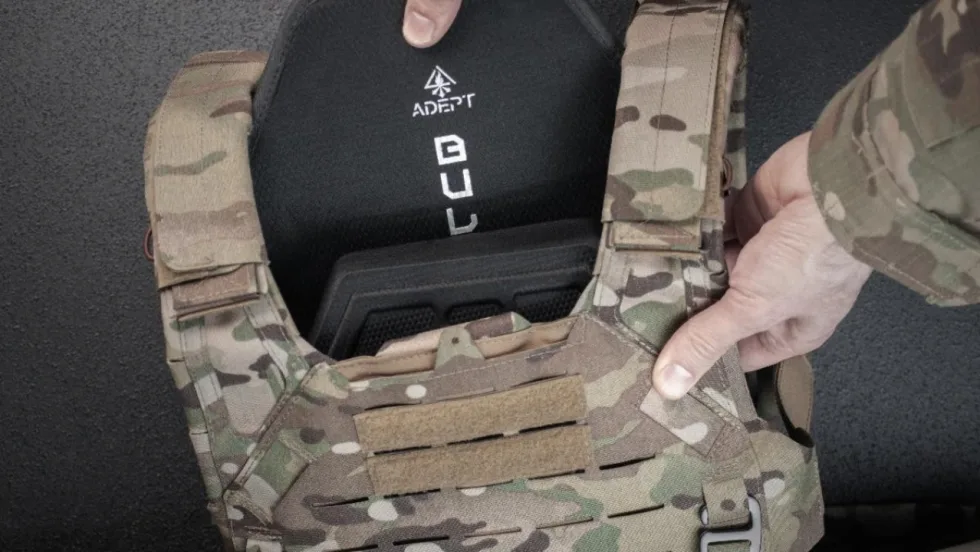
Adept Armor Introduces Two New Rifle Plates
Adept Armor has launched two new Level IV ballistic plates, the Emperor and the Archon Mark 2, which brings Adept Armor’s new Quatroid ceramic to the high-threat, performance-value center of the range at 5.2 pounds.
Read More →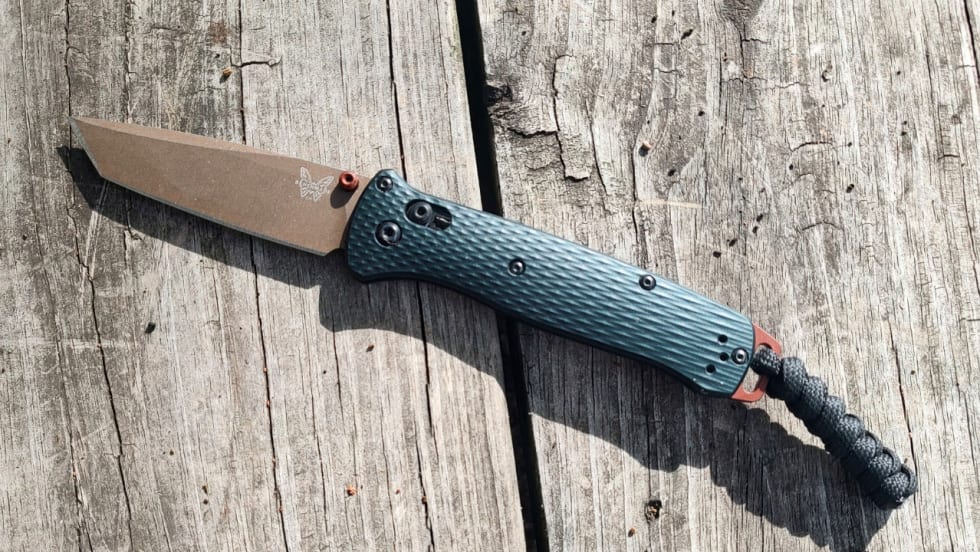
POLICE Product Test: Benchmade Bailout
The Benchmade Bailout is a slim, lightweight carry knife with a deep-ride pocket clip and comes in a variety of blade steels and scales. Here is a detailed review of the Taiga Green Bailout, released earlier this year.
Read More →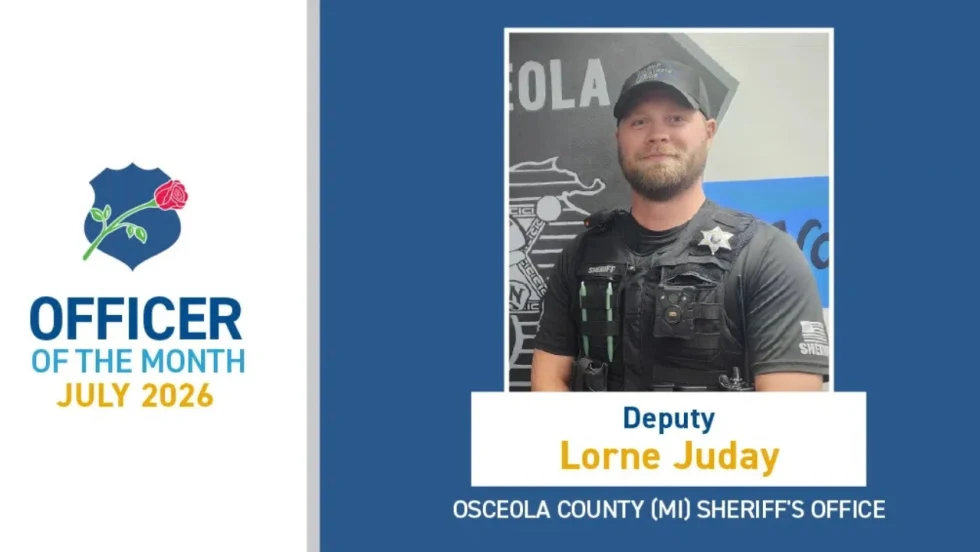
NLEOMF Announces July 2026 Officer of the Month
NLEOMF honored a Michigan deputy sheriff as the July 2026 Officer of the Month for rescuing a trapped driver from a burning vehicle following a Fourth of July crash.
Read More →
Streamlight to Showcase Newest Lighting Products at National Safety Council’s Safety Congress & Expo 2026
Streamlight will showcase its latest lights, including the Portable Scene Light III and the LiteBox 1Million, at the 2026 National Safety Council (NSC) Safety Congress & Expo.
Read More →
The 2027 World Police & Fire Games Set for Perth, Australia
The 2027 World Police & Fire Games (WPFG) will take place in Perth, Western Australia, from Friday, March 12 through Sunday, March 21, 2027.
Read More →
5.11 Partners with National Fallen Firefighters Foundation to Support #ForThe343
5.11 has joined the nationwide movement honoring the 343 New York City Fire Department firefighters lost on Sept. 11, 2001.
Read More →
Team Wendy Announces Title Sponsorship of the Jorge Pastore Foundation
Team Wendy’s 3-year partnership with the Jorge Pastore Foundation expands access to programs that strengthen those who serve.
Read More →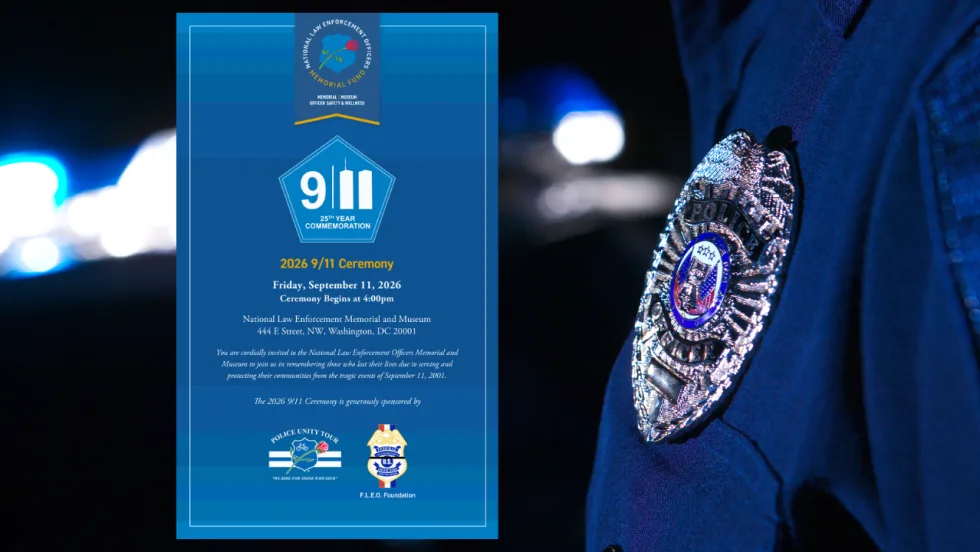
National Law Enforcement Memorial and Museum Hosting 9/11 25th-Year Commemoration Ceremony
The National Law Enforcement Memorial and Museum is hosting a 9/11 25th Year Commemoration Ceremony on Sept. 11 at 4 p.m.
Read More →
National Law Enforcement Officers Memorial Fund Announces June 2026 Officers of the Month
The National Law Enforcement Officers Memorial Fund (NLEOMF) named 15 officers of the Chico Police Department (California) as the Officers of the Month for June 2026 for their roles in responding to an active-shooter incident at a public library.
Read More →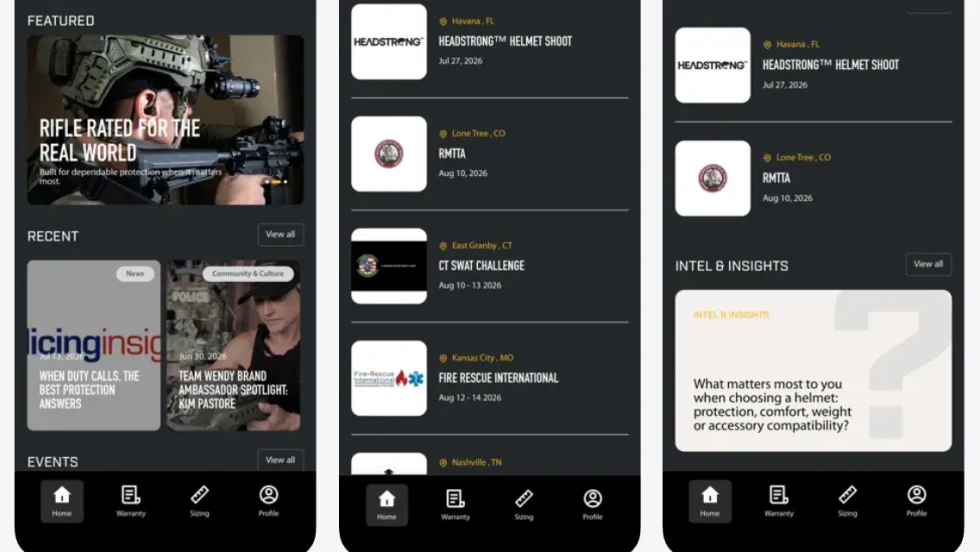
Team Wendy App Creates New Digital Hub for Helmet Owners
The Team Wendy Community App provides one location for warranty registration, size-fit tools, product updates, and community connection. For helmet owners, the new app creates a simpler path to the information and tools that matter most.
Read More →