



Johns Hopkins Doctors Join Maryland State Police Tactical Medical Program
Maryland state troopers in high-risk situations will now have emergency physician care just steps away, thanks to a new partnership with the nation’s leading hospital.

Maryland state troopers in high-risk situations will now have emergency physician care just steps away, thanks to a new partnership with the nation’s leading hospital.
The Maryland State Police and the Johns Hopkins University Department of Emergency Medicine joined forces today in a new program that is expected to become a national model. The Tactical Physician Program will deploy doctors with tactical troopers in high risk situations, such as a dangerous warrant service or hostage incident. In the event a police officer, victim, or suspect is injured, these emergency doctors will be on-scene to provide immediate care, in addition to what is already provided by State Police tactical paramedics.
At a recent Maryland State Police trooper candidate class graduation, Col. Thomas E. Hutchins, Secretary of the Department of State Police, was joined by Mr. Jim Scheulen, Chief Administrative Officer, and Dr. Nelson Tang, both of the Johns Hopkins Department of Emergency Medicine. They signed a memorandum of understanding that was also signed by Dr. Edward D. Miller, Vice President for Medicine and Dean of the Johns Hopkins Medical Faculty. Also present were Dr. Kevin Gerold and Dr. Don Alves, of the Maryland State Police Tactical Medical Program.
“We stand prepared to support the men and women of the Maryland State Police as they protect and serve our citizens,” Tang said. “We look forward to a relationship that enhances Johns Hopkins in our mission to train the future leaders of emergency medicine and tactical casualty care. This partnership will ensure a new level of excellence for both our organizations.”
“Our troopers will be safer because of the care and concern of these doctors who are willing to stand beside us as we protect the people of Maryland,” Hutchins said. “I thank each person associated with the Johns Hopkins Department of Emergency Medicine for their unselfish commitment to our law enforcement officers.”
The agreement provides the State Police Tactical Medical Unit with physicians and medical resources at no cost during high-risk law enforcement operations. In return, State Police will provide supervised training and operational medical support opportunities to emergency medicine physicians with an interest in tactical medical care.
As a leader in law enforcement, the Maryland State Police will provide Hopkins doctors with opportunities to develop the knowledge and skills necessary to plan for and provide medical support to high-risk, large scale, and extended law enforcement operations. After training, these doctors will go on to similar assignments around the nation, working with police departments and homeland security operations.
The new partnership will help ensure state troopers and allied law enforcement officers injured during the course of providing high risk law enforcement services are given the highest quality of immediate medical attention and delivered to appropriate medical care within the all important ‘Golden Hour.’ The program is strongly supported by local emergency medical providers and the State Police Aviation Command. It is expected to quickly become the national model for tactical medical support.
For more information visit www.mdsp.org.
More Patrol

Team Wendy Introduces the EXFIL Endurance Ballistic Helmet, Engineered to Reduce the Burden of Extended Wear
Team Wendy has launched its EXFIL Endurance, a new lightweight ballistic helmet engineered to deliver protection, comfort, and fit during demanding, extended operations.
Read More →
The First Responders Children’s Foundation National First Responders Day Roll Call of Heroes Ceremony Returns to Times Square, NYC
First Responders Children’s Foundation (FRCF), in collaboration with T-Mobile, will host the Roll Call of Heroes ceremony in Times Square to commemorate National First Responders Day on Wednesday, Oct. 28. During the event, FRCF will present 18 Hero Awards.
Read More →
Streamlight to Showcase Newest Lighting Products for Law Enforcement Professionals at IACP 2026
Streamlight will showcase its newest lights for law enforcement at the International Association of Chiefs of Police Annual Conference & Expo. Featured lights will include the TLR-3 X, the PolyTac 1X, and more.
Read More →
Streamlight Portable Scene Light III Wins 2026 OH&S New Product of the Year Award
Streamlight’s Portable Scene Light III has won the 2026 Occupational Health & Safety (OH&S) New Product of the Year Award in the Lighting category.
Read More →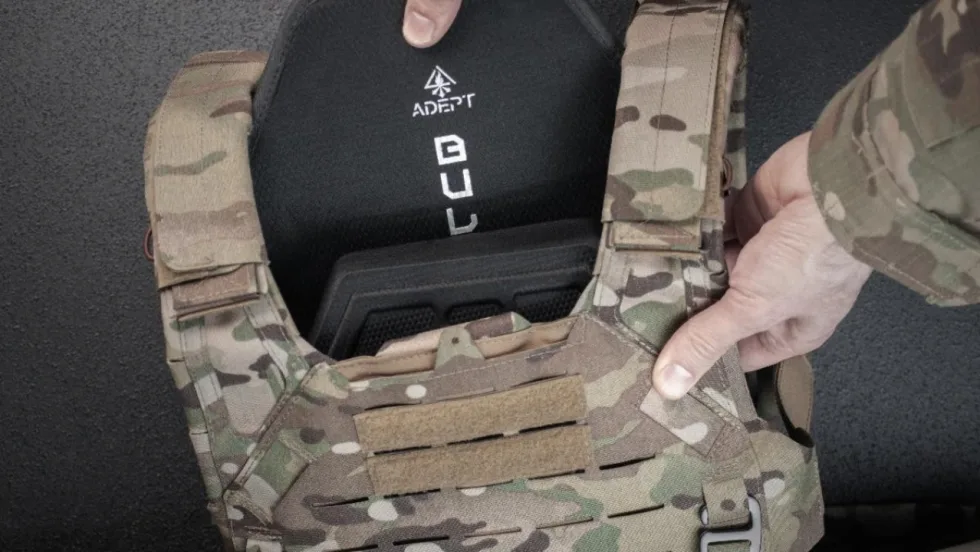
Adept Armor Introduces Two New Rifle Plates
Adept Armor has launched two new Level IV ballistic plates, the Emperor and the Archon Mark 2, which brings Adept Armor’s new Quatroid ceramic to the high-threat, performance-value center of the range at 5.2 pounds.
Read More →
POLICE Product Test: Benchmade Bailout
The Benchmade Bailout is a slim, lightweight carry knife with a deep-ride pocket clip and comes in a variety of blade steels and scales. Here is a detailed review of the Taiga Green Bailout, released earlier this year.
Read More →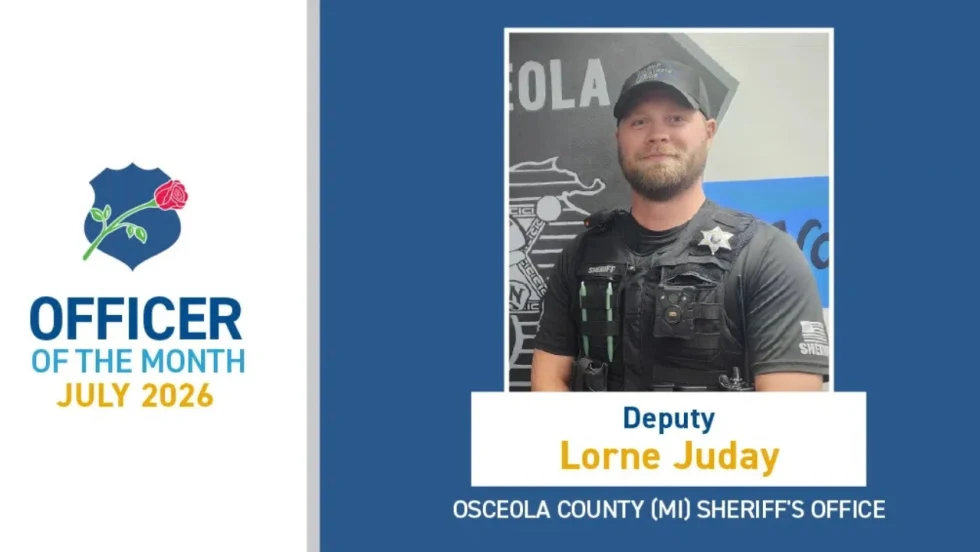
NLEOMF Announces July 2026 Officer of the Month
NLEOMF honored a Michigan deputy sheriff as the July 2026 Officer of the Month for rescuing a trapped driver from a burning vehicle following a Fourth of July crash.
Read More →
Streamlight to Showcase Newest Lighting Products at National Safety Council’s Safety Congress & Expo 2026
Streamlight will showcase its latest lights, including the Portable Scene Light III and the LiteBox 1Million, at the 2026 National Safety Council (NSC) Safety Congress & Expo.
Read More →
The 2027 World Police & Fire Games Set for Perth, Australia
The 2027 World Police & Fire Games (WPFG) will take place in Perth, Western Australia, from Friday, March 12 through Sunday, March 21, 2027.
Read More →
5.11 Partners with National Fallen Firefighters Foundation to Support #ForThe343
5.11 has joined the nationwide movement honoring the 343 New York City Fire Department firefighters lost on Sept. 11, 2001.
Read More →