



Time and a Half of What?
Most police officers and police employers know that the federal Fair Labor Standards Act requires overtime pay at "time and one-half' for FLSA overtime hours worked. Less well known, however, are some of the FLSA rules governing how time and a half must be calculated. This has sometimes resulted in arithmetic mistakes which have deprived officers of wages to which they are entitled under the law.

Most police officers and police employers know that the federal Fair Labor Standards Act requires overtime pay at "time and one-half' for FLSA overtime hours worked. Less well known, however, are some of the FLSA rules governing how time and a half must be calculated. This has sometimes resulted in arithmetic mistakes which have deprived officers of wages to which they are entitled under the law.
Wage Augments
FLSA overtime must be paid at time and one half an officer's"regular rate" of pay. For some police officers, their regular rate will simply be the hourly rate at which they are employed. However, in many departments officers receive "wage augments" in addition to their normal hourly wage or salary. These can include compensation for "longevity;" "shift differentials;" "detective pay;" "uniform allowances;" and so forth. Some of these may well be required to be factored in when the employer calculates time and a half for FLSA overtime purposes. It is not unusual to find that FLSA overtime has been improperly calculated by failure to include some wage augments as required by the law.
The FLSA regular rate includes virtually all compensation paid to an employee for work. The law is pretty settled that the following wage augments are to be included in figuring regular rates for FLSA overtime purposes: "longevity pay;" "shift differentials;" "special duty pay" (such as detective payor "stipends" for special duty work); and "increased compensation," awarded to officers who hold particular educational degrees. These are no more than increases in the rate of pay for work, and overtime must be based on the actual compensation received for work performed. If "wage augments" such as these are paid in "lump sums," they should be prorated for FLSA computation purposes.
Additional compensation for anything other than work is not included in an employee's regular rate of pay. For example,"vacation buy-backs" or "rewards" for not using sick leave are not pay for work and therefore need not be included in the regular rate for FLSA overtime purposes. An illustration of the difference might be tuition reimbursement programs (which are not pay for work) and wage augments for officers who have obtained particular educational degrees (which are). A good "rule of thumb" is that money received for time spent doing work-related activity is part of the regular rate, while money received to reimburse expenses incurred is not.
When Problems Occur
If some pay for work is not included in the regular rate on which FLSA overtime is calculated, that would be a violation of the statute. Affected employees would be entitled, under the law, to have their FLSA overtime recalculated, using proper regular rates, and to be paid the difference. The FLSA also provides that employees are entitled to interest on wage underpayments, and in most cases the amount of interest is 100 percent (called "liquidated damages" in the FLSA).
Failure to include wage augments in an employee's regular rate may be a simple mistake on the part of management and in some cases can be corrected simply by bringing the matter to their attention. If this does not work, affected employees who wish to pursue their rights must either complain to the federal Department of Labor or initiate private legal proceedings. Private lawsuits are the more common method by which police officers have sought to enforce FLSA rights. If legal action is required, recovery is generally limited to the period beginning two years before a complaint is filed in court. The FLSA also provides for "attorneys' fees awards," designed to make it possible for employees to vindicate FLSA rights without having to incur extensive personal legal bills to do so.
No one will likely get rich on a recovery for this kind of FLSA violation, but officers are certainly entitled to be paid properly under the law.
Jeffrey Chamberlain is a partner in the Albany, N. Y., law firm of Chamberlain and Kaufman, and has represented police employees and employers in Fair Labor Standards Act litigation.
More Patrol

Team Wendy Introduces the EXFIL Endurance Ballistic Helmet, Engineered to Reduce the Burden of Extended Wear
Team Wendy has launched its EXFIL Endurance, a new lightweight ballistic helmet engineered to deliver protection, comfort, and fit during demanding, extended operations.
Read More →
The First Responders Children’s Foundation National First Responders Day Roll Call of Heroes Ceremony Returns to Times Square, NYC
First Responders Children’s Foundation (FRCF), in collaboration with T-Mobile, will host the Roll Call of Heroes ceremony in Times Square to commemorate National First Responders Day on Wednesday, Oct. 28. During the event, FRCF will present 18 Hero Awards.
Read More →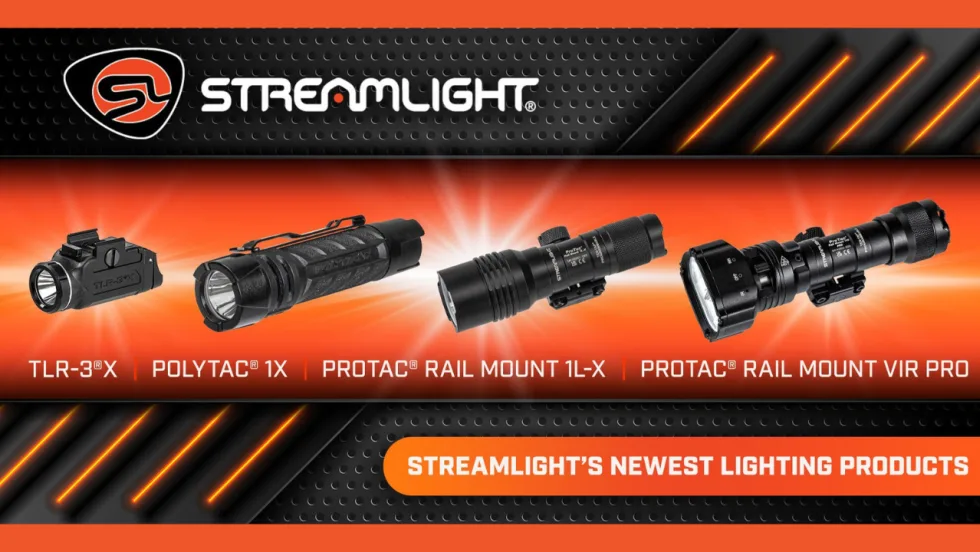
Streamlight to Showcase Newest Lighting Products for Law Enforcement Professionals at IACP 2026
Streamlight will showcase its newest lights for law enforcement at the International Association of Chiefs of Police Annual Conference & Expo. Featured lights will include the TLR-3 X, the PolyTac 1X, and more.
Read More →
Streamlight Portable Scene Light III Wins 2026 OH&S New Product of the Year Award
Streamlight’s Portable Scene Light III has won the 2026 Occupational Health & Safety (OH&S) New Product of the Year Award in the Lighting category.
Read More →
Adept Armor Introduces Two New Rifle Plates
Adept Armor has launched two new Level IV ballistic plates, the Emperor and the Archon Mark 2, which brings Adept Armor’s new Quatroid ceramic to the high-threat, performance-value center of the range at 5.2 pounds.
Read More →
POLICE Product Test: Benchmade Bailout
The Benchmade Bailout is a slim, lightweight carry knife with a deep-ride pocket clip and comes in a variety of blade steels and scales. Here is a detailed review of the Taiga Green Bailout, released earlier this year.
Read More →
NLEOMF Announces July 2026 Officer of the Month
NLEOMF honored a Michigan deputy sheriff as the July 2026 Officer of the Month for rescuing a trapped driver from a burning vehicle following a Fourth of July crash.
Read More →
Streamlight to Showcase Newest Lighting Products at National Safety Council’s Safety Congress & Expo 2026
Streamlight will showcase its latest lights, including the Portable Scene Light III and the LiteBox 1Million, at the 2026 National Safety Council (NSC) Safety Congress & Expo.
Read More →
The 2027 World Police & Fire Games Set for Perth, Australia
The 2027 World Police & Fire Games (WPFG) will take place in Perth, Western Australia, from Friday, March 12 through Sunday, March 21, 2027.
Read More →
5.11 Partners with National Fallen Firefighters Foundation to Support #ForThe343
5.11 has joined the nationwide movement honoring the 343 New York City Fire Department firefighters lost on Sept. 11, 2001.
Read More →