



Are You Ready for a Promotion?
You've packed off a gazillion puking drunks, officiated at countless barroom brawls, gone through a truckload of ticket books and restored relative tranquility to more scenes of domestic mayhem then you'd care to number. You're ready for a new challenge. You are ready, at least in your own mind, for promotion.

You've thought about it. Really thought about it. You've experienced more than your share of the best cop blues. You've packed off a gazillion puking drunks, officiated at countless barroom brawls, gone through a truckload of ticket books and restored relative tranquility to more scenes of domestic mayhem then you'd care to number. You're ready for a new challenge. You are ready, at least in your own mind, for promotion.
But are you really? Being tired of one job does not necessarily translate into readiness for the next link in the chain of command. These are other good options, like seeking a special assignment for instance. If you still remain dead-set on promotion, hopefully it is for all of the right reasons.
You truly believe you have what it takes to be a police leader and are willing to do the extra work and accept the extra responsibilities that the position brings with it. You are ready and ble to handle the consideration preparations required to "go for the gold". And equally capable of maintaining that energy level for as long as you hold the position of law enforcement supervisor. That's what it's really all about.
What Will Your New Job Be?
For most peace officers, the first rung on the leadership ladder will be that of first-line supervisor, or sergeant. Although the new leader's duties will vary at least somewhat from one jurisdiction to the next, in most agencies the man or women sporting a new set of stripes can expect to face some of the following, basic tasks: an honest effort to fix a problem, confront a wrong.
Impartiality: As noted, fairness requires a supervisor to treat everyone the same when employee vs. organization, employee vs. employee. or employee vs. citizen-customer confrontations arise, as they most certainly will.
Judgment and deci.sion making: No supervisor has to make the "right" decision every time. No one does. But he does have to be willing to make the calls even the very hard ones - in a timely and effective manner. That may mean that, on occasion, he will have to gather the facts, assess them, apply his own good judgment and common sense and reach a decision without much time to consider the issue or seek the advice of others. The effective supervisor seeks input and attempts to build consensus where he can, but is willing and able to make the tough calls alone when the situation dictates.
The street-level, tactical decisions he will be called upon to make may be dicey ones, it's true. But the "personnel issues" he must deal with and render decisions on in personnel matters can be even tougher.
Ability to see the "Big Picture:" In order to be truly effective in his new position, the first-line supervisor cannot afford to limit his perspective to his own small part of the organization, whether that part is a patrol team or a specialized unit. A good supervisor does not hoard resources or information. He shares what he controls with the larger organization and expects the same from his fellow supervisors. He is able to look well beyond his current position or assignment and see the department as it is: a group of interdependent parts that must mesh smoothly and support one another if the organization is to be an effective one.
How Will You Get Ready?
Assuming that he has conducted an honest self-assessment and determined that moving up in the organization with its attendant plusses and minuses is really what he wants to do, the candidate for advancement must next develop a plan for reaching the ultimate goal: actually obtaining the desired promotion. Some specific objectives, set now and achieved along the way to promotion, should serve well.
First of all, it will prove helpful to talk with recent, successful candidates for promotion and find out what they did to do well in the process. What did they have to learn? What knowledge, skills and abilities did the process appear to test the most? What would their advice be for the serious promotional candidate? And so on.[PAGEBREAK]
Second, the savvy promotional hopeful will identify precisely what he or she intends to know well in order to get ready for the testing process. Some example topics for study might include, for instance:
Agency policies, procedures and regulations;
Pertinent criminal and traffic ordinance and statutes;
Pertinent case law, particularly regarding arrest, search and seizure;
Disciplinary procedures, including any appeal process; Employment issues, including federal mandates regarding FSLA, FMLA, ADA, etc.; Response to tactical scenarios, including hostage-taking and hazmat incidents.
Third, the smart candidate will establish and stick to a routine for study. That will include both a quiet, out-of-the-way spot and a set time of the day for work on the "project" to take place. If he's really smart, he will stick to his promotional preparation routine no matter what other temptations are vying for his attention.
The wise candidate will take advantage of any formal, promotional training opportunities offered by his agency or a police professional association. In addition, he will take advantage of group study sessions with other promotional candidates.
How Will You Be Tested?
Probably the only thing consistent about the ways law enforcement agencies test for promotion is the inconsistency of the testing process from one department to the next. Some departments rely solely on an eligibility list determined by candidates' scores on a written test. Others rely on assessment centers, oral boards or a combination of the two, while yet others combine some mixture of written and oral testing procedures.
Whatever the nature of the examination process, the agency is attempting to rank order its promotional candidates in their ability to solve factual, issue-based and hypothetical problems and scenarios.
For his part, the promotional candidate must learn in advance all he can about the nature of the tests he is facing in order to prepare intelligently. Carefully reviewing the promotional announcement information is an obvious means of gathering such data, as is talking with candidates who have been through the process recently. Some of the more frequently encountered "tests" include the following:
Written exams: The agency may rank its candidates solely on the results of the written test, or rely upon a specific cutoff score as a test-taker's "ticket" to the next stage of the promotional process.
During the exam, he will pace himself carefully and not spend too much time on a really tough question - he can return to it later.
Oral boards: These are generally made up of staff officers from the candidate's own agency, perhaps with community leaders or other "outsiders" thrown into the mix for diversity purposes. The candidate generally does one or more oral presentations and responds to questions and hypothetical scenarios posed by board members. The candidate is expected to think on his feet and make quick, correct decisions within the parameters of applicable policies, procedures and statutes. Technical and legal knowledge, plus communication skills will be tested.
In addition to building a solid background of job-related knowledge, the successful candidate will read up on the hot issues of the day, from department happenings to what is going on in the profession and society in general. He will practice his oral presentation skills and rehearse what it is he wants to say if he is asked to talk about himself and his readiness for promotion.
A thoughtful candidate will take the opportunity to talk about what he has done to prepare for promotion, tasks he has already carried out that a supervisor might be expected to do and just why he represents the best choice for promotion. Genuine enthusiasm and self-confidence that does not stray into arrogance or conceit will help his cause.[PAGEBREAK]
Assessment centers: These vary widely in content but often include such exercises as role-playing, tactical problems, impromptu speaking, written or in-basket tests and a personal speaking presentation by each candidate. The assessors, who are most often law enforcement managers from other agencies, attempt to gather information under standardized conditions about each candidate's abilities to carry out the tasks of a first-line supervisor.
There are, of course, some "generic" preparations the candidate should undertake to get ready for the rigors of an assessment center. Getting really familiar with his selected study material is one of them. Practicing, practicing, and yet more practicing of his oral presentation and impromptu speaking skills is another.
At the same time, each assessment center exercise calls for its own, special preparations.
For the tactical, the candidate can prepare by developing a solid background knowledge of his department's emergency operating procedures and available resources.
For the written or in basket challenge, the well-prepared candidate will watch his spelling and grammar and take care to present his thoughts and observations clearly, succinctly and in a logical fashion.
For the role-playing exercise, a top candidate will meet the designed crisis with patience, tact and self-control. He will display sound decision making, excellent "people skills" and the ability to think on his feet. He will not be overbearingly authoritarian, but neither will he permit the other "players" to gain control of the interaction.
For the oral presentation, in whatever form it presents itself, he will mentally outline what he wants to say, maintain eye contact with his audience, keep an erect yet comfortable body posture and speak clearly at an appropriate, natural volume and pace. His facial expressions, controlled hand gestures and other body language will help communicate that he is enthusiastically working to connect with his audience.
Learning by Experience
The secret to earning that coveted promotion is learning by experience. The fact is that most officers do not gain the top slot on the promotional list their first time out. The smart ones make the effort to find out where they fell a little short and what they could do better the next time.
The really sharp promotional candidates keep asking questions after the process has ended. Where possible, they interview those who supervised the testing. What did they think the candidate did well? How about the oral presentation, if there was one? Where were the perceived weaknesses? What recommendations would they make for an improved performance the next time?
Summary
The serious candidate for promotion will have given a great deal of careful thought to the pending career milestone before he elects to take the plunge.
He will have conducted an honest self assessment and determined that he's making the right choice for the right reasons.
He will have looked carefully at what his agency expects of its first-line supervisors and reached the determination that he is both willing and able to measure up.
He will have examined his former peers who have preceded him into supervisory ranks and concluded that he would fit in well as a contributing member of the work group.
Having decided to compete for promotion, the in-earnest candidate will accept as a given that even his best friends on the department will not treat him exactly the same as they did before he donned the sergeant's chevrons. Likewise he will acknowledge the changed outlook, the need to see the bigger picture, the mandate not to engage in mindless criticism of the agency and its leaders that will be expected of the first-line supervisor.
He will remain mindful, too, of the absolute requirement that he always lead by example and serve as an excellent role model for his subordinates.
Assuming that he is willing to meet these tough expectations, the prospective police leader will throw himself 100 percent into the effort to prepare himself for the promotional competition in whatever forms it may present itself.
The leap from line officer to first-line supervisor generally represents the single, most radical change in a law enforcement officer's career. By making sure that he is ready to meet the challenge, he will have answered in the affirmative that he (or she) is indeed, ready for promotion .
Capt. Gerald W Gamel; a 28-year veteran of policing, is a captain with the Lakewood (Colo.) Police Department. A member of the Advisory Board for POLICE, Garner holds a master's degree lit Administration of Justice and writes and lectures widely on law enforcement topics, including officer safety, management and police-media relations. His book, Common Sense Police Supervision (Charles C. Thomas, 1995) includes a discussion on promotion.
More Patrol
Why Tennessee’s New Deadly Force Law Matters Beyond Tennessee
Tennessee’s new deadly force law is more limited than many may realize. Effective July 1, 2026, the law applies to a person who is not engaged in conduct that would constitute a felony or a Class A misdemeanor and who is in a place where the person lawfully resides. But it could have far-reaching influence.
Read More →
When Do You Transport a Wounded Officer by Police Vehicle?
Time-sensitive injuries like penetrating trauma mean a wounded officer needs to reach a trauma center as soon as possible, and in some cases, that means transporting by police vehicle rather than waiting for EMS. What are the factors to consider in making that transport decision?
Read More →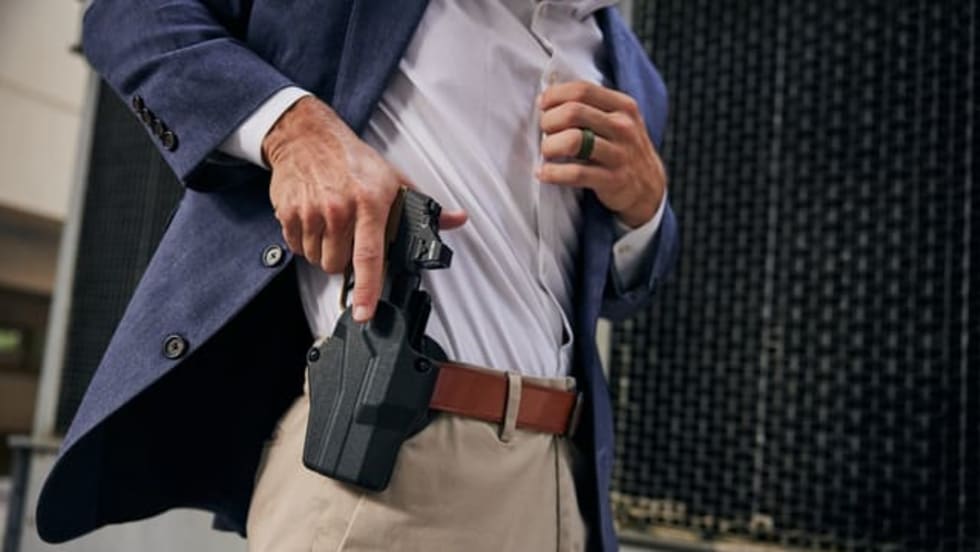
Safariland Solis Rethinks Concealable Duty
What if Level I retention didn’t require a full duty rig? Safariland’s Solis delivers trusted ALS security in a streamlined OWB platform built for administrative and plainclothes professionals who need protection without the bulk.
Read More →

5 Things to Know When Buying Backup Lights for Patrol Use
What is the value of a backup light, and what do you need to consider when selecting one? These smaller lights are invaluable as a secondary or special-purpose light and can be easily carried in a pocket or clipped to MOLLE gear, a key chain, shirt, or a vest.
Read More →
363 Fallen Officers Honored During National Police Week
In case you missed NELOMF’s annual Candlelight Vigil, here are all 363 names of the fallen officers whose names were added to the National Law Enforcement Officers Memorial this year.
Read More →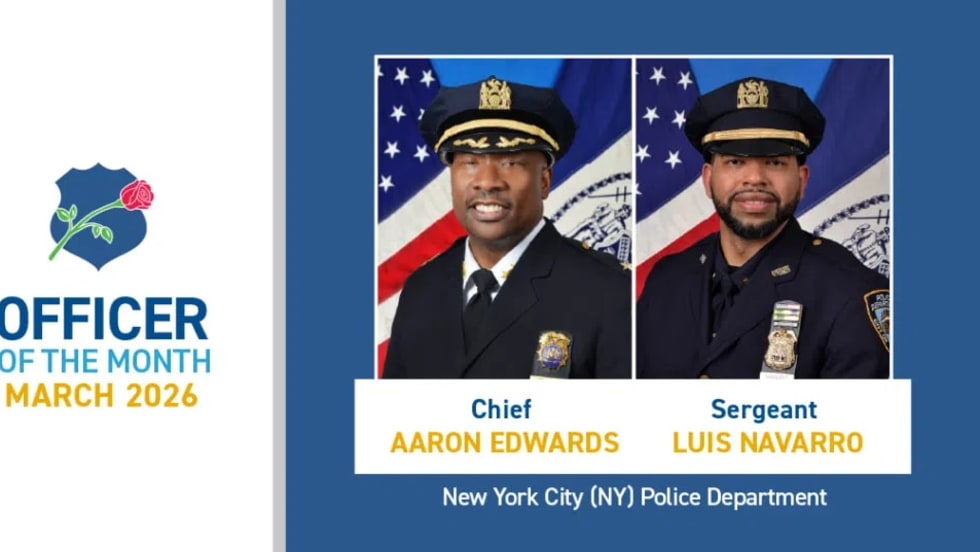
NYPD Officers Who Responded Quickly During IED Incident Recognized as NLEOMF Officers of the Month
Chief Aaron Edwards and Sgt. Luis Navarro were recognized by NLEOMF as Officers of the Month for their response during an IED incident and their actions that helped prevent harm to the public.
Read More →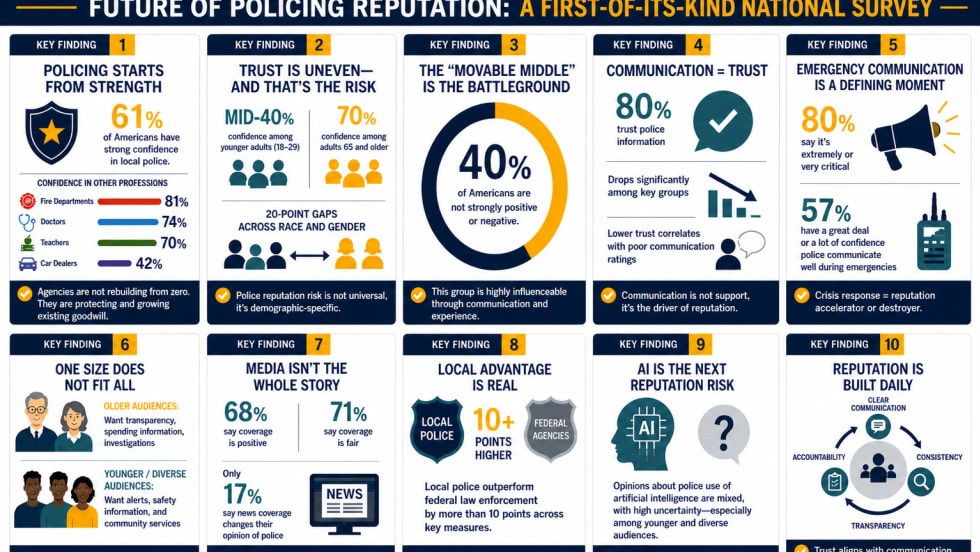
National Police Survey Reveals How Americans View Policing Today
A new national survey offers a comprehensive look at how Americans view policing. The study uncovers public sentiment toward local vs. federal police, communications, crisis response, the use of AI in policing, and more.
Read More →
Streamlight TLR-7 X Selected as Standard Issue Pistol Light by Canadian Federal Police
The Canadian Federal Police will be adding a new duty pistol system, which will include Streamlight’s TLR-7 X and a Glock 45 MOS 7 pistol with a red dot sight.
Read More →
Fallen Law Enforcement Officers from Across the Country to be Honored During 38th Annual Candlelight Vigil on May 13th in Washington, D.C.
The National Law Enforcement Officers Memorial Fund (NLEOMF) will honor 363 fallen officers who have died in the line of duty as their names are added to the National Law Enforcement Officers Memorial during the annual Candlelight Vigil on May 13.
Read More →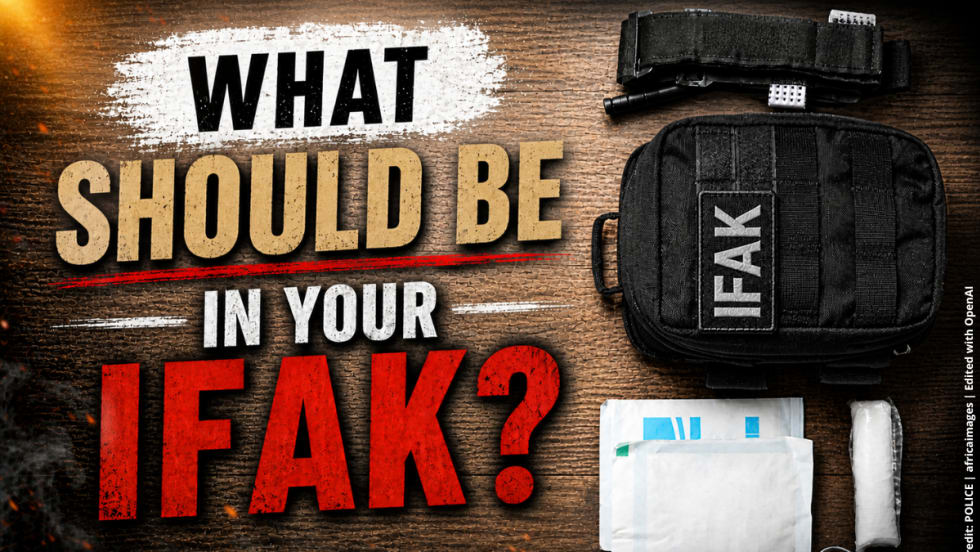
What Should Be in Your IFAK?
What should every officer include in an IFAK? Sydney Vail, M.D., a veteran trauma surgeon and former SWAT surgeon, explains which components are needed and which are not, and stresses training.
Read More →