



Property Crime and Pawnshops: Correlation or Coincidence?
When pawn lobbyists convinced a Florida Sate senator to sponsor the 1996 Florida Pawnbroking Act, it appeared to many law enforcement officials that regulation of the industry was being significantly compromised.

It is the nature of a free society to produce business opportunities for those willing to take a risk. It appears, however, that the pawn industry, already a prosperous niche market in Florida, had its sights set on creating a blueprint for guaranteed success.
When pawn lobbyists convinced a Florida Sate senator to sponsor the 1996 Florida Pawnbroking Act, it appeared to many law enforcement officials that regulation of the industry was being significantly compromised. In fact, the industry was already being viewed as a major contributor to property crime in Florida, although no empirical research was available to support the correlation between pawnshops and property crime.
Although most owners and operators of pawnshops conduct business according to the "letter of the law," this review may be seen as a philosophical indictment of the entire pawn industry from a law enforcement perspective. It may be true that thousands of people benefit from legitimate transactions. However, industry-driven growth on a national level, aided by "pawn friendly" legislation on the state level, may be causing more harm than good in communities struggling to reduce crime.
Seed for Growth Planted
In 1988, some of the financial risk was removed for pawnbrokers, and the groundwork secured for expansion of the industry, when four pawnshops used the city of Fort Lauderdale in federal court. The pawnshops were tied of having police officers remove stolen property from their shelves and return it to crime victims, without being able to recover their initial investment.
Unfortunately for law enforcement, the judge sided with the pawnshops, ruling that pawnbrokers no longer had to surrender stolen property upon demand. The South Florida law enforcement community has been playing catch-up ever since.
During the past decade, cities in South Florida have reported burglary and larceny rates that rank among the worst in the country. The local media have consistently labeled Fort Lauderdale as a "Top 10" crime city, citing Uniform Crime Report statistics as documented evidence that the "Venice of America" is no longer a safe place to live. Interestingly, the pawn industry thrived as the crime rate soared, until there are now more pawnshops in Florida (1,300) than in any other state.
Recipe for Pawnshops' Success
It appears that the pawn industry understood and capitalized on the three most significant factors involved in their success.
First, it is obvious that law enforcement in South Florida had done a relatively poor job of monitoring activity at pawnshops, connecting information to unsolved criminal cases, arresting those responsible for property crime. Rather than take a "byte" out of crime, most agencies seemed willing to wait for the necessary computer solution. (A delay that has proven costly!)
Second, the most consistently lucrative merchandise, jewelry, is also the most difficult to track. Gold chains, gems, watches, and family heirlooms of all types are brought and sold without interference from victims, and often sold to metal recyclers and lost forever.
Last, and perhaps most importantly, however, ahs been the need to educate potential victims about taking reasonable and responsible precautions. A 1997 study in Fort Lauderdale revealed that of all serialized property that is stolen in burglary offenses, actual serial numbers are reported to the Police Department in less than 10 percent of the cases.
A photograph of jewelry and other personal property is even more rare. Subsequently, it has been easy for the pawn industry to claim that they don't deal in stolen property.
While some police departments are publicly limiting their investigations of property crimes, citing obvious frustration and the tremendous strain on resources, many visionaries, like Jim Jordan of the Boston Police Department, see crime prevention as a strategic goal for law enforcement.
Future efforts in the area of crime prevention should emphasize the importance of citizen responsibility.
In recent years, the sheer volume of pawn transactions handled by the Fort Lauderdale P.D. rendered the antiquated computer system unworkable. Almost 70 percent of all pawn transactions were manually entered and filed away for "visual inspection." More importantly, the information was not timely, and could not be manipulated by computerized programs designed to flush out stolen property, frequent pawners, career criminals, or wanted persons.
In 1995, the police department wrote a comprehensive local ordinance to correct these problems, and to secure the necessary funding for appropriate computerization of both the police department and the pawnshops. Unfortunately, the effort was short-lived, as law enforcement was blindsided by the 1996 Florida Pawnbroking Act.
Florida's Pawnbroking Act
Billed by its sponsor as "a tool for law enforcement," the Florida Pawnbroking Act passed through the state legislature without debate, and became law on Oct. 1, 1996. A more careful examination of the law, however, revealed several surprises.
For example, the law created an exemption from Florida's "home rule" process, making it impossible for local jurisdictions to enact stricter pawnshop ordinances, and a "public records" exemption, so that crime victims, or the media, could no longer gain access to pawn transaction records.
The law also decreased the required holding periods for items pawned or sold, from 30 days to 15 days, creating a serious burden on police detectives, already unable to gain a firm handle on the problem. In addition, it forced crime victims to file suit to recover their stolen property, which, for most victims, meant buying it back from pawnshops. Few victims are happy with the idea of suing both the pawnshop and the pawner, who may well have stolen their property in the first place.
Proponents of the law argued that the Pawnbroking Act provided some benefits to law enforcement. For example, it required mandatory thumbprint on all pawn transactions, provided for background checks on prospective pawnshop owners, and shifted responsibility for regulating the industry to Florida's Department of Agriculture and Consumer Services, which has the ability to revoke a pawnshop license, but is generally limited to issuing fines.
However, those favoring the law failed to mention that most jurisdictions already had appropriate ordinances which required that the pawner leave a thumbprint, or that the requirement was actually removed from the state statue by legislators only two years earlier, pushed, no doubt, by an industry aware of what specific physical evidence might reveal. And, while the law did deny anyone convicted of a felony (within 10 years) from owning a pawnshop, it did nothing about those working in the pawnships, and actually dropped several misdemeanor and civil provisions contained in the previous statute.
A recent "sting" operation highlights the most glaring and frustrating aspect of policing the pawn industry, and demonstrates how insulated the industry has become. Shabbily dressed undercover detectives pushed a shopping cart to a local pawnshop and tried to unload a new computer monitor, which they referred to as a television set. The detective offered the "homeless camp" as their local address, and produced a department of corrections inmate card as required identification (the lamination was folder at the corner and the photograph was loose).
The detectives made it obvious that they did not know what they were offering for sale, and said that they had just "gotten" it. When asked if the property belonged to them, they paused and looked at each other, before saying "yeah." The case was presented for prosecution and declined. Pawnshops, it was decided, need only follow the letter of the law, regardless of how obvious the situation. If the pawner claims ownership of the property, the deal is done.
As a result of this decision, important changes to the sate's "dealing in stolen property" statutes are now being considered.[PAGEBREAK]
Media Investigation
Faced with rising crime rates, and the dilemma created by passage of the Florida Pawnbroking Act, the Fort Lauderdale P.D. encouraged the Fort Lauderdale Sun-Sentinel to conduct an unbiased study of the relationship between property crime and the pawn industry.
The resulting investigative report by Scott Glover and Evelyn Larrubia provided a great deal of insight into the pawn industry. By studying 1995 pawn data supplied by the police department, the reporters found that of the 50 most frequent pawners, 39 had criminal records in Florida, and almost all of the convictions were for burglary or cocaine charges. The relationship between property crime and drug addiction has long been established.
The report also revealed that the legislation was actually written by the pawn industry, which may account for why the law favored the pawnshops. Some items that benefited the industry were often disguised as "tough law." For example, by having the interest rate established by state legislatures, the pawn industry may have been trying to protect against additional federal lawsuits, similar to those in Hawaii and Georgia.
In those states the pawn industry had come under scrutiny for charging interest rates considered too high; the presiding judge in Hawaii calling the 240 percent annual rate "oppressive." Pawnshops in Florida, exempt from state usury laws, were not previously subjected to a rate cap. The new law imposed a "restriction" on pawnshops for the first time, allowing them to earn up to 300 percent annual interest on pawned merchandise.
By comparison, New York State, which has only 50 pawnshops, allows pawnshops to charge just 36 percent annual interest.
Reaction
Response to the Sun-Sentinel series was overwhelming, as readers expressed outrage over reports of burglary victims being forced to buy back their stolen property back from pawn dealers, and unemployed frequent pawners who repeatedly delivered expensive items to pawnshops. Local governments and the law enforcement community were even more vocal. In fact, the evidence produced by the Sun-Sentinel report was so intriguing that CBS News' 60 Minutes reporter Mike Wallace produced a segment on Florida's pawn industry, which aired in December, 1997. Columnist Fred Grimm of the Miami Herald referred to pawnshops as "the crackheads' ATM," and compared straight-faced pawnbrokers to cigarette manufacturing executives.
Correlation or Coincidence?
The information about frequent pawners, documented by the Sun-Sentinel, is a compelling argument to support the theory that the pawn industry contributes to the rate of property crime. Even so, new evidence is being examined. By the end of 1997 all of the pawnshops in Fort Lauderdale, and most throughout Boward County, were supplying transaction data on a weekly basis, which was downloaded into a central computer at the Broward Sheriff's Office. Law enforcement agencies can access the data electronically.
With this new advantage, Fort Lauderdale Det. Jack Gee began looking more closely at the relationship between active property criminals and area pawnshops. Of those criminals who are placed on "house arrest" in Broward County, most are convicted of property crimes or narcotics violations.
In a study by the Fort Lauderdale P.D., the Broward Sheriff's Office and the department of corrections, it was determined that more than 2,700 people in Broward County are currently sentenced to some form of community control, many of them on house arrest. By checking those on house arrest against the automated pawn database, detectives found, not surprisingly, that many offenders ignore the conditions mandated by the courts, routinely visiting pawnshops. As a result of this probe, more than 300 persons originally on house arrest are now serving real time in the state prison system. Perhaps equally appalling, more than 20,000 criminals, many placed on house arrest in recent years, have absconded and are now considered fugitives. Unfortunately, this much-needed alternative to prison seems to have backfired. The evidence suggests that those most responsible for Fort Lauderdale's high crime rate are able to continue to victimize our citizens, even after being convicted!
The reality of stolen property being disposed of by "associates" of thieves is a completely different issue, and creates an additional challenge for law enforcement. It is also important to consider that the pawn industry often points to their cousins, the flea markets, swapshops and secondhand dealers, as deserving of scrutiny. They are probably right! The Tactical Operations Multi-agency Cargo Anti-Theft task force (TOMCAT), formed in 1996, estimates that cargo theft amounts to $10 million in merchandise a month in South Florida, although they believe that much of the property is being shipped out of the country.
Many criminal cases have been made against organized groups of shoplifters, known to use the local flea markets and swapshops to unload stolen merchandise. In addition, counterfeit merchandise is another significant problem associated with this business, which operates without a great deal of regulation.
Conclusion
All of Fort Lauderdale's pawnshops are now computerized, the transaction data is downloaded weekly to a central computer at the Broward Sheriff's Office, and local law enforcement agencies can access the data electronically. As a result, arrests for property crimes have increased dramatically, and more and more stolen property is being recovered.
The state legislation introduced some positive changes to the Pawnbroking Act during the 1997 legislative session. New laws are also being considered to address perceived problems with the swapshops and flea markets.
The Florida Enforcement Recovery Unit, a statewide group of burglary and pawn unit detectives, continues to press for reform, while the 2000 Florida Legislature now appears poised to mandate the creation of a statewide pawn database for use by law enforcement.
However, the real challenge remains with local law enforcement agencies.
Meanwhile, the revolving door of justice may lead through a pawnshop.
Assistant Chief Hurley is in his 20th year with the Fort Lauderdale Police Department. This is his first contribution to POLICE. He has also been published in the FBI Law Enforcement Bulletin.
More Patrol
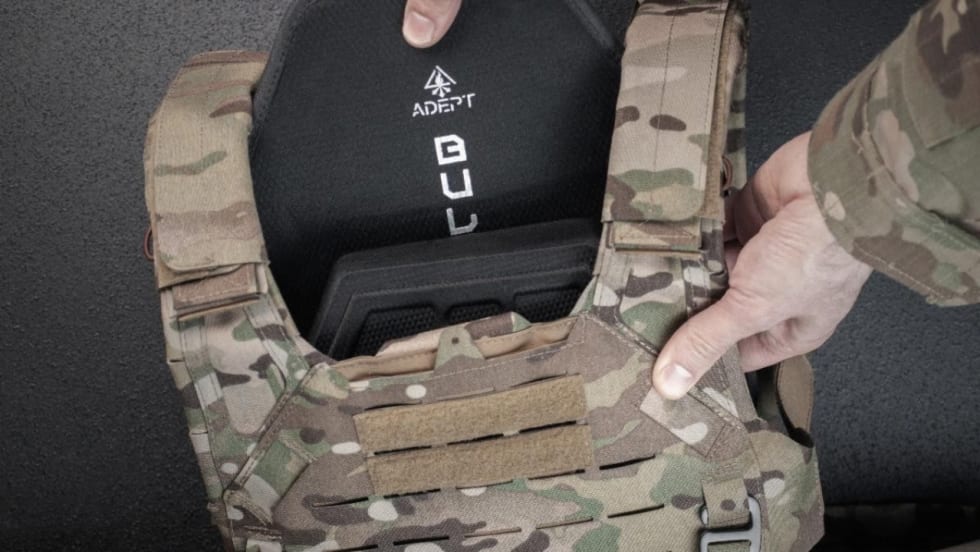
Adept Armor Introduces Two New Rifle Plates
Adept Armor has launched two new Level IV ballistic plates, the Emperor and the Archon Mark 2, which brings Adept Armor’s new Quatroid ceramic to the high-threat, performance-value center of the range at 5.2 pounds.
Read More →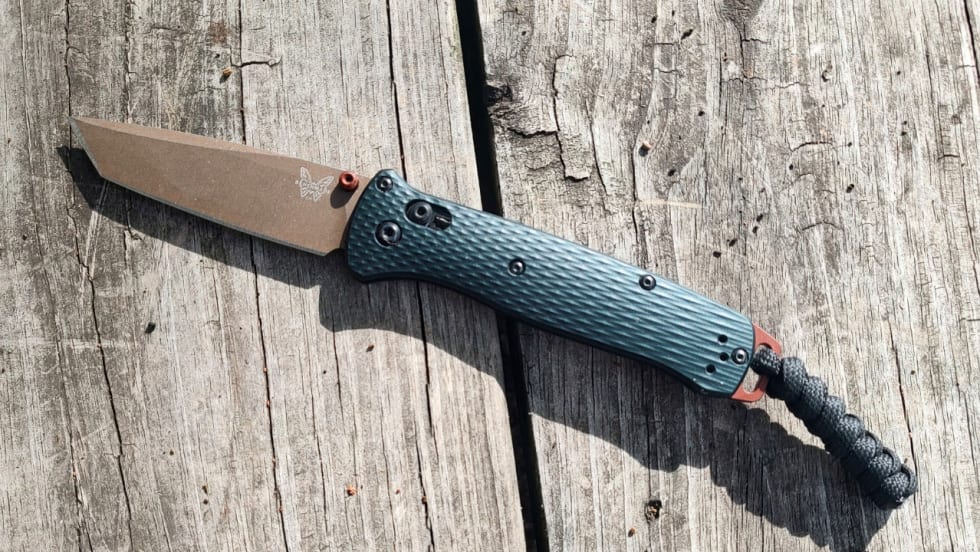
POLICE Product Test: Benchmade Bailout
The Benchmade Bailout is a slim, lightweight carry knife with a deep-ride pocket clip and comes in a variety of blade steels and scales. Here is a detailed review of the Taiga Green Bailout, released earlier this year.
Read More →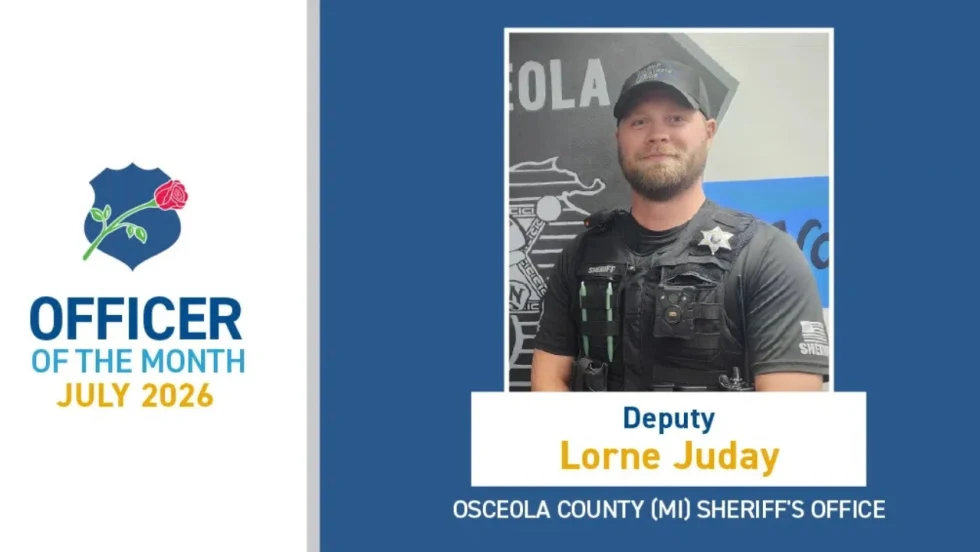
NLEOMF Announces July 2026 Officer of the Month
NLEOMF honored a Michigan deputy sheriff as the July 2026 Officer of the Month for rescuing a trapped driver from a burning vehicle following a Fourth of July crash.
Read More →
Streamlight to Showcase Newest Lighting Products at National Safety Council’s Safety Congress & Expo 2026
Streamlight will showcase its latest lights, including the Portable Scene Light III and the LiteBox 1Million, at the 2026 National Safety Council (NSC) Safety Congress & Expo.
Read More →
The 2027 World Police & Fire Games Set for Perth, Australia
The 2027 World Police & Fire Games (WPFG) will take place in Perth, Western Australia, from Friday, March 12 through Sunday, March 21, 2027.
Read More →
5.11 Partners with National Fallen Firefighters Foundation to Support #ForThe343
5.11 has joined the nationwide movement honoring the 343 New York City Fire Department firefighters lost on Sept. 11, 2001.
Read More →
Team Wendy Announces Title Sponsorship of the Jorge Pastore Foundation
Team Wendy’s 3-year partnership with the Jorge Pastore Foundation expands access to programs that strengthen those who serve.
Read More →
National Law Enforcement Memorial and Museum Hosting 9/11 25th-Year Commemoration Ceremony
The National Law Enforcement Memorial and Museum is hosting a 9/11 25th Year Commemoration Ceremony on Sept. 11 at 4 p.m.
Read More →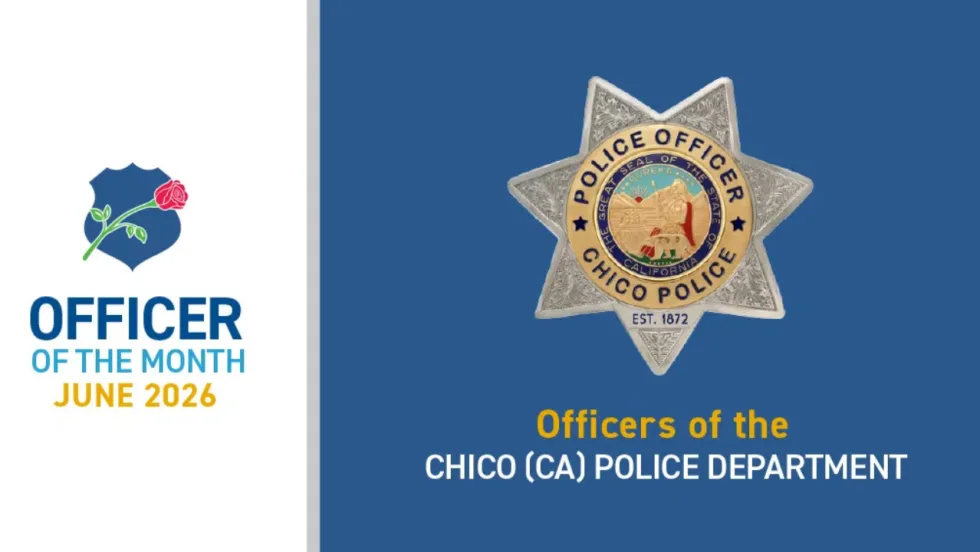
National Law Enforcement Officers Memorial Fund Announces June 2026 Officers of the Month
The National Law Enforcement Officers Memorial Fund (NLEOMF) named 15 officers of the Chico Police Department (California) as the Officers of the Month for June 2026 for their roles in responding to an active-shooter incident at a public library.
Read More →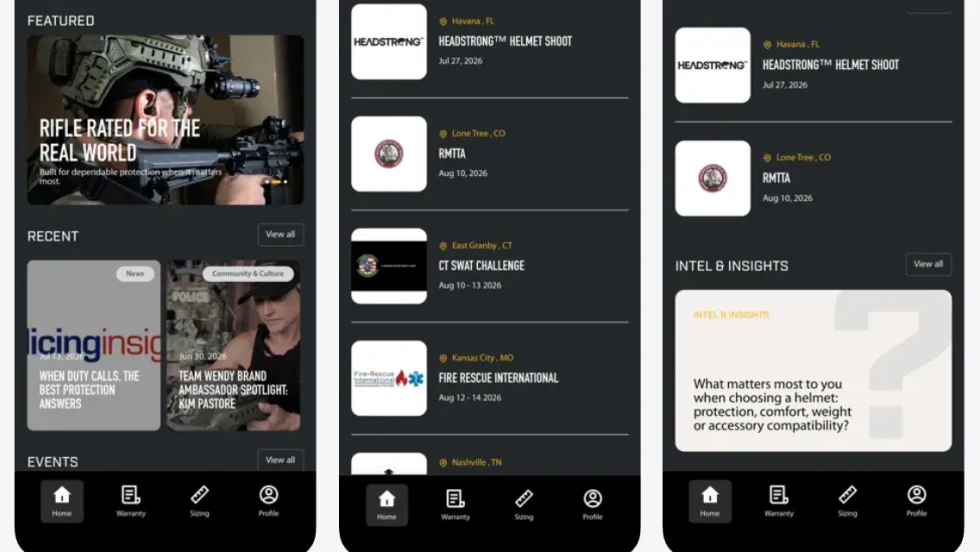
Team Wendy App Creates New Digital Hub for Helmet Owners
The Team Wendy Community App provides one location for warranty registration, size-fit tools, product updates, and community connection. For helmet owners, the new app creates a simpler path to the information and tools that matter most.
Read More →