



Using Persuasion Tactics to Handle Conflict
Facing conflict and confrontation is inevitable for anyone in law enforcement. The challenge is to take an angry or uncooperative person and have him or her voluntarily cooperate with you.

Facing conflict and confrontation is inevitable for anyone in law enforcement. The challenge is to take an angry or uncooperative person and have him or her voluntarily cooperate with you. Many of the concepts in this article are subtle and may not have an impact by themselves. But by layering these techniques one on top of the other, you maximize your power to influence people. And best of all, it's achieved without them becoming aware of what you have done.
Rather than suggest generalized principles, I've stressed specific information that is easily applied. The principles outlined below are valid and based on research. In effect, you're "playing the odds" by incorporating them into your communications. However, as anyone required to interact with upset people will know, there are no guarantees.
Basic Principles of Dealing with Interpersonal Conflict
The order in which you present options to another person is important. For example, if you have three reasons you want someone to listen to you immediately, start with your strongest argument and finish with the second strongest argument, rather than the weakest. This sequence has the greatest impact on the listener.
If you want someone to think about it over a period of time (i.e. the weekend), then you may want to end with your strongest, as the last thing said tends to be remembered for the longest time.
Make positive statements to the other person. On a psychological level, if I say, "You seem to be a reasonable person," then the listener subconsciously begins to view himself or herself as reasonable. Even better, there's a "Velcro" effect when you make positive statements like this. In other words, the listener also tends to view you, the speaker, in the same way. Conversely, if I call someone an "idiot," then guess what-I become the idiot.
People who are upset have short attention spans. Keep comments short and use simple terminology, avoiding abstruse and prolix disquisition. It doesn't impress people; it aggravates them. (See what I mean?)
People tend to be slightly calmer when approached from their non-dominant or weak side (the left side for approximately 90 percent of the population).
When people become agitated or excited, they tend to move their hands or feet more. This seems especially true in women. Minimizing this behavior in yourself during a stressful situation is one way to project an image of personal confidence and professionalism to the other person.
Use the word "because" when explaining yourself. "Because" is what's known as a "trigger." A trigger is a word or action that can influence someone to do something. It's akin to buying something you don't really need or want, but you do anyway just because it's on sale. Phrases like "for sale" and "liquidation price" are retail examples of triggers utilized by salespeople to get us spending our money. Same thing for the word "because." People will more readily accept an explanation or request that incorporates this word over another word meaning the same thing. Believe it or not, saying, "You have to leave because the manager requests it," will have more chances of success than, "You have to leave since the manager requests it."
Males tend to be more confrontational in the presence of females (any female). Therefore, separating them is generally a good idea. When interviewing or separating people, keep in mind that women are often less territorial. Getting a woman to voluntarily leave an area is more probable than getting a man to do the same.
People are generally much more confrontational in areas with which they are personally familiar or comfortable. Similarly, unfamiliar places tend to inhibit confidence (and hence, aggression). Therefore, if possible, discuss business in neutral territory, or better yet, on your "turf" (i.e. police station). This part of the rationale that supports effective interviewing in a police facility. Interviewers will have more success getting a statement conducted at a police station than at a suspect's home.
A word of caution. You are undoubtedly aware of the concept of "personal space." Moving in too close to someone may make him or her uncomfortable. The generally quoted range of 4 feet is a North American average. But don't be misled by this generalization. Personal space is influenced by race, nationality, sex, age and even your mood. In fact, it's been found that people imprisoned for violent offenses have, on average, a larger "personal space" than non-violent individuals.
Contrary to conventional wisdom, letting someone "vent" may be the worst thing you can do. Caution should be exercised if you believe the situation could develop into a physical confrontation. Studies have found that letting people vent during these situations can actually increase the probability of incident escalation.
If someone is very upset and won't calm down, try distracting him or her. By changing a person's focus, you increase the opportunity to break down his or her resistance. Some things you might try include having the person write something, or dropping an item and having him or her retrieve it for you. This simple act can help you regain control of a discussion.
A very useful, persuasive technique incorporates the notion of reciprocity (giving something to get something in return). So what can you give? How about a cup of coffee, a cigarette, a good word on a report, or meeting someone at a time or place convenient to him or her? Almost anything.
Once you give something, the other person becomes indebted to you. The advantage of reciprocity lies in its power and flexibility. You can give something small (i.e. coffee) and ask for something significant in return (i.e. a statement). Also reciprocity isn't affected by personal likes, dislikes or biases. I can give something to someone who doesn't like me and still ask for something in return. As a negotiator, I might open a conversation with a suspect by saying something to the effect (true or not), "I've got some good news; I was able to convince the commander not to shut off the power." Before he's spoken a single word to me, he already owes me. Something I'll try to collect on later.
I've touched on just a few of many different control and influence strategies available when you're faced with a confrontational person. These same principles can also be used with more advanced techniques to further facilitate one's control. And don't limit yourself in the application of these ideas. You can use these same tactics in challenging staff performances issues, guiding negotiations, mediating groups or even positioning yourself for promotion. You determine where and how far to take it.
Kevin McCaffery is a 20-year police veteran (including nine years in hostage negotiation) and lecturer. If you have any questions or comments, he can be reached at (613) 769-8892 or by e-mail at kevin@controlconflict.com.
Conflict management skills can be of tremendous value in a variety of situations...and may even save someone's life.
Good conflict management skills can help diffuse a situation and may even save your life.
More Patrol

The First Responders Children’s Foundation National First Responders Day Roll Call of Heroes Ceremony Returns to Times Square, NYC
First Responders Children’s Foundation (FRCF), in collaboration with T-Mobile, will host the Roll Call of Heroes ceremony in Times Square to commemorate National First Responders Day on Wednesday, Oct. 28. During the event, FRCF will present 18 Hero Awards.
Read More →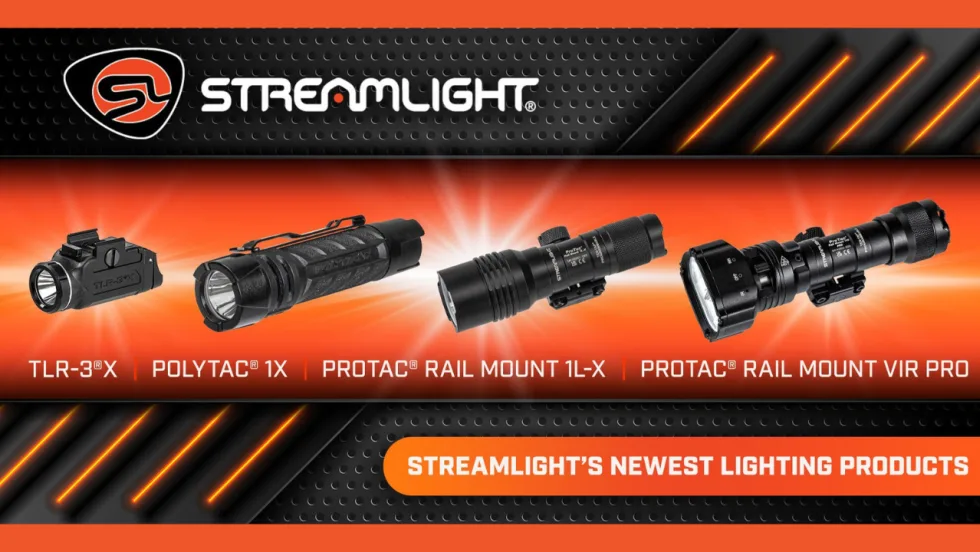
Streamlight to Showcase Newest Lighting Products for Law Enforcement Professionals at IACP 2026
Streamlight will showcase its newest lights for law enforcement at the International Association of Chiefs of Police Annual Conference & Expo. Featured lights will include the TLR-3 X, the PolyTac 1X, and more.
Read More →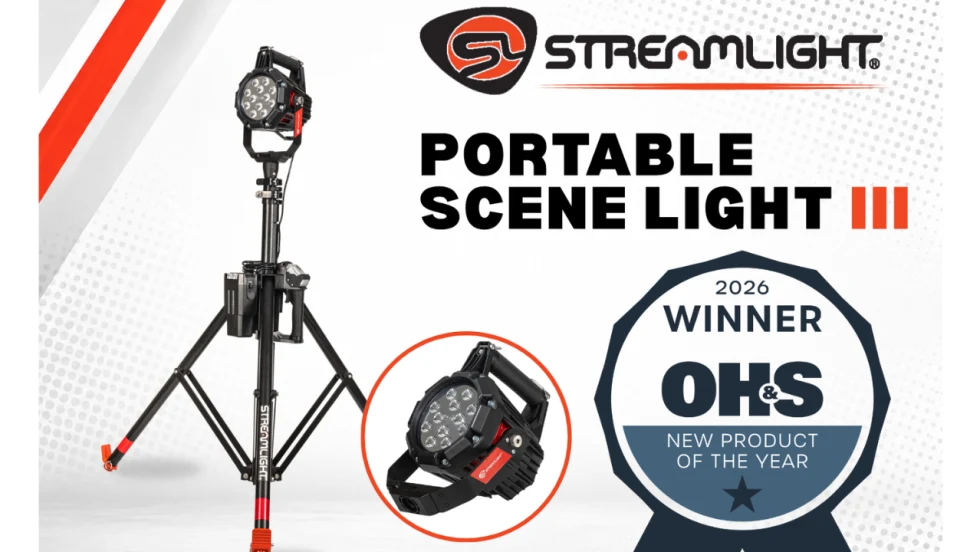
Streamlight Portable Scene Light III Wins 2026 OH&S New Product of the Year Award
Streamlight’s Portable Scene Light III has won the 2026 Occupational Health & Safety (OH&S) New Product of the Year Award in the Lighting category.
Read More →
Adept Armor Introduces Two New Rifle Plates
Adept Armor has launched two new Level IV ballistic plates, the Emperor and the Archon Mark 2, which brings Adept Armor’s new Quatroid ceramic to the high-threat, performance-value center of the range at 5.2 pounds.
Read More →
POLICE Product Test: Benchmade Bailout
The Benchmade Bailout is a slim, lightweight carry knife with a deep-ride pocket clip and comes in a variety of blade steels and scales. Here is a detailed review of the Taiga Green Bailout, released earlier this year.
Read More →
NLEOMF Announces July 2026 Officer of the Month
NLEOMF honored a Michigan deputy sheriff as the July 2026 Officer of the Month for rescuing a trapped driver from a burning vehicle following a Fourth of July crash.
Read More →
Streamlight to Showcase Newest Lighting Products at National Safety Council’s Safety Congress & Expo 2026
Streamlight will showcase its latest lights, including the Portable Scene Light III and the LiteBox 1Million, at the 2026 National Safety Council (NSC) Safety Congress & Expo.
Read More →
The 2027 World Police & Fire Games Set for Perth, Australia
The 2027 World Police & Fire Games (WPFG) will take place in Perth, Western Australia, from Friday, March 12 through Sunday, March 21, 2027.
Read More →
5.11 Partners with National Fallen Firefighters Foundation to Support #ForThe343
5.11 has joined the nationwide movement honoring the 343 New York City Fire Department firefighters lost on Sept. 11, 2001.
Read More →
Team Wendy Announces Title Sponsorship of the Jorge Pastore Foundation
Team Wendy’s 3-year partnership with the Jorge Pastore Foundation expands access to programs that strengthen those who serve.
Read More →